At the start of our travels, Cyprus was not in our plans, but we decided that it may be the perfect time for us to visit this island country. I had heard a lot about Cyprus from my good friend Laura who used to live there, and she always shared amazing stories about her time there. We reached out to her during our planning to gain a better perspective on where to visit, eat, and explore. Originally, we were planning only to stay a few days, however, Laura’s convincing along with a bit of research convinced us that we needed to extend this part of the trip to a full week, and I am so glad that we did!!
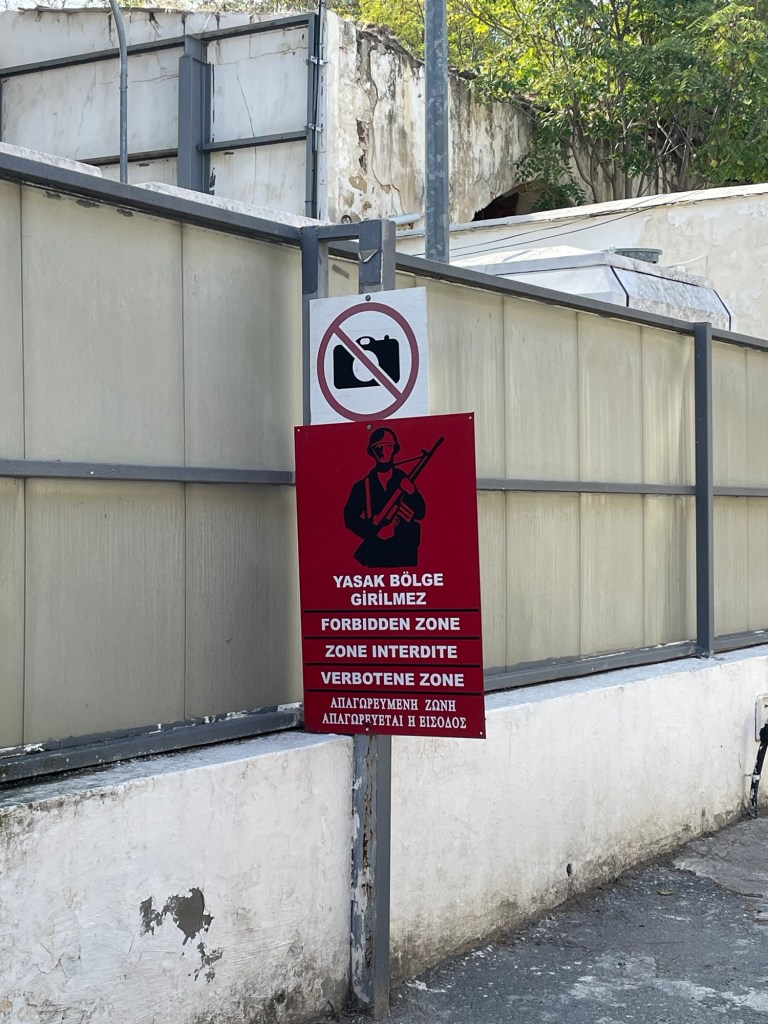
For those who don’t know (I didn’t), Cyprus is an island country part of the European Union. Yet, it is also a contested island with the northern part of the island occupied by Turkey as they believe that the island should belong to them. In 1974 Turkish forces invaded and gained control of the northern part of the island. When the two sides agreed to end the fighting, a peacekeeping force from the UN was established to control this newly decided border between Cyprus and the Turkish-occupied Northern Cyprus and this controversial border has existed ever since. The crazy part is that the capital city of Nicosia is split right down the middle between the two countries. You can be walking through a market, get to a border checkpoint, show your passport, and then go to the other part of the market that is technically in a different country. Turkish citizens are allowed to visit Northern Cyprus freely but need further visas to be allowed into the South. We found the North and the South to be very different, but we’ll discuss that later.
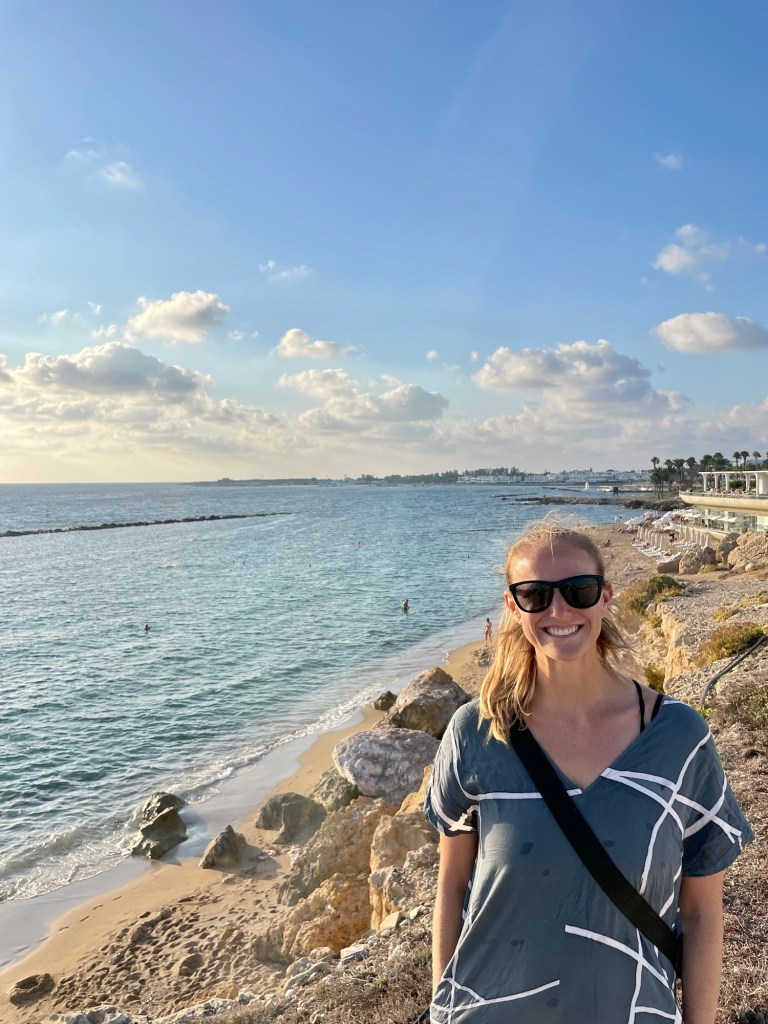
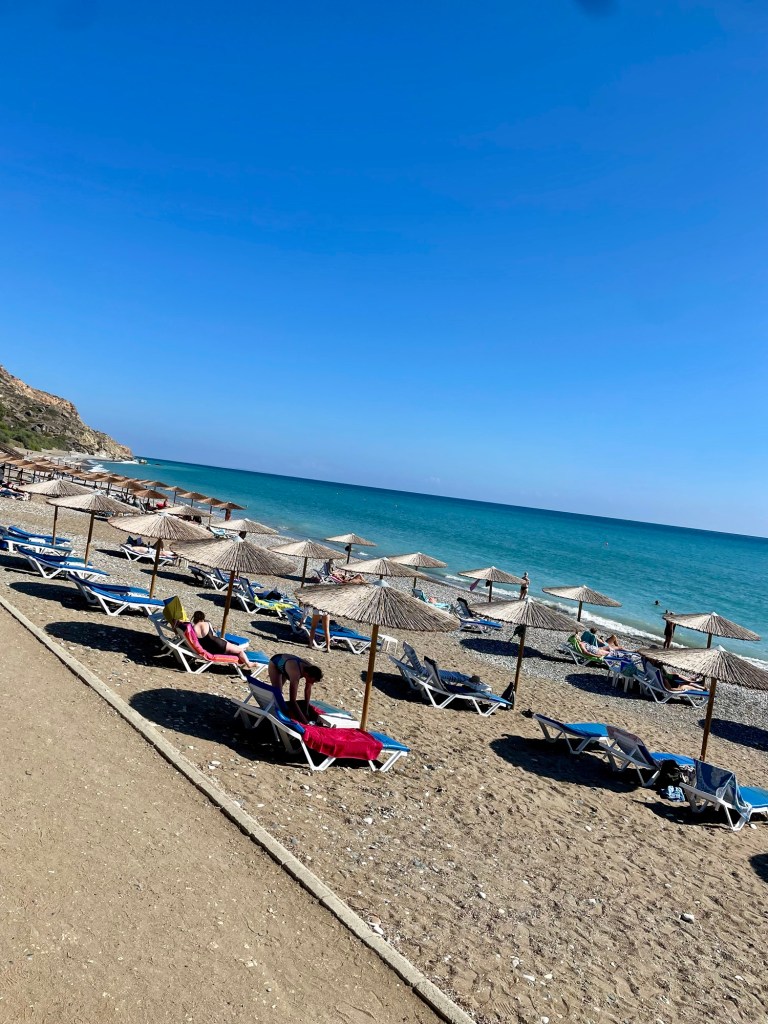
We began our Cyprus trip in Paphos, which is a large and ancient city on the southern Mediterranean coast. Cyprus does not have a passenger train system, so we decided upon a rental car as this seemed the easiest way to explore Cyprus. It did not take long for us to quickly realize that despite Cyprus tourism not being very well known in the United States, it is an extremely popular destination for Brits. The first rental apartment in Paphos felt as if we were in the British version of a Florida retirement community with BINGO, karaoke, and trivia nights full of retirees. The pool and beaches were full of elderly Brits who were sun-baked like red lobsters. The tourist beach in Paphos is lined with large hotels with resort pools and beach chairs covering the lawns for what seems like miles.

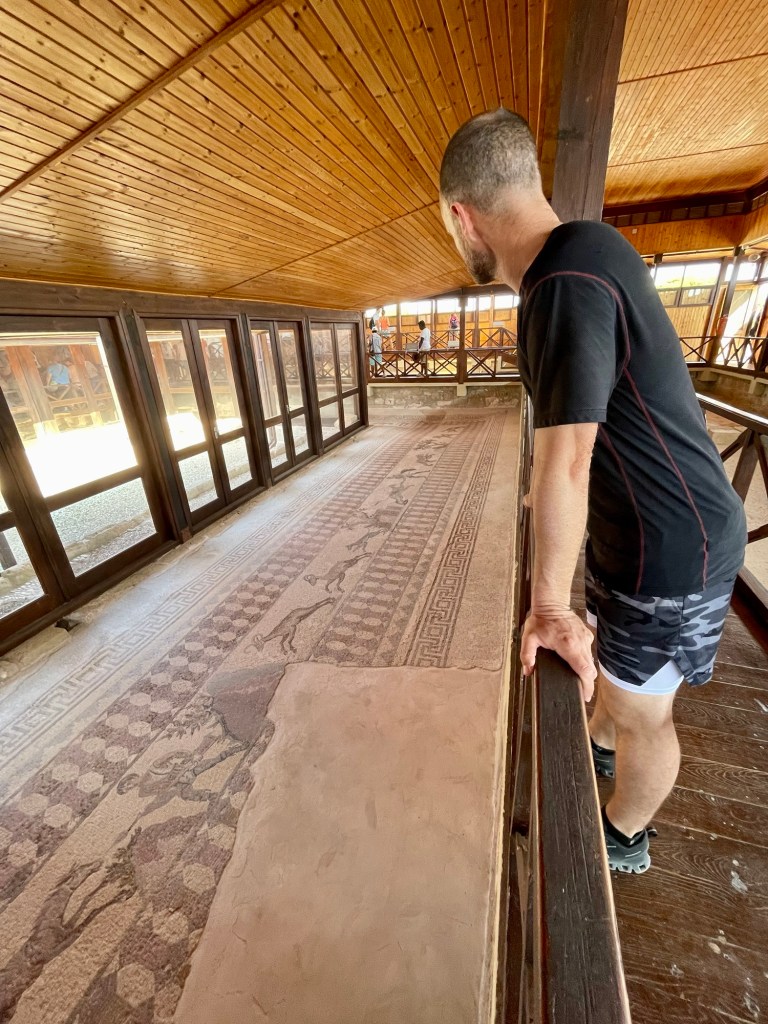
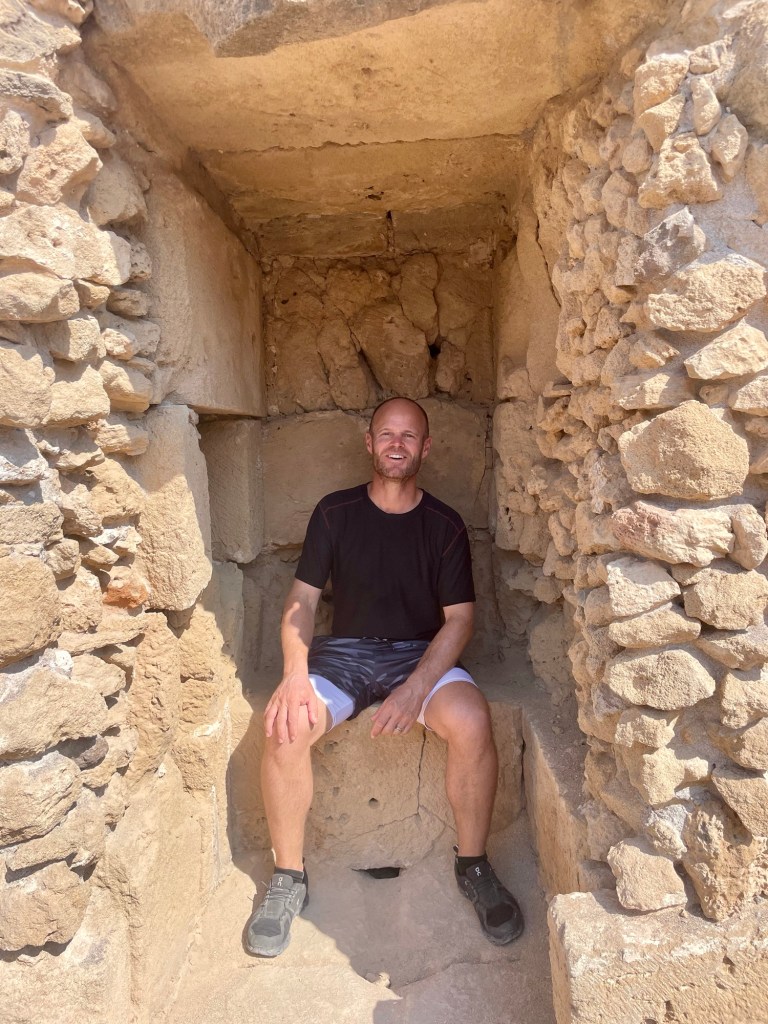
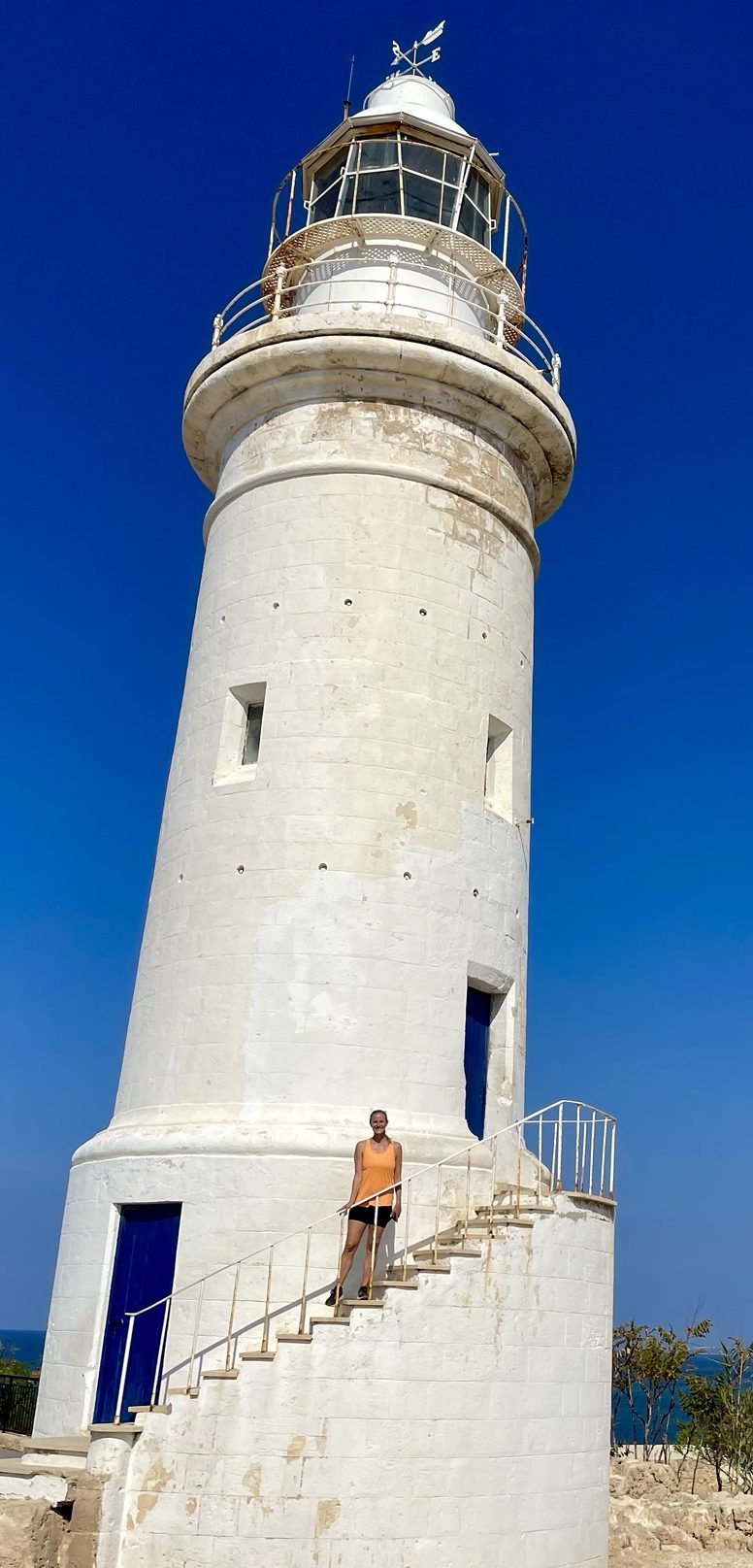
The largest attraction aside from the beaches here is the Paphos Archaeological Park. Nate and I went for a run down the boardwalk to get to the park and then spent the rest of the morning exploring the historical site. The ruins include four elaborate Roman villas dating back to the 2nd to 4th century AD. In the ruins, you can see rooms, pillars, and theaters, but the big draw is the elaborate mosaics they found on the floors. The House of Dionysos housed the most mosaics and you can take an elevated walkway to see all of the stories shown on the floor. In the same complex, you can also find a lighthouse dating back to 1888, as well as a beautifully preserved castle (Saranta Kolones) dating back to the 7th century AD. One of my favorite parts of the castle is that we found the oldest toilets I have ever seen.
After running back to our resort, we checked out and loaded the car to head north into the mountains. Away from the coasts of British retirees, Cyprus took on a very different look. Small towns lined windy roads up into the mountains, and vineyards covered nearly every hillside. Wine production in Cyprus dates back to ancient times and the knowledge of how to grow grapes in this dry seaside landscape has apparently been passed on for generations. The best part for us was that the wine here was extremely affordable and really good! We found two different vineyards along our route up into the mountains that offered wine tastings (which were free), Linos Winery and Zenon Winery.
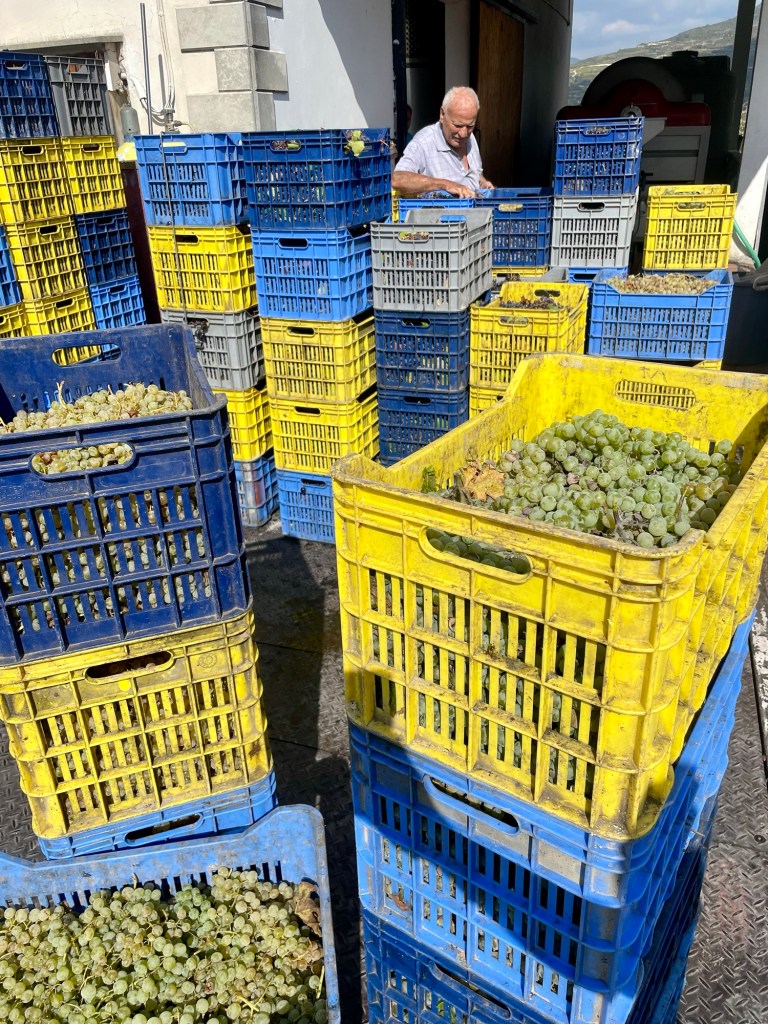
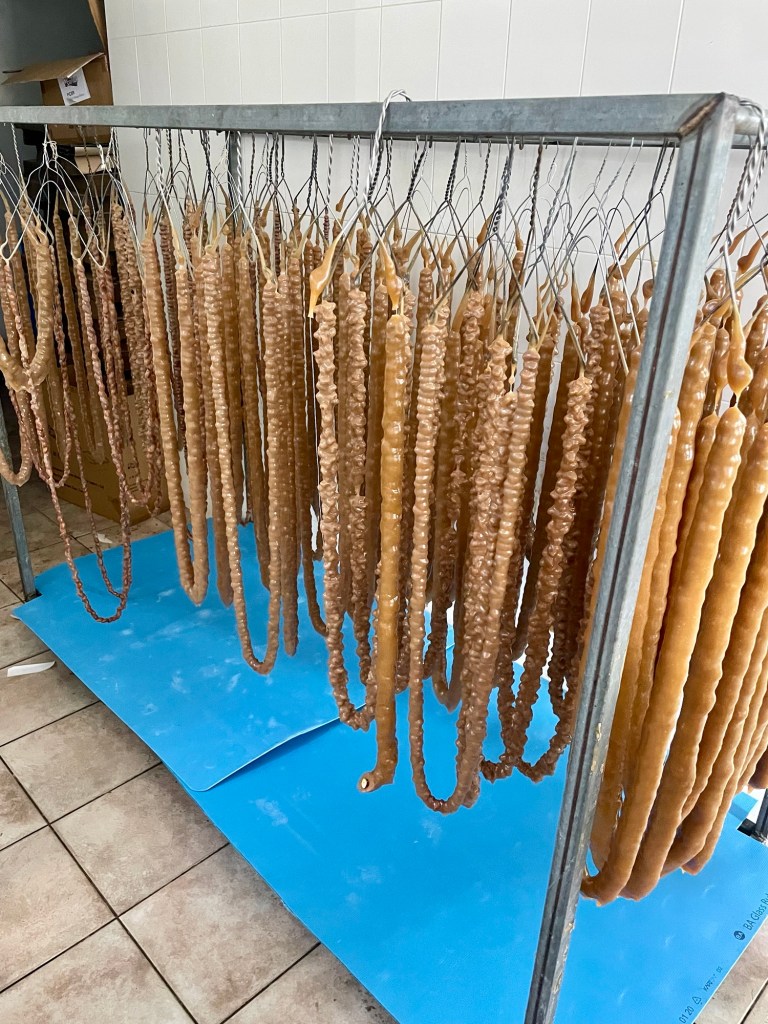
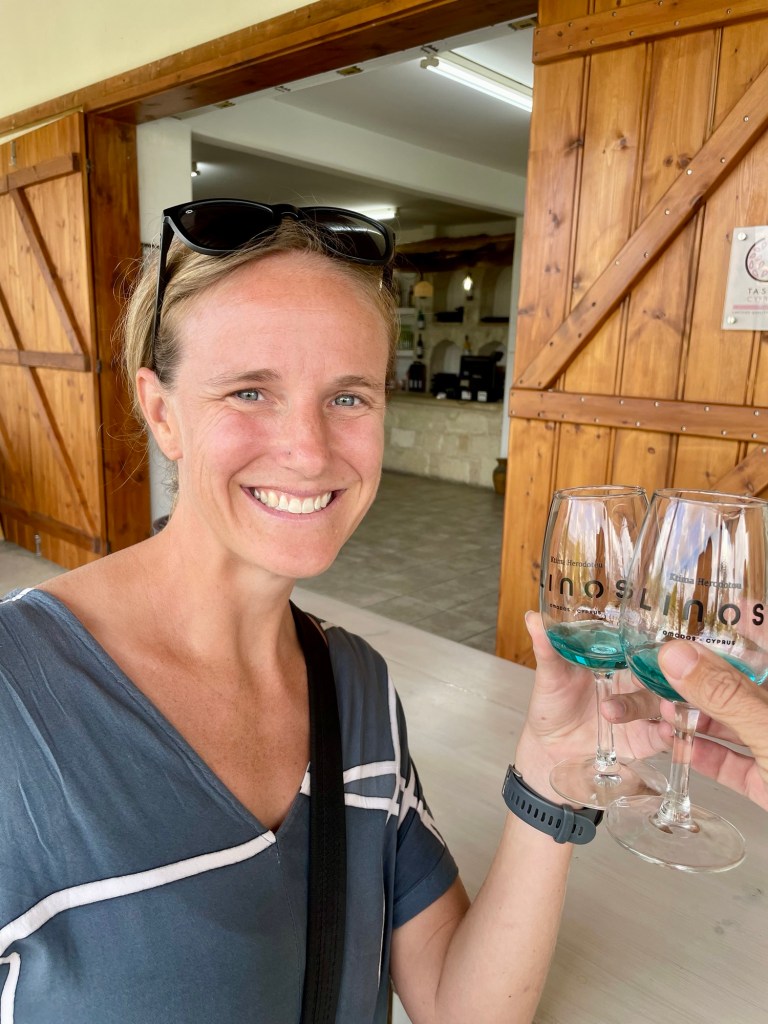
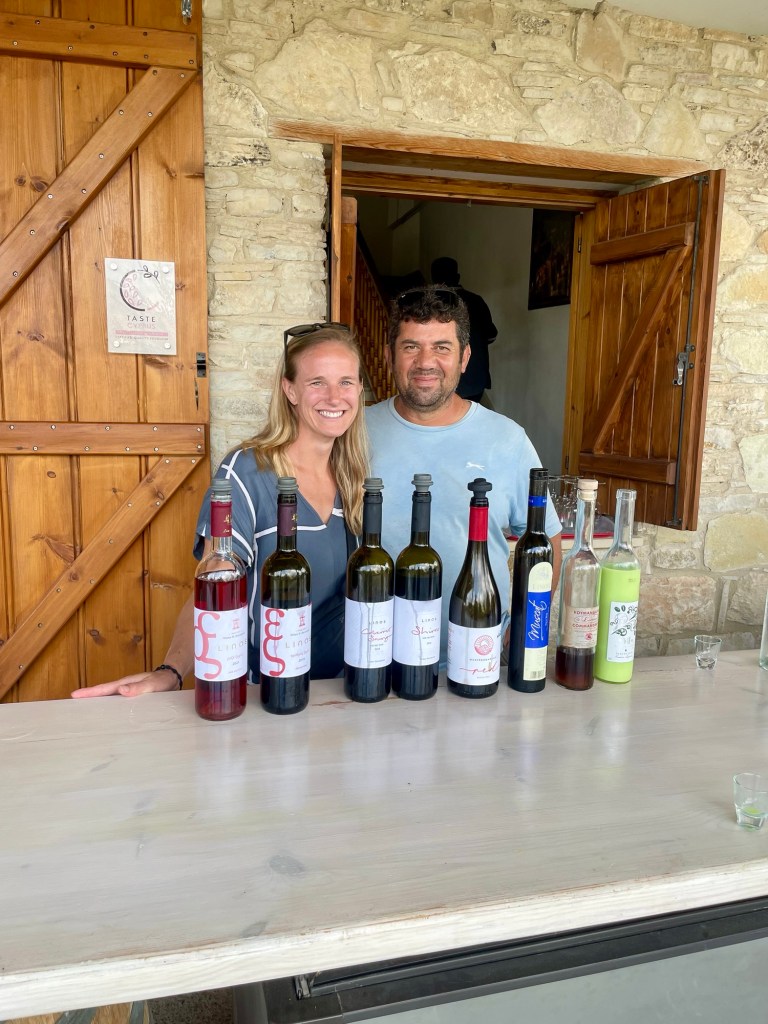
In Linos Winery we were first greeted by crates and crates of grapes they were harvesting to start the wine-making process. The owner of the vineyard greeted us upon our arrival and beckoned us to his outdoor tasting area looking over a beautiful hillside where he proceeded to give us the tasting himself. The pours were not light, and he let us try ALL his products, including liquors and a liquor made from grape skin that they called Zivania. He was most proud of his blue wine, which he said was an accident that he stumbled upon while experimenting and something that you will find in only a few places in the world.
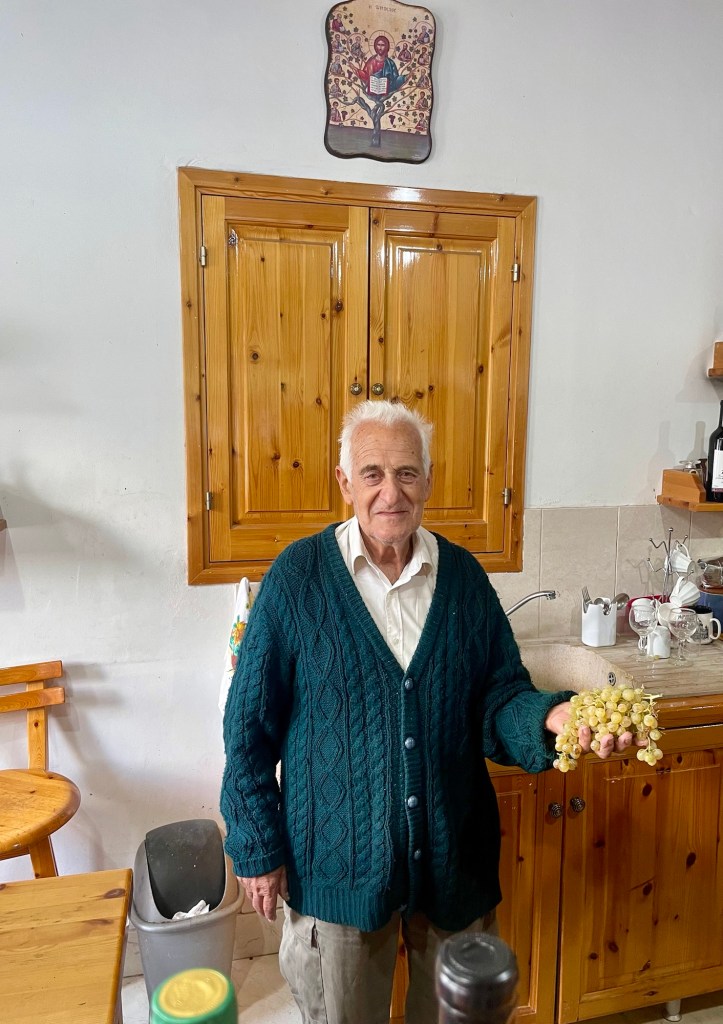
Our second vineyard was Zenon Winery. While we enjoyed the tasting, we found that their wines did not suit our palates quite as much as those at Linos. At Zenon we were able to meet the owner who was a kind older gentleman and were impressed that he was able to still manage the operation at his age. Our final stop up in the mountains was a small town called Omodos. This small village in the mountains was a bit more touristy with cute little streets filled with shops and restaurants. We visited a local church, as well as some of the first wine cellars in the region where we saw replicas of the old wooden machinery used to juice the grapes in past centuries. It was quite a history in winemaking.
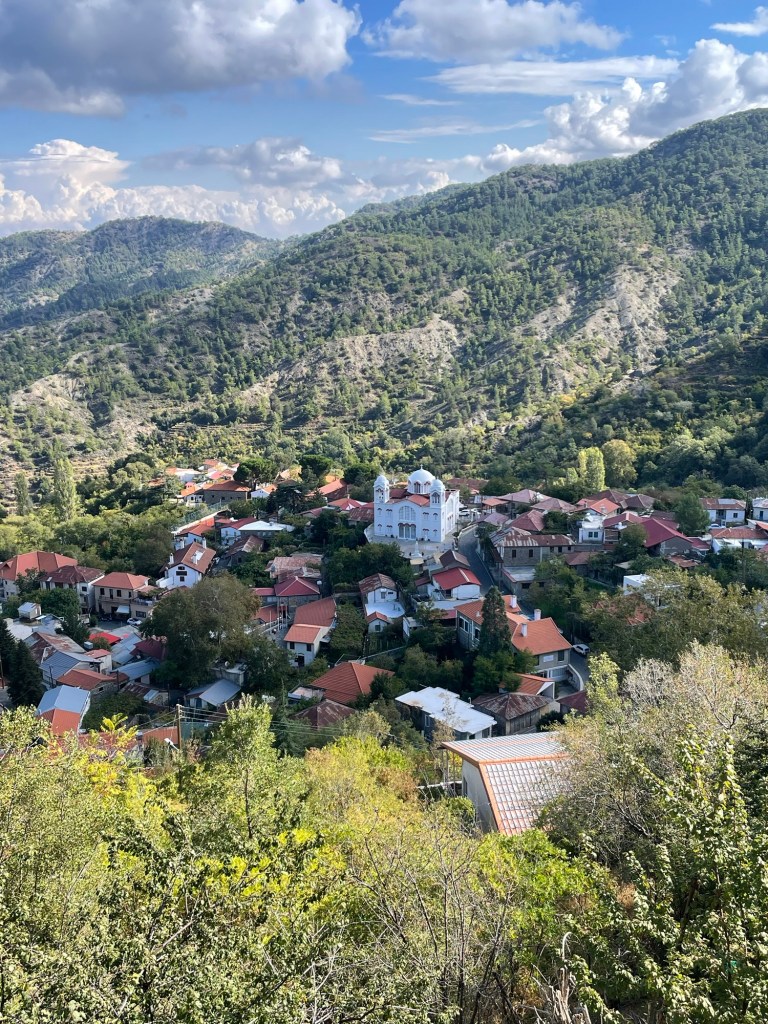
From here we headed further up the mountains to a small village called Pedoulas. We stayed at the Two Flowers Hotel which has a lovely balcony view out over town and the beautiful village church that rings its bells every hour. Unfortunately, it was quite foggy on this day and a bit rainy when we arrived, so we could not enjoy these views until the following morning. Along with great wine, Cyprus is known for great cheese, one of which is Haloumi. We enjoyed so much grilled Haloumi during our week in Cyprus that I think we nearly turned into cheese myself.
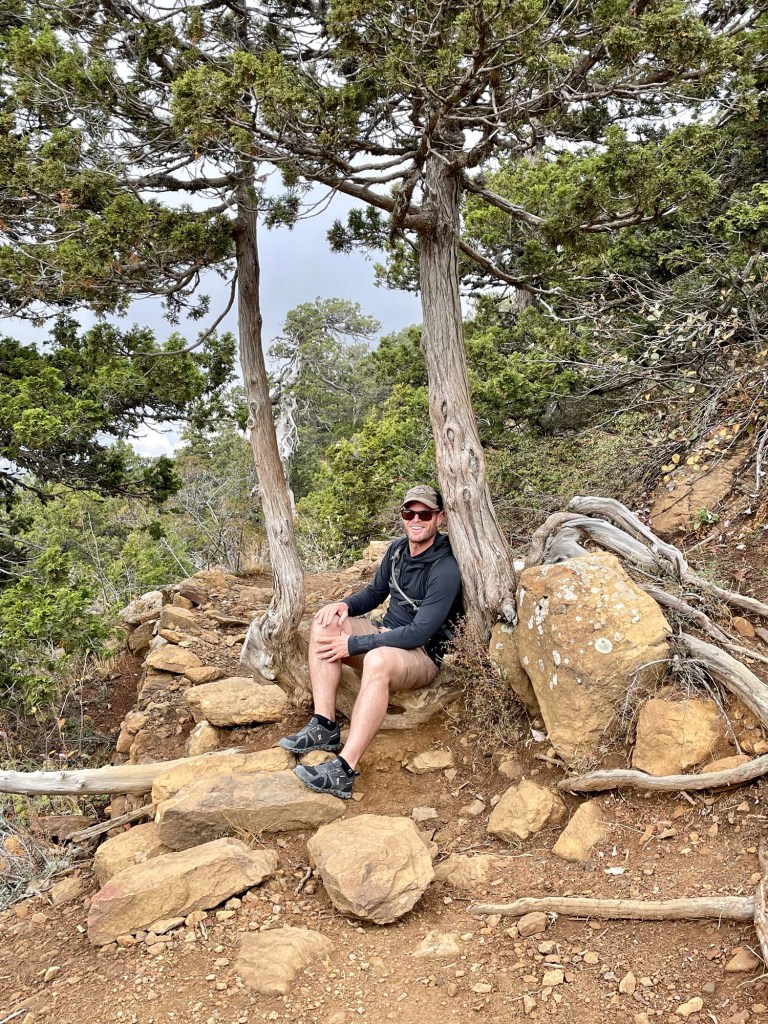
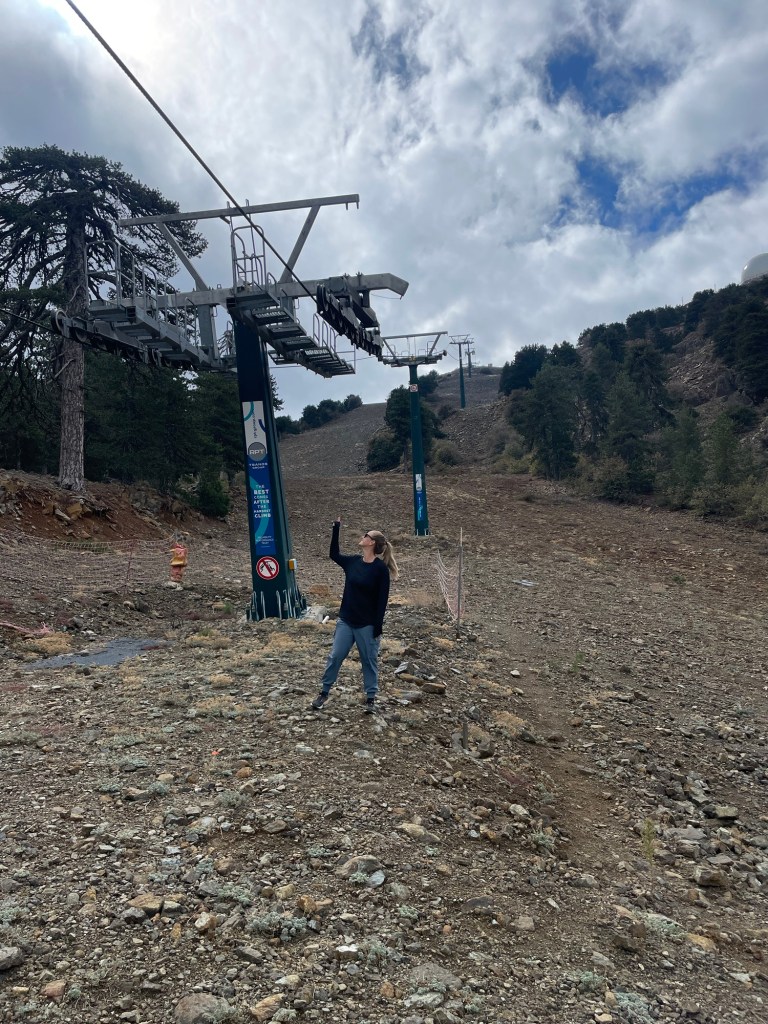
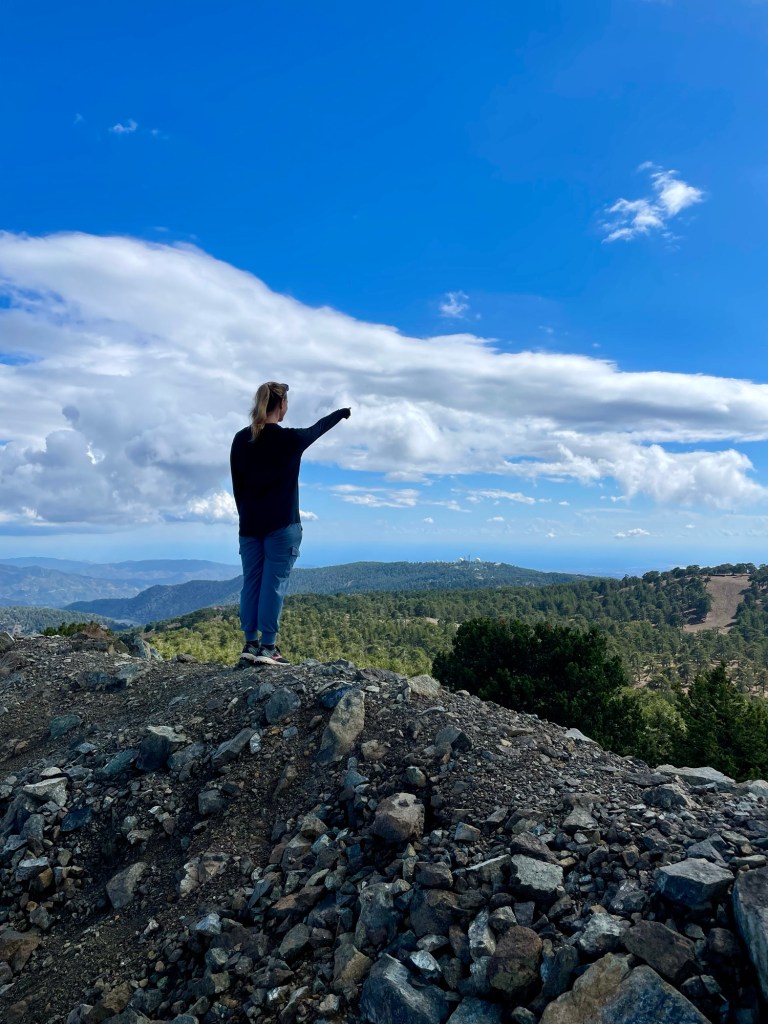
The following morning we headed even further up to the top of the mountains to explore the highest point in Cyprus. When planning this trip we were amazed to learn that a Mediterranean island nation would have a ski area, but it turns out that Cyprus must get snow during the winter months. It is one of the only places I know where you can ski and literally look out on the sea in the distance. While hiking we enjoyed beautiful views of the Mediterranean on all sides of us, as well as stunning mountain vistas. With clouds and fog rolling in and around us, we took in the fresh mountain air, and at times forgot that we were hiking on an island.
Once we finished our hiking, we made the drive out of the mountains where we stopped at a final beautiful waterfall where we enjoyed a small bottle of wine before continuing on to the famous beaches on the east coast of the island. Only a few hours from the mountains, our first beach stop was the stunning Nissi beach. After seeing photos during our research of the island we knew that we had to see this beach, and the sunset here certainly did not disappoint. Nissi Beach is located in a calm cove with a little island in the middle that you can walk over to through the water during low tide.
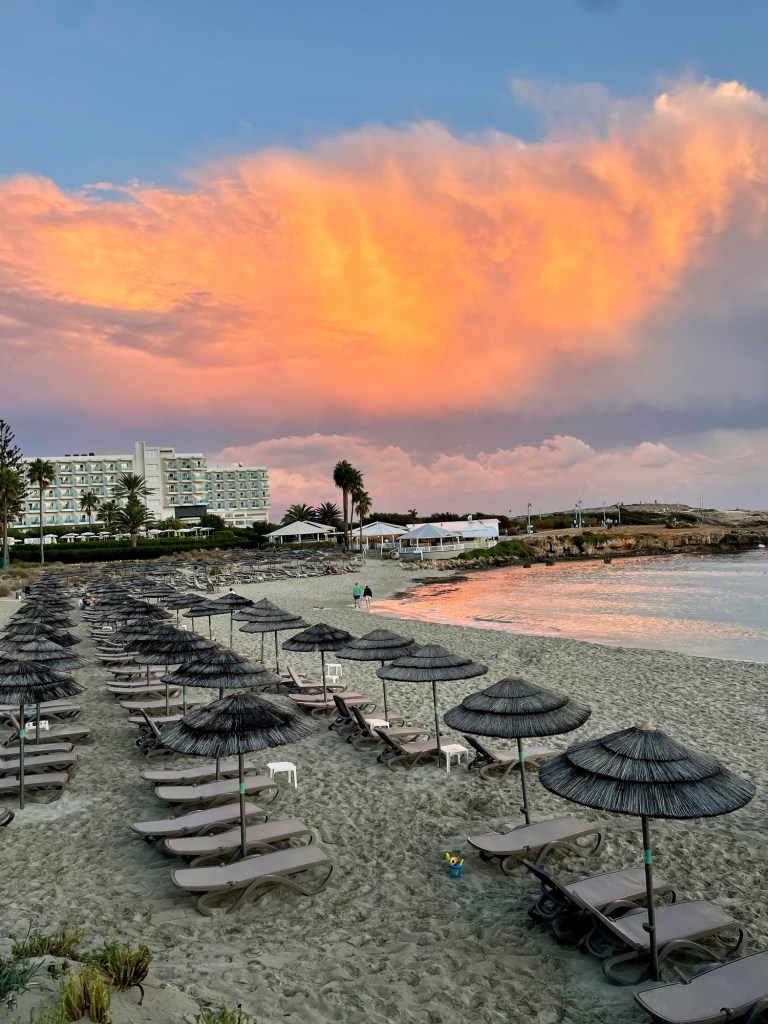
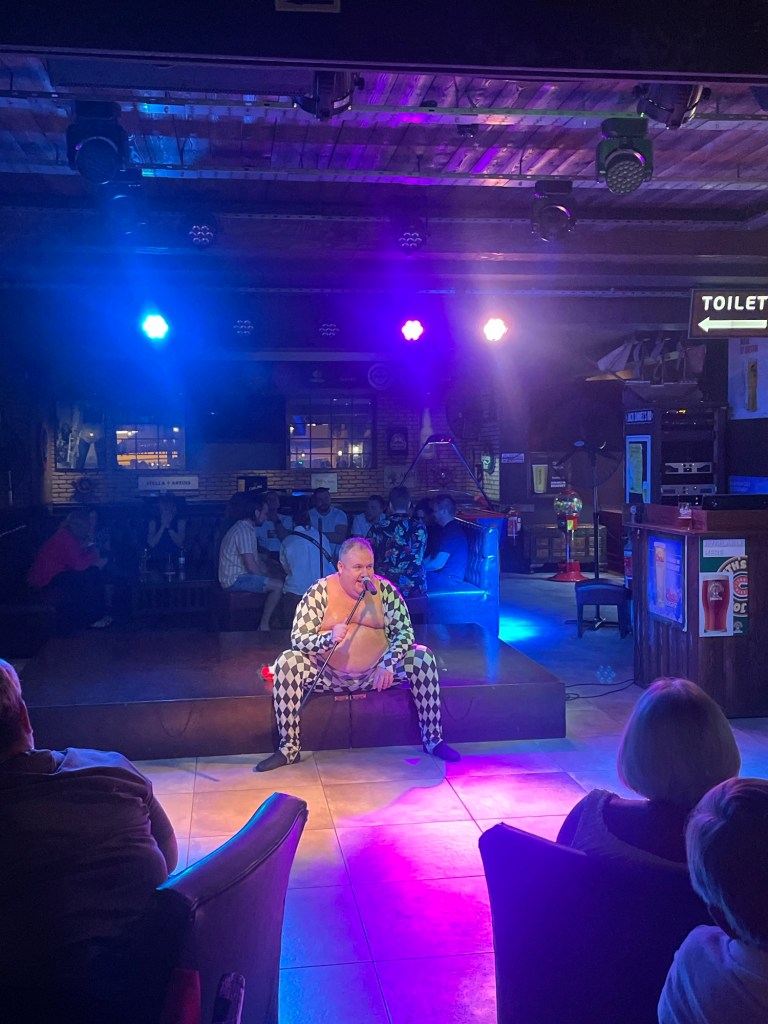
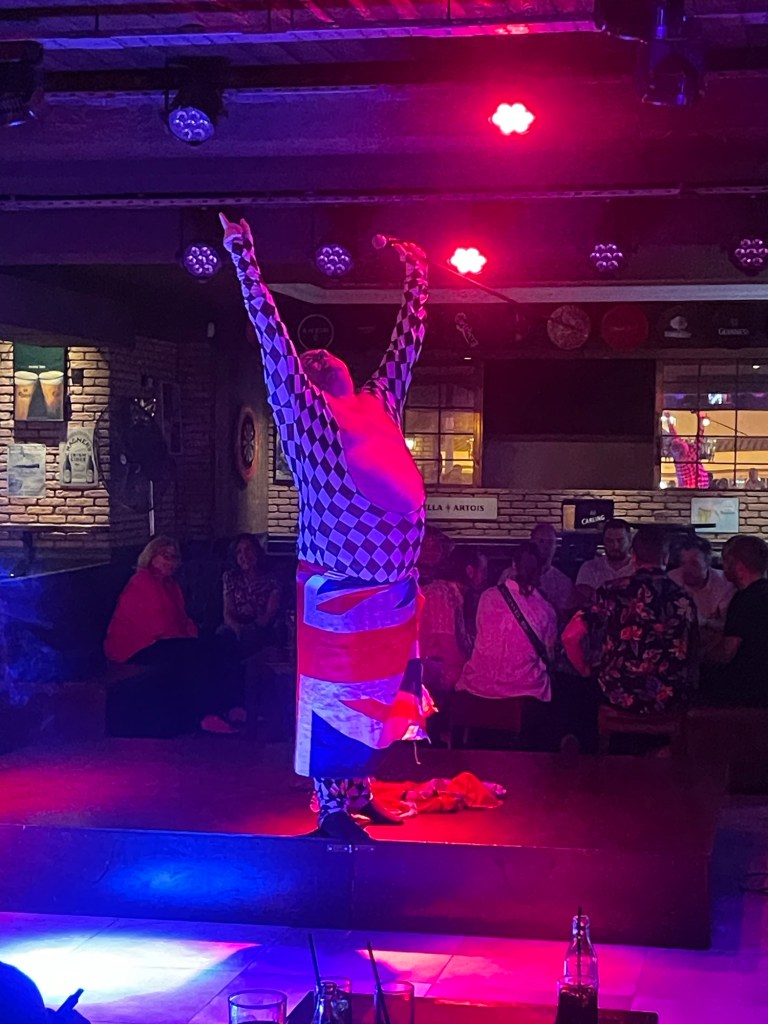
Our final stop for the day was the beach we would call home for the next few nights, Fig Tree Bay. If Paphos was the British version of Florida, Fig Tree Bay and the nearby Vrissi Beach was the British version of Cancun. Paralleling the beach was a strip of bars and restaurants that were packed full every night by fellow partygoers. The tourists on this particular beach in Cyprus left us feeling as if we were on a cruise ship. We quickly came to realize that the bars here have a rotating series of tribute singers that keep the tourists entertained each evening with classic acts ranging from Elvis, Franky Valli, and Freddy Mercury, as well as the more modern Lady Gaga, Michael Jackson, and British rock star Rags and Bones man. Live music was easy to find, however the quality of this tribute singing varied considerably.
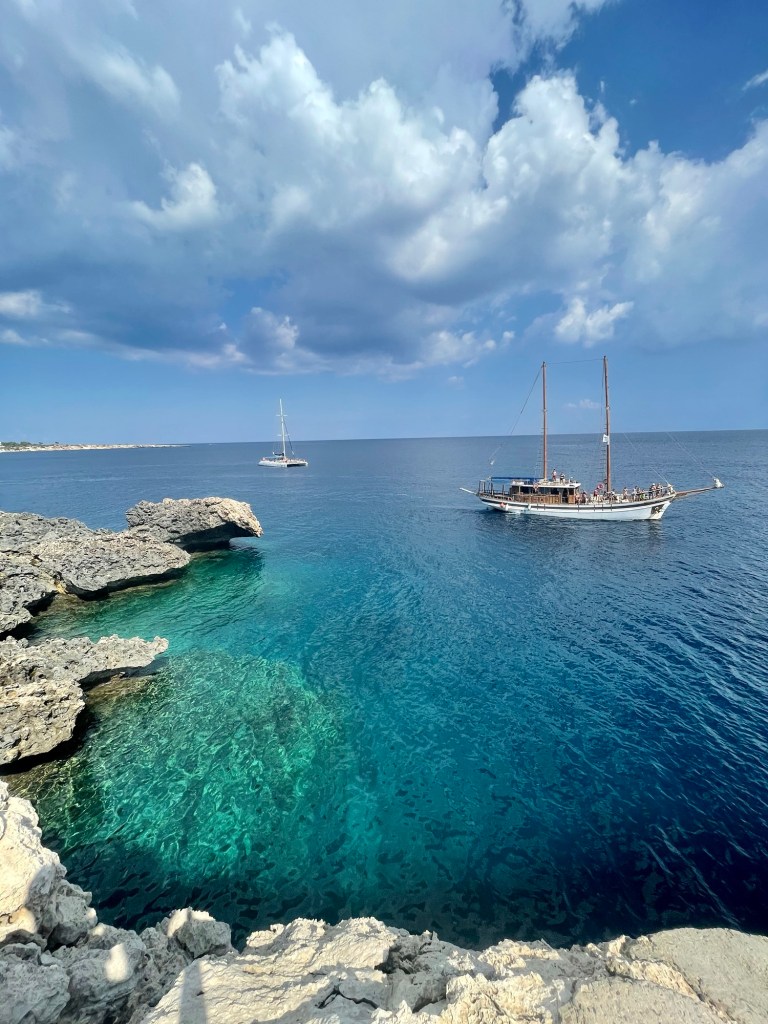
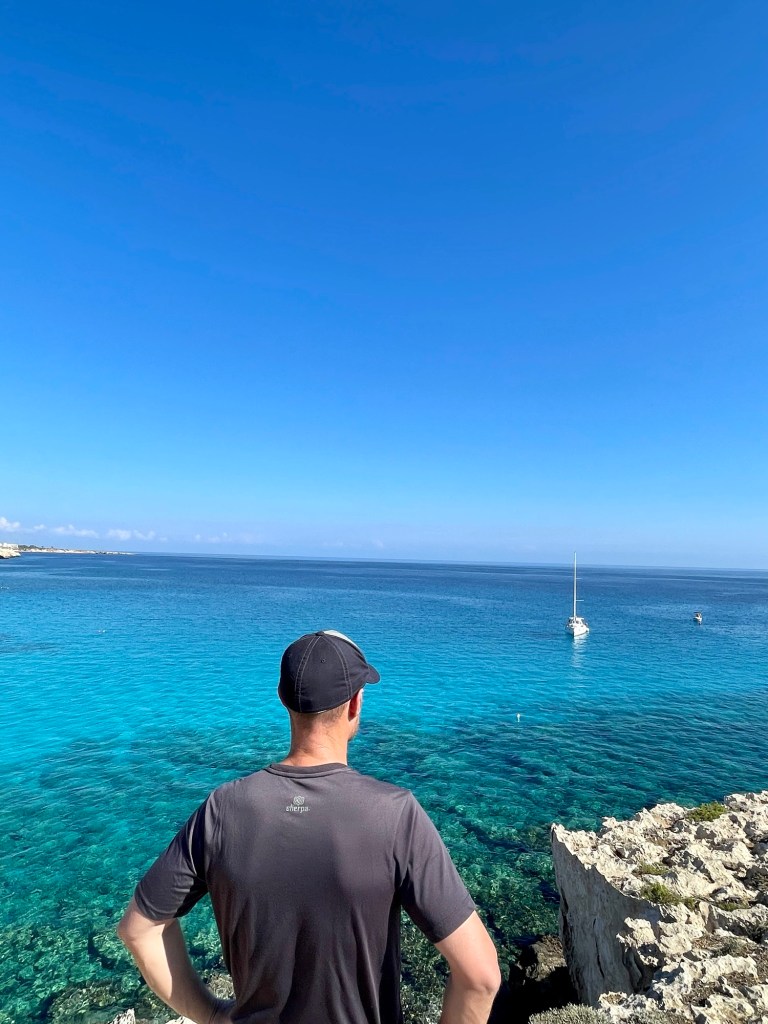
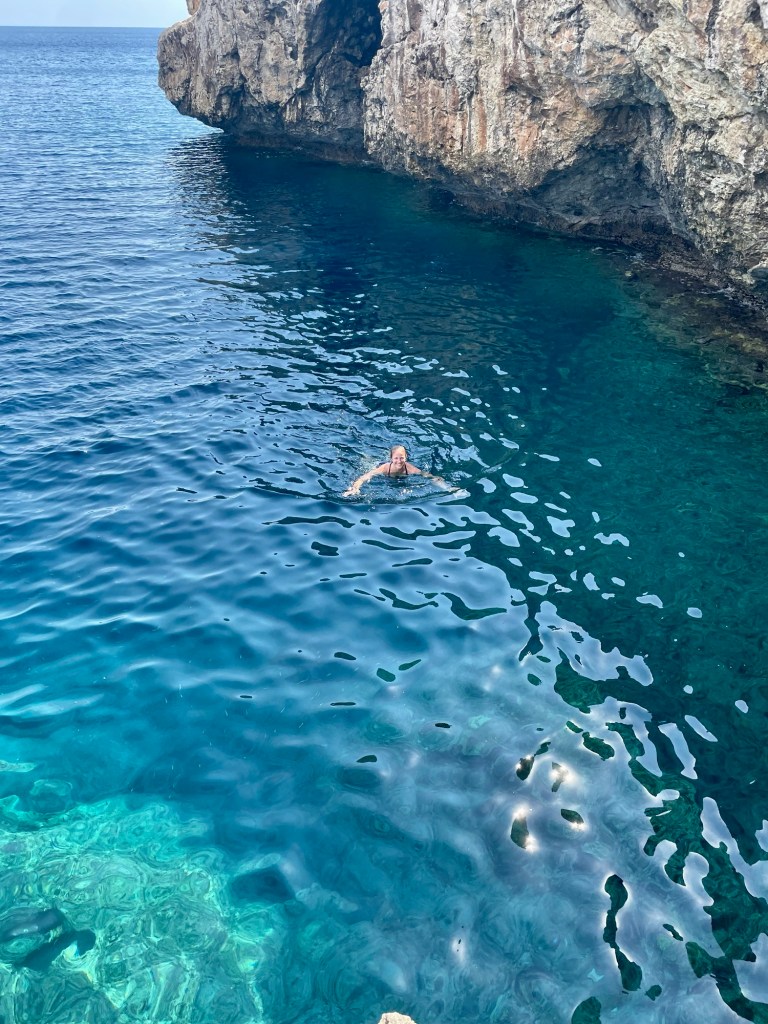
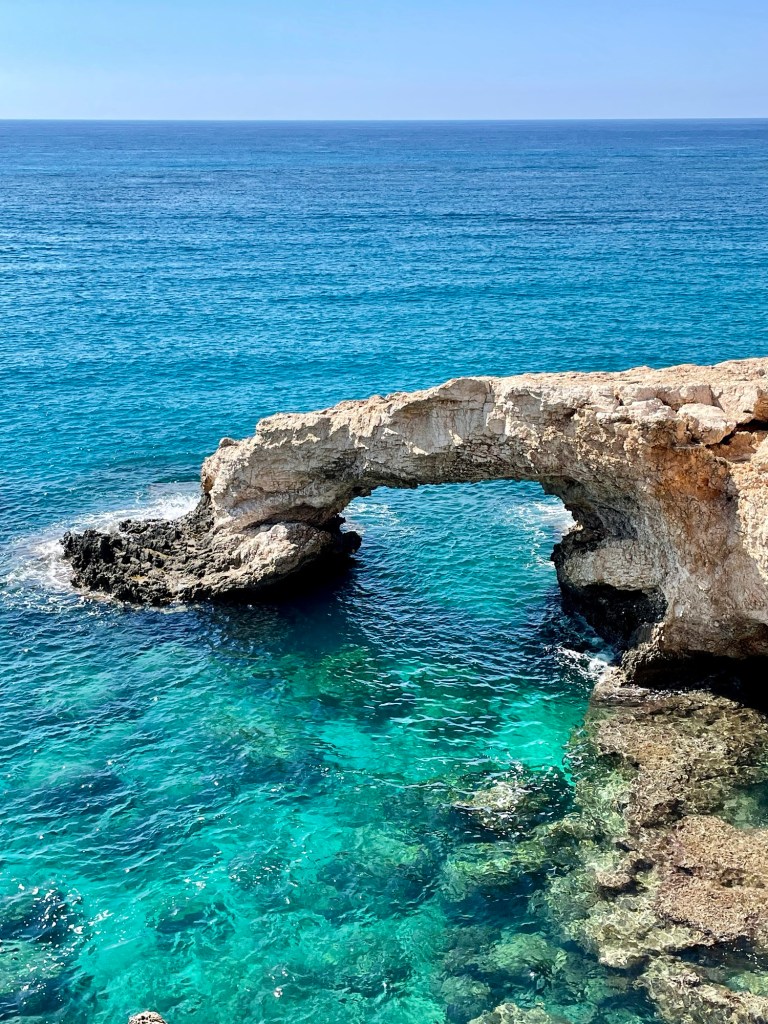
Our favorite part of staying at this beach was the national park next to it called Cape Greco. The coastline here was gorgeous with steep rock cliffs and small cave grottos dropping straight into the ocean. A popular way to view this area is with a boat tour that takes you along the coast where you can swim in the crystal clear waters. With limited time, we chose to take our car out onto the Cape to explore and took the route of cliff jumping instead. Since Nate didn’t have his bathing suit, I got to do the honors myself and jumped off an 8-meter cliff into the ocean, ending up in a sea cave.
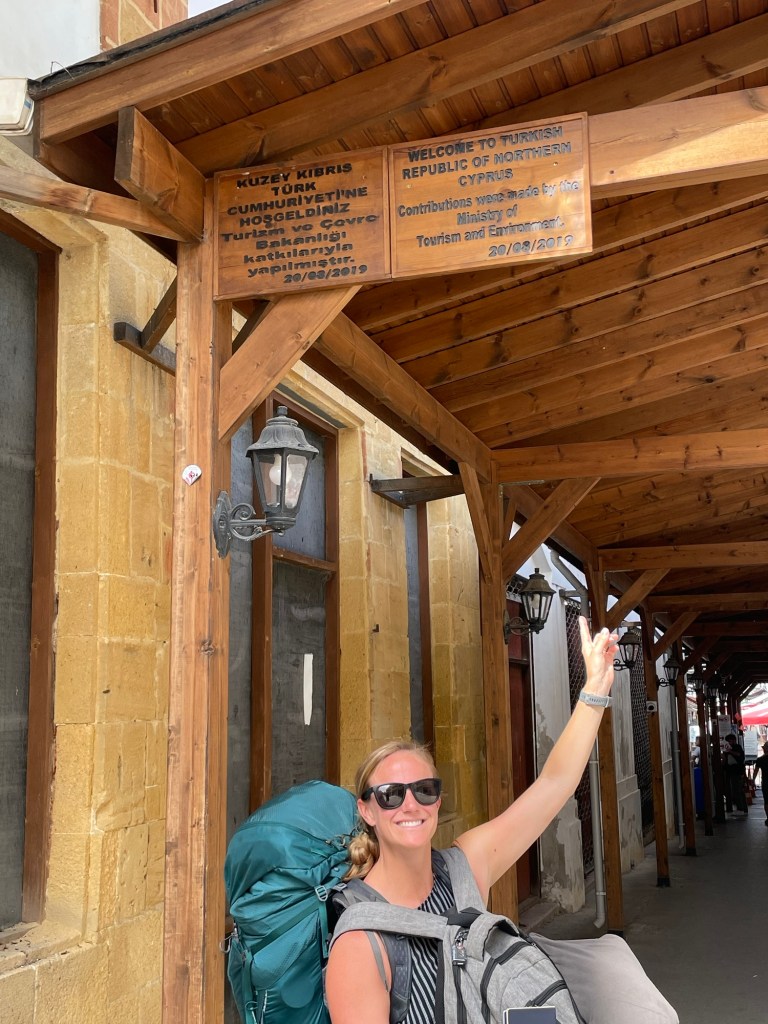
Our final stop on our Cyprus tour was up to the capital and an overnight visit to Turkish-controlled Northern Cyprus. This started with a busy day driving the rental car back to Paphos from where we took a series of buses up the capital and largest city on the island of Nicosia. We enjoyed a wonderful night out in Nicosia and the following day we walked through the main market street to reach the border crossing that I mentioned earlier. It was an incredibly unique experience to walk through a border into an occupied territory and we were amazed to see just how different the two sides of Nicosia are. We felt that the Turkish north maintained more of the historical feel while the Cypriot south felt newer with more modern architecture and infrastructure.
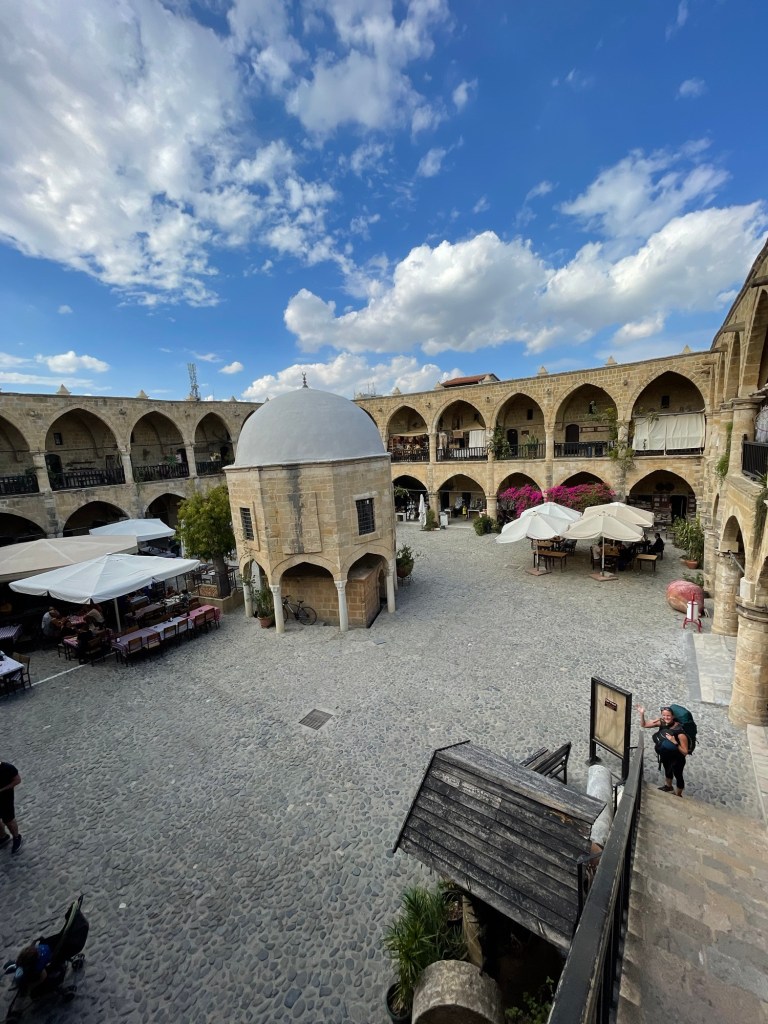
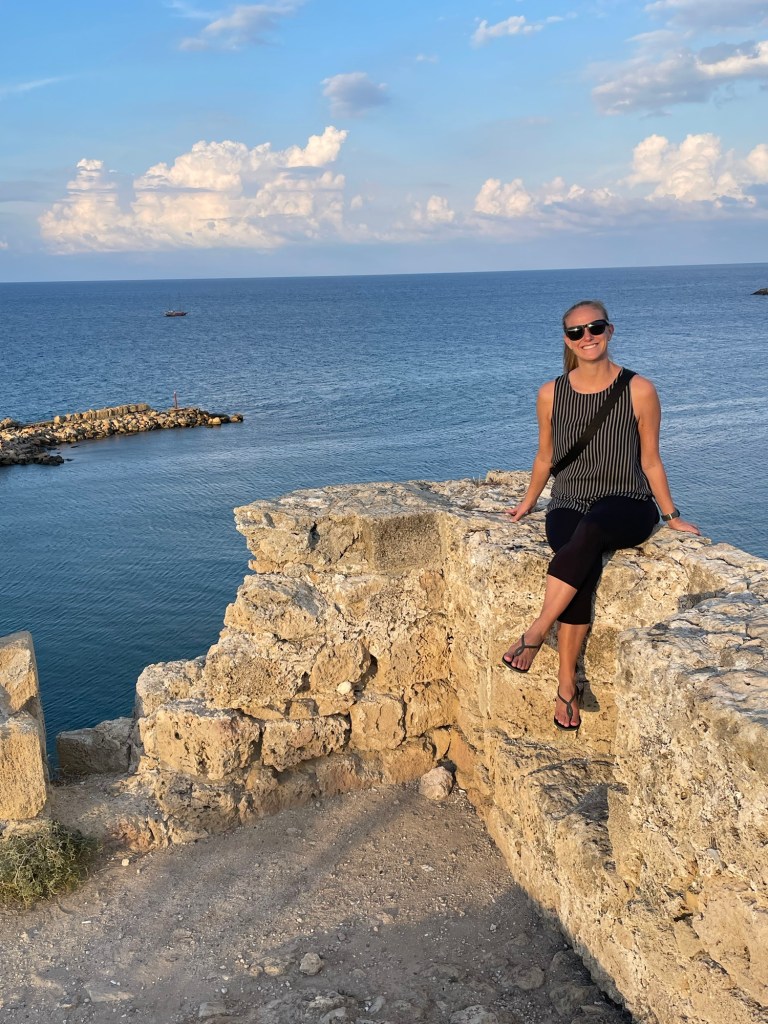
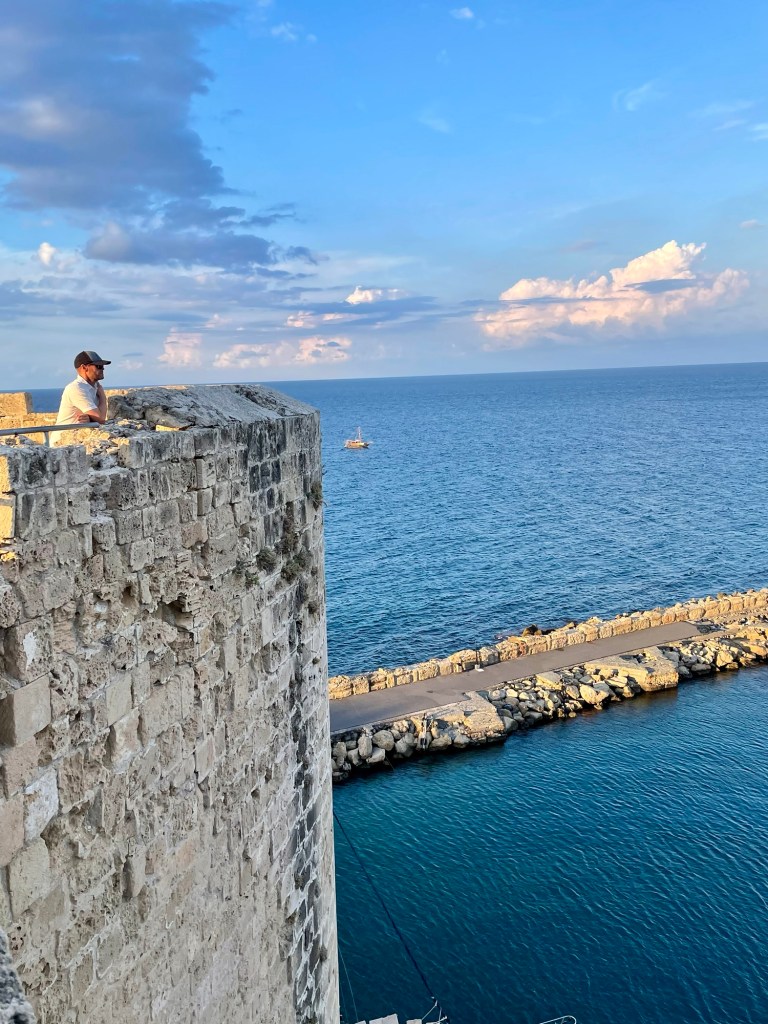
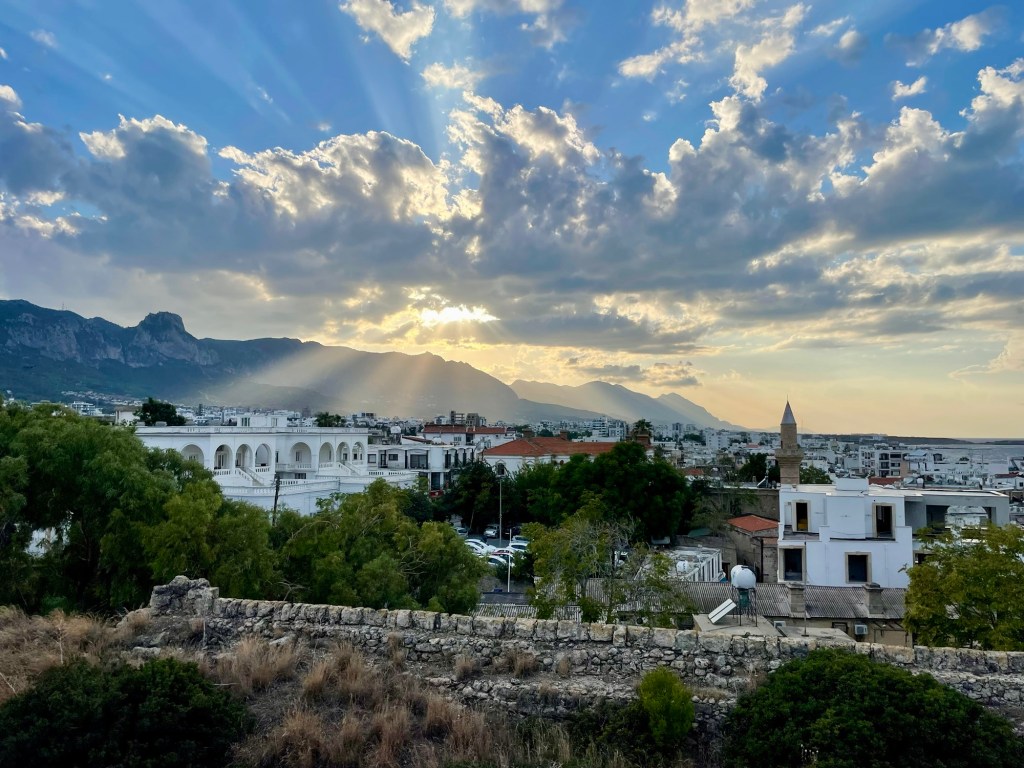
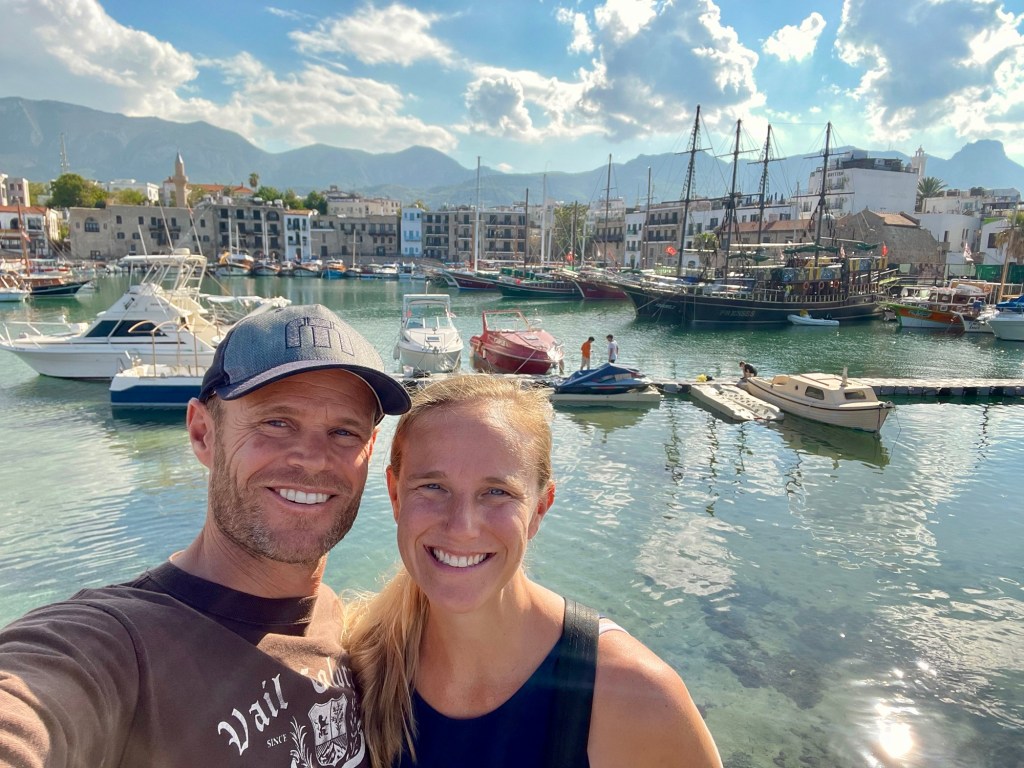
We took a minibus to reach the historic port city of Kyrenia/Girne. This city is known by two different names depending on if you are from Cyprus or Northern Cyprus. This wonderful historic port town really impressed us. Despite the upgrades and construction going on in the harbor we could imagine what the revamped port will look like when it reopens next spring. Our first stop was the Kyrenia Castle, which is a 16th-century castle built by the Venetians. The castle is in really great shape and it was really cool to walk through and picture ourselves back in time five hundred years ago. The top walls hosted great views of the city, harbor, and mountains beyond.
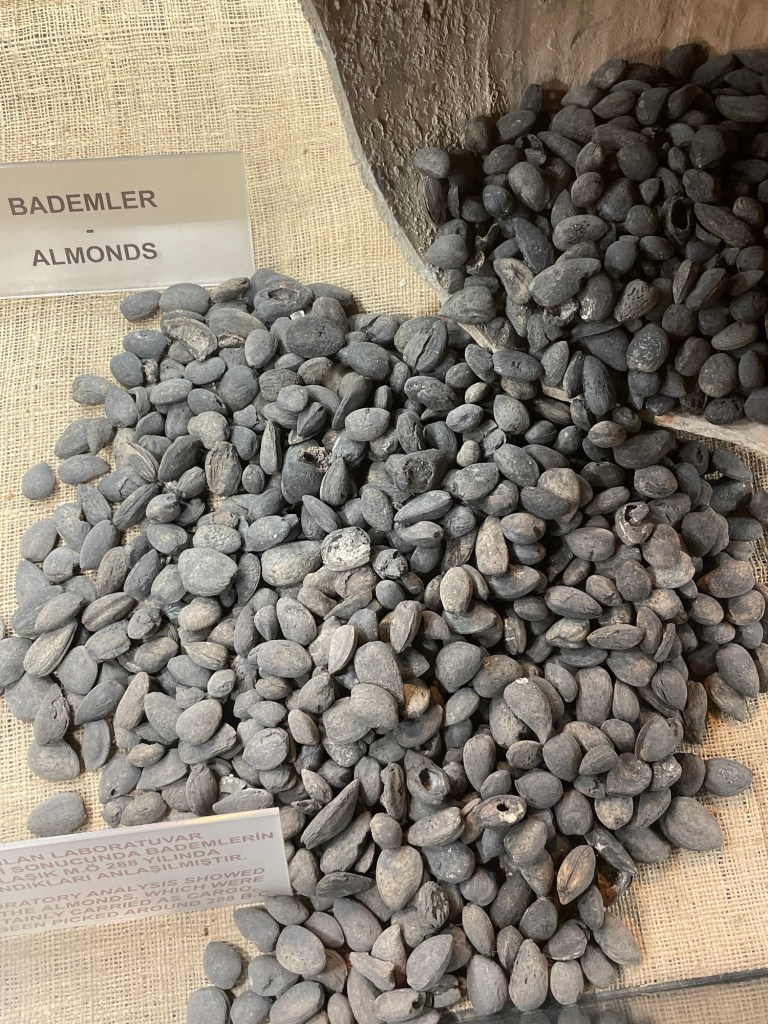
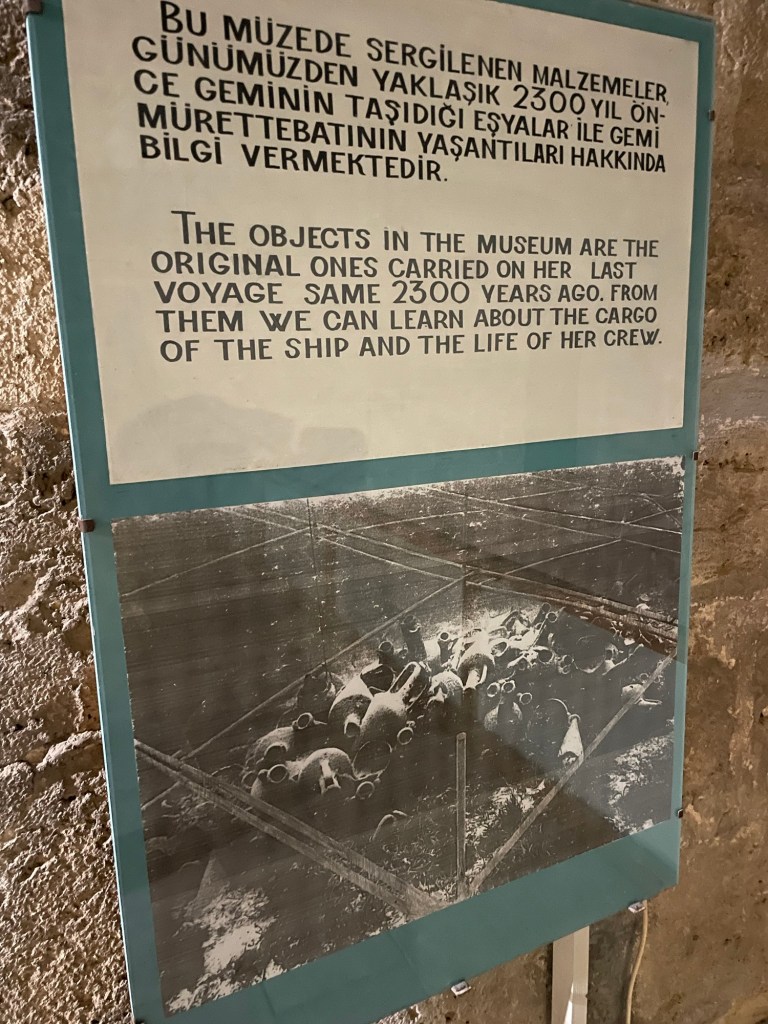
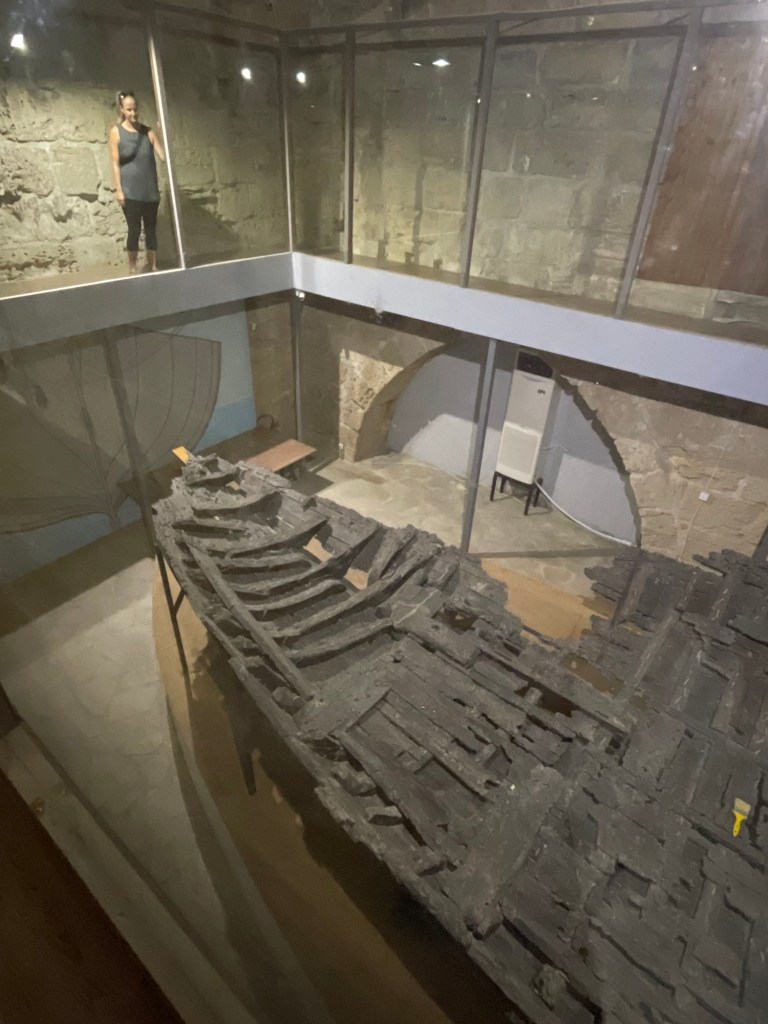
My favorite part of the castle was the shipwreck museum inside. In 1965 a scuba dive exploration team found the remnants of an old ship. After raising the ship from the sea floor and testing the ships and historical remains nearby, it is estimated that this ship dates back to the 4th century BC. This is one of the oldest vessels ever to be recovered with its cargo in such good condition. They found almonds and wine pots in nearly perfectly preserved condition from 2300 years ago!
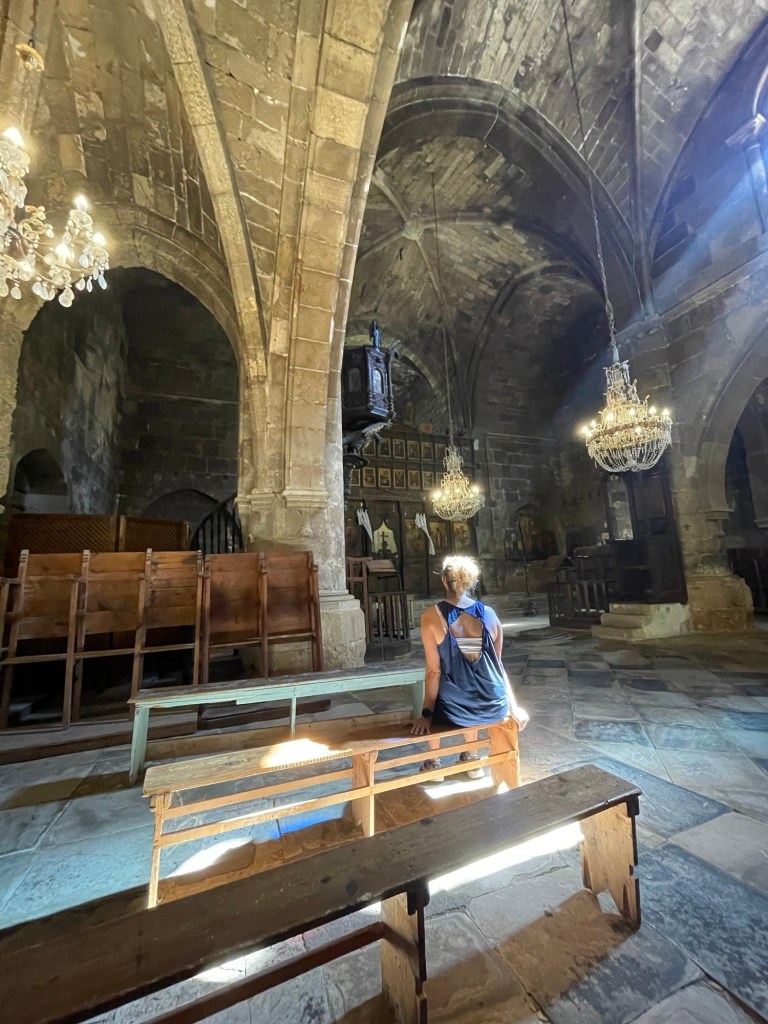
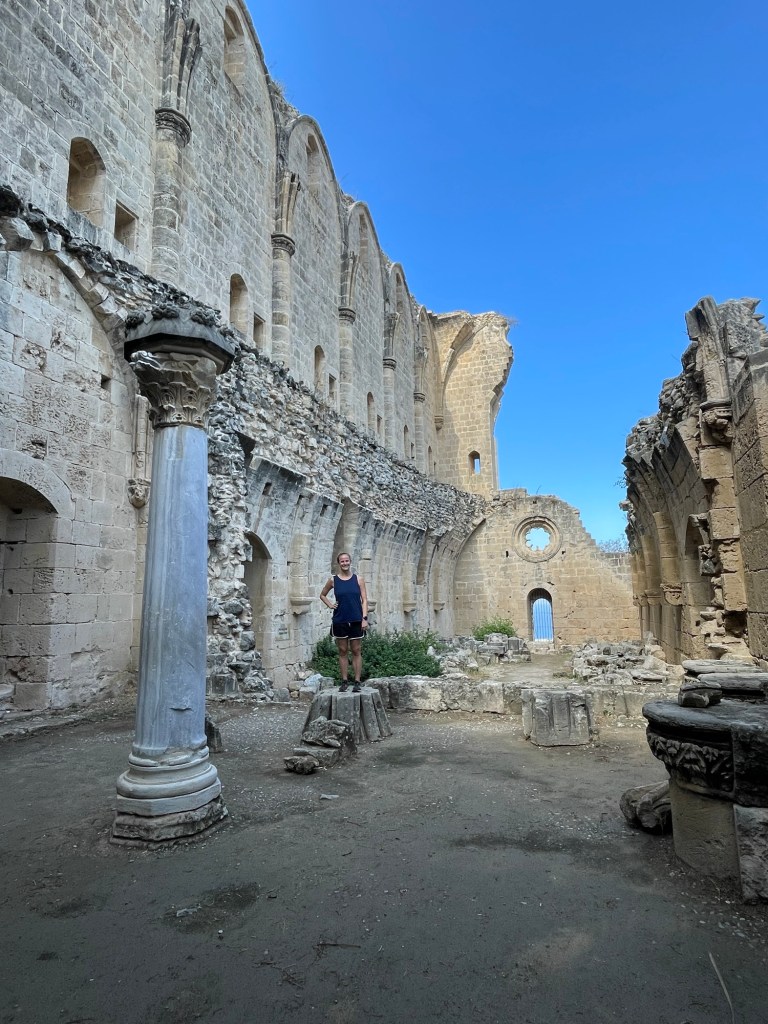
Our final stop in Cyprus was Bellapais Abbey, which we visited the following morning. This monastery was built in the 13th century on a hill overlooking Kyrenia. The inside of the monastery is beautiful, and it was nice to walk around the ruins. One of the rooms is now used as a concert hall and it apparently boasts amazing acoustics. We were not wowed by anything about this stop, but it was a nice piece of history. A couple of buses later took us back to Cyprus and then on to the city of Larnaca where we caught a late evening flight to our next stop, beautiful Georgia.
 Teri and Nate's World Adventures