We entered into Turkey across the land border in the far northeast of the country on the Black Sea. It was pouring rain the day that we crossed, and that really set the scene for the rest of our Turkish adventures. For future reference, November is not the best month to visit Turkey. It rains….a lot! We quickly jumped in a minibus, soaking wet with all of our luggage, and since there was limited room, Nate was sitting on a small plastic stool that the driver placed in the aisle. Although the drive along the Black Sea coast was beautiful, we were both grateful when we finally reached our destination for the next couple of days, Trabzon. We read that this is a picturesque and authentic Turkish city, and nearby is the Sumela Monastery which is a beautiful and interesting landmark.
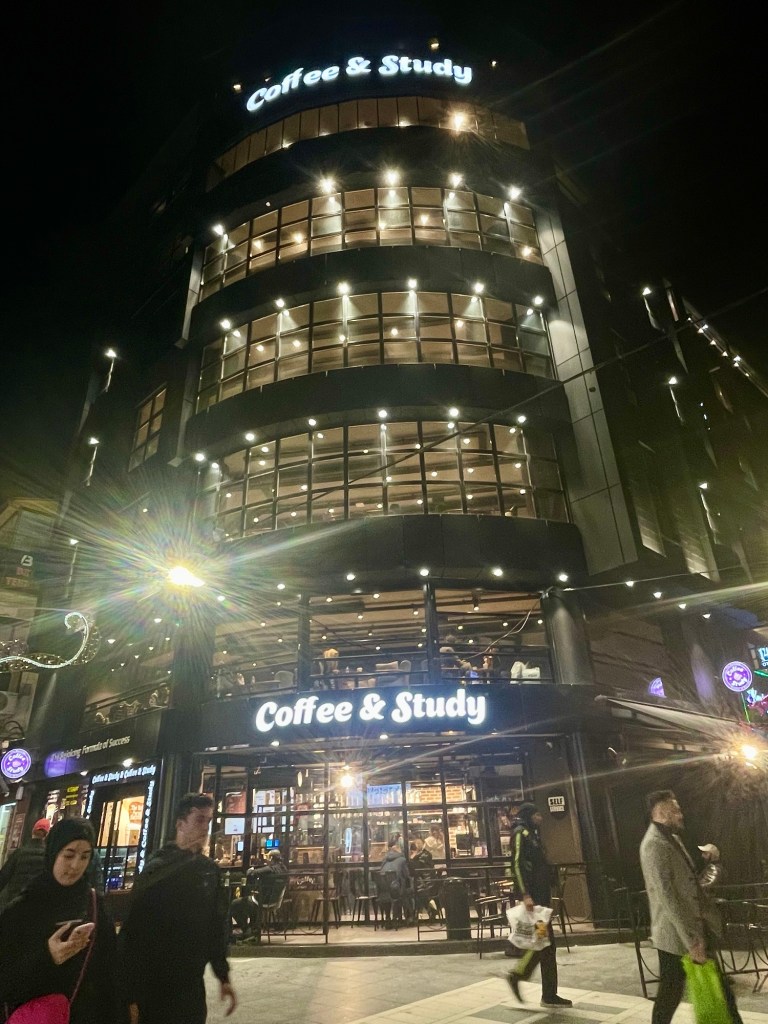
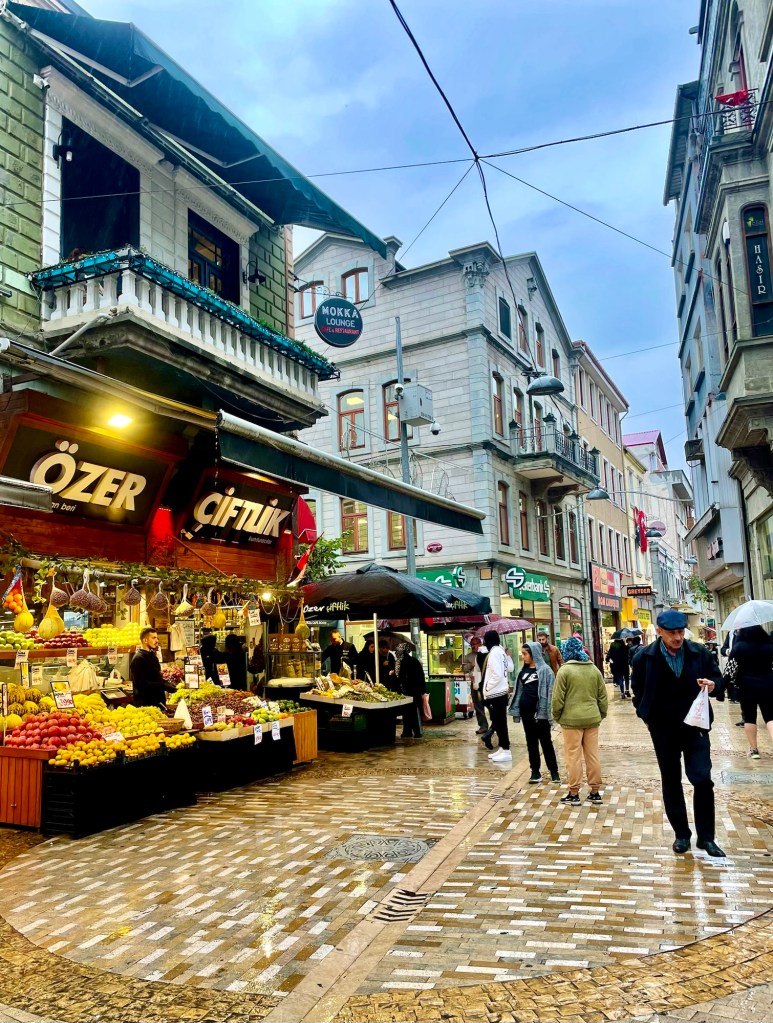
Our bus dropped us off at a mall outside of town, so we were left with the task of trying to figure out where we were, get money, and find a way to get into town. After asking for some assistance we managed to find the ATM, and located a minibus that would bring us to the city center. From there, we began walking through the cobblestone streets of the central village toward our hotel. What we noticed first was that many of the streets are pedestrian-only walking and shopping streets with quaint restaurants and little shops. It is a really cute and historic downtown! After dropping our bags at the hotel, we wandered back out for dinner and found a cute and unique family-run restaurant with outstanding reviews. They have a daily menu of around eight items, and you can choose three to four items for dinner. The menu changes daily, and the food was so good that we came back the following night as well!
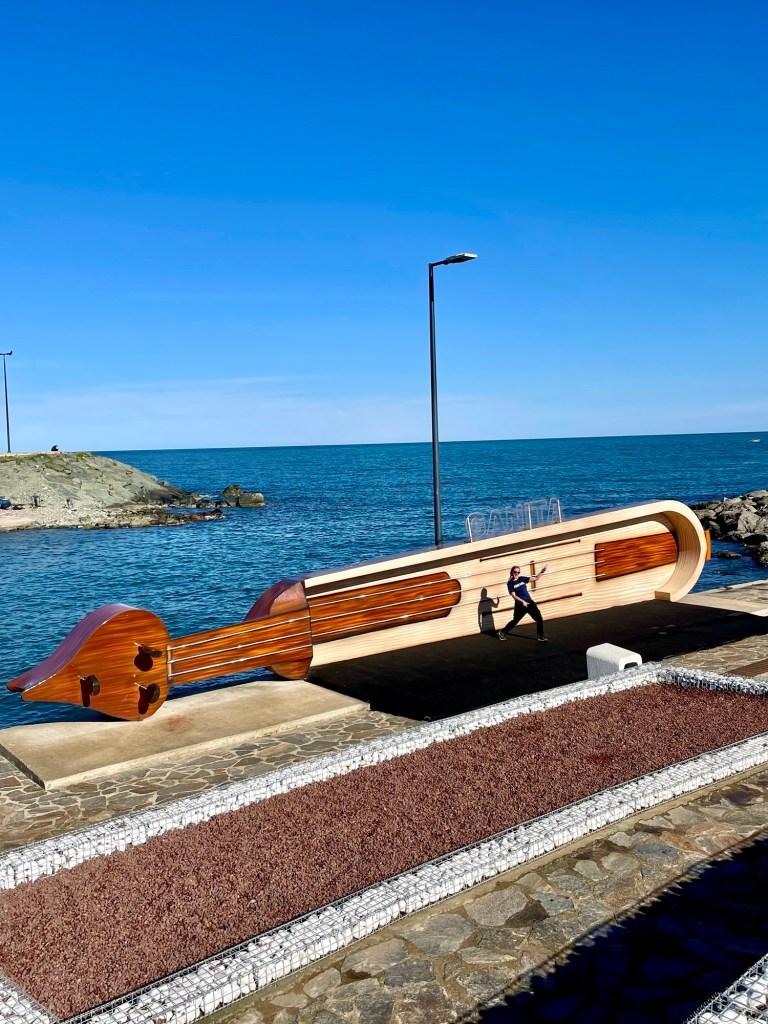
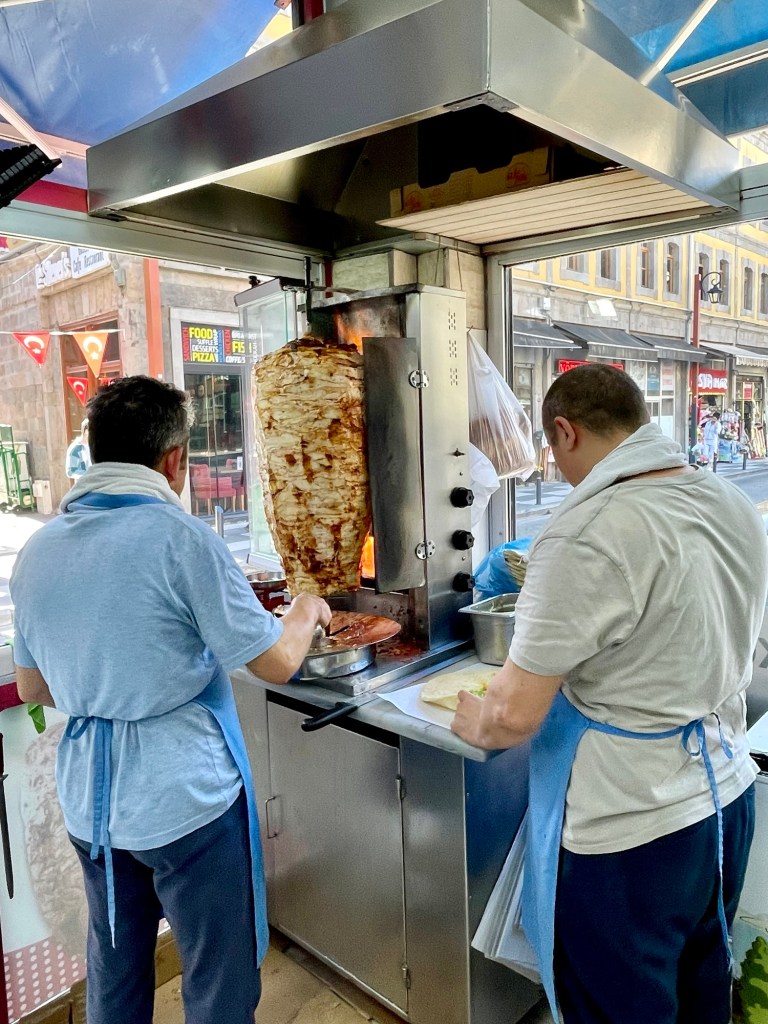
The following day our goal was to go up into the mountains to visit the Sumela Monastery. The draw of this particular Monostery is that it is built into a steep cliff and looks like it is actually hanging off the rock wall. After seeing pictures, we decided it was somewhere that we wanted to visit. We found a minibus that would take us up there, wait an hour, and then return to Trabzon. Each way the drive was around one hour. We had read online that the entrance fee was 150 lira (6USD), however when we reached the entrance to the Monastery we found out that the entrance for foreigners had increased three fold this year to 450 Lira (18 USD), while the entrance for locals remained just 60 Lira (2 USD). Also, to make it worse for foreigners, the 60 Lira allowed locals to get into all National historical attractions in the country for one full year, while foreigners must pay 3000 lira for an inclusive ticket, which would only be valid for two weeks.
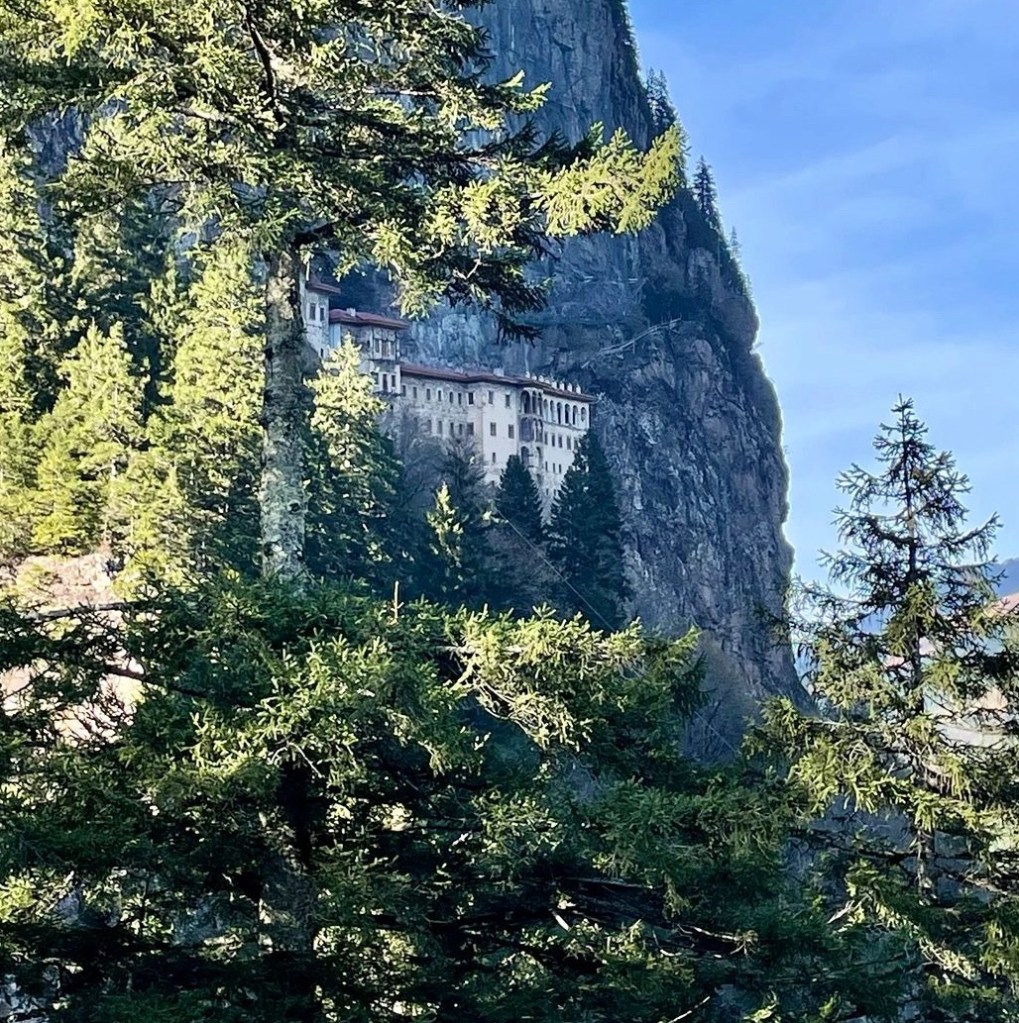
I completely understand charging tourists a bit more, but nine times the amount, and then we were going to have to pay thousands of Lira more for the other attractions in the country during our stay, felt quite unfair and unwelcoming. We were really turned off by this first interaction in Turkey and were offended to be charged a government entrance fee to a Christian Monastery (particularly when the Ottomans killed or forced all the Christian monks to escape to Greece during the Armenian Holocaust). We also visited countless Monasteries and religious sites in Georgia and Armenia and never were asked for an entrance fee. So, we decided to not pay to go inside, especially since we knew that there would be nothing authentic left inside after the Armenian Genocide. Instead, we just hiked around, took pictures from the outside of the complex, and bused back to the city.


The following day we had a long travel day. We first took a flight from Trabzon to the capital of Turkey, Ankara. Then we quickly took an airport bus to the regional bus station where we had to quickly rush into the station to buy two tickets for the bus leaving for Gorme (Cappadocia). We hopped on one of the last buses with only two minutes to spare before it departed. It felt like we were on The Amazing Race. From Ankara, we had a long bus ride to Cappadocia. Long-distance buses in Turkey are the way to travel. They are so nice and even have an attendant on every bus. Instead of four seats, there are only three seats across making a two-plus-one arrangement, which allows for bigger seats with more room. In addition, the bus attendant rolls down the aisle and serves complimentary beverages and snacks during the journey. Bus travel in Turkey is quite a luxurious experience compared to most countries.

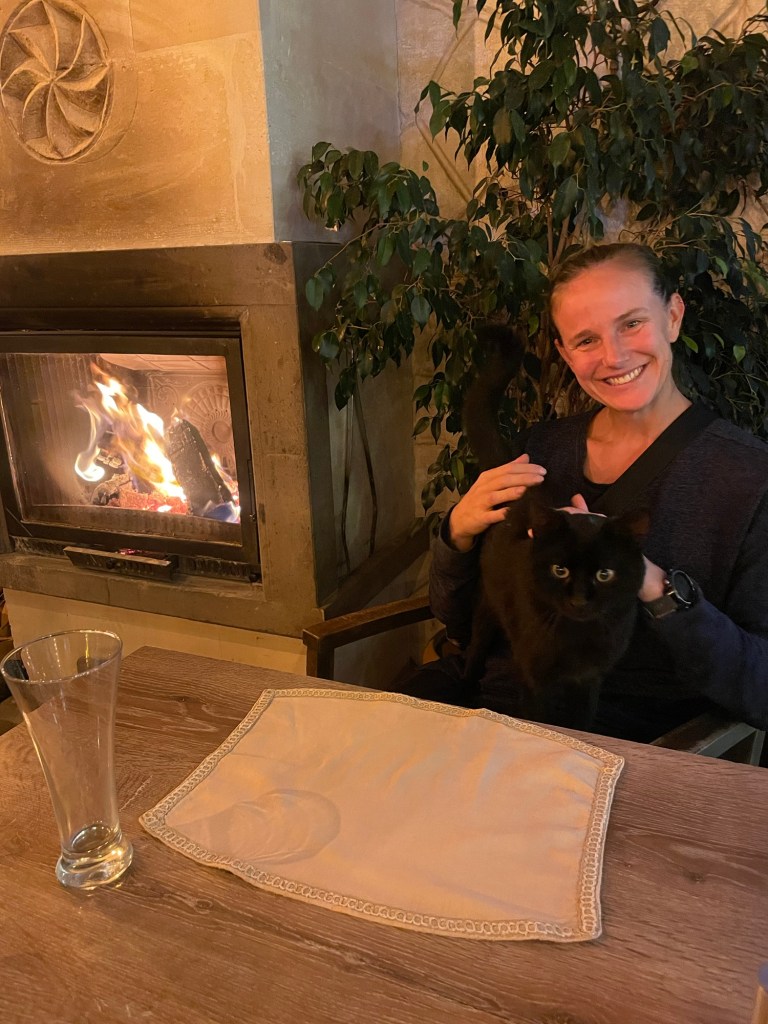
We arrived in Cappadocia in the late afternoon and it was raining, which was becoming a common weather theme for our time in Turkey. We didn’t want to hike up the hill to our hotel in the rain so we stopped at a restaurant for a late afternoon drink and a snack. This was well warranted since our crazy travel day forced us to skip lunch. We stumbled upon a really nice restaurant and managed a table right in front of the wood-burning fireplace. We were also joined by a very friendly and cozy cat who made his home on my lap for a while. When the rain stopped, we made our way up to our cave hotel. Cave hotels are a popular type of accommodation in Cappadocia.
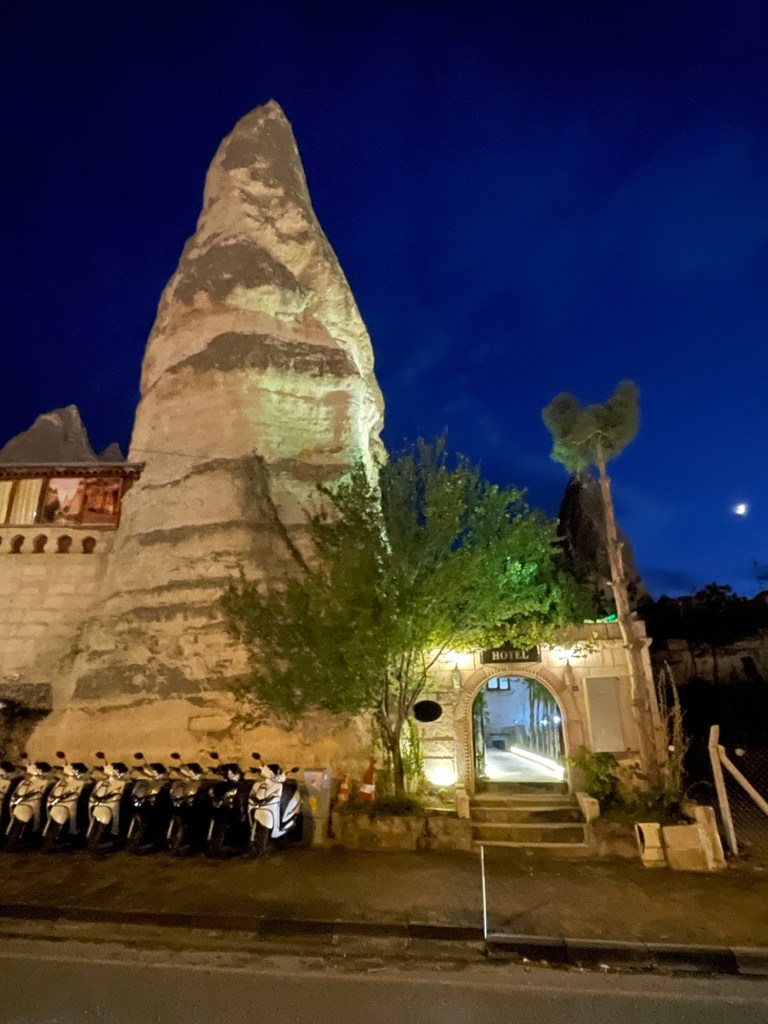
These hotels are essentially carved into the rocks and most seem to have a rooftop terrace for breakfast from which guests can take in the hot air balloons floating by each morning. Cappadocia is famous for two main reasons, the interesting cone and mushroom-shaped fairy chimney rock formations that cover the landscape, and the hundreds of hot air balloons that fly above these rock formations each morning. Leading up to the trip, I was saving money (these balloon trips are not cheap) to take a hot air balloon ride, as this was a much-anticipated experience on our year-long trip. That evening, we searched around town to find a balloon company that we liked and trusted for the following morning.


We woke up the following morning very excited. We were picked up in the dark at around half past six for our sunrise balloon ride. We drove out to the field where we would launch, and we were provided a small boxed breakfast to eat along the way. We waited in anticipation, but as we reached our balloon the sun was beginning to light up the sky and we noticed it was quite foggy and the balloons were not set up or inflated. We sat and waited for thirty minutes and were eventually told that the government had called off all the balloons for that day saying it was too foggy with a low cloud ceiling. I was gutted.


We purposely shifted our plans to arrive during what we thought would be the best weather and chance to balloon. We knew this might happen, so we planned to spend several days in Cappadocia to have some insurance in case of bad weather, so I just told myself perhaps another day. Well, unfortunately for us, every other day that week was too windy to fly. We had just caught Cappadocia during an extremely bad stretch of weather. During our three-day visit we did not see the balloons in the air, nor did we have the opportunity to fly in a balloon ourselves. We settled on the fact that we will just have to come back again someday to check this one off our bucket list.


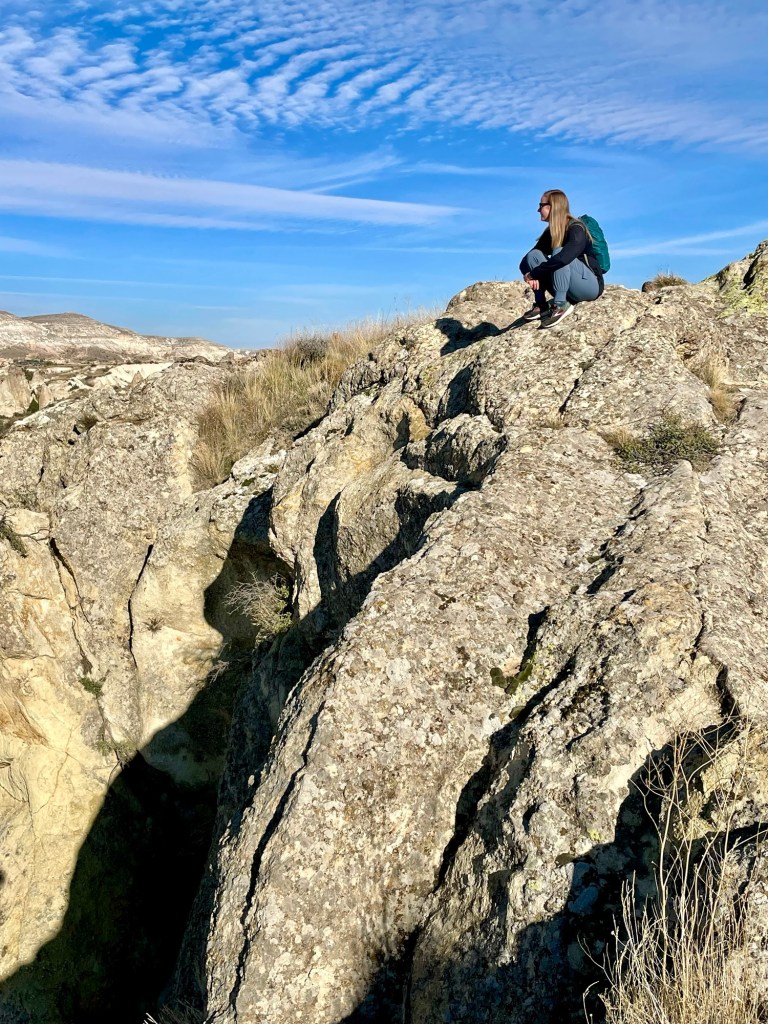
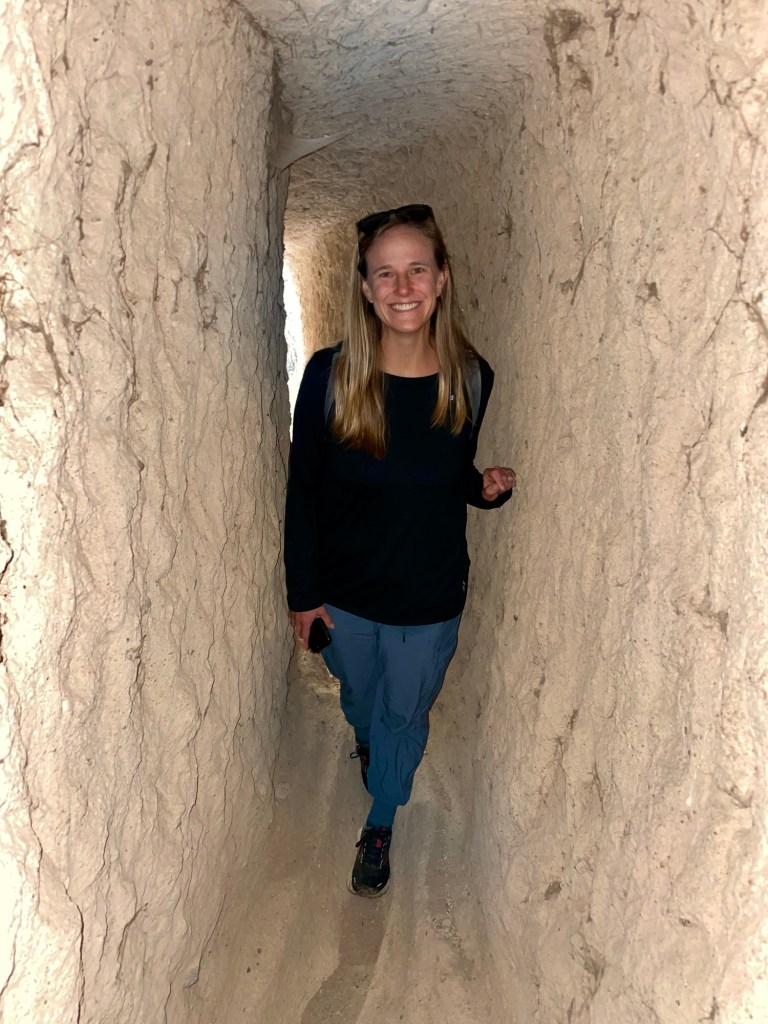
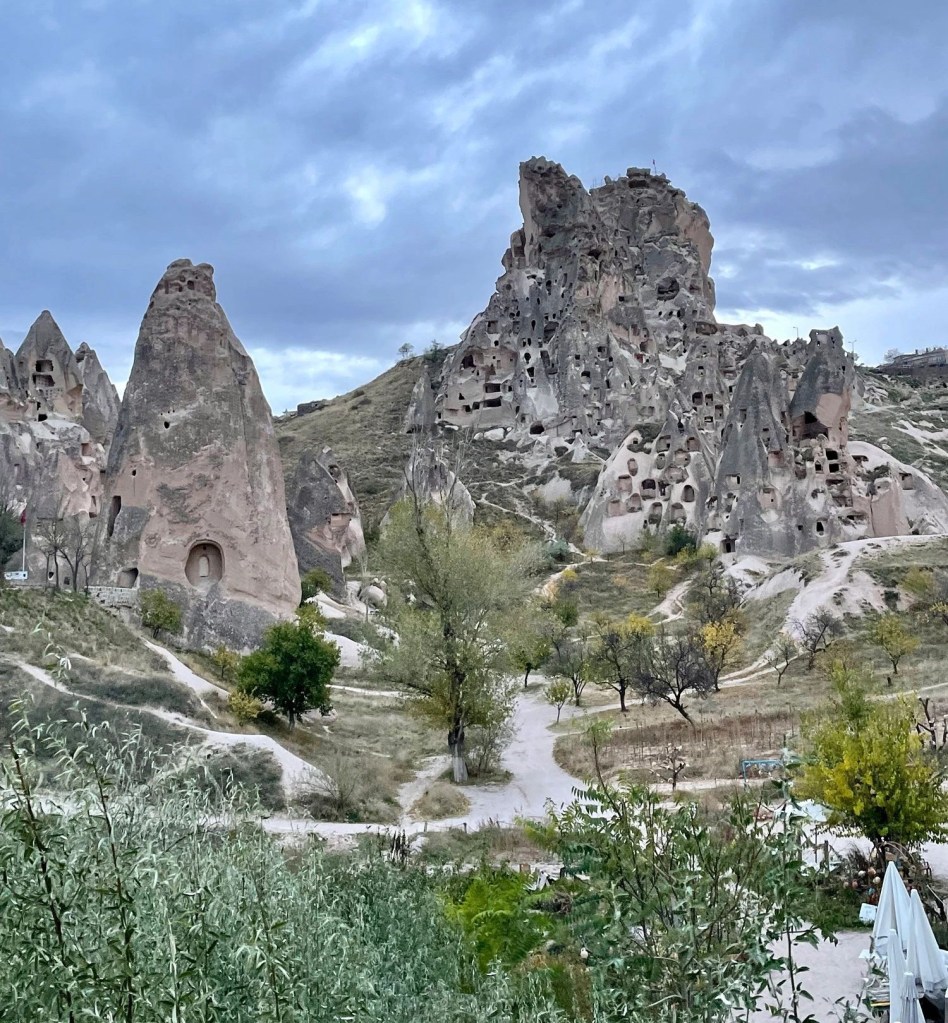
Setting aside the balloon experience, everything else about our time in Cappadocia was amazing. The first day we decided to make our own tour and hike in the beautiful rock landscapes. We hiked up past the Goreme Open Air Museum (going inside didn’t seem worth it to us) and up into the Meskendir Valley. The landscape of Cappadocia is incredibly unique with spires of rocks of all different shapes, the most famous they refer to as fairy chimneys. The rock is very soft and easy to carve and at many points in history, people made their houses inside of these rocks. Walking around we found houses, caves, storage facilities, tunnels, and even churches carved into the rock. It was like a giant playground and I couldn’t help but think of the Flintstones, or Dr. Seuss’s house. We climbed on everything and took tons of pictures.


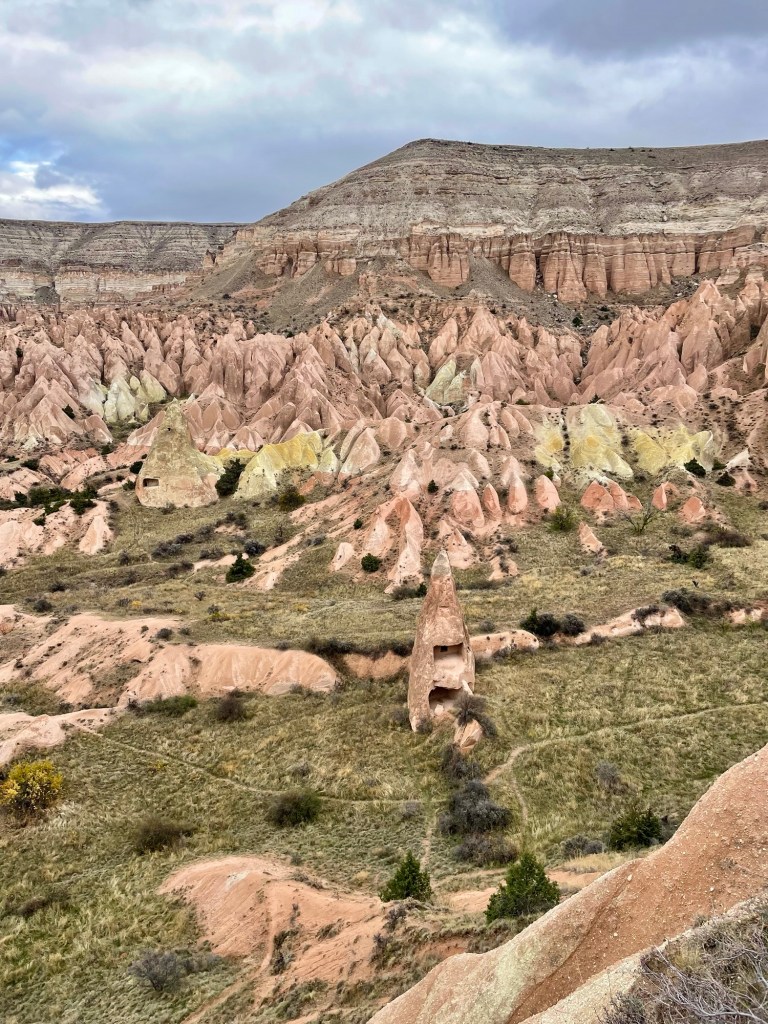
Our plan was to hike up into two famous areas called the Rose and Red Valleys as well, but we were having so much fun exploring that we moved slowly and only made it through one of the two valleys. The sun began to set and so we climbed as high as we could to catch an amazing sunset view. It was spectacular, and we were able to see the Rose and Red Valleys lit up with color. We noticed a popular activity is to ride horses up to a sunset point, or take cars or jeeps up to watch. We liked that we did it on foot on our own to avoid the crowds.

Since the balloons were already canceled for the following morning, Nate and I decided to do our own sunrise tour and woke up early to hike to a sunrise point. We were joined by a friendly stray Turkish dog and he took in the sunrise with us. The views were spectacular and it was lovely to see the colors changing as the sun peaked out from behind the rocks. The sun always adds so much more color to any landscape. On the way back down, we found an interesting small church inside of a large fairy chimney, which we decided to explore before having a lovely breakfast on our hotel rooftop.

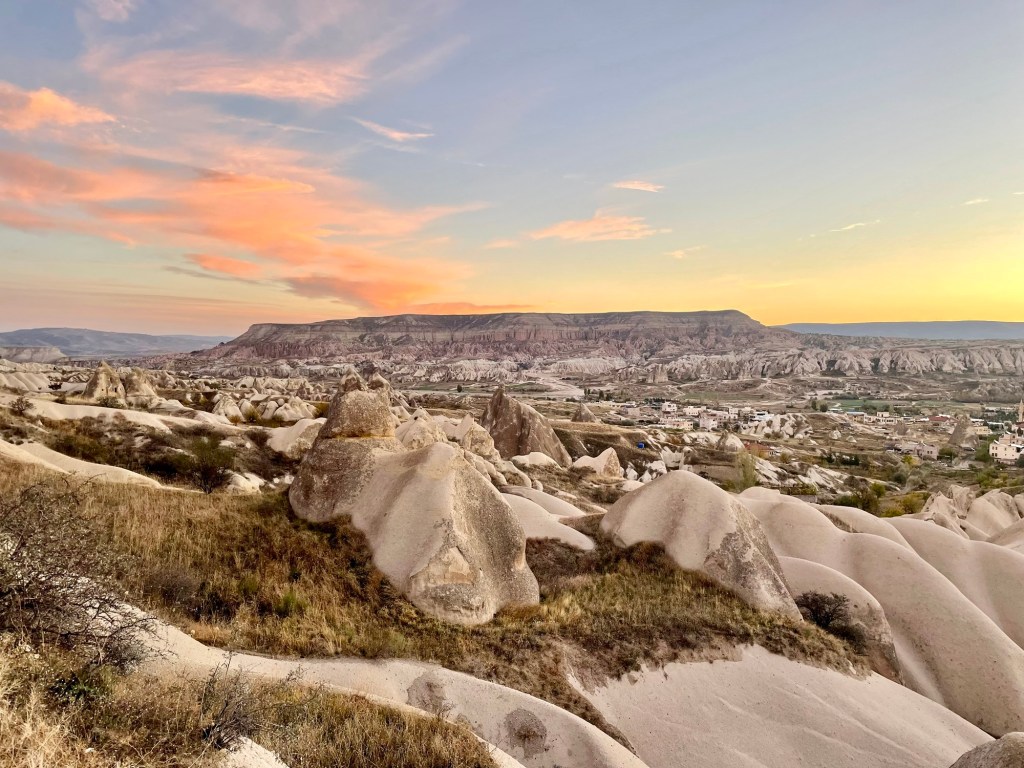
There are two popular day tours offered in Cappadocia called the Red Tour and the Green Tour. The Red Tour stays more in the immediate area and consists of sites you can do on your own, while the Green Tour goes much further distances away to explore harder-to-reach spots. So, since we couldn’t ride in the hot air balloons, we signed up for the longer Green Tour to see as much as we could in the greater region. Our first stop was a place called the Goreme Panorama, which was a viewpoint looking back over town. It was really nice, but we came upon a lot of similar views during our hike the day before, as well as at our sunrise viewpoint.

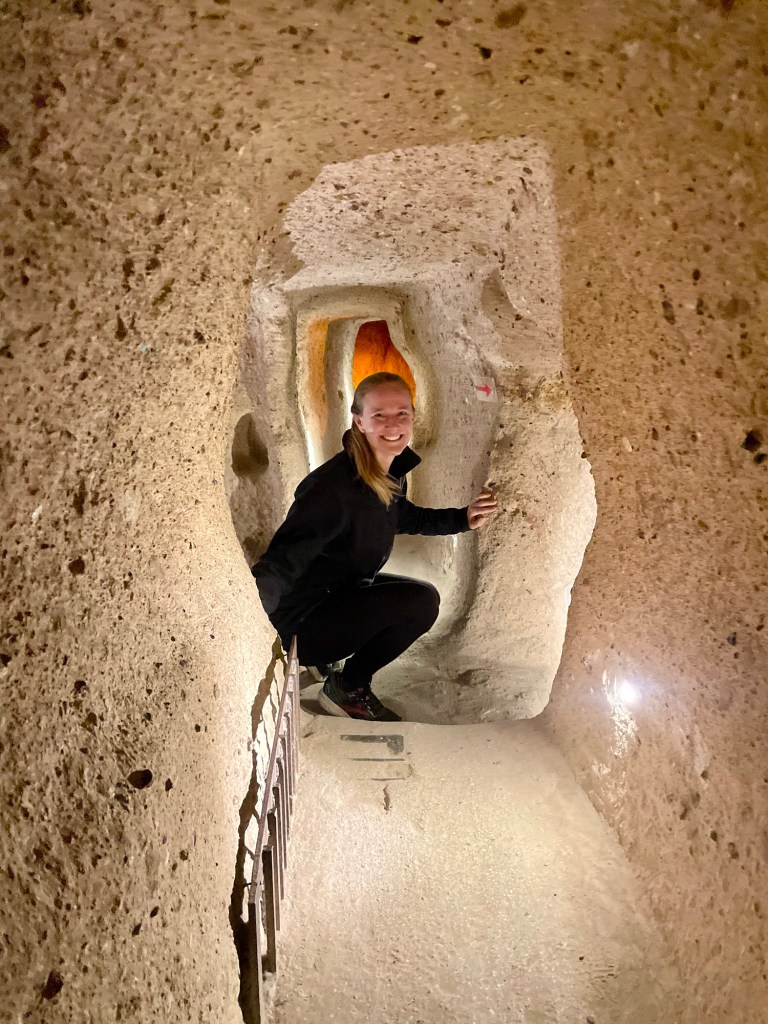
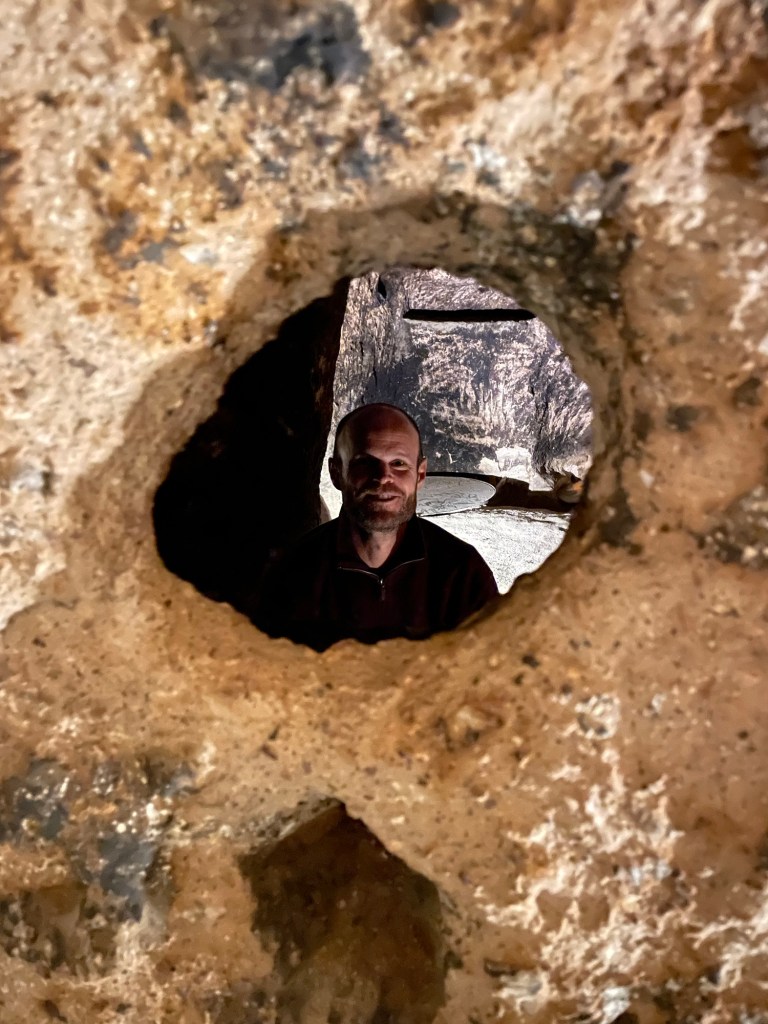
Our second stop was the Keymakli Underground City, which I believe is the most interesting stop on the Green Tour. There are multiple underground cities in Cappadocia and they believe that even though these cities are many kilometers apart, they might be interconnected by underground tunnels. The underground cities were used as safe havens for Christians back in the times when they were persecuted by the Romans and then later on the Arabs.

When they were attacked, they would move everyone underground and live there for months at a time if necessary. The top levels were used for animals and staircases and tunnels led down at least eight or nine levels under the ground. There were housing areas, kitchens, churches, and even a winery. They could live up to six months underground before the air became too thin and they needed to come up. It is truly remarkable!
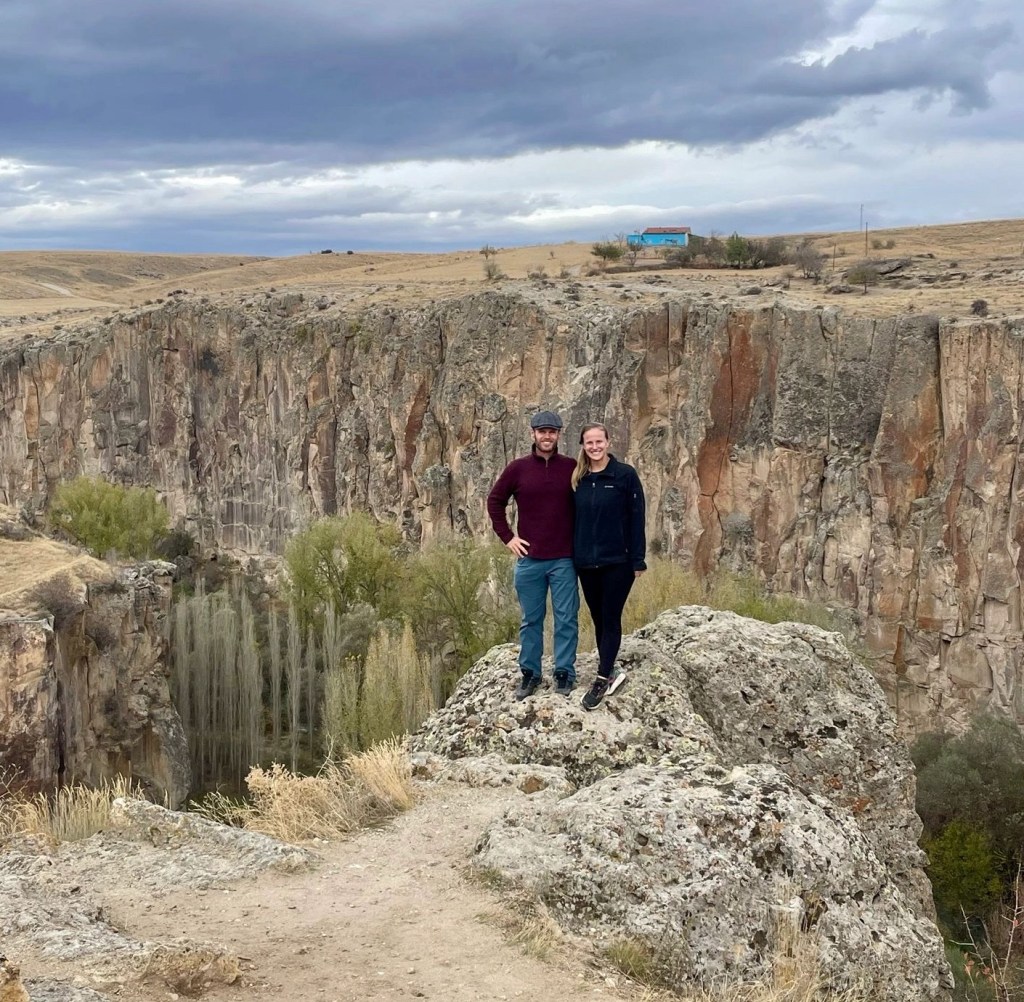
Our third stop on the tour was the Ilhara Valley where we hiked along a river that led us to our lunch destination. Many restaurants set up cabanas with tables on them which were built on stilts over the river. It is a peaceful place to eat, but the food was not exceptional. It seems like they just try to run tourists through by the masses, and everyone who does the Green Tour eats at one of the restaurants along this small river.

The next stop was added by our tour director and was a viewpoint looking down over a canyon. I don’t even know what this stop was called, but it was a beautiful viewpoint looking down into the valley. We stopped here for some amazing picture-taking opportunities and for tea before moving on to our last stop outside of Goreme called Lake Nar. Lake Nar is a large beautiful lake in the center of a long-extinct volcano.

Our final stop that was part of the tour was to visit a “tourist gift shop” which featured many homemade foods and remedies. It was an interesting, yet incredibly touristy experience. A salesman brought us back to a sales display table and let us try a lot of their roasted nuts, Turkish delight, menthol products, and even coffee made out of nuts. We don’t usually buy things at shops like this, but their food and coffee were really quite good!

On the way back into town, the other Indian couples on our tour convinced our guide to stop at the Uchisar Castle. This sixty-meter-tall castle is carved into a giant rock and consists of many rooms and tunnels. It is said that in Byzantine times, around one thousand people lived in this rock formation. The government apparently has deemed it no longer stable, and when we were there they no longer let people inside.
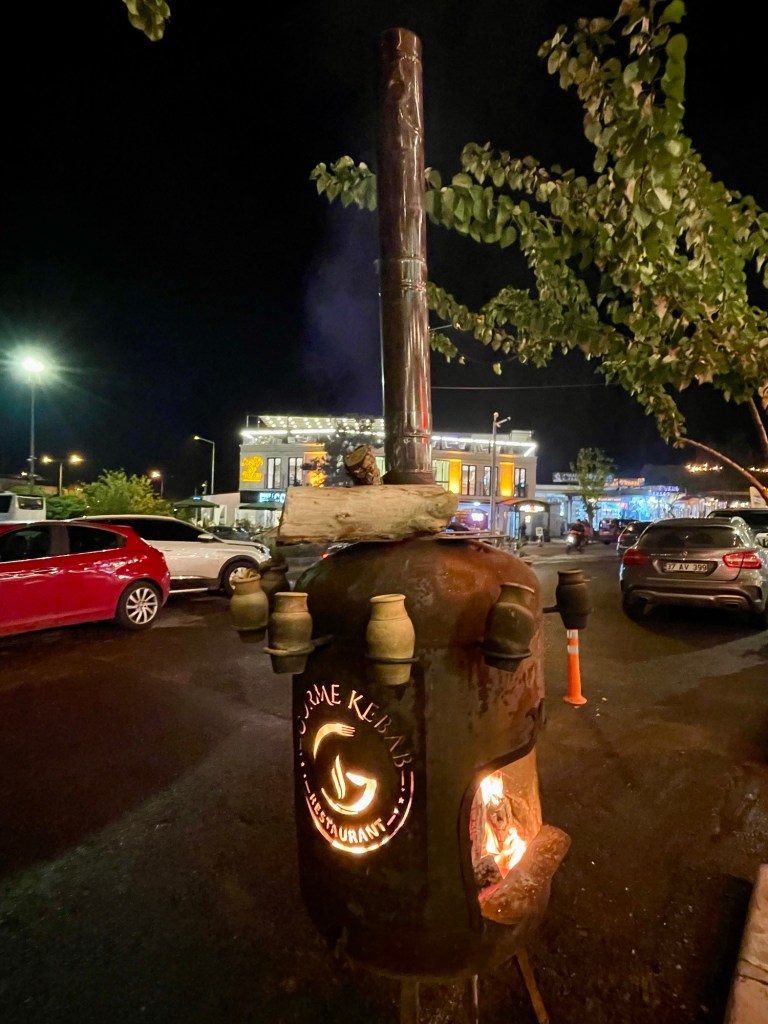
Walking around Goreme in the evening was a great experience, and it felt like a small ski town. It boasts many interesting restaurants and there are even fire pits out in the street. We enjoyed some hot chocolate while walking around before choosing a restaurant for dinner. I really loved this quaint town even though it was a bit touristy.
On our final day, with the balloons canceled again, we decided to go for another hike and finally make it to the Rose and Red Valleys that we weren’t able to reach on our first day. This day went very much like the first where we just wandered the paths of the park, and climbed on anything that looked interesting. We started in the Sword Valley, went up through the Rose Valley, and then back through the Red Valley.
One of the most memorable spots on this walk was something called the “Columned Church” on maps.me. We went into the carved-out entrance way and at first, we didn’t see anything special. When we climbed a short set of steps we entered an amazing church cathedral room that indeed has columns carved out of the rock and vaulted high ceilings. We were dumbfounded at how much work had gone into carving this church out of the rock.


In between the Rose and Red Valleys, we arrived at a viewpoint where you could see both valleys and it was breathtaking. This landscape is truly unique and I will remember it for the rest of my life. It was mid-November and we were very cold, so we found a small cafe with a fire pit and a view to warm up and drink some hot cocoa. We exited the Red Valley and enjoyed more spectacular views along the way.

Our final stop in Goreme was to visit the Women’s Co-op for dinner. We tried every day to eat at this nonprofit restaurant, but they closed very early and we always missed their opening hours. This place is special because local women cook food every day and serve it by the plate for a very reasonable price. Then, all the proceeds go back to the co-op. Lots of love goes into the food and we saw women rolling tiny manti (dumplings) by hand for dinner the following night. It was a very cool place. After an early dinner, we caught an evening bus to the nearby town of Konya.


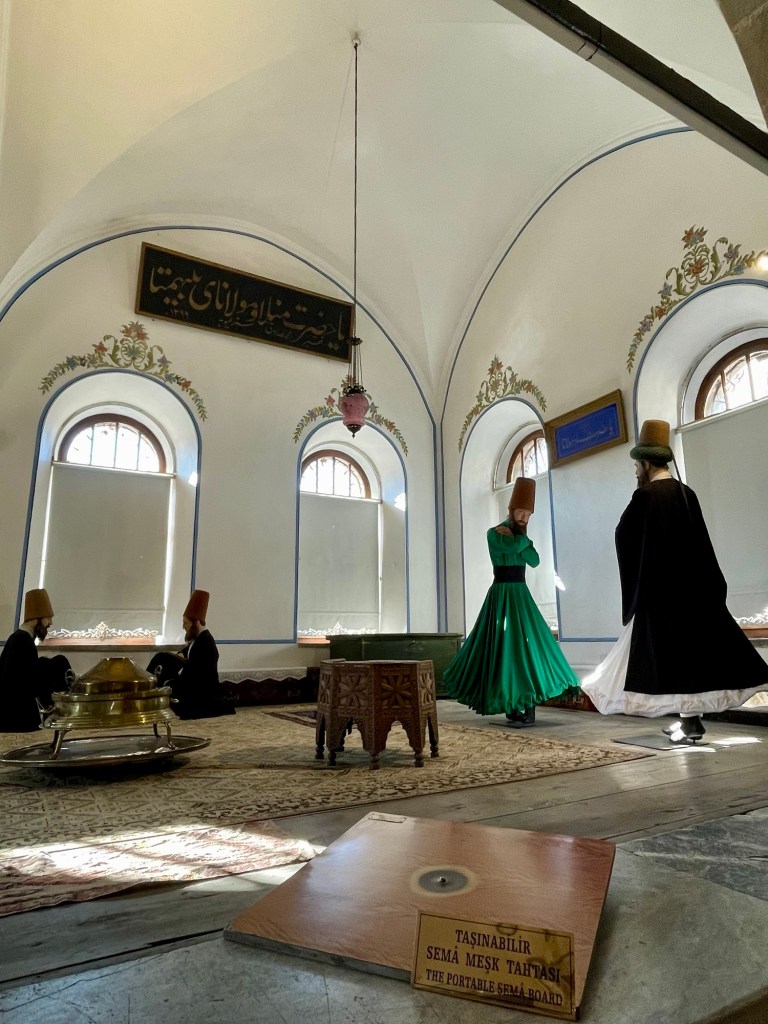
Konya is the religious capital of the country and the home of Rumi and the whirling dervishes. Rumi is a renowned thirteenth-century poet whose poems and quotes are still famous today. During his life, he moved to Konya and started the order of the Whirling Dervishes. Essentially this practice of Sufi whirling is a form of meditation where the practitioners can turn in circles to reach a trancelike state. There are very specific rituals set around this type of prayer and is a way of praying to Allah. The orders have a hierarchy of jobs based on devotion and demand full devotion from its members. Konya is one place where you can see the dervishes still practicing this old traditional whirling, unfortunately, they only do this publicly once a week and we were not there on that particular day.

While in Konya, we visited the Mevlana Museum which is a religious pilgrimage spot, a museum for the whirling dervishes, and the resting place of Rumi. We saw his grave, learned about the order of the dervishes, and even saw very old Q’rans with amazing art inside of them. This was a really cool stop even though it was only for a night. After the museum, we took the train back to the bus station and travelled to the resort city of Antalya on the Mediterranean Sea.

While we were disappointed at the start with Turkey, Cappadocia, and Konya both captivated us and have left us with some great memories.
 Teri and Nate's World Adventures