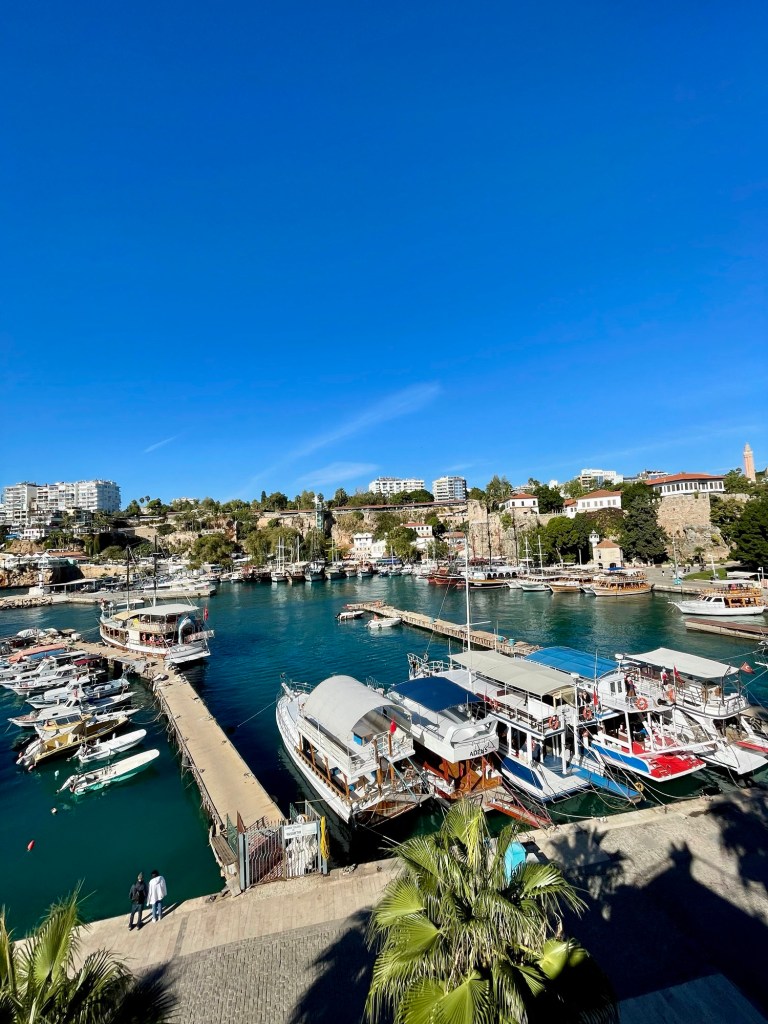
We arrived in the beautiful Turkish Riviera resort town of Antalya on a bus from Konya and were greeted by a really cool historic Mediterranean City and harbor. The local train into town was very easy to use and dropped us right at the gates to the Old City. When we arrived, we had not yet booked any accommodations since this was late fall and the start of the offseason. So, our first order of business was locating a coffee shop with internet to find a place to stay. We found a really nice apartment in the middle of the old district for a reasonable rate and they were happy to accommodate us even at the last minute. This apartment turned out to be a gem, and even had a washing machine which helped tremendously with our laundry. In our travels throughout Georgia, Armenia, and Turkey we found many one-bedroom apartments on booking.com, and our offseason travels typically provided us great deals with small kitchens for breakfast and laundry machines.
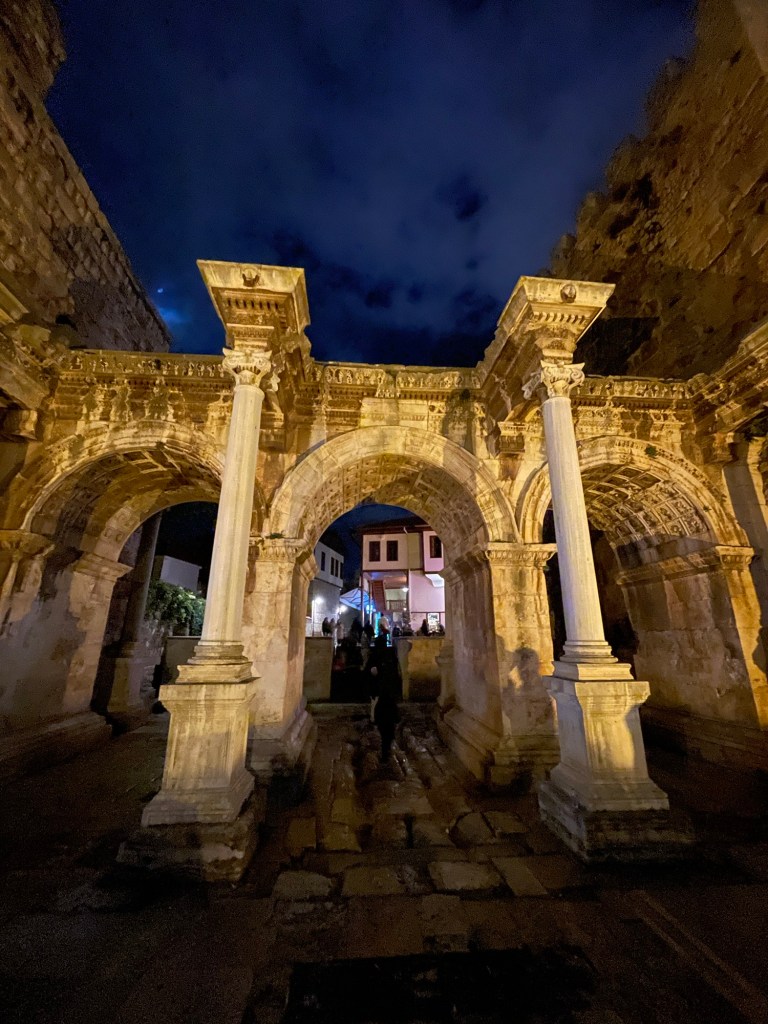
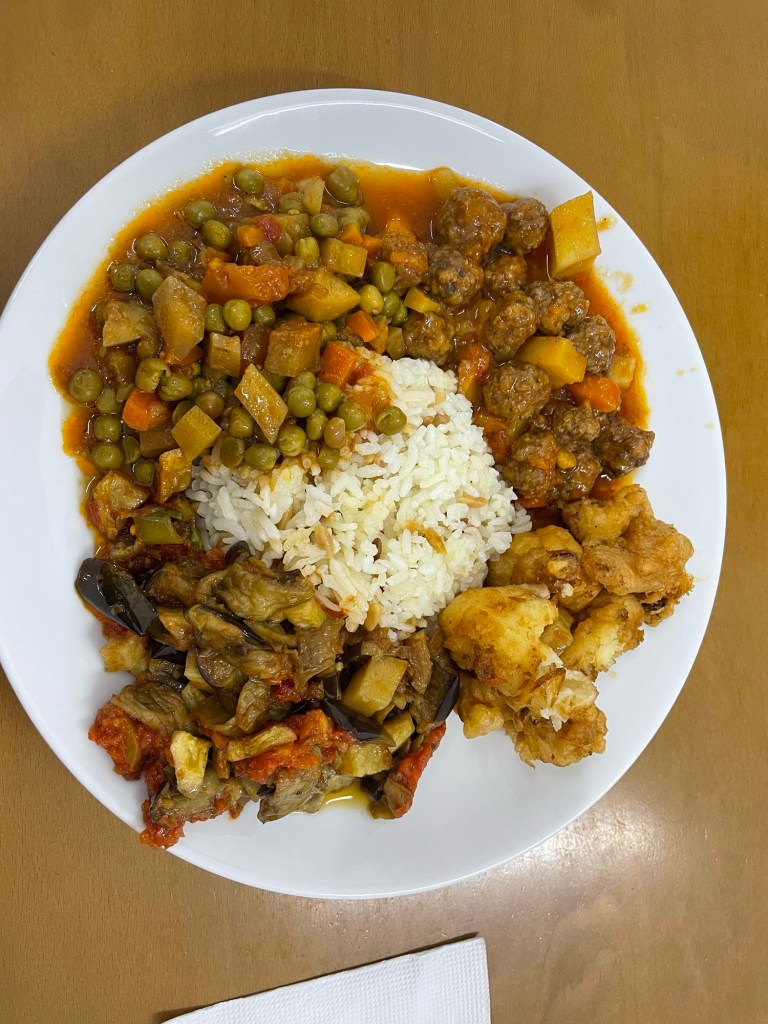
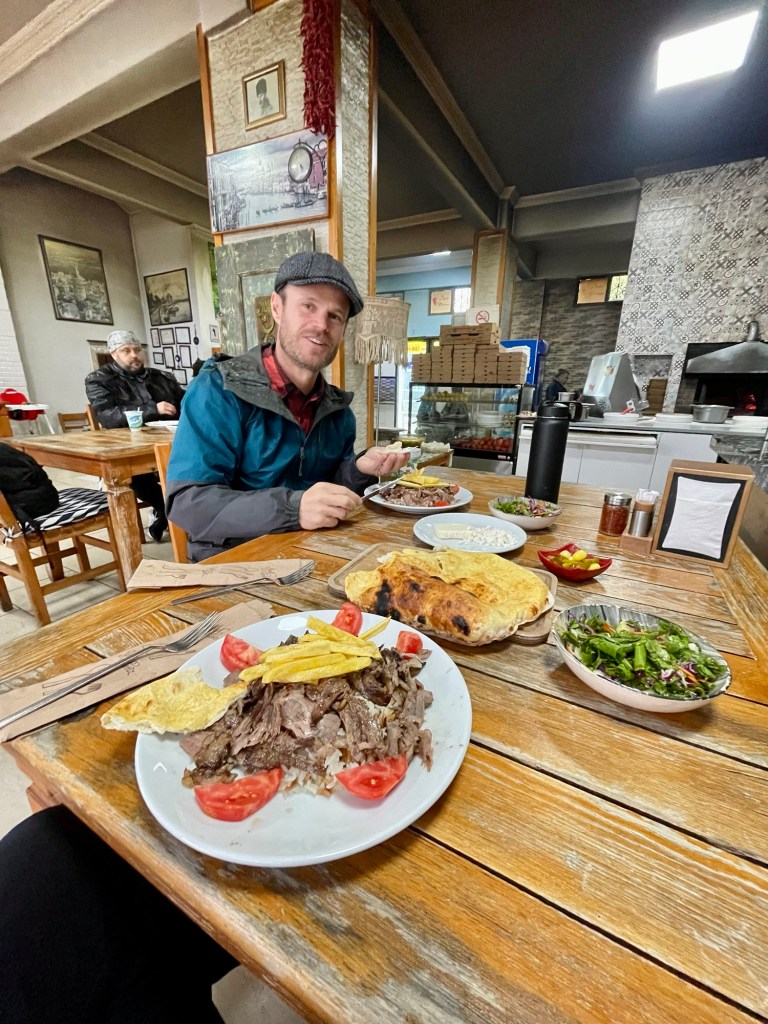
Walking through the 1800-year-old Hadrian’s Gate, we entered the Old City and it felt like we were taken back in time. Inside the gates of the Old City, we found tons of restaurants and nightclubs, however, these all seemed overpriced and touristy with poor reviews online. The highest-rated restaurants and places where we found the best food seemed to be right outside the gates, which is where we ended up for nearly every meal in Antalya. In a similar fashion to what we found in Trabzon, we found a restaurant here that makes about eight dishes each day where you choose any four of the things they had made for your meal. Every day the menu changes, and this type of restaurant became our favorite choice when available during our travels throughout Turkey.
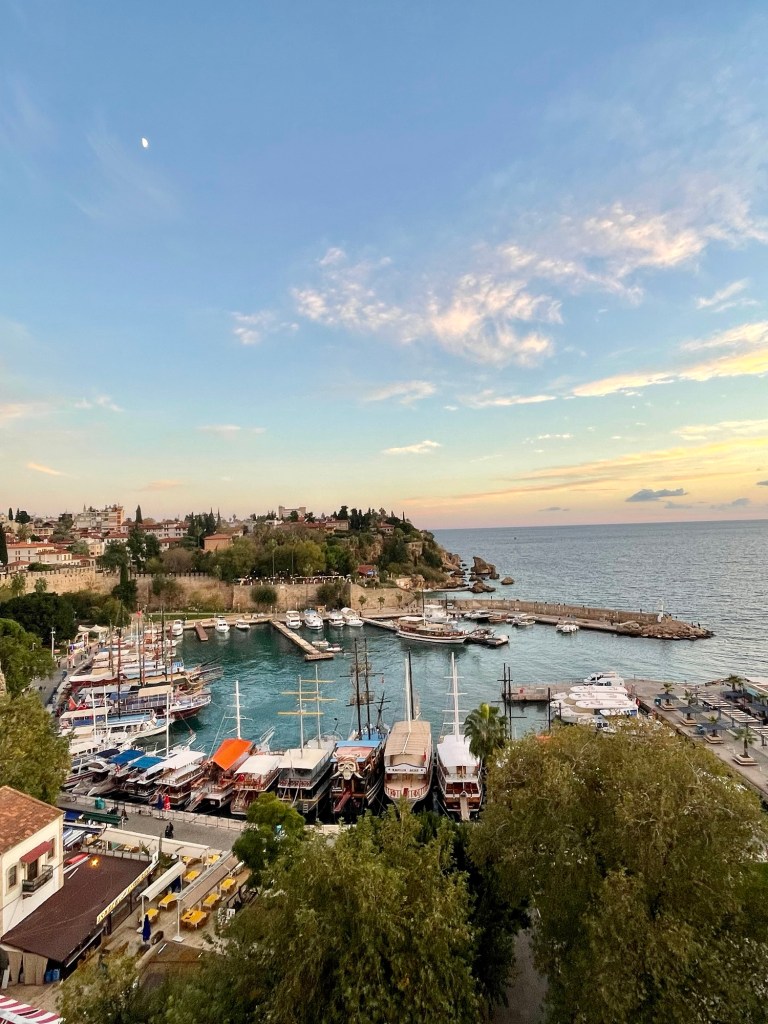
The following morning brought clear skies and a crystal blue Mediterranean Sea. We walked around the small quaint walking streets of the Old City and enjoyed a nice lunch overlooking the harbor. We connected and booked in with a boat tour that would take us on a two-hour cruise for a very reasonable price with the main attraction being the Lower Duden waterfalls. We cruised up the coastline, which is made of steep rock cliffs with small waterfalls running down, but when we reached the Lower Duden waterfalls we were left speechless.

Duden waterfall is particularly special due to the amount of water that falls over the rocks cliff and straight into the sea. With a beautiful clear day and the late afternoon sun shining perfectly on the falls, we were blessed with a rainbow across the falls. Our boat cruised nearly right up under the falls where we could take some amazing pictures. Then, we saw a lovely sunset as we returned to the harbor. Upon returning to the harbor we found a nice place for drinks as we watched the sun set over the ocean.

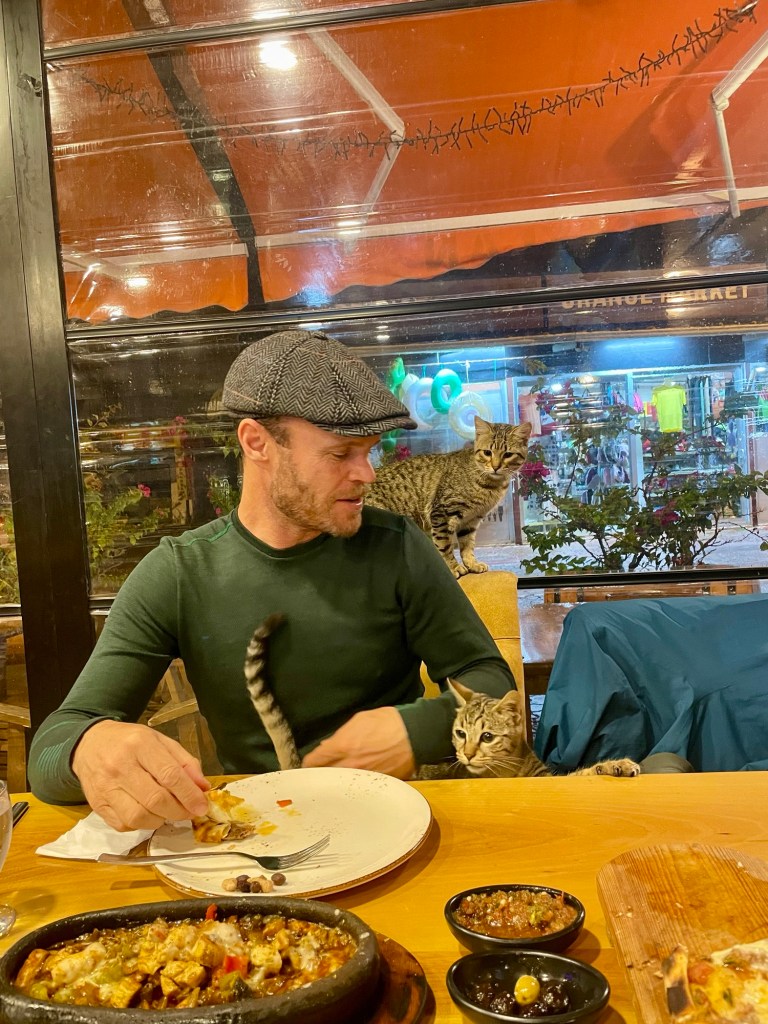
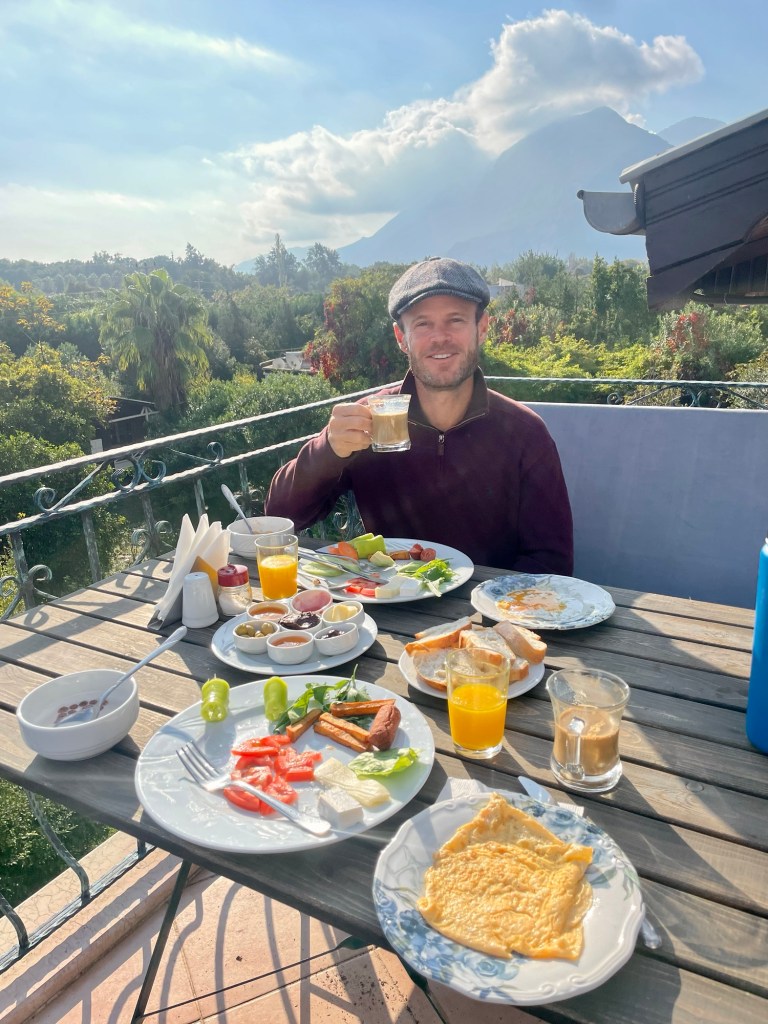
The following day we headed slightly further south down the coast to Cirali Beach, which is home to the ancient city of Olympos, which is famous for its connection with Marcus Aurelius. This town is a bit off the tourist path and was harder to reach, however, we were able to catch a bus headed in that direction going to the city of Kas. We then asked to be dropped off on the side of the road just above Olympos. From here, it is about ten kilometers down a windy road to the beach village. We were told there would be a local shuttle bus that went down the hill every thirty minutes, however when we arrived a local told us that since it was the off-season this local bus was not running regularly. We were quick to catch a break as within minutes a local man drove by and offered us a free ride down into town and insisted he took us all the way to our hotel! We stayed at the Anatolia Resort which was a cute hotel a bit back from the beach, but it had a beautiful garden. Since this was the off-season, only two restaurants were open in town and we ate at both of them during our short stay. As usual in Turkey, stray cats and dogs were common and welcome inside both restaurants.
The two main historical attractions to see in Cirali are the ancient city of Olympos and Chimaera. Olympos was an ancient city built around the 4th century BC and a member of the Lycian League until conquered by Julius Caesar in 78 BC. At the time, it was a popular fortified city due to the natural cliffs that allowed a fort to be built with expansive views out to the Mediterranean Sea. It was also built on a river tributary that provided fresh water to the city.
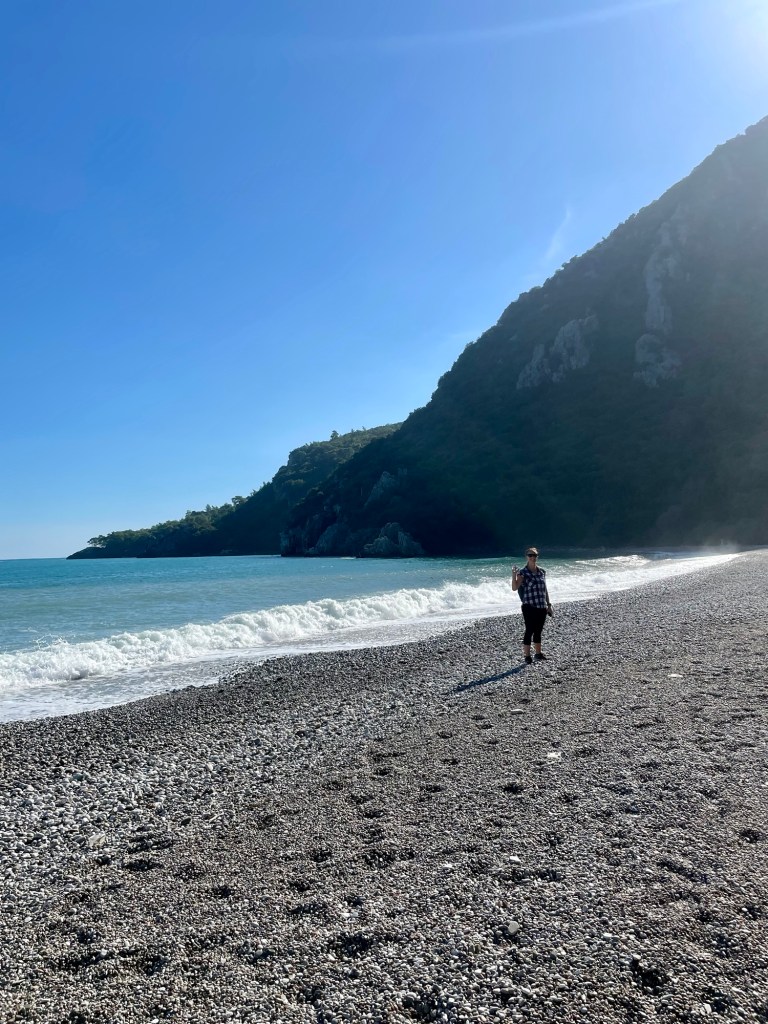
To get to the ancient city, we took a lovely walk south along the beach until we started to see ruins in the trees. From here, there is a boardwalk into the archeological site and a ticket booth to pay the entrance fee. Once inside, it was not crowded at all and we were free to explore and go wherever we’re interested. It was fun to explore because around every corner and throughout the forest there were plenty of ruins of ancient buildings and burial sites. We climbed up the hill to the fort where we enjoyed great views of the turquoise sea and beach below.
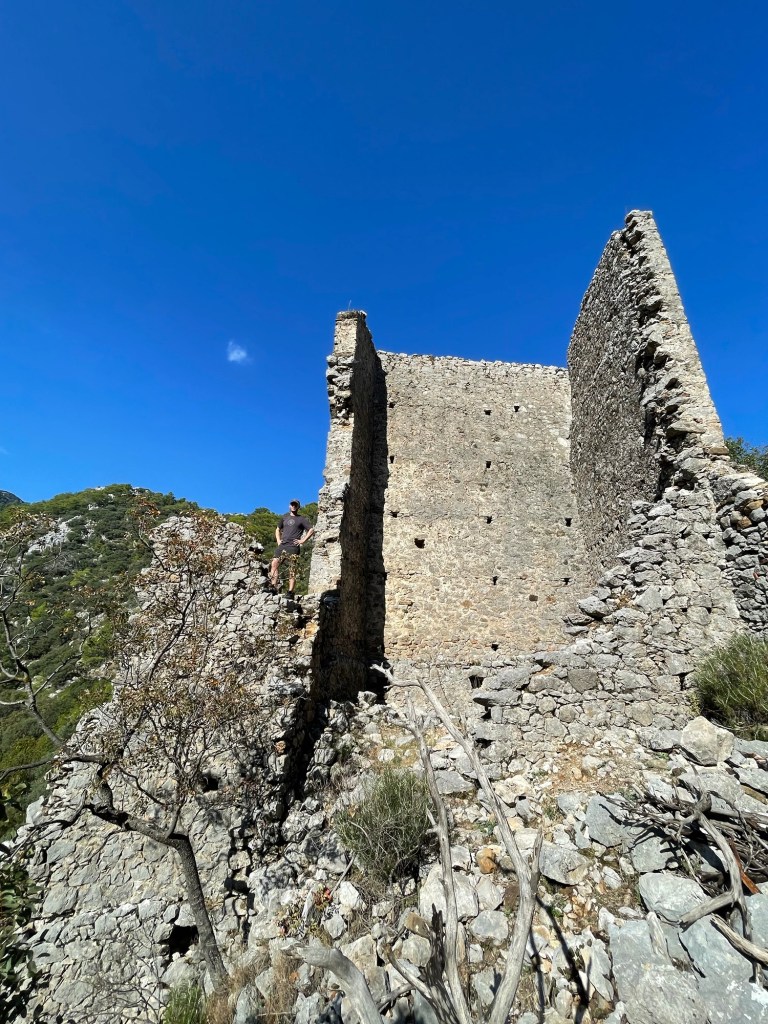
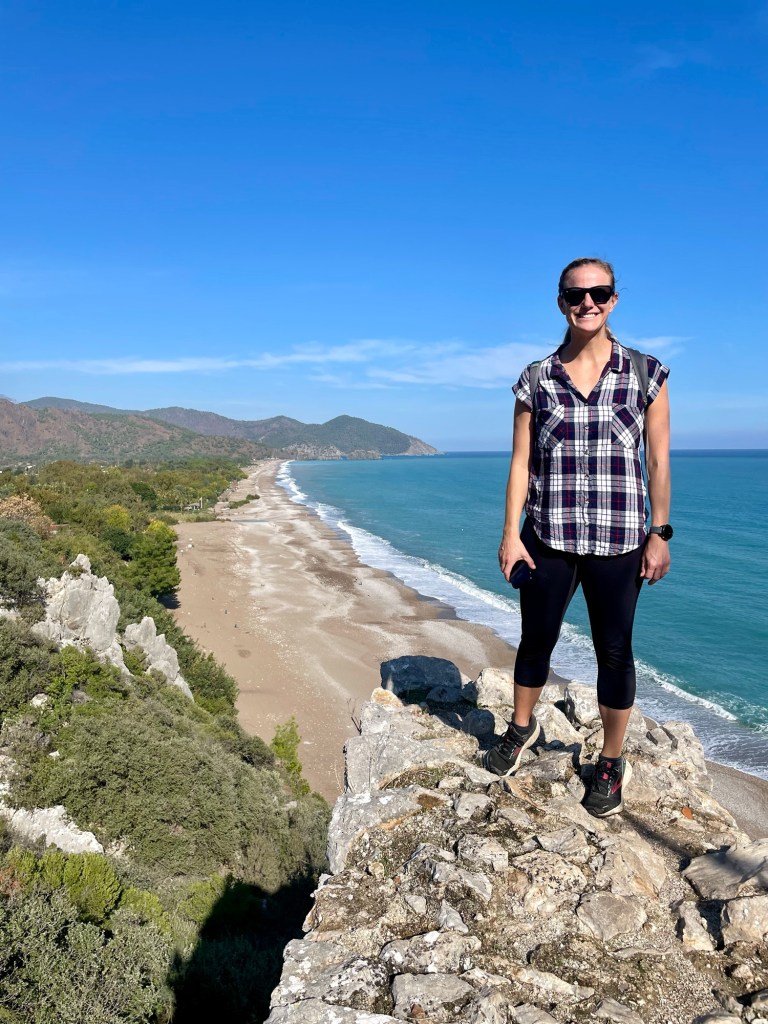
We found many sarcophagus’ that are intricately decorated on the outside. Unfortunately, all of them have been broken on the sides by pirates and treasure hunters over the years looking for riches that were entombed with those buried inside. There are temples, ancient bathing halls, village markets, and old villas that were used by the wealthy and powerful. The city is expansive and we were only able to see part of what was there due to restoration that was going on, which meant that many of the sites were off limits. We found it frustrating and careless management that we only found out about the extensive restoration work once we had already paid the entrance fee and were already in the park.
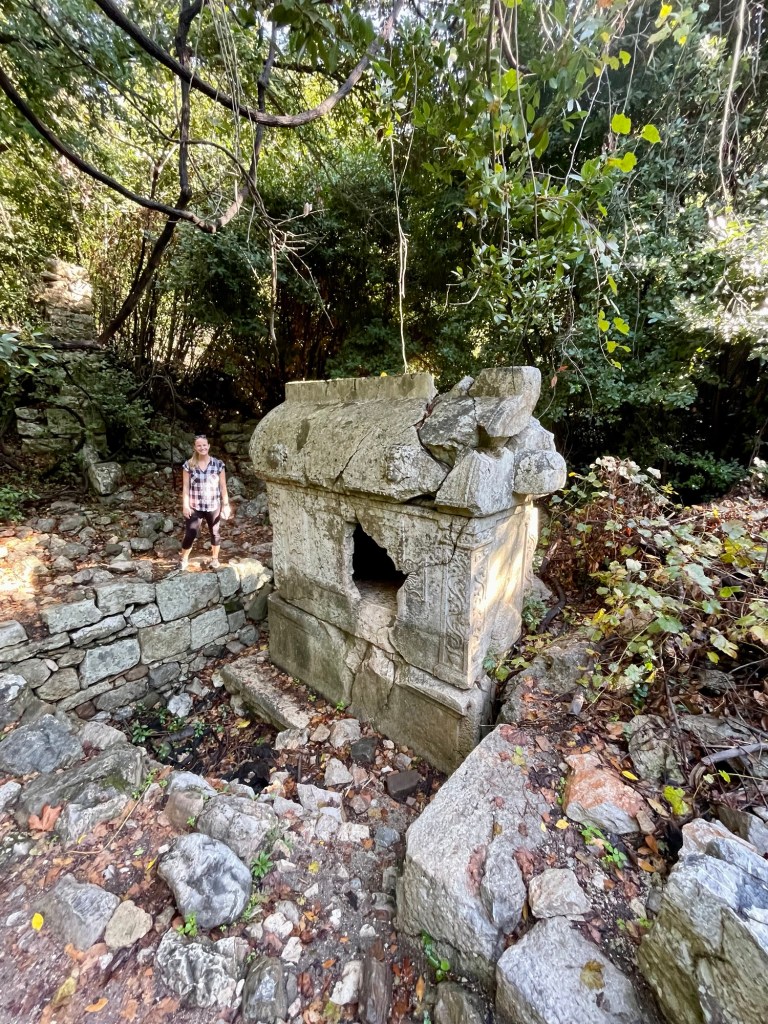

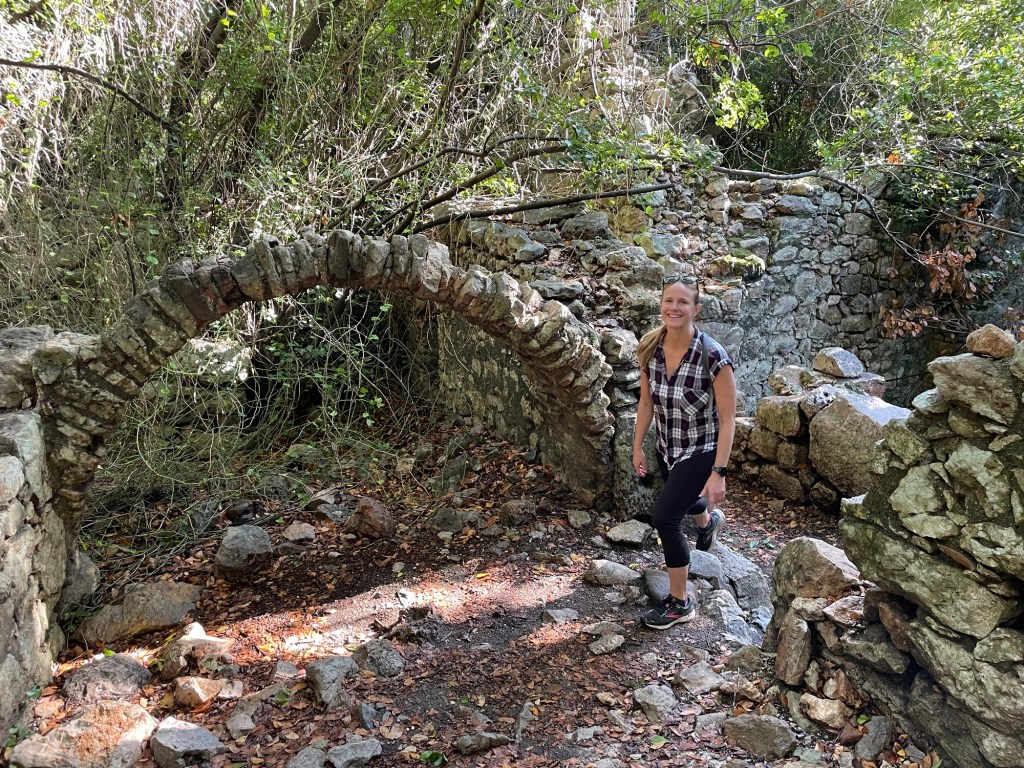
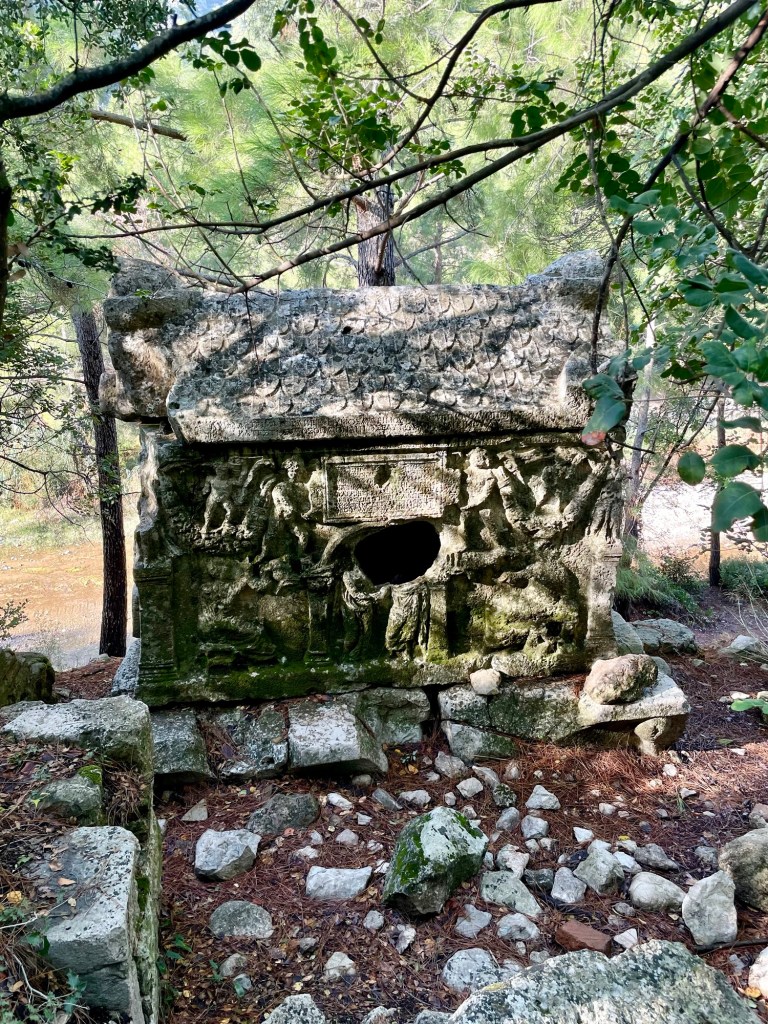
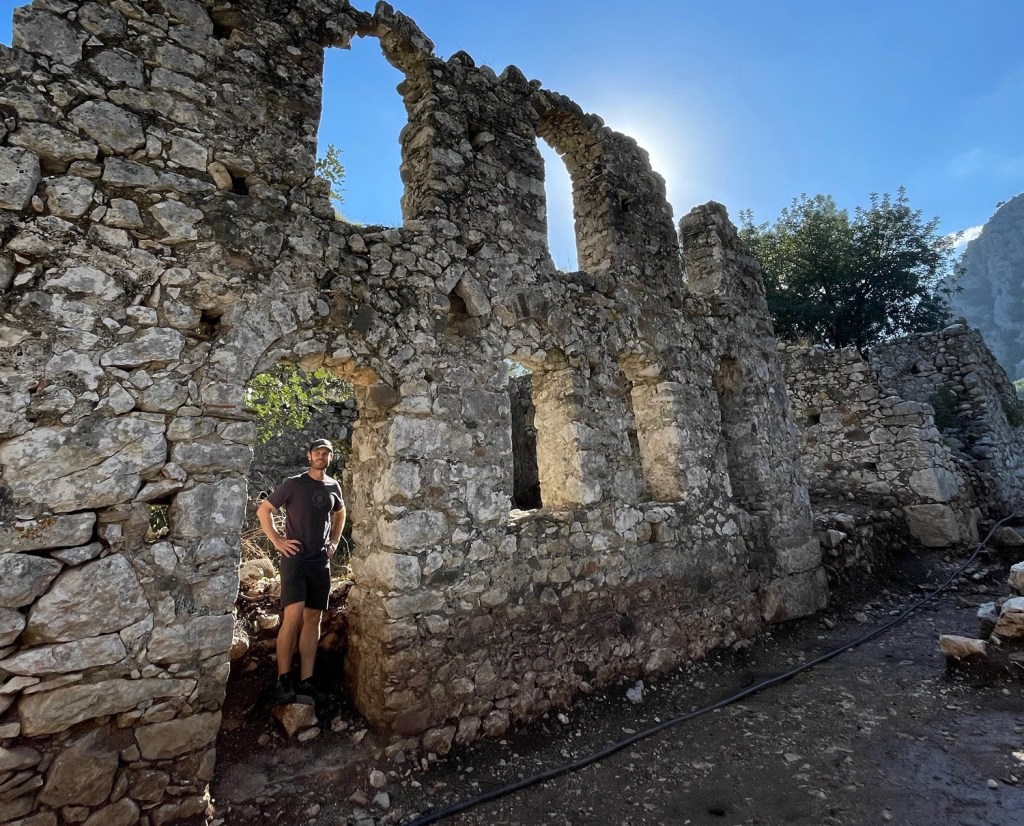
To finish our exploration, we crossed the small river where we found more sites and ancient relics to explore. There were hardly any people on this side of the river, which made it feel like we stepped back in time, or we were in an Indiana Jones movie. There are more tombs, Roman baths, and even a theater. We really enjoyed our time investigating this ancient city.

Our second stop of the day was a six-kilometer walk across town to another ancient site called Chimaera. This site is famous since it has been on fire for as long as anyone can remember. It is essentially a large rock face halfway up a mountain that has pockets of fire coming out of the stone. Scientists believe there is gas escaping from the rocks and when it makes contact with the air it creates a flame. There is a theory that the first Olympic flame came from here, and since it is next to the ancient city of Olympos with an eternal flame on the mountain above, I believe this assessment could very well be true.
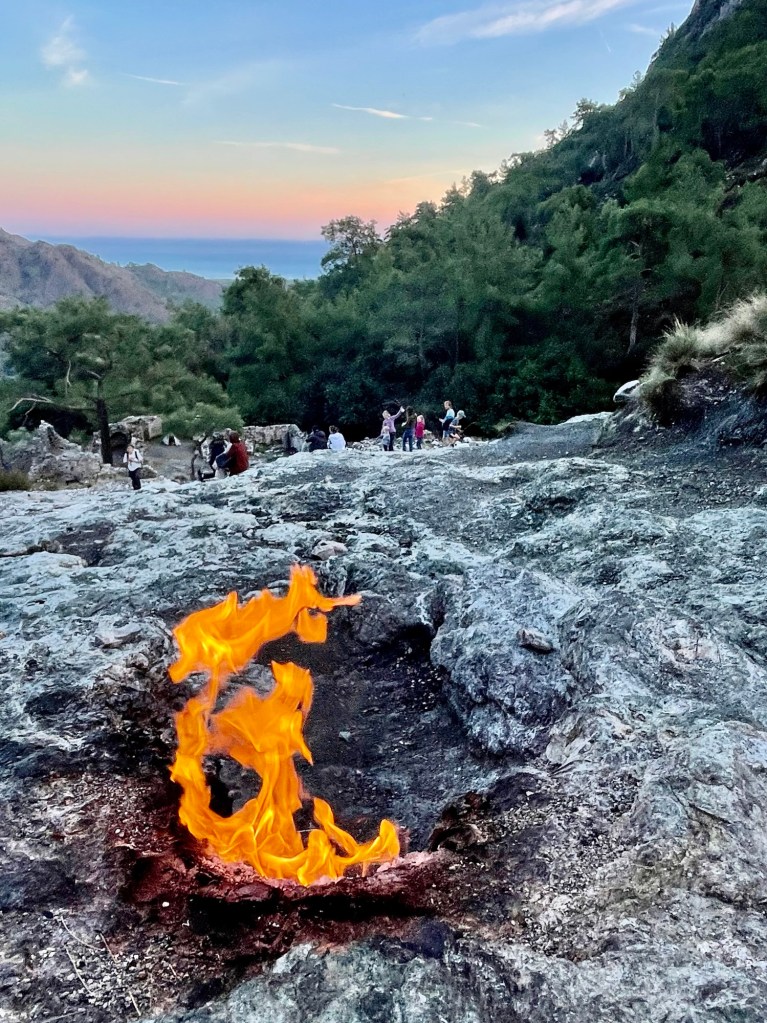
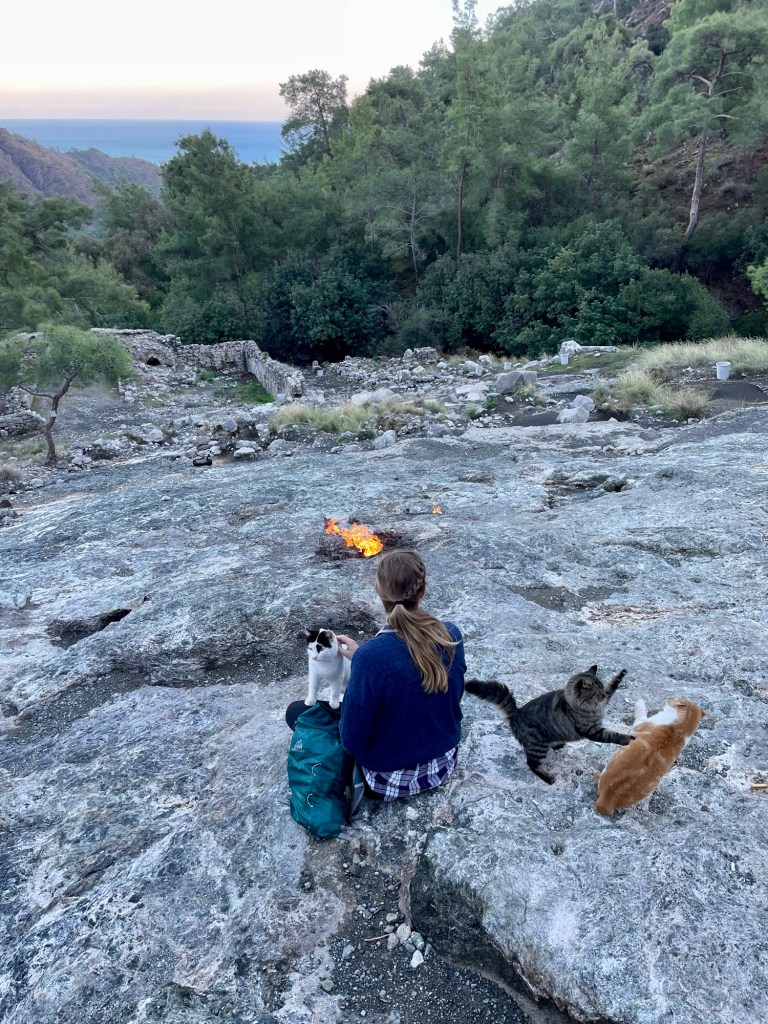
We had to hike up to this site on a well managed trail and were excited when we got to the top. After the Darvanza gas crater in Turkmenistan, this site didn’t wow us quite as much as it probably does for others, but just knowing this natural fire has been burning for centuries made it worth the journey. We also had fun playing with the stray cats that made this site their home. As sunset approached, more people made the trek up the mountainside since this was also a good vantage point over Cirali Beach. Some families even brought marshmallows to roast over the flames and were kind enough to share with us.

Our next stop was the small city of Denizli to see a famous historical and natural site called Pamukkale. Departing Cyrali we had to retrace our steps back up the hill but this time we were able to find a bus to take us to the top. When we reached the side of the road, we hailed down a bus heading back to Antalya and from there found a long distance bus heading to Denizli. Denizli in itself is not a tourist destination but instead, an industrial city that we found to be pretty sketchy at night. We chose to stay here instead of Pamukkale because we read that everything is more expensive near the site and there is nothing to do in this small town once the park closes. Unfortunately, on our first day in Denizli, it rained all day so we found a cafe to catch up on some work.

The following morning, with the skies looking slightly more promising, we caught a bus for the short ride up to Pamukkale. If you do a google search of Turkey, you will definitely find pictures of Pamukkale as a vast surreal, and beautiful white landscape full of turquoise pools with waterfalls spilling over down the hillside. In Turkish the name Pamukkale means “cotton castle” after the white carbonate mineral left by flowing thermal spring waters.
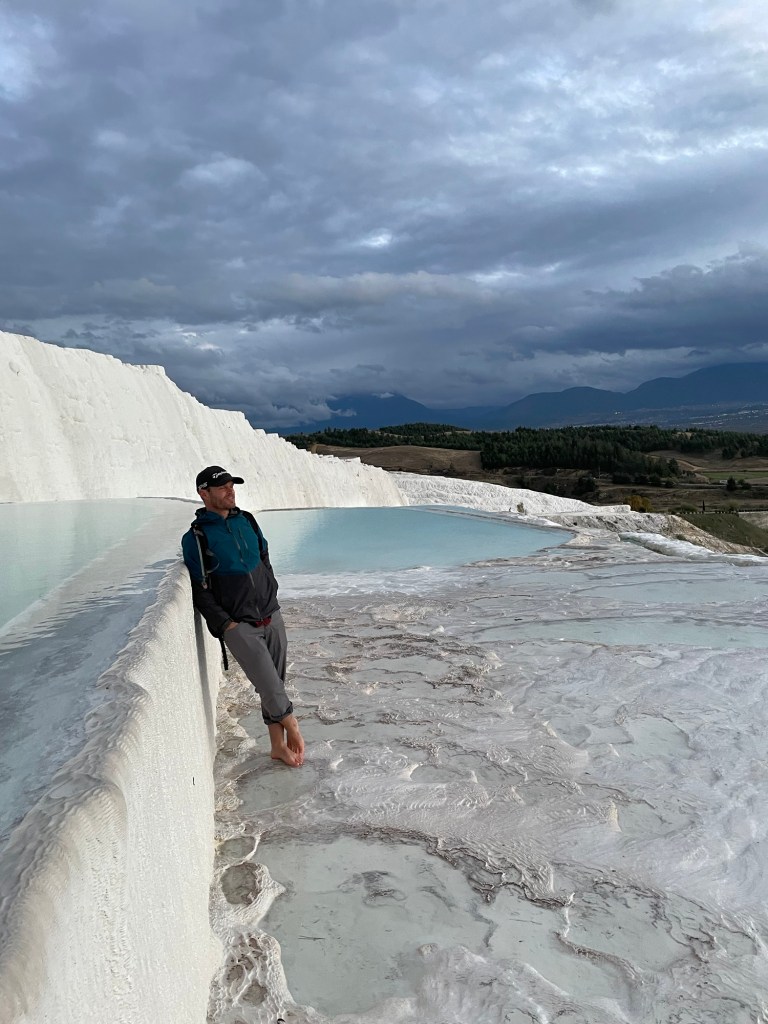
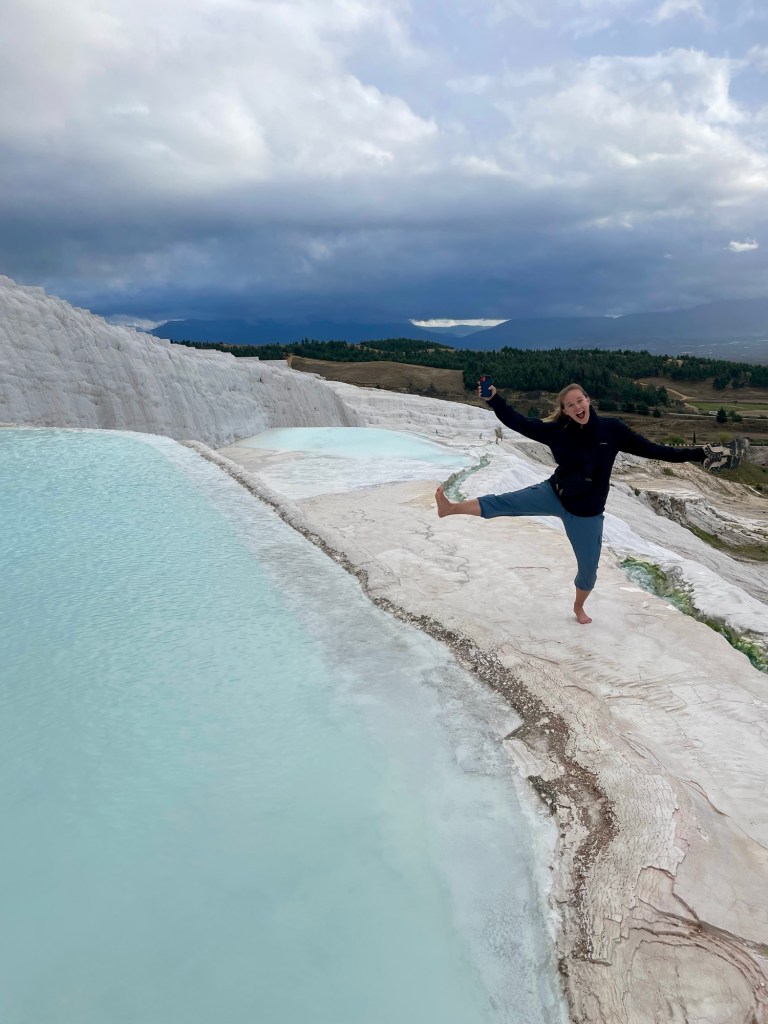
The thermal waters flow through this area creating mini hot springs all down the hillside. Yet we found that this landscape has now been ruined by years of tourism and much of the hot water is now being diverted to hotels to create their own “natural hot springs” for tourists. This leaves a dry white landscape with evidence of where the pools used to reside. They still allow the water to flow down the main part of the hillside and fill about seven large pools that get progressively hotter as you move toward the top. I have to say that we were really disappointed that this natural wonder has been heavily destroyed by mismanagement.
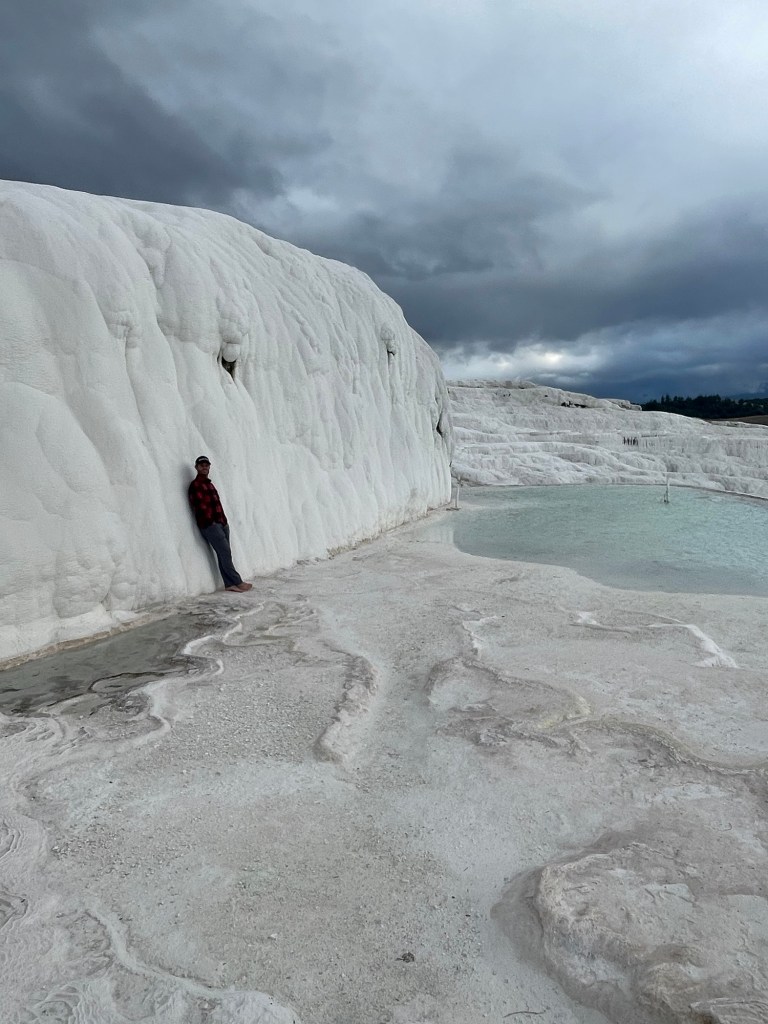
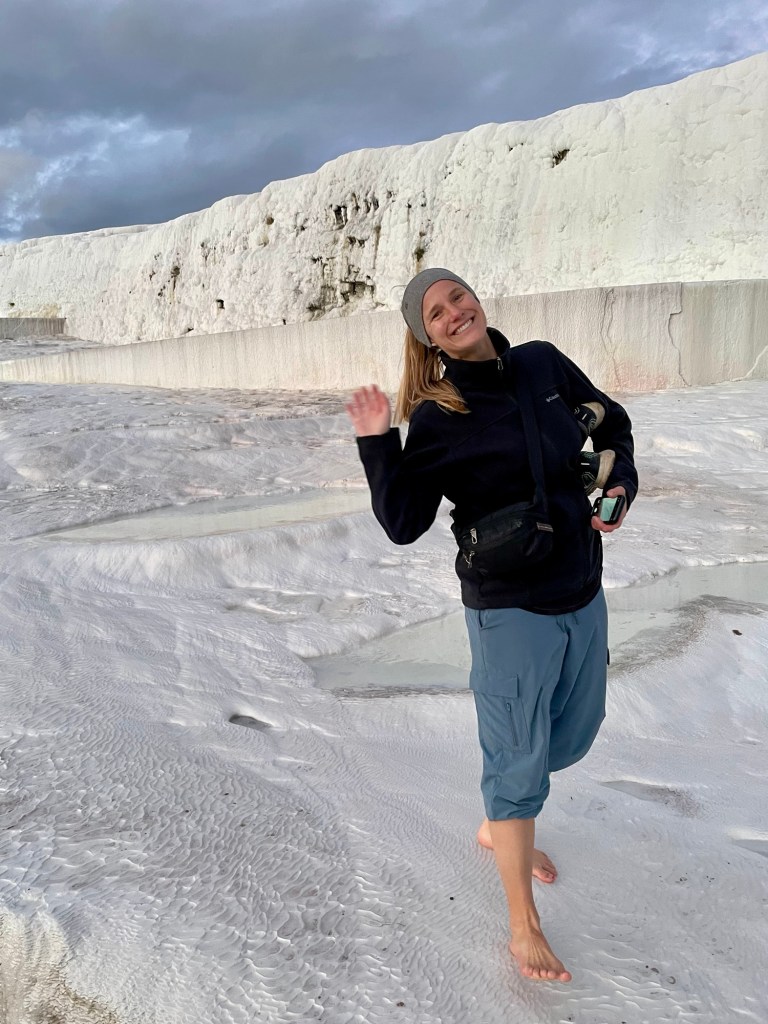
We entered Pamukkale National Park from the bottom entrance and were quickly instructed to take off our shoes since they do not let shoes walk on the white carbonate surface. We were there on a relatively cold day and our feet were quickly frozen walking across this surface and through the cold pools at the bottom. As we walked up the hill, our feet gradually warmed up since the pools toward the top are warmer. This is also where we started to encounter the crowds of people who entered the park from the top entrance only to dip their toes in the warm water.
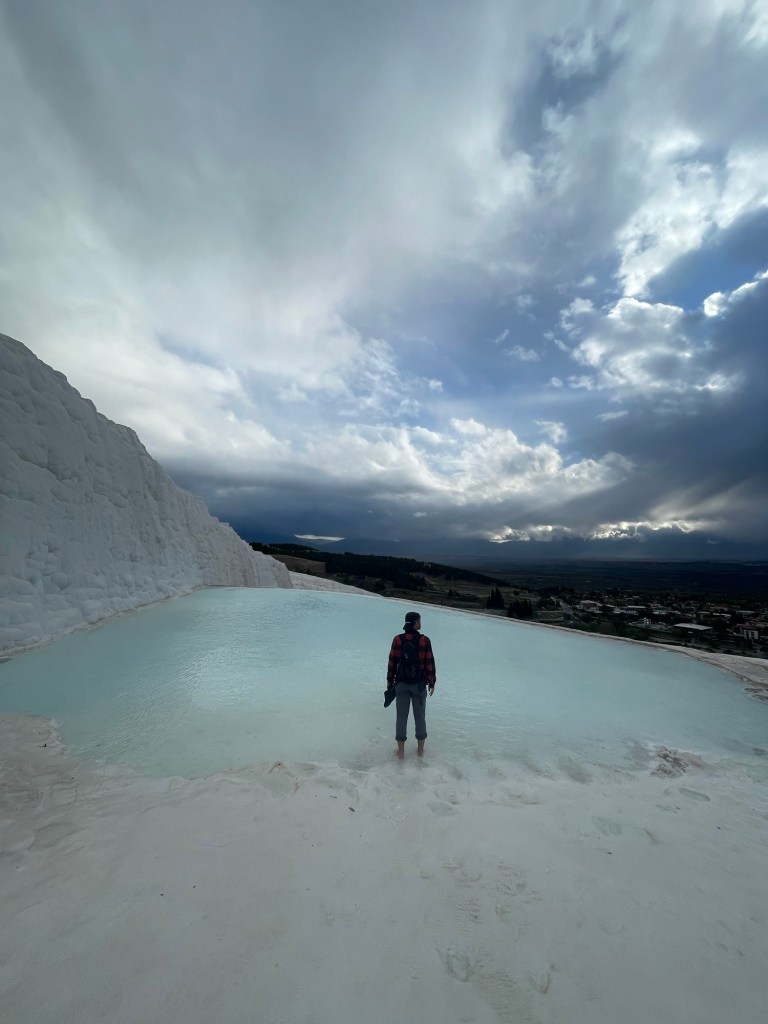
At the top, we put our shoes back on and went to explore the ancient city of Hierapolis, which in my opinion was the more fascinating part of our visit due to the lack of water now flowing through the terraced pools. Hierapolis was first built in the 7th century BC by a Phrygian cult as a temple dedicated to the mother goddess Cybele. It was later occupied by Greek colonists who built a city on the ancient settlement and then later by the Romans. Hierapolis is seen as a gateway to the underworld and a place of communication with underworld deities because of the toxic gases that emerge from the hot springs inside of a cave in the center of the city. It was also known as a healing center using the thermal pools for treatment.

The first thing you come across in exploring the ancient ruins is the pool they have turned into a tourist trap called Cleopatra’s Pool. Despite the historical nature, you can pay an additional fee on top of the park entrance fee and swim in a hot pool that has ancient pillars and ruins in the water. While it is quite beautiful and unique, we opted not to take a swim on this cold day.

The next thing we came across was the Hierapolis Roman Theater. This is an absolutely stunning piece of architecture. It has been restored, but they used different colors of marble to show you what the original would look like compared to their restorations. This theater really took me back in time and I was mesmerized.

Another interesting area was Pluto’s Gate which was revered as the Gateway to Hadeshere. There is a small cave here that exists on a fault line and it emits a strong level of Carbon Dioxide gas that can kill. Priests would go into the cave to try and prove that they were immune to the gas and therefore divine. There are more ruins that you can see at this site, but since the park was closing soon we didn’t have time to fully explore. We walked back to the white hillside, took pictures of the pools at sunset, and then walked barefoot back down the way that we entered the park, but this time we were accompanied by a very cute and friendly stray dog.

The following day we hopped on two different buses to reach the small Mediterranean town of Datca. Datca is a small fishing village on a tiny peninsula looking out on the easternmost islands of Greece. In our research on Turkey, we saw pictures of this town with stunning blue waters, and since it is just off the beaten tourist path we knew that we needed to pay it a visit. Datca is a really cute town with restaurants along the coast and a village-like feel with pleasant walking streets to explore. We stayed in a guesthouse on the coast called the Veziroglu Apart and had a small apartment with a balcony looking out over the Mediterranean Sea. Unfortunately, the rainy weather that seemed to define our November in Turkey followed us here, so the beaches and sea were left for just photos and we used our time here instead to just relax and enjoy the small seaside village.
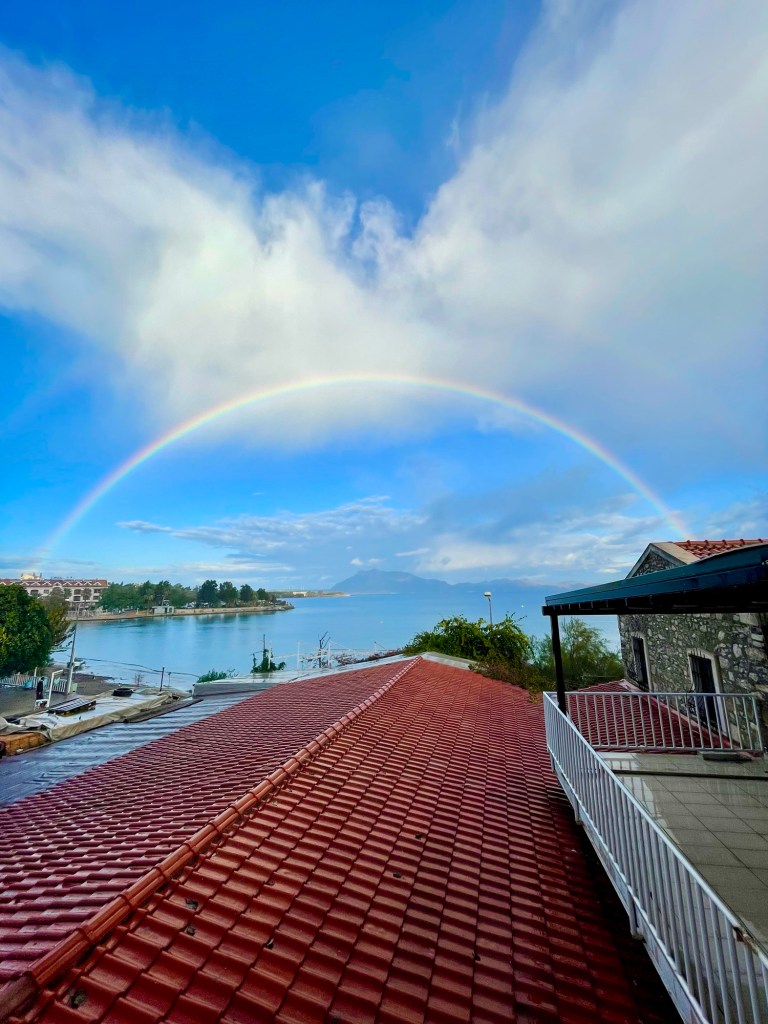
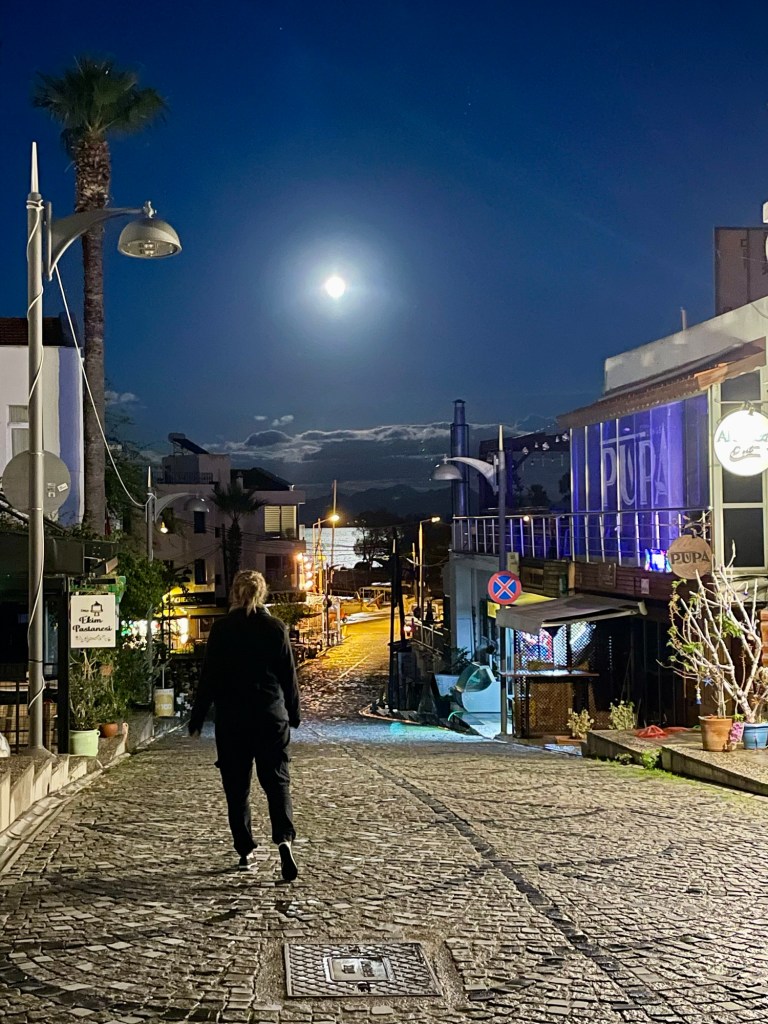
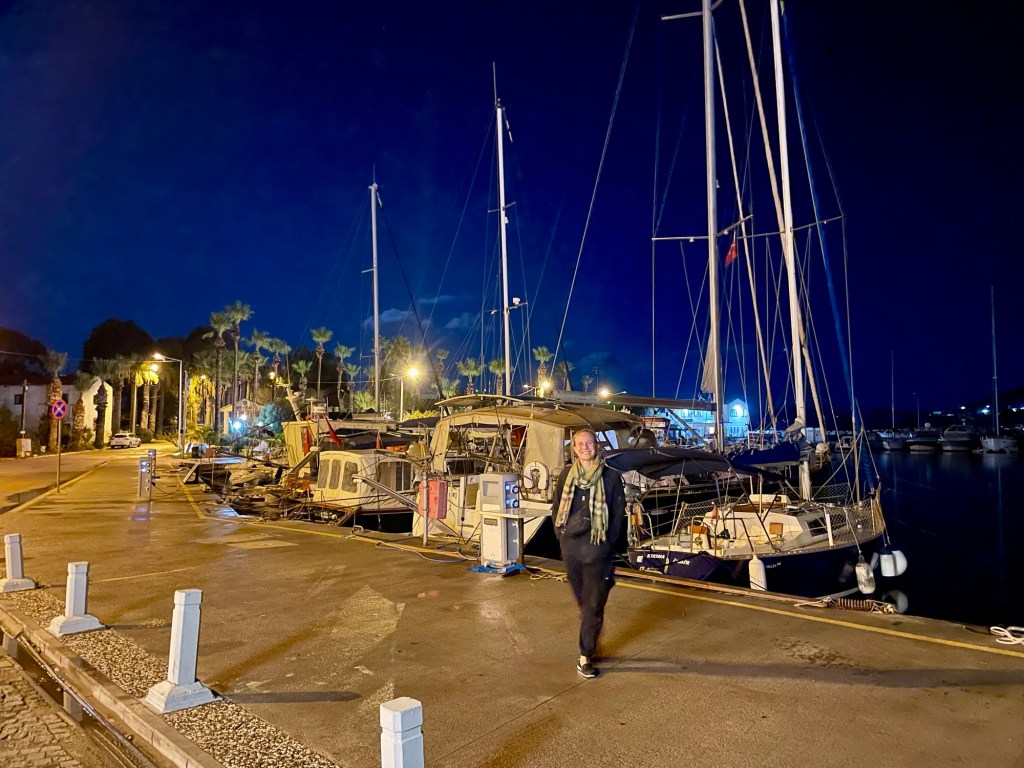
We stayed for two days in Datca enjoying the local eateries, I went for runs along the Mediterranean, and we wandered through the streets when it wasn’t raining. It was terrific to have a few days to decompress in this beautiful town after a long stretch of busy traveling. We left Datca in agreement that we would love to return one day when the weather is sunnier to truly enjoy the beach and explore this special village town and peninsula further.
 Teri and Nate's World Adventures