Transportation in Nepal is never easy and our journey to Chitwan National Park was no exception. Through our hotel in Pokhara, we reserved two seats on a tourist bus to Chitwan. Tourist buses are advertised as different than local because the seats are more comfortable and they are supposed to have one pick up and one drop off point and only stop along the way for a bathroom and toilet break whereas local buses stop in every little town to pick up and drop off passengers. Unfortunately, the tourist bus was far from the express ride for which we had hoped. We embarked on a bus that was moderately more comfortable than the local bus we had previously taken, and when our bus departed the station only half full we subsequently stopped every five minutes to pick up locals along the way out of town, which was really quite annoying!
We stopped every forty-five minutes for some sort of tea break, bathroom break, or lunch break and it truly felt as though we were never going to arrive! Once we approached Chitwan, we ended up again stopping every hundred meters to let off the locals at their desired street corner, which felt a bit unfair because we knew the bus wasn’t going to be dropping us off at our respective destinations. I feel like they need a better system. This is probably a good opportunity to mention the condition of the roads. The main highways in Nepal have literally been under major construction under China’s belt and road project for at least the last seven to ten years, which makes for a slow, dusty and extremely bumpy ride.

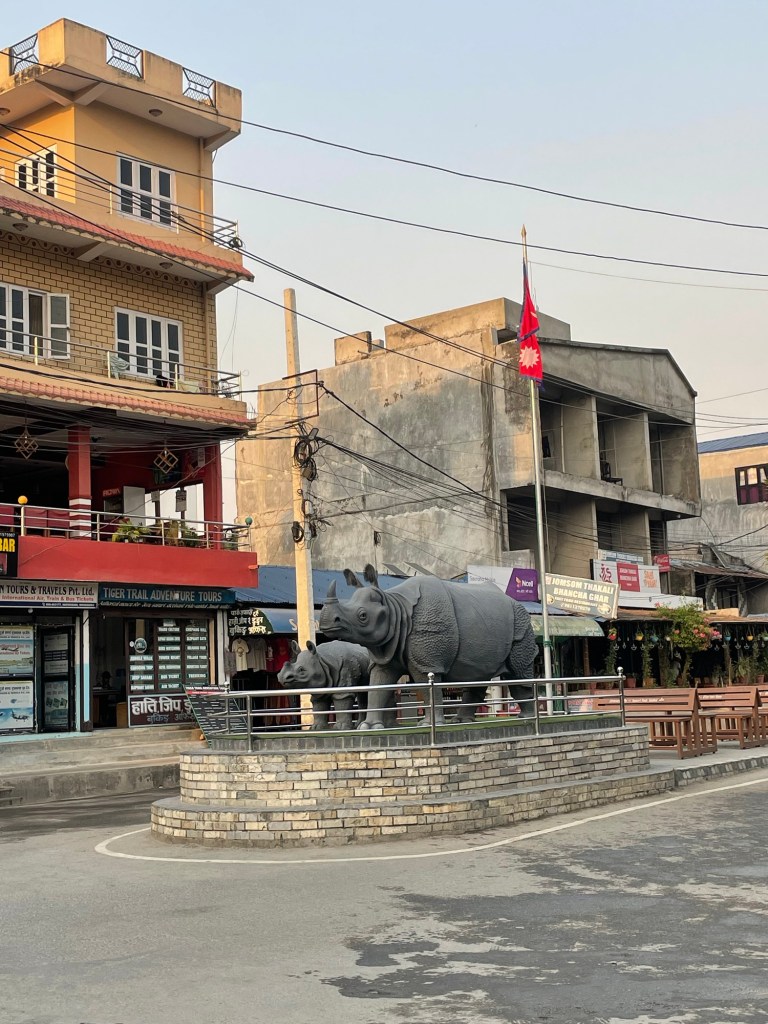
Finally, we arrived in Chitwan and took a tuk-tuk to our accommodation at the Bambi Chilling House. This is a really quaint family-run guesthouse on the outskirts of the main town, but still within walkable distance to the main street and National Park entrance. The small guesthouse is beautifully situated on the main river, and you can see rhinos crossing the river in the morning and evening. The front desk also organized all of our park activities for us, which was great and convenient!
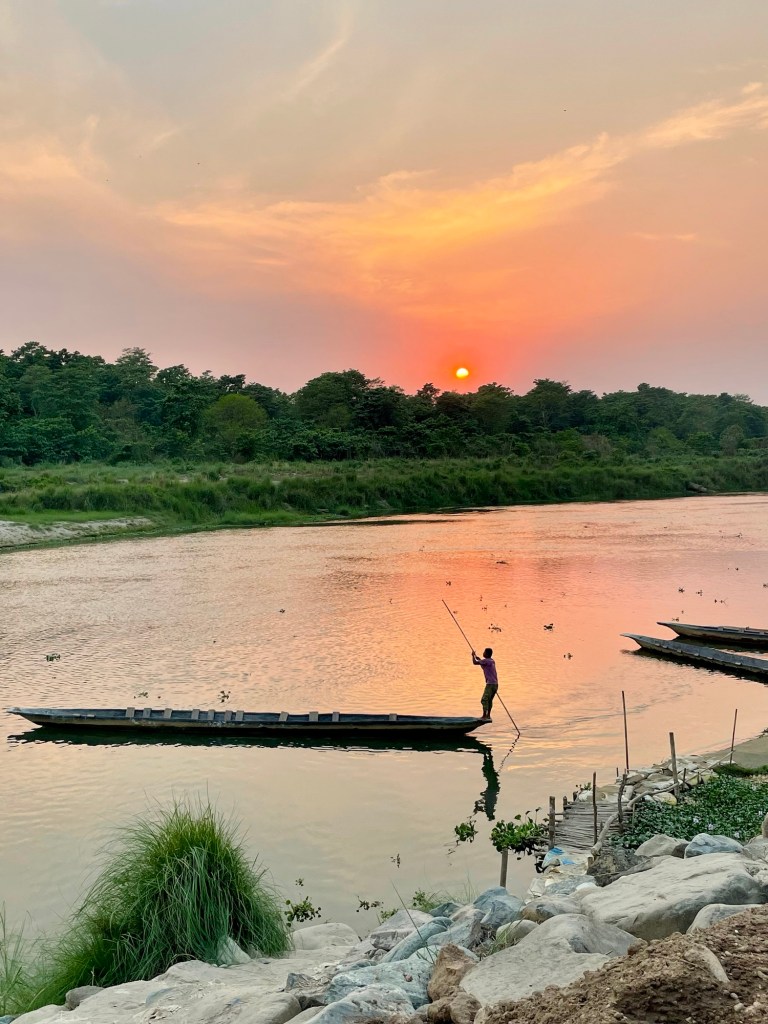

That first afternoon we walked into town to have a look around. There were plenty of shops and restaurants lining the street and we walked to the junction of two rivers at the end of main street. This is where the National Park office is located and a great spot for all wildlife viewing as you can often see almost as much here as you can on safaris throughout the park. We decided to sit down at a table along the river and have a beer to watch a beautiful sunset. While we were there we saw, an old retired elephant eating and drinking, as well as crocodiles laying out to sun themselves. We watched everyone returning from their afternoon safaris on the other side of the river as they enjoyed the short canoe ride back into town.

That evening we headed back to the hotel to have dinner overlooking the river and the National Park on the other side. While we were eating we saw a rhino come across the river and go back into the park, which was quite exciting for all the guests to see. He must have been wreaking havoc in farmers fields all afternoon. It was such a peaceful experience on this calm moonlit night.

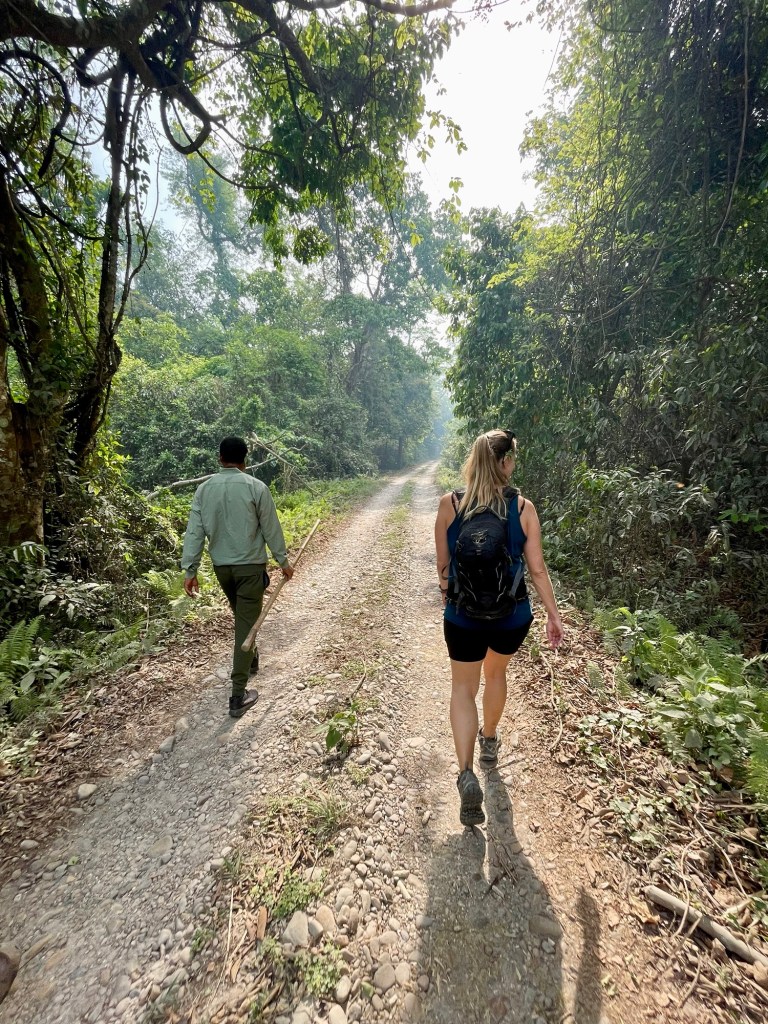
The following morning we were up early, ate breakfast, and jumped into a tuk-tuk for our first safari. Nate and I had debated on which type of safari to take in the morning because the most popular walking safari is also potentially quite dangerous. In the end we were talked into it. Chitwan is one of the only Tiger Reserve National Parks that I am aware of that let you do a walking safari. Now, I have done a walking safari in Africa, but our guides were armed with guns. Our guides here only had bamboo sticks! I have no idea what we would do if we were attacked by a tiger as in reality we would have no chance! They said the sticks were to poke the bears if they attacked us. None of this sounded very safe, but we still made the decision to go on foot. Due to the thick jungle in Chitwan there is a far greater chance of spotting the big game on foot opposed to in Jeeps that make a lot of noise.

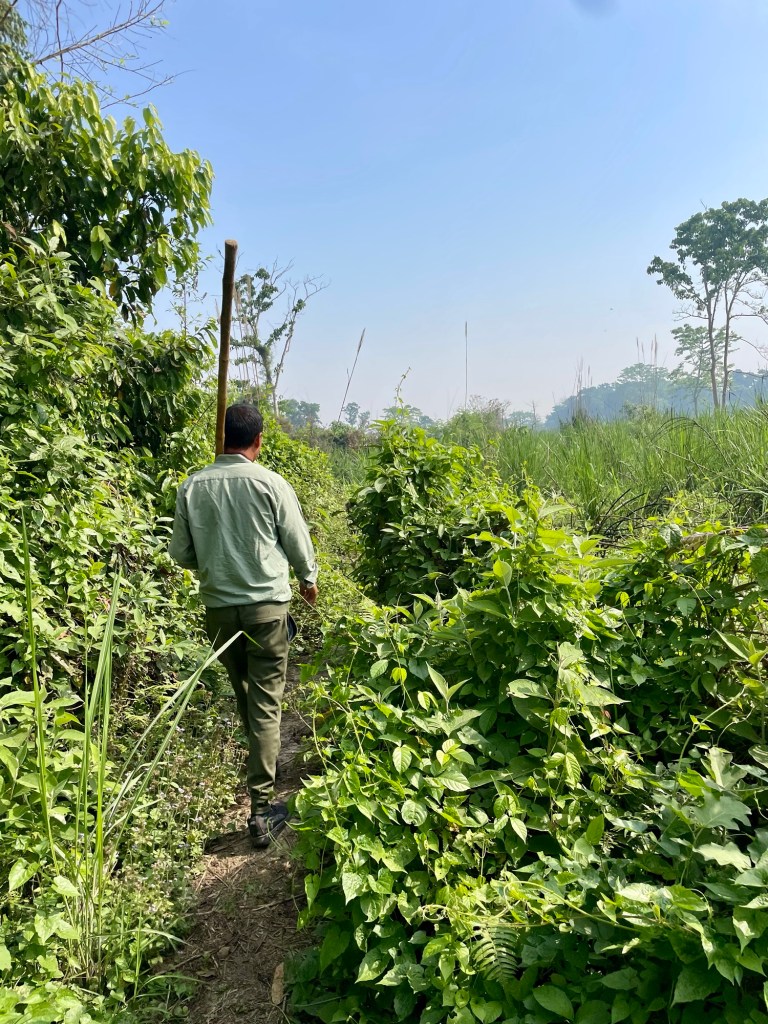
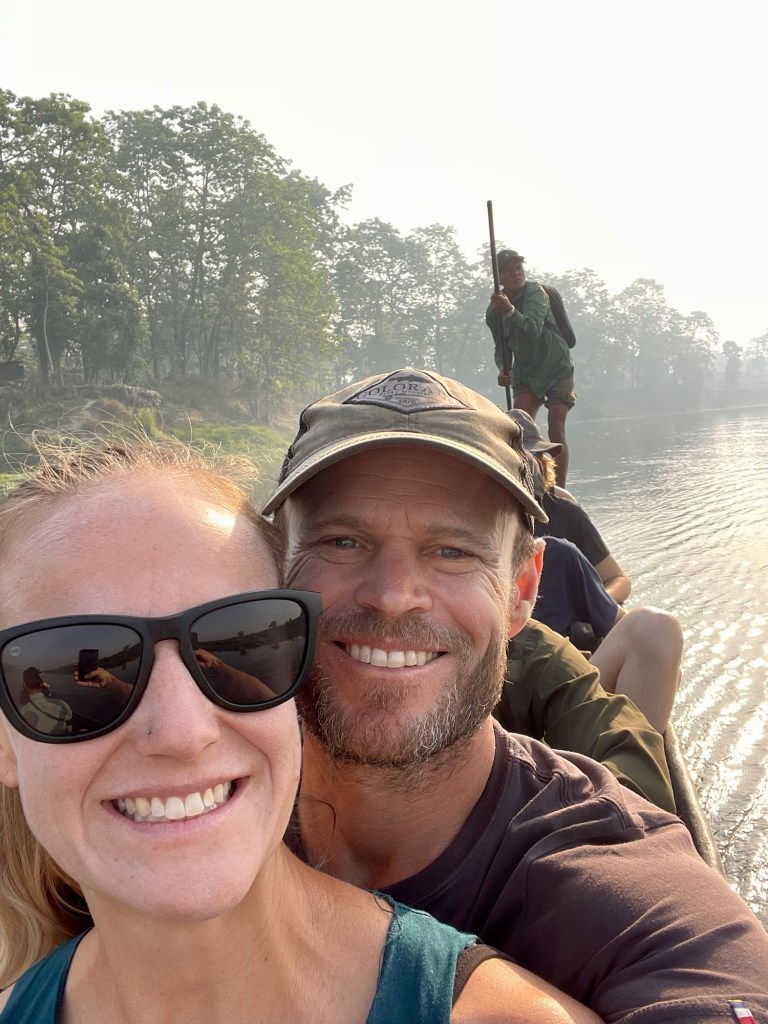
Our safari started with a very peaceful early morning ride in a canoe down the river where we spotted lots of very large crocodiles and many colorful birds. Our boat driver used a pole to navigate the river, and we were told that after our ride he would then have to push the boat back up the river using only that same bamboo pole and that it might take as long as three hours.

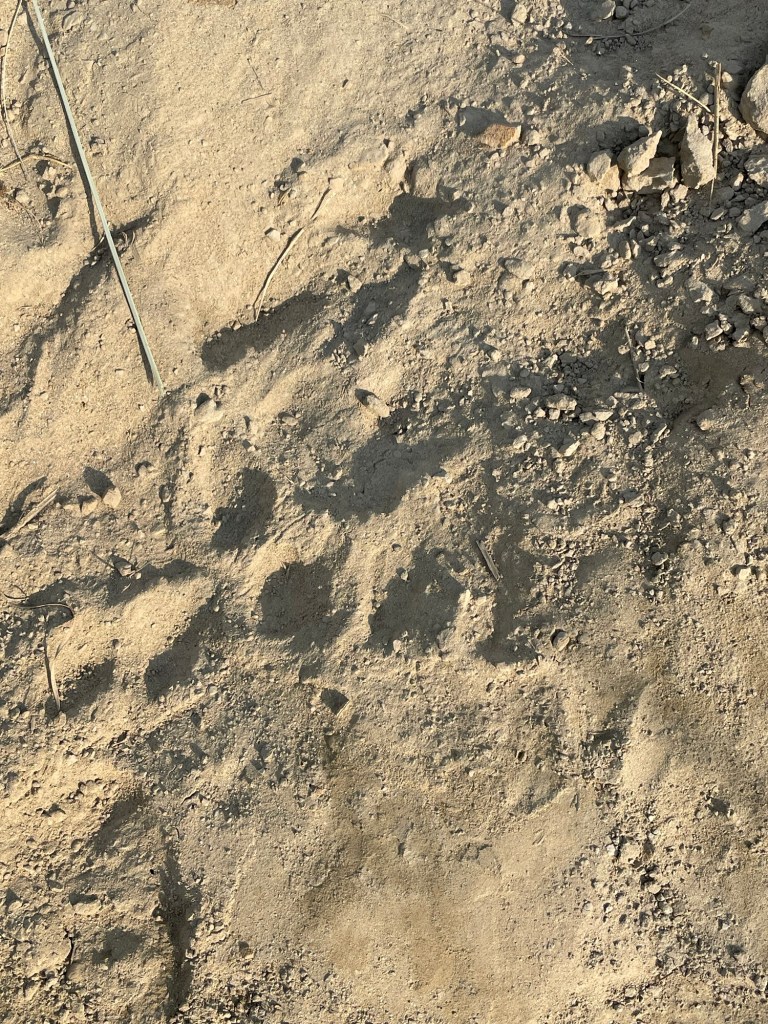
Once we landed, we started walking on small animal paths through the forest. Along these paths our guides pointed out things such as large rhino poop piles (yes rhinos seem use the same spots to go to the bathroom essentially creating their own toilet areas), tiger pee on a tree (yes we smelled it), tiger tracks and poo, and even leopard tracks. They pointed out plants use by the locals for all sorts of uses including a bug repellant when tucked behind the ear. We saw both samba and spotted deer, as well as a freshly killed spotted deer hanging up a tree.

Our two guides believed that it was killed by a leopard the day prior and then dragged up into the tree so that a tiger would not steal the kill and so that it could come back later to continue eating. It was quite an extraordinary site. At the very end of the walking safari, we saw a rhino taking a mud bath in the river. He was just laying there on his side and as we stood just fifty feet up the slope he did not seem bothered by us in the slightest bit.

After the tour, we returned to our hotel for a quick lunch and to freshen up since it was scorching hot. Less than two hours later we returned back into town for our afternoon jeep safari. The specially built cantor jeeps are equipped for ten tourists and one guide. Unfortunately, our guide seemed to just go through the motions, and it was fairly obvious that his heart wasn’t in it and he wasn’t excited about spotting animals. Unlike in India, the animals in Chitwan are quite scared of jeeps and the likelihood of seeing a Tiger or Leopard on this type of safari is admittedly very low.

On our jeep safari, we saw several rhinos, monkeys, deer, and even one sloth bear, although this happened very quick since he was running away from us as soon as he saw the jeep. In the middle of the tour, we stopped at a crocodile breeding center. The gharial crocodile numbers are decreasing and endangered, so this project has been working to breed more numbers and send these crocodiles out into the wild. Despite the strength of these animals, we were told their survival rate from birth to full maturity is only around two percent. At this breeding and rehabilitation center, we could see crocodiles up close from just one year old all the way to full grown. There are two types of crocs in Chitwan and this particular species is very unique and quite a beautiful animal because they have a very long and incredibly thin nose. They look like cartoon crocs.
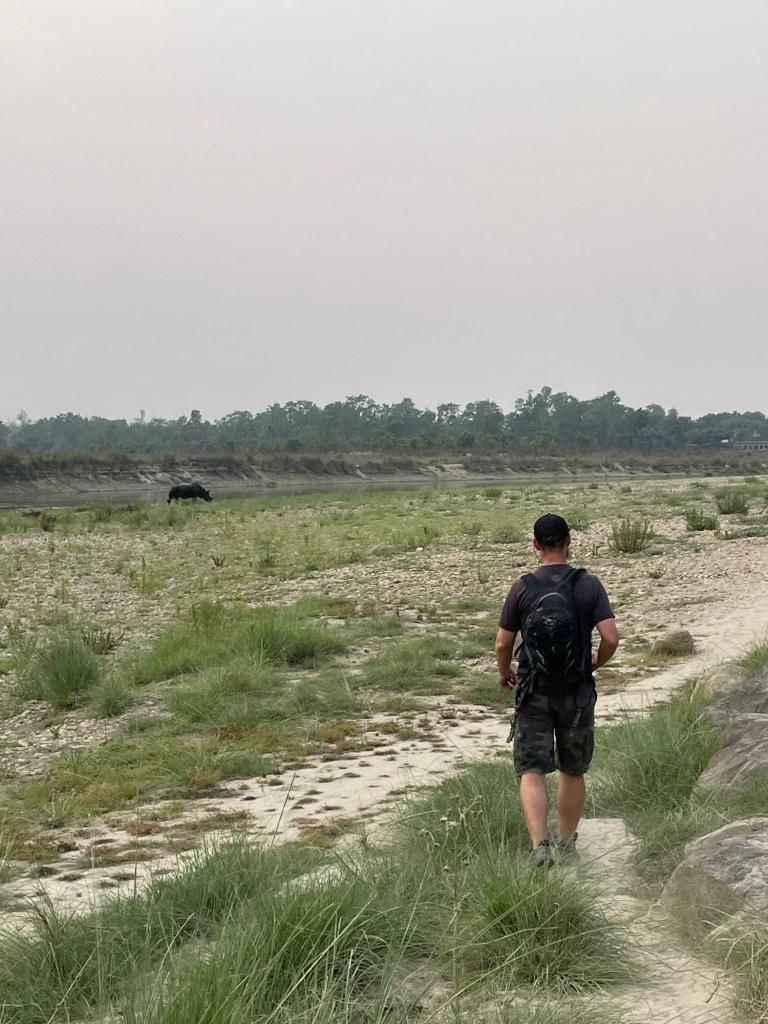
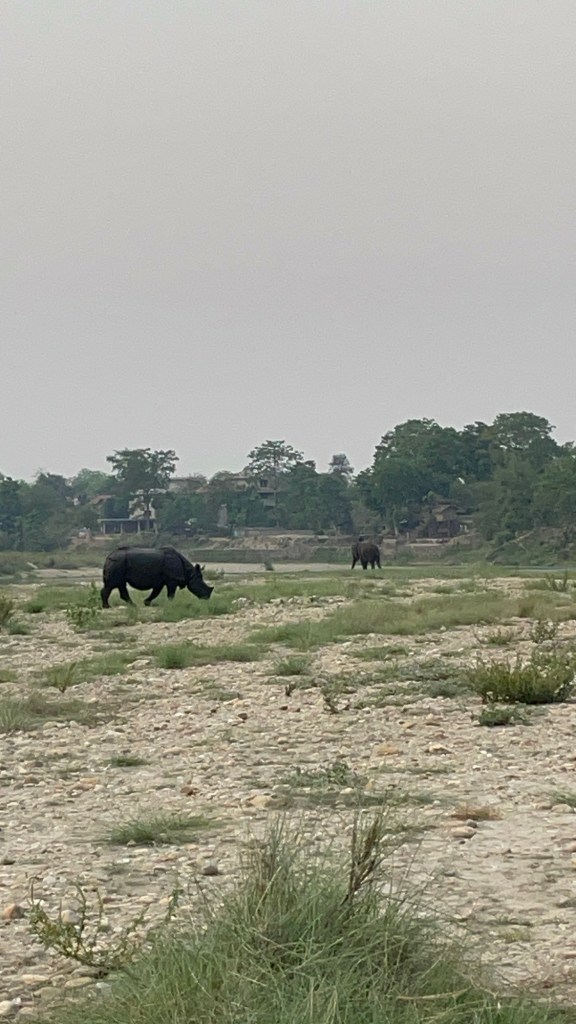
After our safaris, we saw a giant soft-shelled turtle on the river bank as well as another rhino bathing in the river. As we enjoyed one more beer we watched another large rhino emerge from the National Park, walk across the river, and venture right into the heart of the town. After this, we grabbed a quick dinner on the main street and headed to the Tharu Cultural Show. The native tribe in this area demonstrated some of their traditional dances that are common at festivals throughout the year. It was beautiful to watch and it was nice to take in some local culture. The show is quite short, just thirty minutes long, and I would highly recommend it to anyone visiting Chitwan. They even kept dancing when the power went out, which is sadly something that locals have to deal with quite regularly in Nepal!
We really enjoyed our time in Chitwan, and the following morning we embarked on another tourist bus adventure as we traveled back to the capital of Kathmandu to prepare for our next trekking adventure to the base of Mt. Everest!
 Teri and Nate's World Adventures