Our final week in Kyrgyzstan took us to the south of the country near the Chinese Border. We had secured the government permission to explore this region by managing the maze of Bishkek bureaucratic paperwork and stamping to obtain the proper border permits. We found that the travel required to get in and out of this region may be more difficult, however, I would still highly recommend this region for its ruggedness and stunning beauty. Naryn state is without question far less traveled than the Issyk-Kul Lake region, so you may end up as we did with many of the valleys to yourself.
We started this journey at the Bishkek bus terminal to find a Marshrutka that would take us to the town of Naryn. While Naryn is a small town, it is the perfect jumping-off point for the sights of this area. As I mentioned in earlier posts, Marshrutkas only depart once they have reached capacity. We were once again unlucky as we apparently arrived at the terminal just after the previous van departed and were the first two to hop on the next transport when it arrived. We knew we were due for another long wait, and this time it was nearly three hours before all the seats had filled and we finally began our five-hour journey south.
After a short stop for dinner at a roadside restaurant, we arrived at our guest house at around 10 p.m., and we were happy to get some rest after the long travel day. I was happy that we made a reservation, and kept our host apprised of what was happening so that they kept the lights on and we didn’t surprise them. This is a small, sleepy town and we stayed at the Naryn Guesthouse, which turned out to be a great choice. The hosts were so nice, and the accommodation was cozy. In addition, they helped arrange private drivers for the trips in the area, and we found out that they can even arrange the border permit for you if you have not yet secured one prior to arriving.
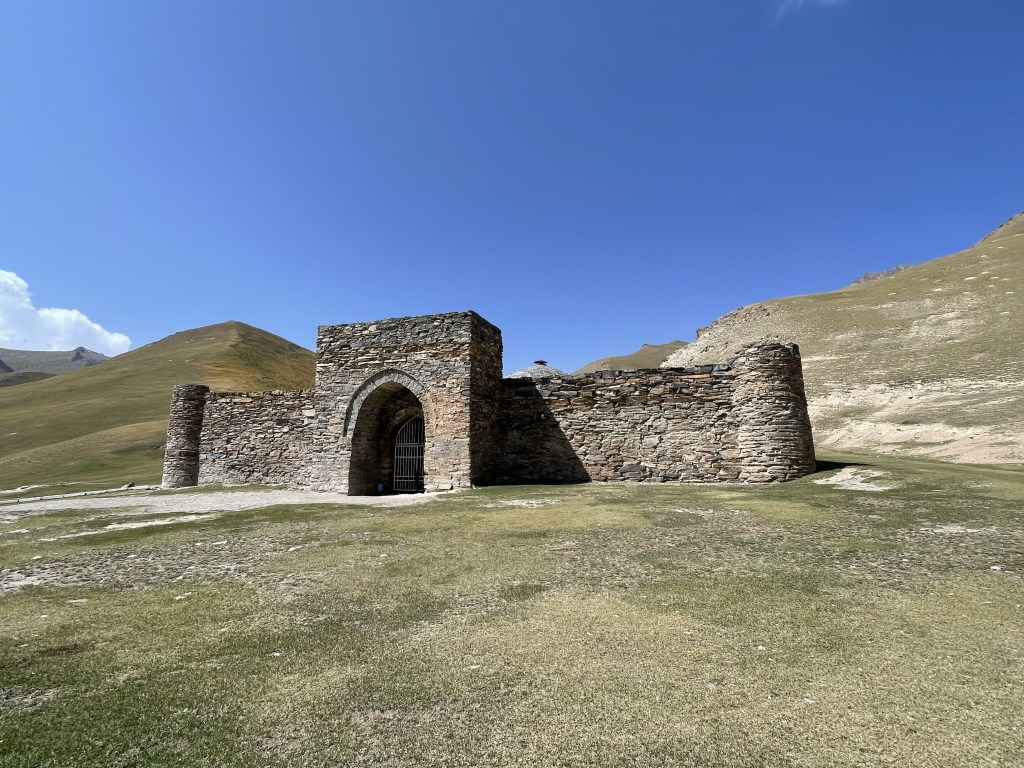
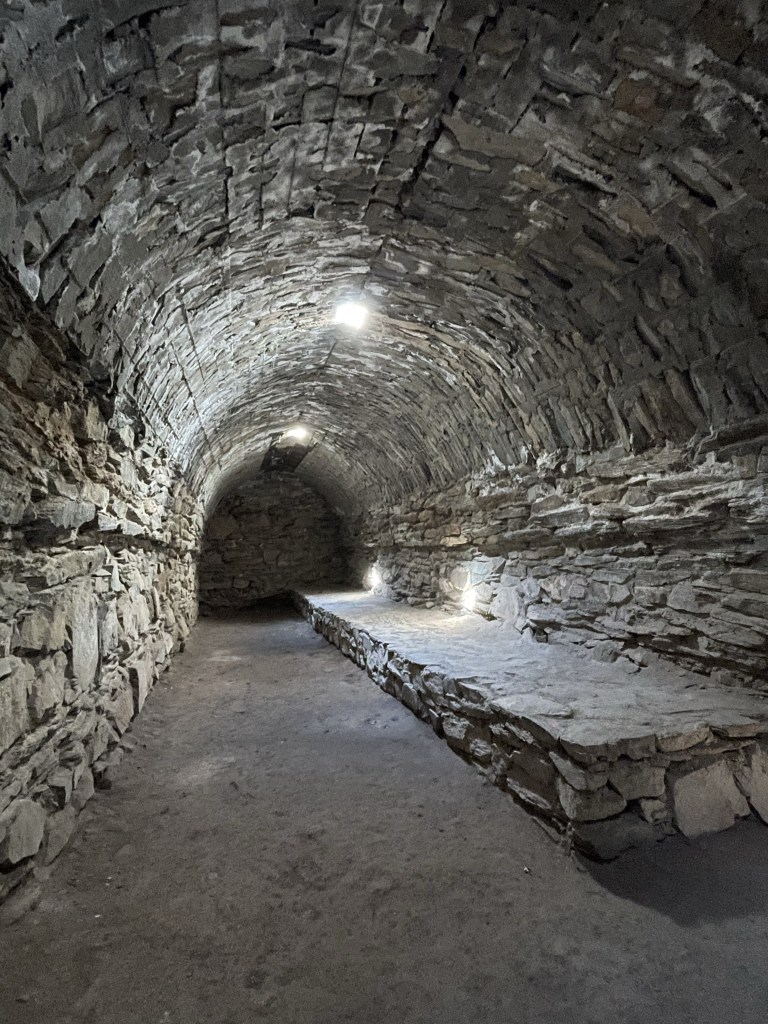
Despite our late arrival, we talked with our host to secure a driver for the following morning who could take us on a day trip to visit the historical Tash Rabat. It turned out that his close family friends lived near Tash Rabat, so he decided to make a family day trip out of this and drive us himself. We met another German traveler named Marvin at the Guesthouse and he decided to join us along with our host, his wife, and young son. Our host had to take care of the daily breakfast service in the morning, and could not leave too early, so we did not arrive at Tash Rabat until around 12:30 p.m. After dropping us off, his family drove off to see their friends nearby for the day and we agreed to meet them back at the historical site at around sunset. The Tash Rabat is an ancient stone building that dates back to the early days of the Silk Road. While there was not much information about the large stone structure, it was known to be a sort of Inn for travelers to stop after a mountainous stretch along the now Krygz Chinese border in the formidable Tian Shen mountains. The woman who ran the yurt camp directly facing Tash Rabat was its caretaker, and she opened the front door of the ancient site so that we could explore it for a small fee.
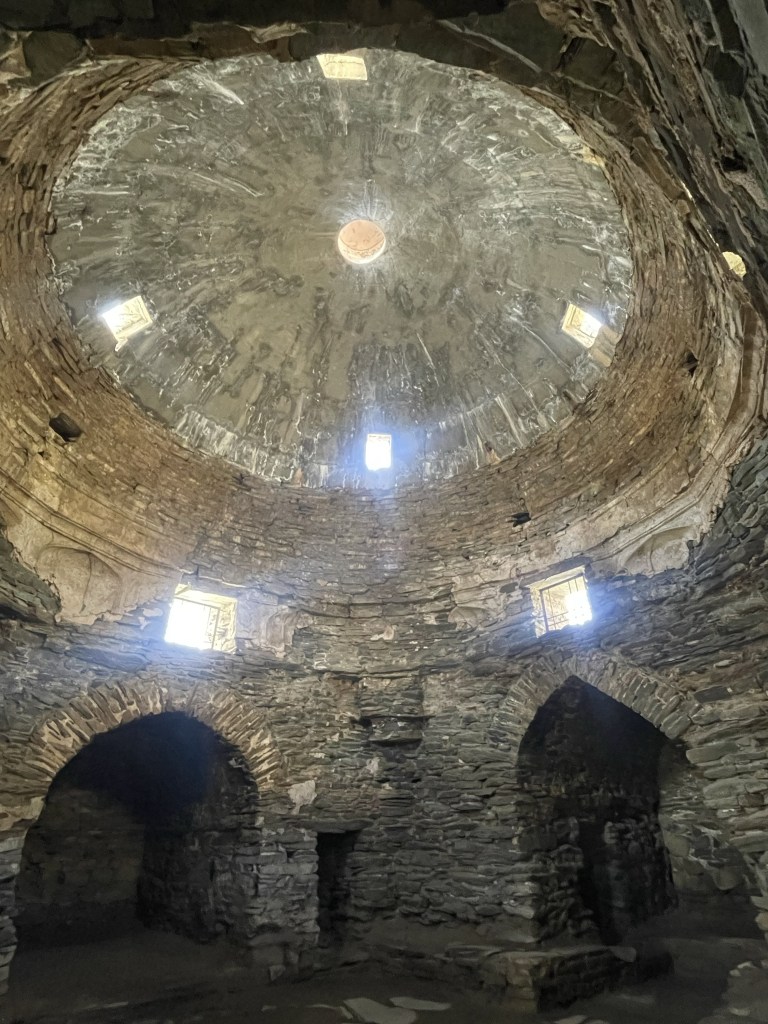
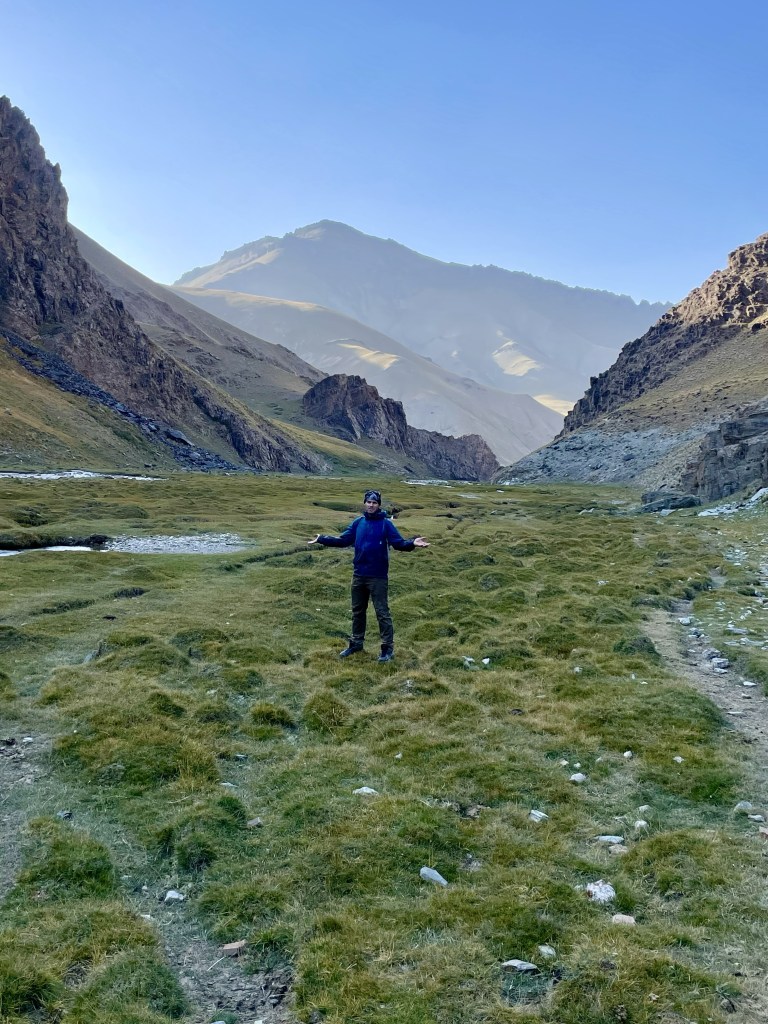
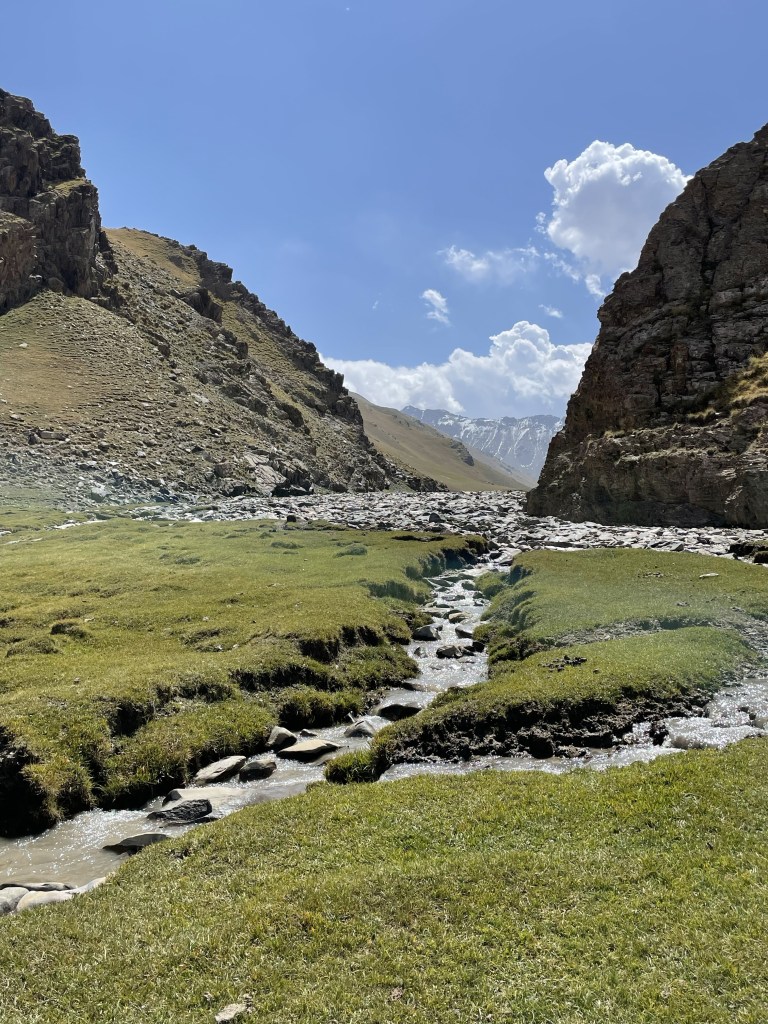
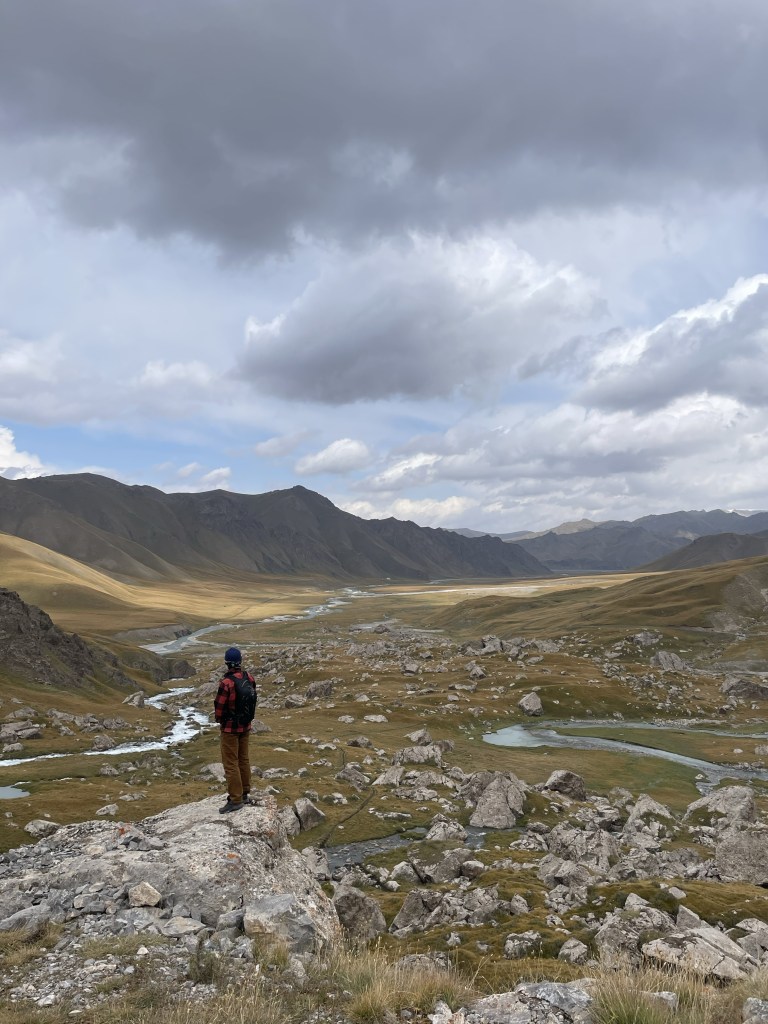
After seeing the ancient building, Nate and I decided to tackle the big hike up the valley. Despite our late start, we were determined to reach the Panda Pass summit and scenic lookout over Chatyr-Kul Lake as well. We were really starting quite late for a high-altitude summit, especially since it was projected to be a six to seven-hour return trip, but we had beautiful clear skies as we started, agreed to turn back if the weather turned on us, and we tried to move quickly. The hike started up a valley where a river wound beautifully back and forth. We had to do a lot of rock hopping over this river. There were also these strange mounds throughout the grass that were annoying to work through and get around.
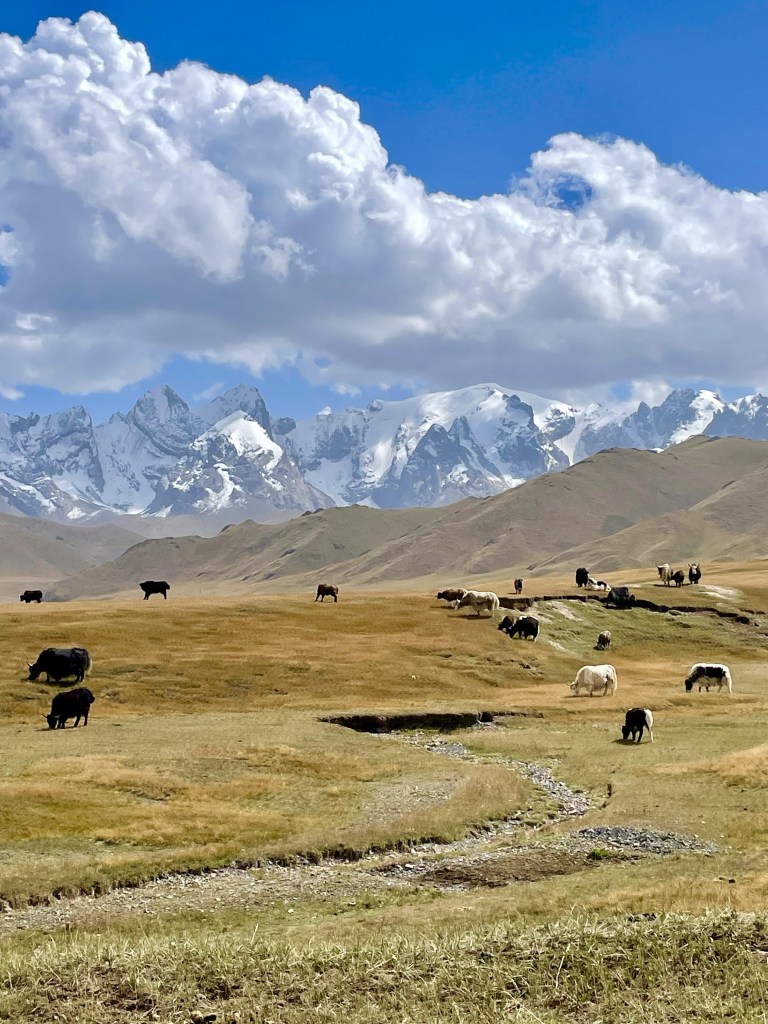
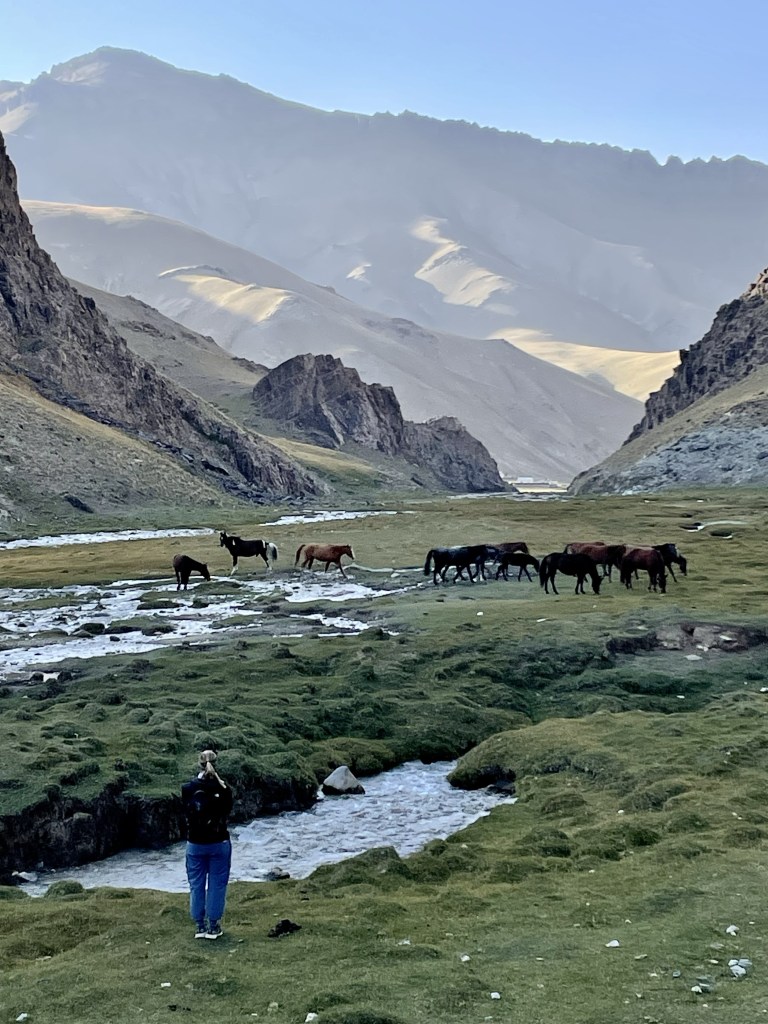
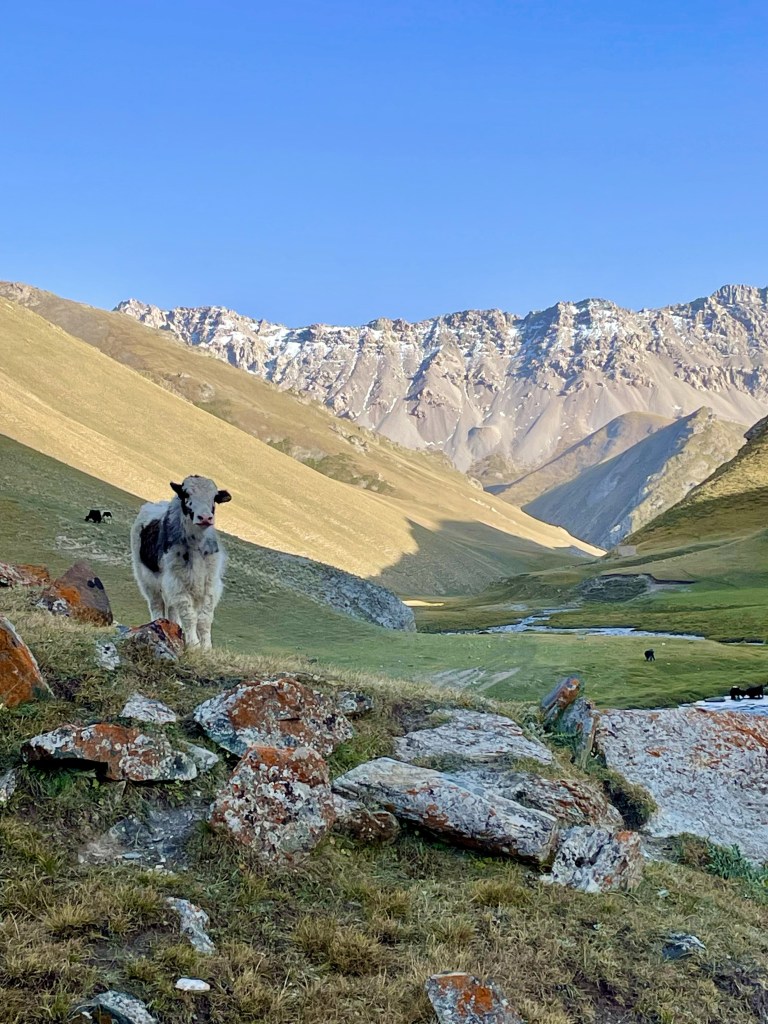
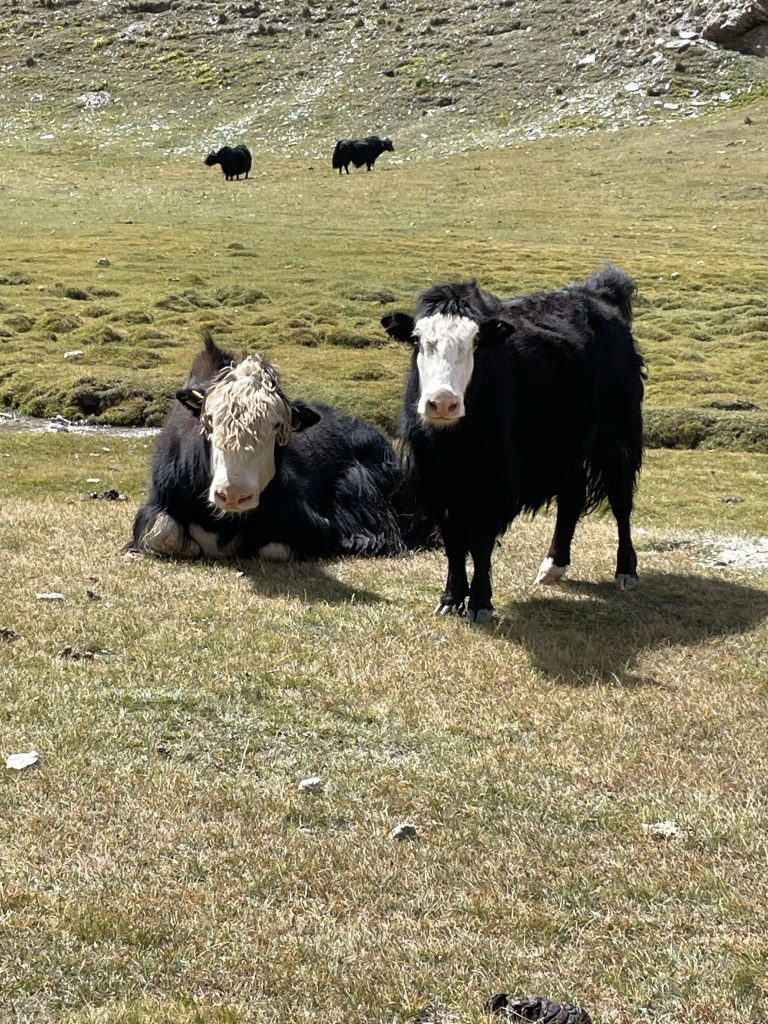
The valley was full of sheep, cows, horses, and yaks. This was our first encounter with yaks, and I was so excited to see them. Yaks are really adorable animals and full of personality. They remind me of a mix between bison and cows and I found the babies playing around with each other adorable.
As we continued up the valley, we were surrounded by green pastures. Our German friend Marvin had decided to fall behind and not attempt the summit, so we spent the day without another person in sight and felt small in the face of the Tian Shen mountains and this extraordinary nature. I felt like turning in circles and singing “The Hills Are Alive” as if we were in The Sound of Music. The other fun animals we encountered on this hike were marmots. They remind me a little of groundhogs, but cuter. They built a series of tunnels under everything and would pop up from one place, run across the grass, and disappear down a different hole. The marmot population looked like they had a good year because they were a little portly struggling to run between their holes throughout the valley.
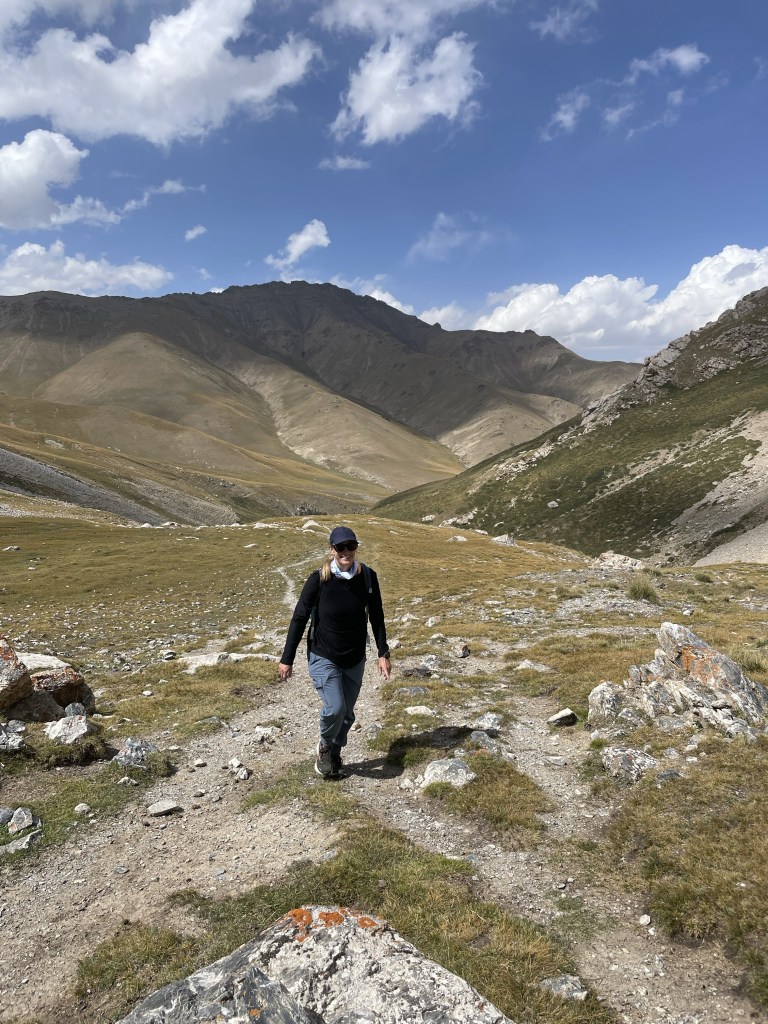
Eventually, the slopes began getting steeper, and my breath started getting shorter. Nate was pushing us at a good pace since we knew we were short on daylight if we wanted to get back before dark. Towards the summit, the slopes became very steep and rocky. Several times when we thought we reached the top, it turned out to be a false summit and my heart dropped. Seemingly each final pitch became steeper and even harder, and I had to take it slow due to the altitude. My body was continuing to adjust to these higher and higher hikes. We topped out on Panda Pass at 13,220 feet.
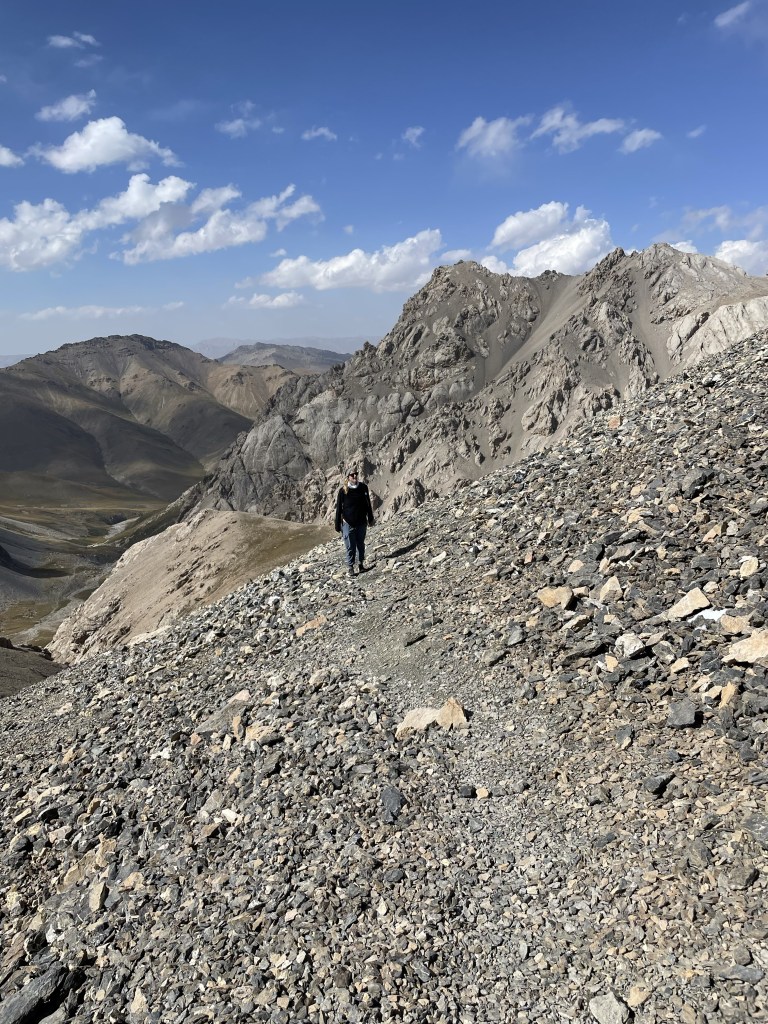
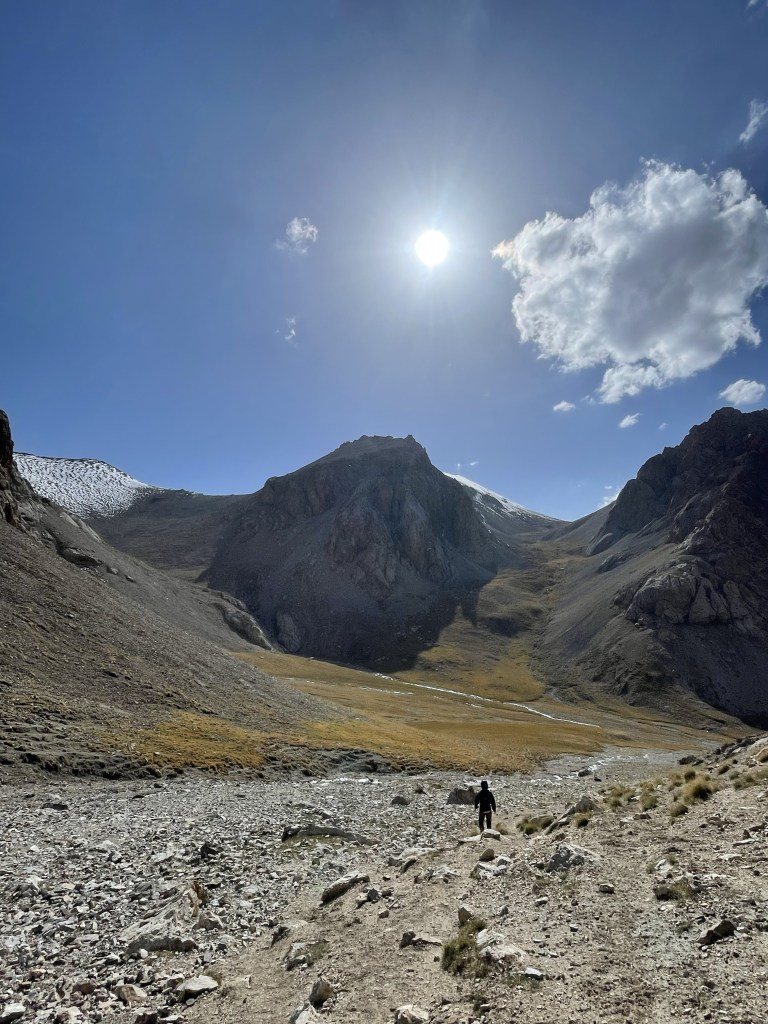
Our final viewpoint looked out over Chatyr-Kul Lake and beyond into China and further into the Tian Shen mountain range. The final stretch was very windy, but luckily someone had built a rock wall at the pass to provide some shelter and break the wind. We sat in our little rock wind structure and shared some snacks while looking out over the giant alpine lake below. Unfortunately, the weather was now a little hazy, but overall it was beautiful. I will say this hike was more worthwhile for the journey than the destination.
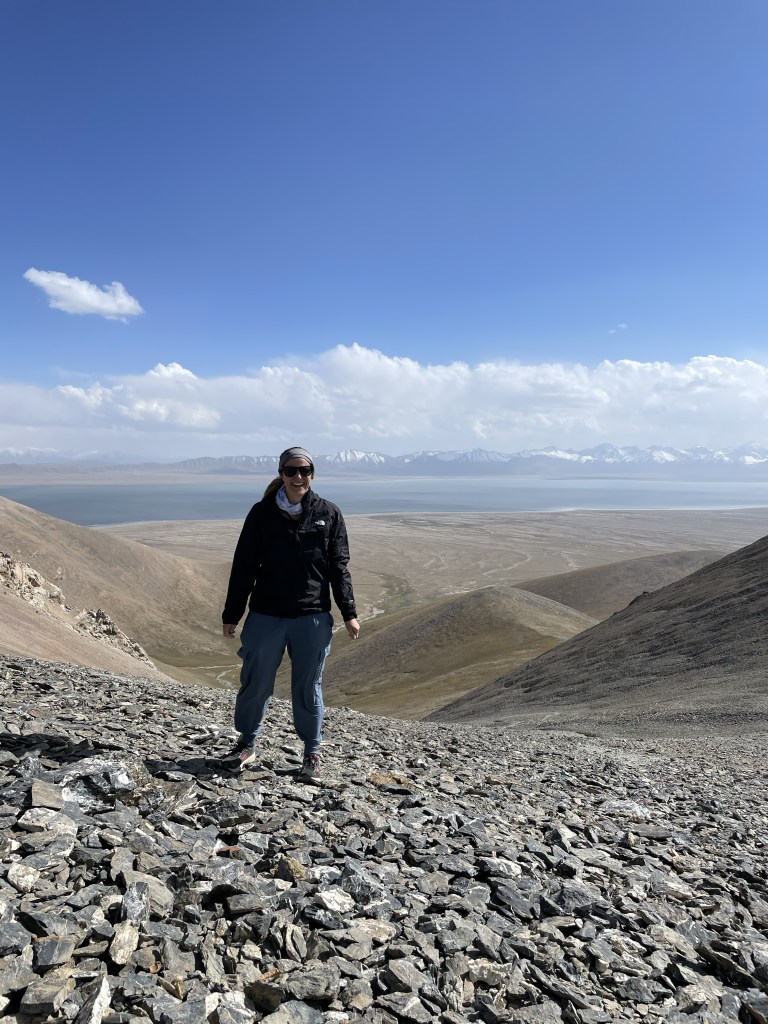
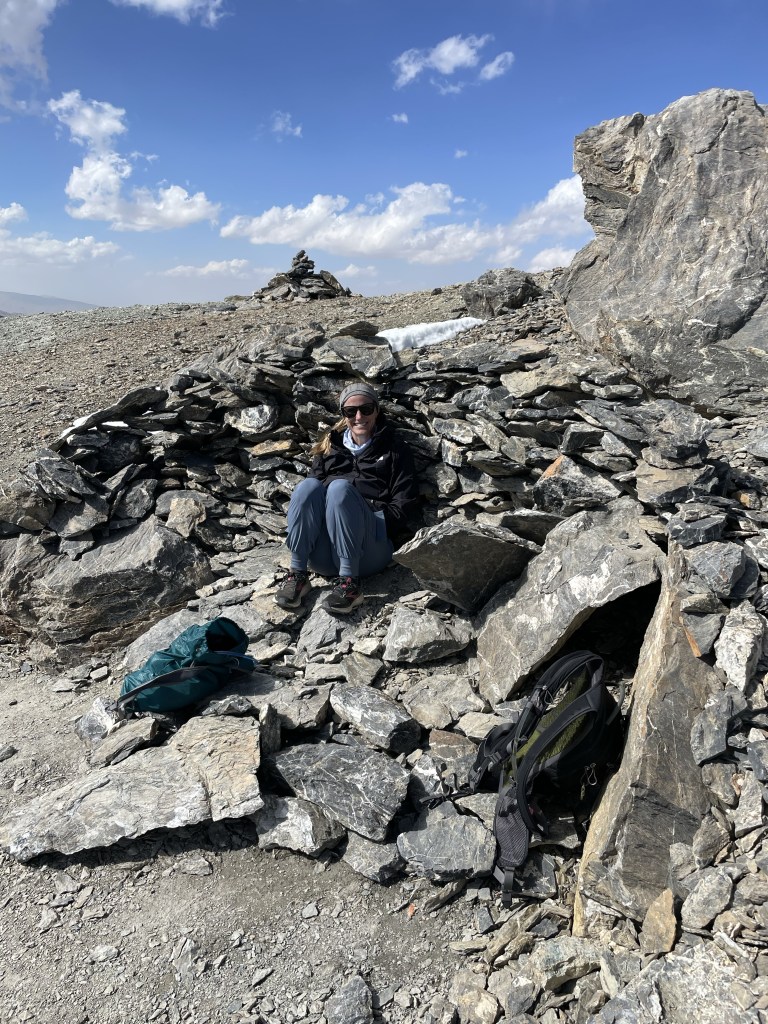
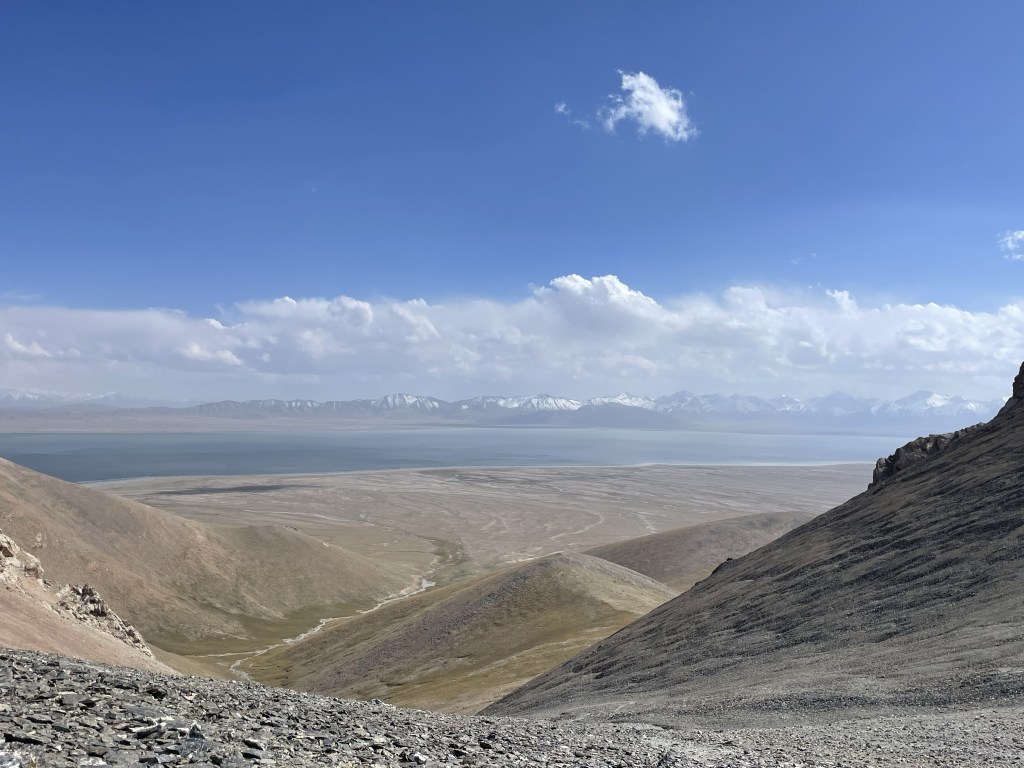
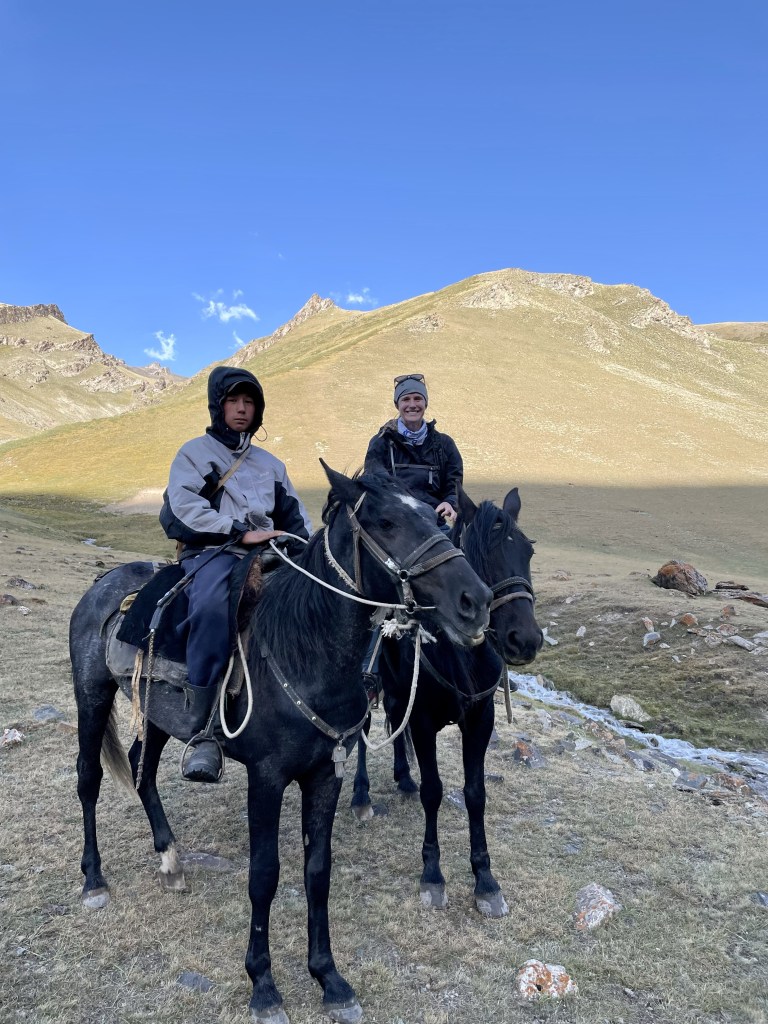
Now very cold and windblown, we hiked down the pass much faster than we ascended. Before we knew it, we were back in the green valley below watching the marmots once again scurrying from hole to hole. We continued down the valley and felt as if we were walking home with the yaks as they journeyed back to their owner’s ranch near the Tash Rabat for the night after a day of grazing. We were approached by horses galloping through the valley with two young Kyrgyz cowboys mounted on their backs. These two gentlemen excitedly stopped to greet us, and even let us get up on their horses and take a few great photos.
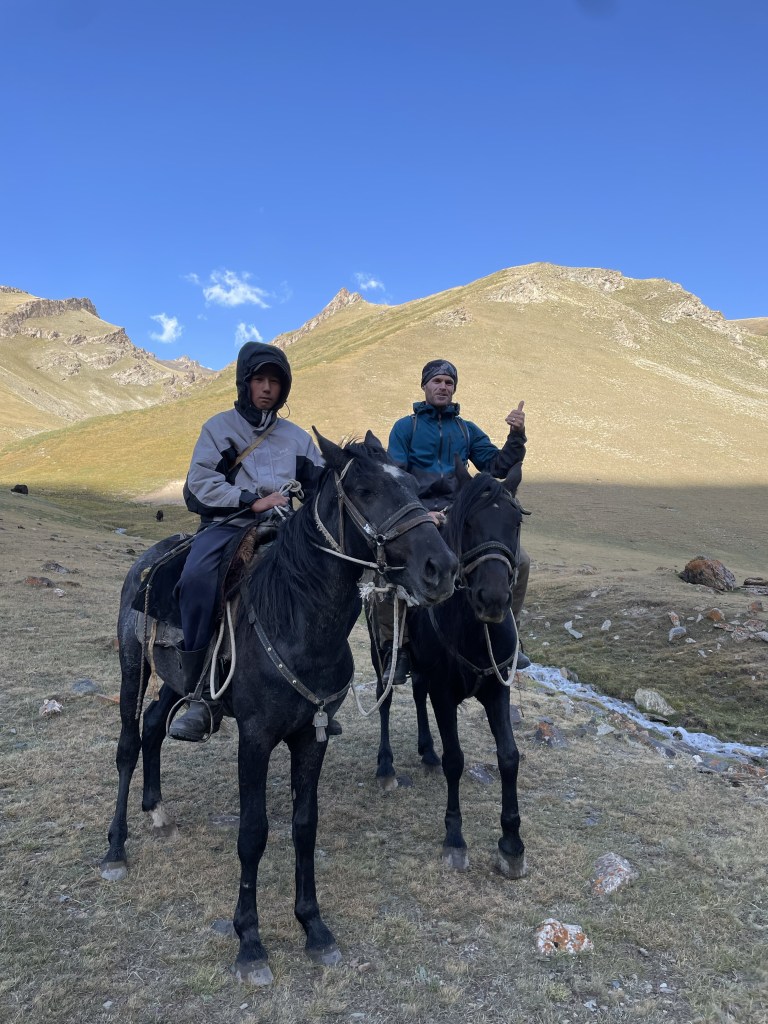
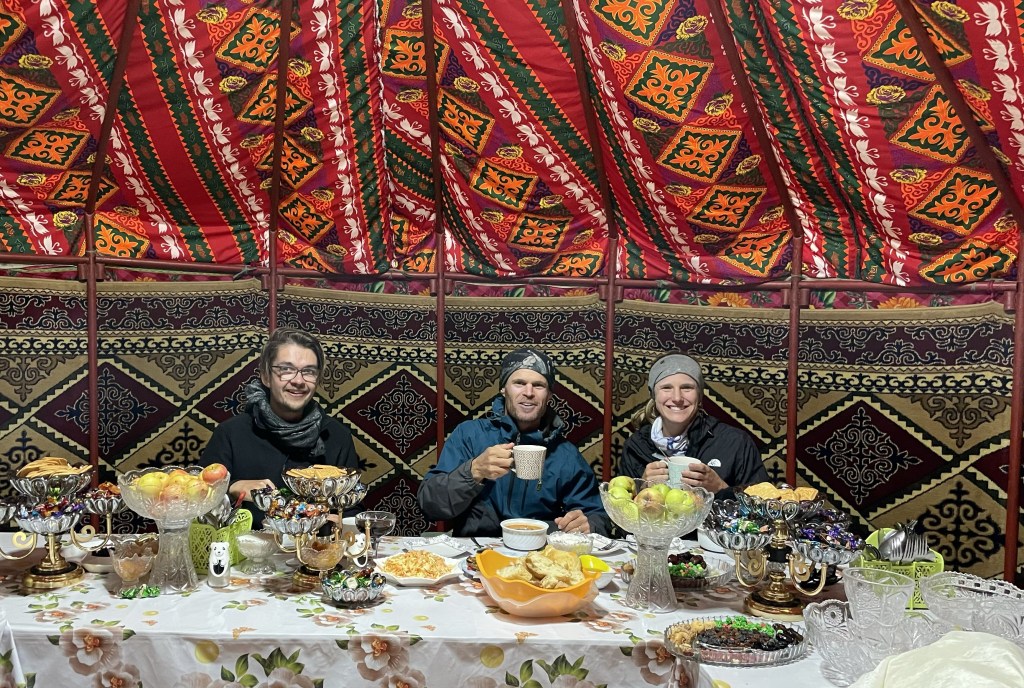
After our fourteen-mile round trip, we arrived back at the Tash Rabat around 7 p.m. just as it was getting dark and frigid. Before embarking on our journey up the valley earlier in the day we had arranged with the Tash Rabat caretaker for her to prepare dinner for us when we returned. Upon returning from the trek we entered the most elaborately and beautifully decorated yurt we had seen thus far, and enjoyed hot tea, amazingly soft bread, and delicious beef stew. This meal hit the spot after our long day, and the lovely lady even let us take half a loaf of her amazing bread with us to go because we enjoyed it so much.
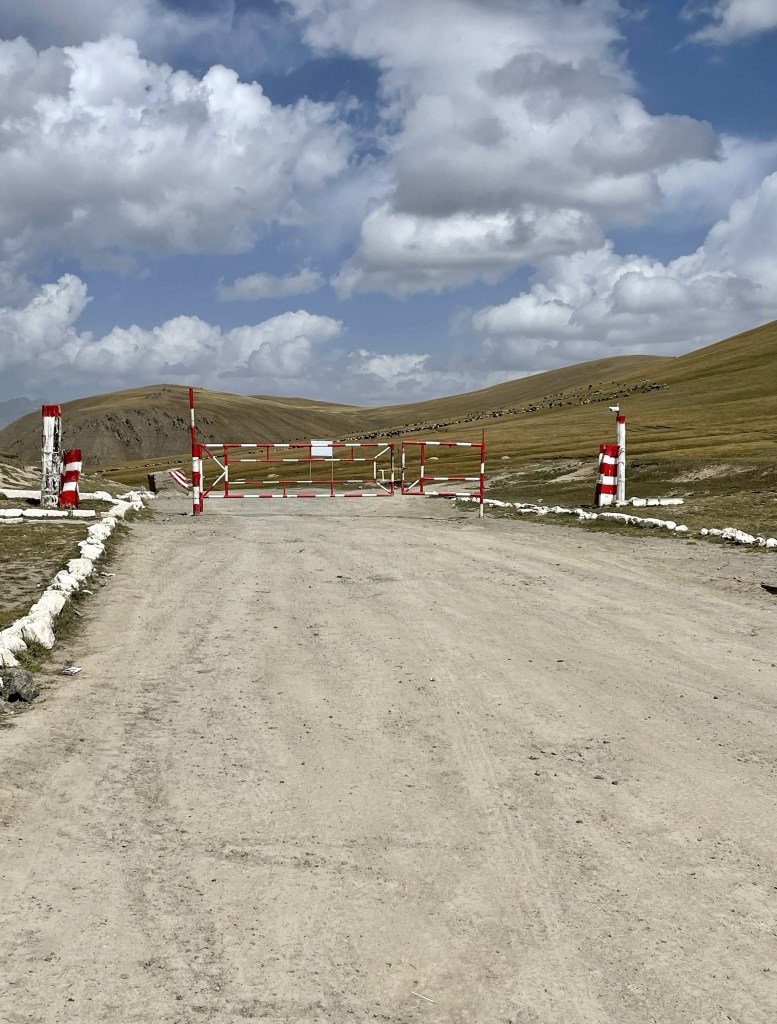
The following day we once again arranged with our host at the Naryn Guesthouse for a private driver to Kel-Suu Lake, which is the most popular trek and scenery in this region. As is often the case, our guesthouse offered a much better rate compared to the organized tours to this lake that we researched online prior to this trip. Planning and research is always a good idea, however, sometimes it works to your benefit to work with the locals on the ground rather than the tour companies often based in the capital cities or even outside the country in untravelled regions like Central Asia. We enjoyed a beautiful, but extremely bumpy five-hour drive up to Kel-Suu Lake. At several points on the drive we had to yield to cows and sheep as they cleared the road, as well as stop at the infamous border patrol checkpoint to show our hard-earned permits.
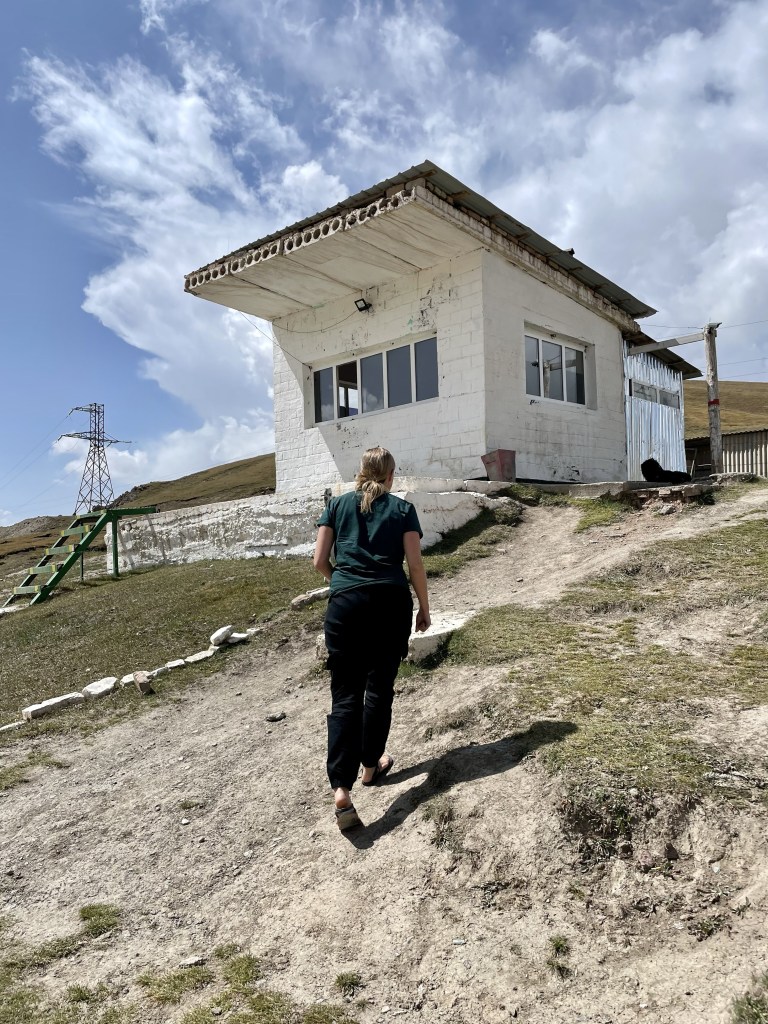
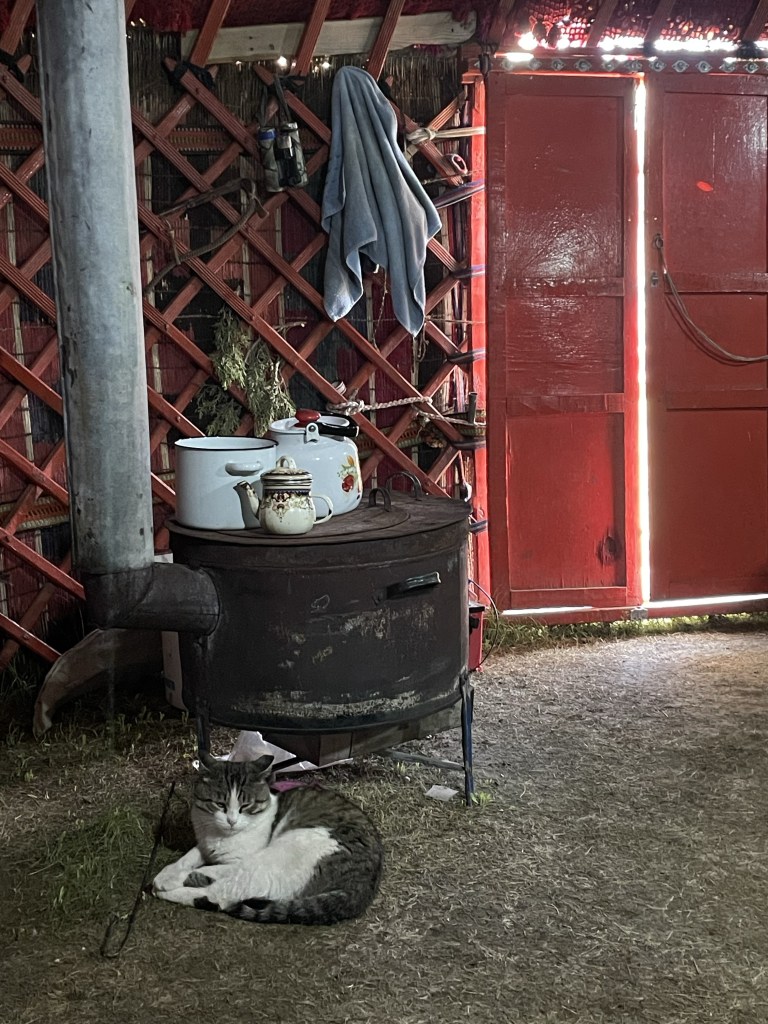
We arrived at the high valley yurt village where we checked into the Yurt Camp Anash, which was owned by perhaps the nicest couple we had met thus far on our trip. As soon as we arrived, they welcomed us into the dining yurt for a welcoming tea with the customary fresh baked bread. We used Google Translate to converse and learn about their small village life living at over 10,000 feet. This traditionally nomadic couple in their mid 50’s had made this valley their home living in a yurt throughout the year in both summer and winter for the last eleven years. Without question, this is one of the toughest places to live that I have ever seen!
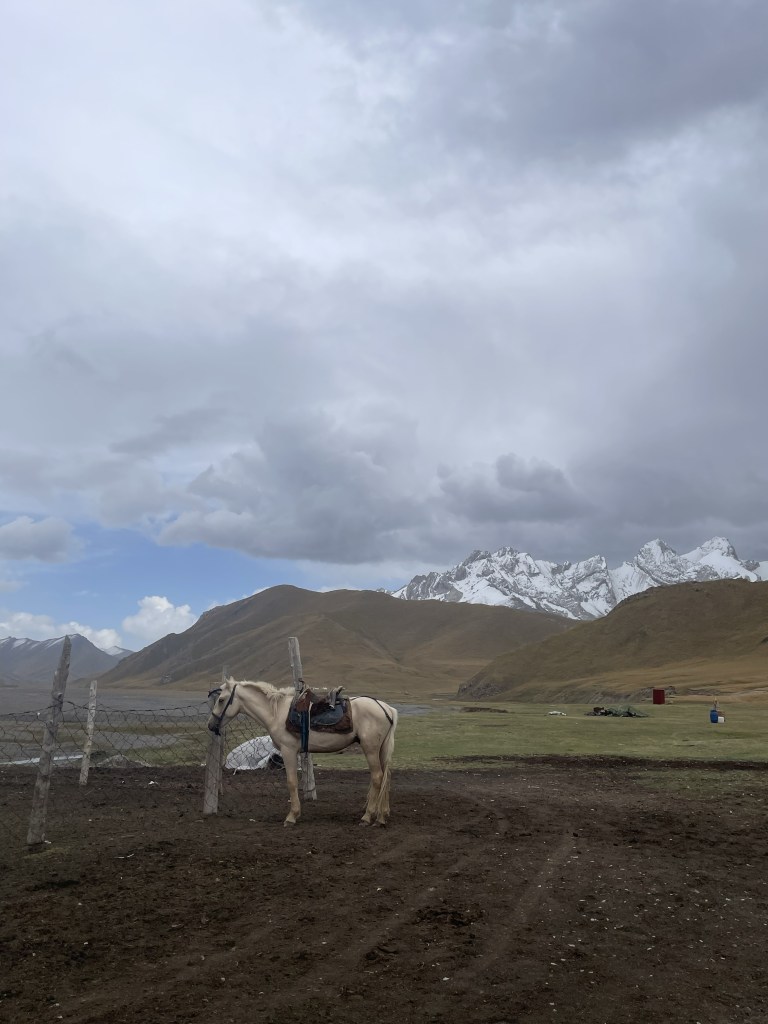
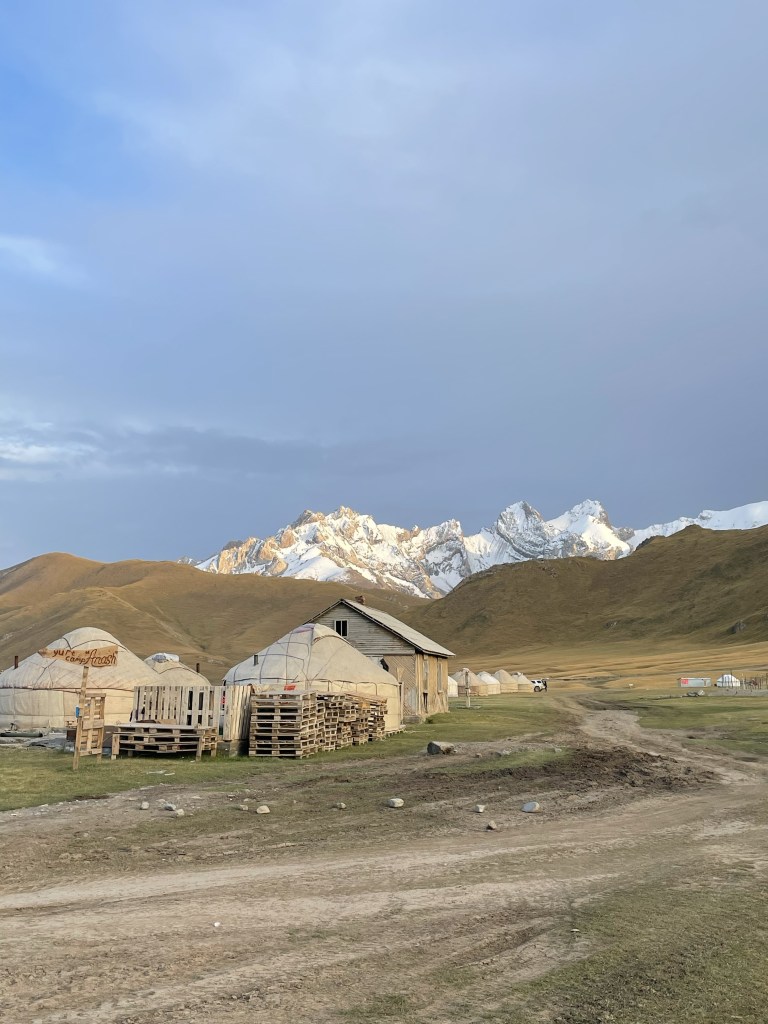
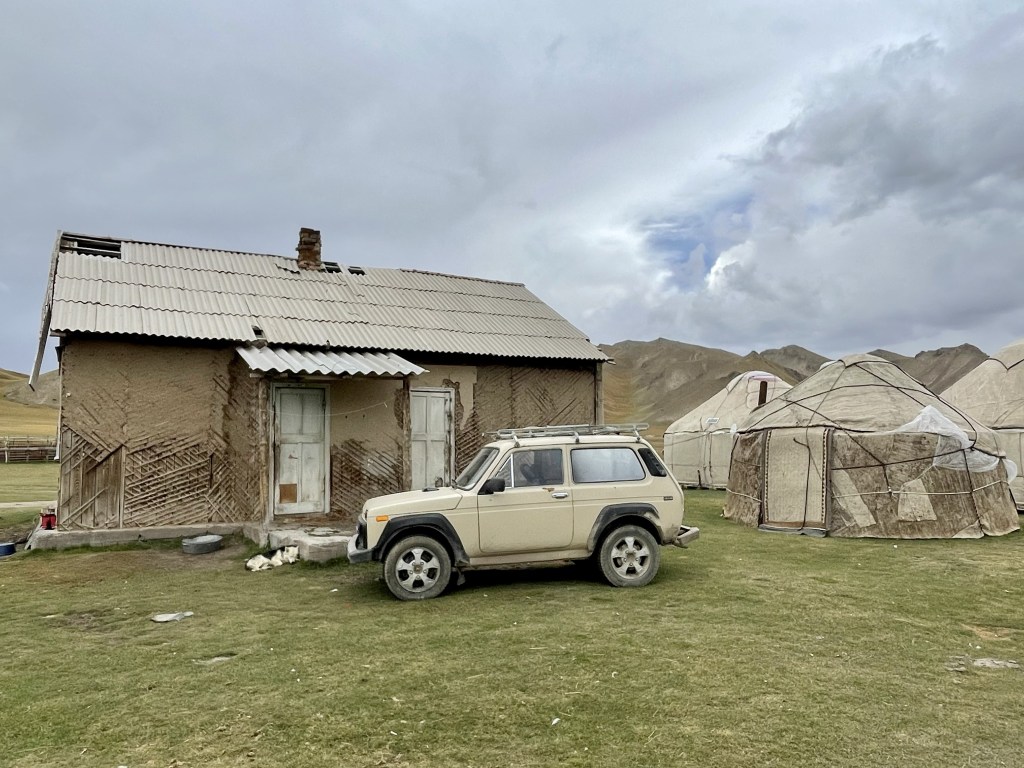
After exploring the valley and finding a nice spot to read, we saw a parade of four-wheel drive SUVs attempting to cross the large river. To my surprise, they made it across easily. We also saw a horseman with his dogs heading across the river and out into the valley to bring his herd of animals home for the night. It started to rain and become really cold, so we worked our way back to our yurt and warmed up under the ridiculously thick set of homemade blankets until dinner. It was extremely cold for the beginning of September, and we were fortunate later that evening when they lit the stove in our yurt using yak dung as fuel for the fire. Trees are nowhere to be found in this region, so as disgusting as it sounds, yak dung is the only fuel available for the stoves and fireplaces. It surprisingly did not smell and provided for a cozy and warm night’s sleep!
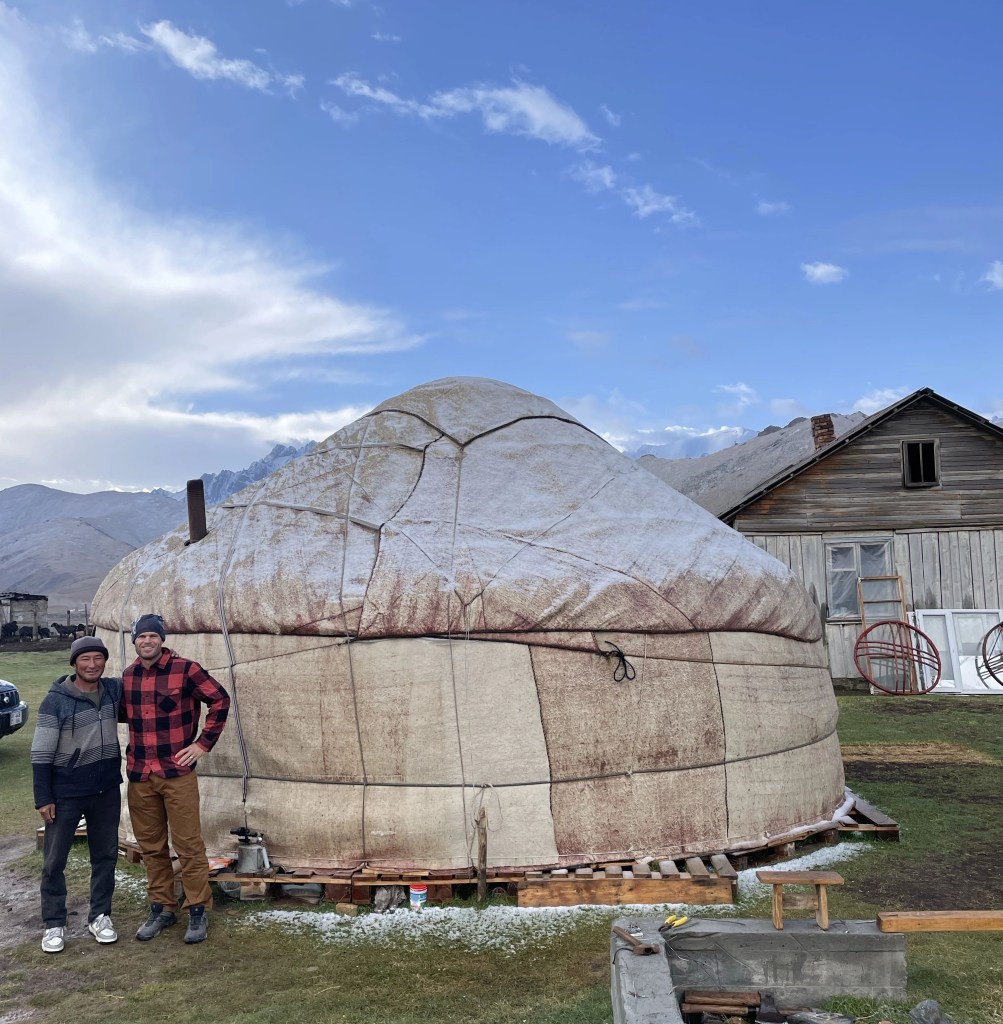
The following day we woke early and were excited and ready for our hike to Kel-Suu Lake. Even though it is not a long hike, it is a hike best done in the morning due to the unpredictable weather at this high altitude in the afternoons. When leaving our yurt, we were greeted by a thin layer of ice on the ground and found a dusting of snow on our yurt. If it snows in the late summer, we cannot even imagine what the weather must be like in the heart of winter!
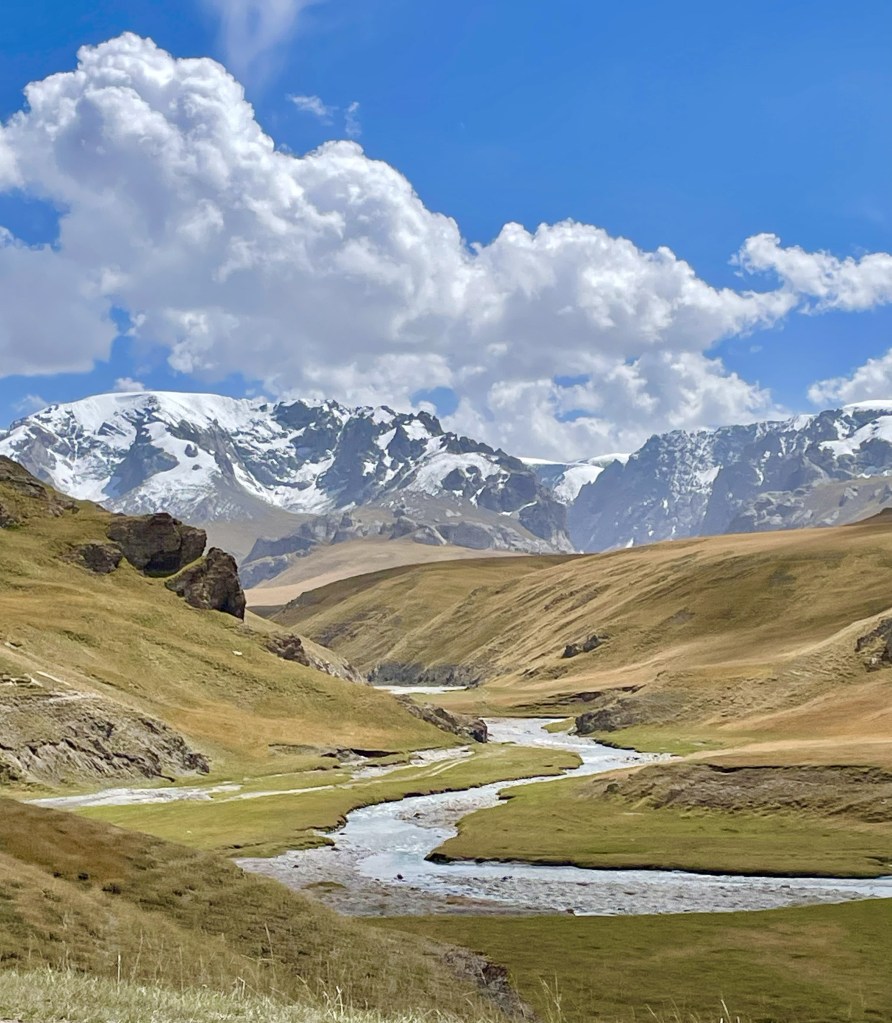
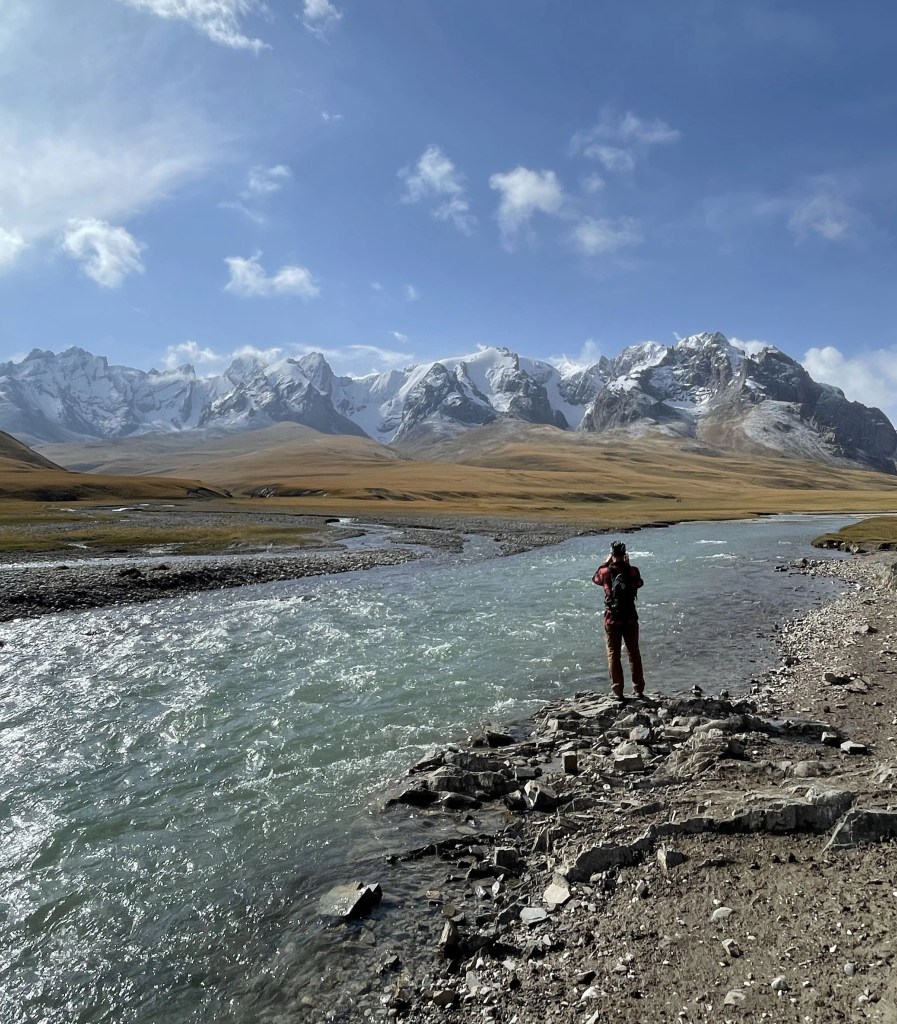
We followed the right bank of the large river basin as it meandered up the valley toward the sharp rocky mountains ahead thoroughly enjoying the views every step of the way. We were passed by a couple small groups of tourists riding horses up the valley, which looked really fun. I was admittedly a little sad that we chose to make the trek on foot as opposed to horseback. The hike was relatively flat until the end with only one tricky creek crossing. I was a bit concerned as to how we would eventually cross the large river but was relieved to find that it magically goes underground near the lake, which eliminated any need to cross before the final ascent.
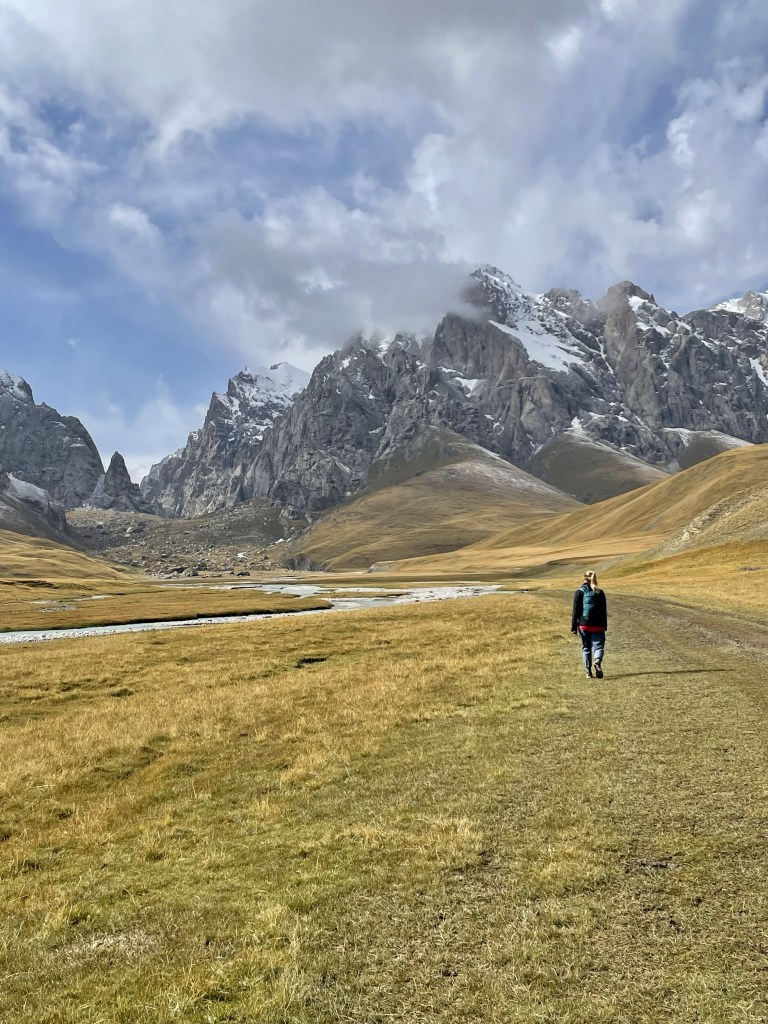
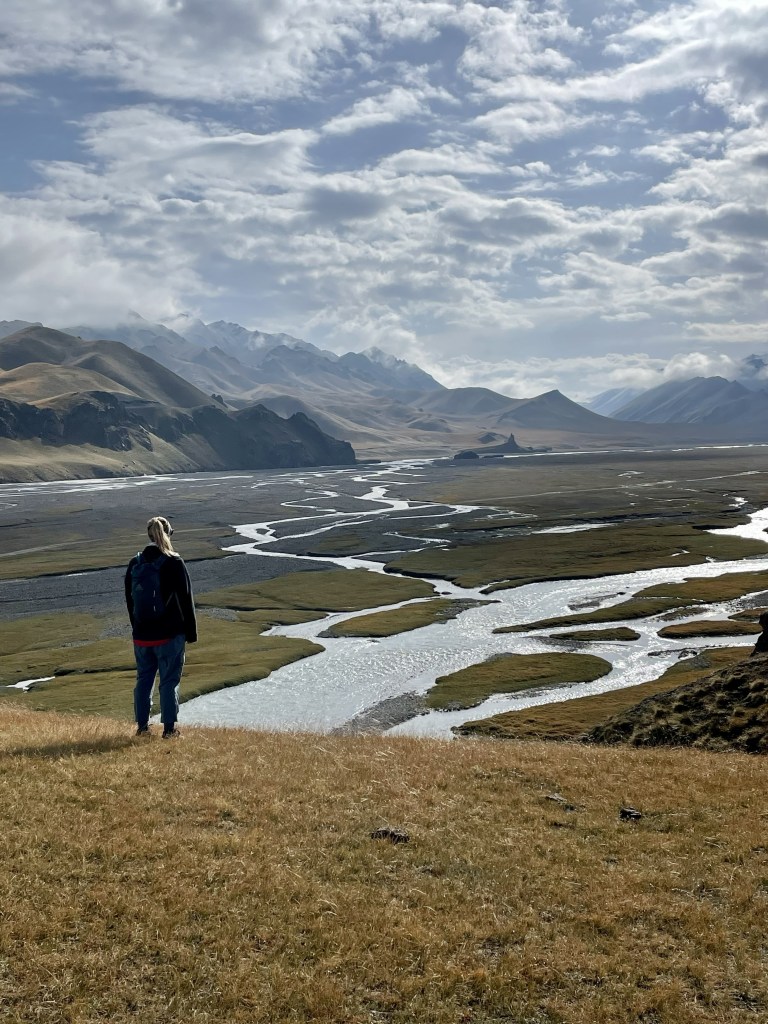
The lake is nothing short of breathtaking. There is no better way to say it. I don’t think I have seen a more beautiful lake in my life, and we have seen a lot of alpine lakes on both this trip and in past travels. The pictures are beautiful, but they don’t even compare to actually seeing Kel-Suu with your own eyes. Since the lake is fed by nearby glaciers the water is almost Caribbean blue. There are sharp cliffs and mountains on all sides, which means the path we took is the only way the lake is accessible.
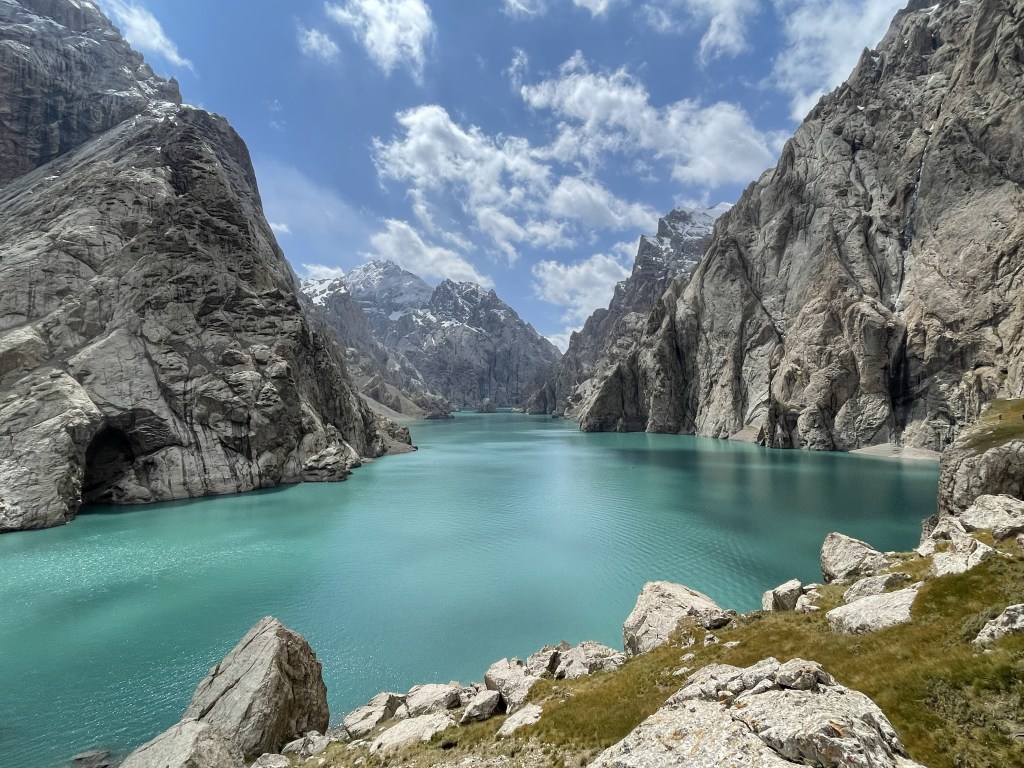
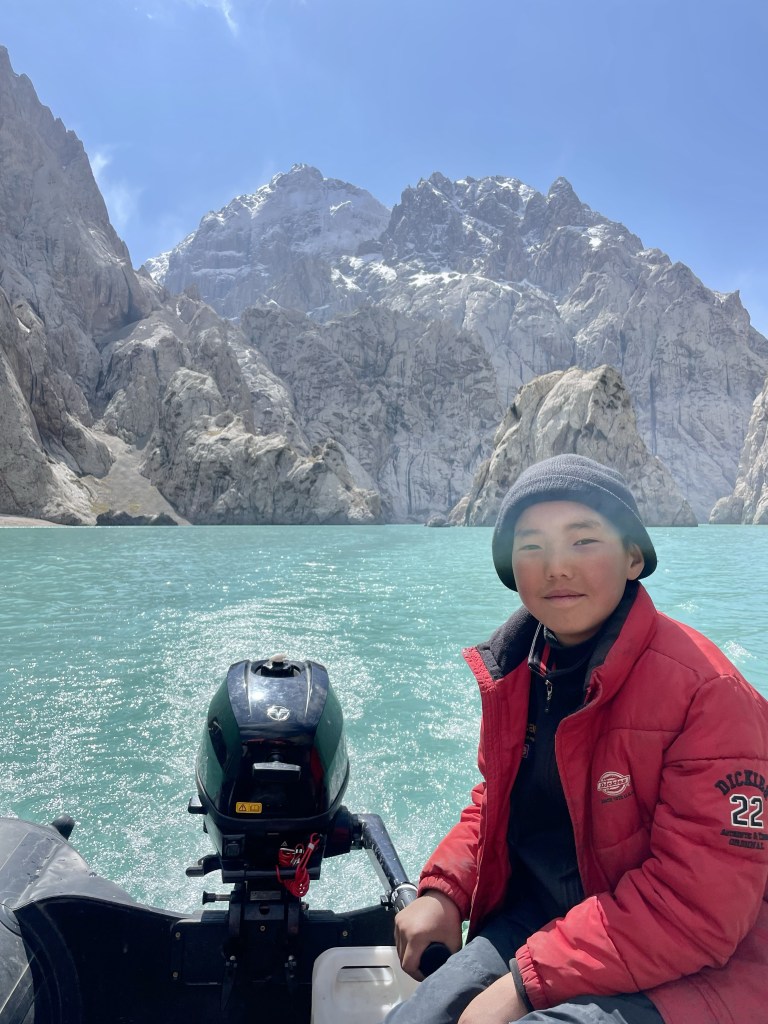
On the lake, several locals have brought up and inflated their small pontoon boats for the summer months, and offer 30-minute boat rides to the other side of the lake for around $9 USD per person. We could not turn down this most spectacular boat ride, and I am so glad that we got to take it in from all sides. Our boat captain could not have been much older than his early teens, and his pontoon had only enough room for the three of us. He went very slow across the lake, and we were able to take in the beautiful colors, and the sheer rock walls and touch the freezing cold glacier water.
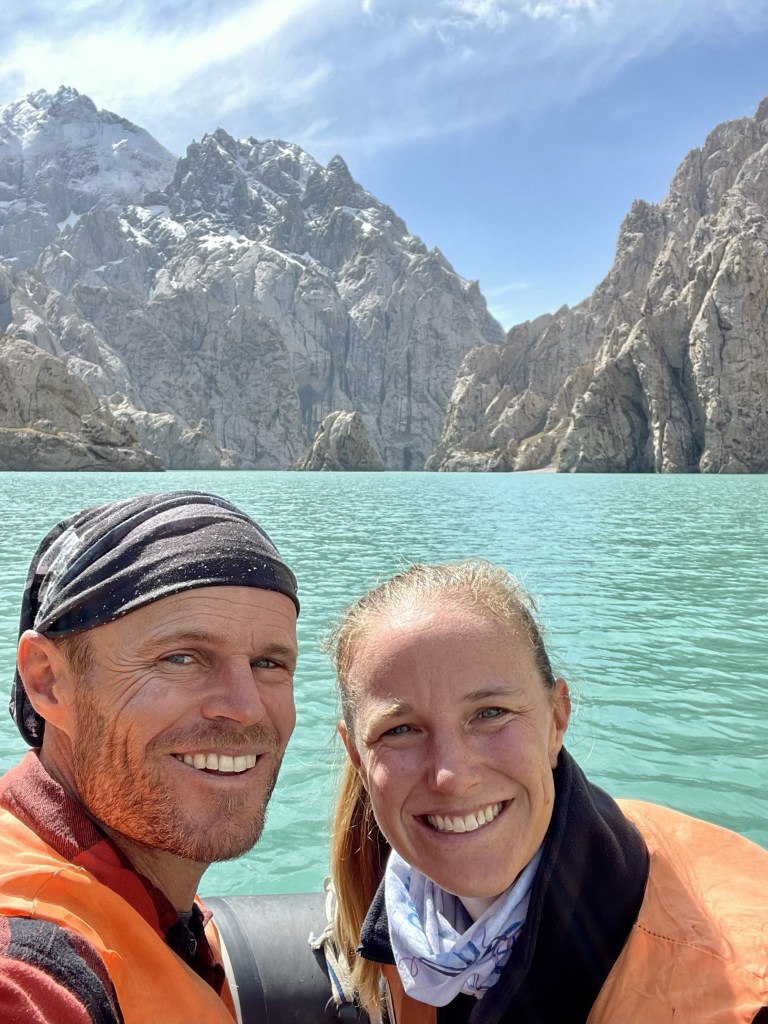
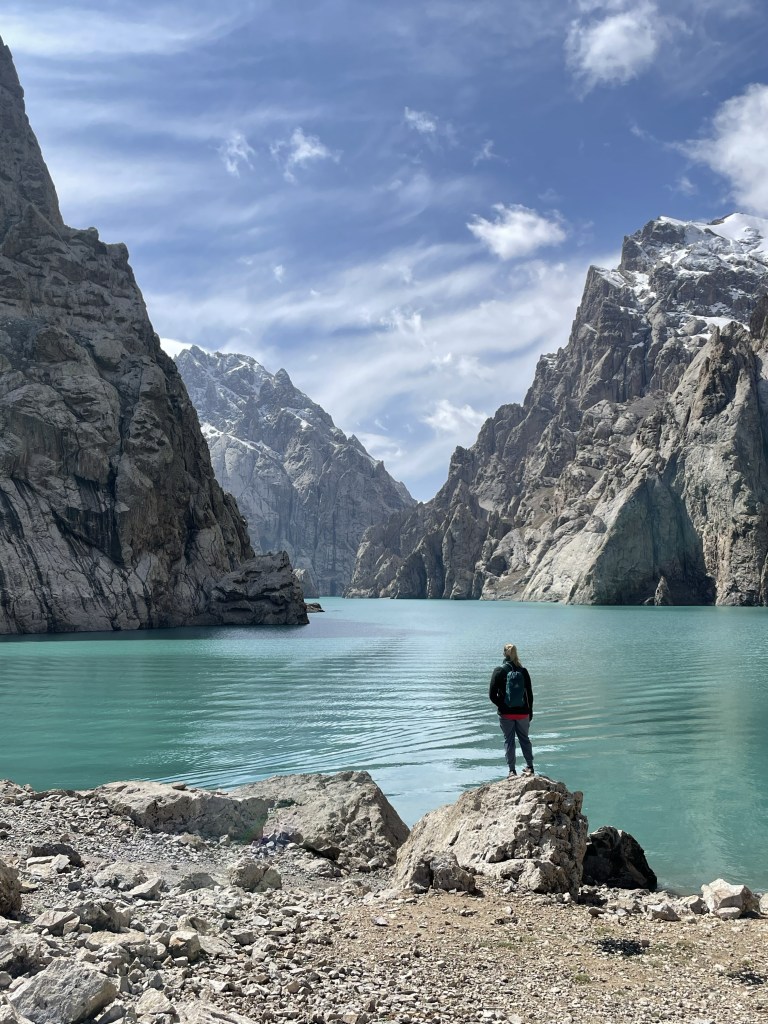
Once reaching the shore, we hiked a bit higher for a better view of the whole lake before beginning the hike down. It was just after noon at this point, and we sensed that the weather was already turning and didn’t want to get stuck in a storm. I am so glad we left when we did because as soon as we returned to the yurt camp it started to lightning and thunder. Then, something weird happened. Little ice balls (sleet) started rolling under the door to the yurt. The storm only lasted around 30 minutes, but I was happy to wait it out in a warm yurt instead of on the side of the mountain or up at the lake.
After one final round of tea and bread, we drove the same bumpy road back to the Naryn Guesthouse. For the drive back down from the yurt village we were joined by the host from the Yurt Camp Anash as he caught a ride to see his parents and children who live in the lower towns of the valley. As with most in this region, the yurt camp hosts did not seem to have a car so riding with drivers who come down to the valley is their only means of transportation. We saw his mom’s house, which was quite dilapidated and almost appeared abandoned, and we were reminded how lucky we are to live with so many luxuries that we often take for granted.
Our adventures in the south were full of kind hospitality and beautiful scenery. This is a difficult and remote region that is far less traveled due to the difficult and limited travel options and the near necessity for a private driver, but for the sheer beauty of this mountainous region, I highly encourage anyone visiting Kyrgyzstan to add this to your itinerary.


