We finished up our time in Tajikistan with a few enjoyable days in the capital city of Dushanbe where we recovered from the intense ten days that we spent traveling and hiking on the Pamir Highway. From Dushanbe, we made our way north into the Fergana Valley and spent our last night in the country in the border town of Kujand before crossing into Uzbekistan the following morning. This is not the normal traveled route through Central Asia, but we were eager to see the people and experience the culture in this vital agricultural region. The Fergana Valley is an important area for Central Asia since it has some of the most fertile soil. The land in this agricultural region is split between Kyrgyzstan, Uzbekistan, and Tajikistan and there have been many border disputes over the years. Historically there are several towns in the Fergana Valley that are rich in Silk Road history, due to the silk making that later gave these trade routes the namesake they have become synonymous with.
The first city we visited in Uzbekistan was Kokand. Unfortunately, we realized upon arriving that we were here a few days too early as they were setting up for their annual International Festival of Handicrafts. It was even more unfortunate because hotels were either sold out, or already increased to double the price for the week, yet we were there two days before the festival truly started, and therefore could not partake. So, we paid the increased price for lodging without the fun and unique cultural experience over the upcoming weekend. One observation that we quickly made about Kokand was the lack of restaurant options here. We saw very few quality places to eat out, and the restaurants we were able to find classified more as “fast food” and seemed to only sell fried chicken, pizza, and burgers, none of which we would call delicious. I’m not sure where people eat in this fairly large town!!

After setting out on foot to explore Kokand, we found two places of note, the Palace of Khudayar Khan and the small, but unique Juma Mosque. In the afternoon of our arrival, we walked over to the Palace and its surrounding gardens, which were clearly going to be the site for the festival that upcoming weekend. There were many locals running around setting up all booths for the artisans, and many areas were cordoned off. Luckily, we were able to still enter the famous palace despite a large stage with big screen TVs and grandstand seating being set up in front of the main entrance, as well as several dance and music acts that were running through dress rehearsals.

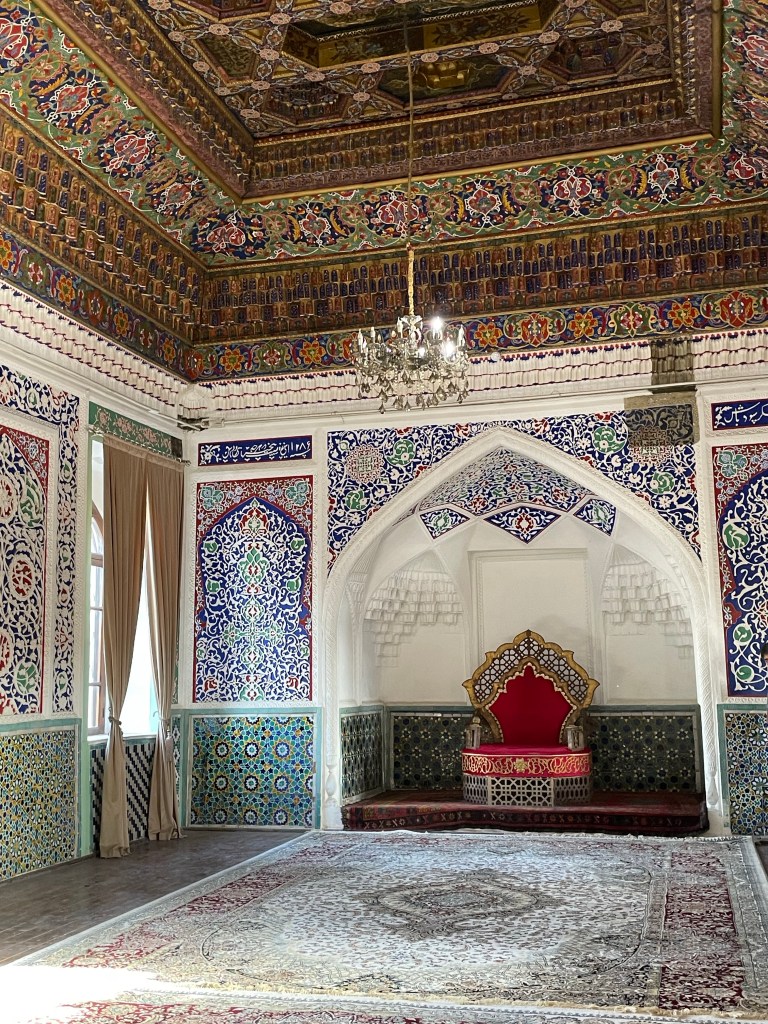
There is a small fee to enter the palace, and it is obvious that a great deal of it has been reconstructed from its original form. Upon entering through the main gate there is a room where the Khan would apparently hold court, and a throne is set up to show what this room may have looked like. Also of interest was a small museum set up within the palace walls with old documents and photos, as well as a small art gallery. The self-guided tour took us a little over thirty minutes.
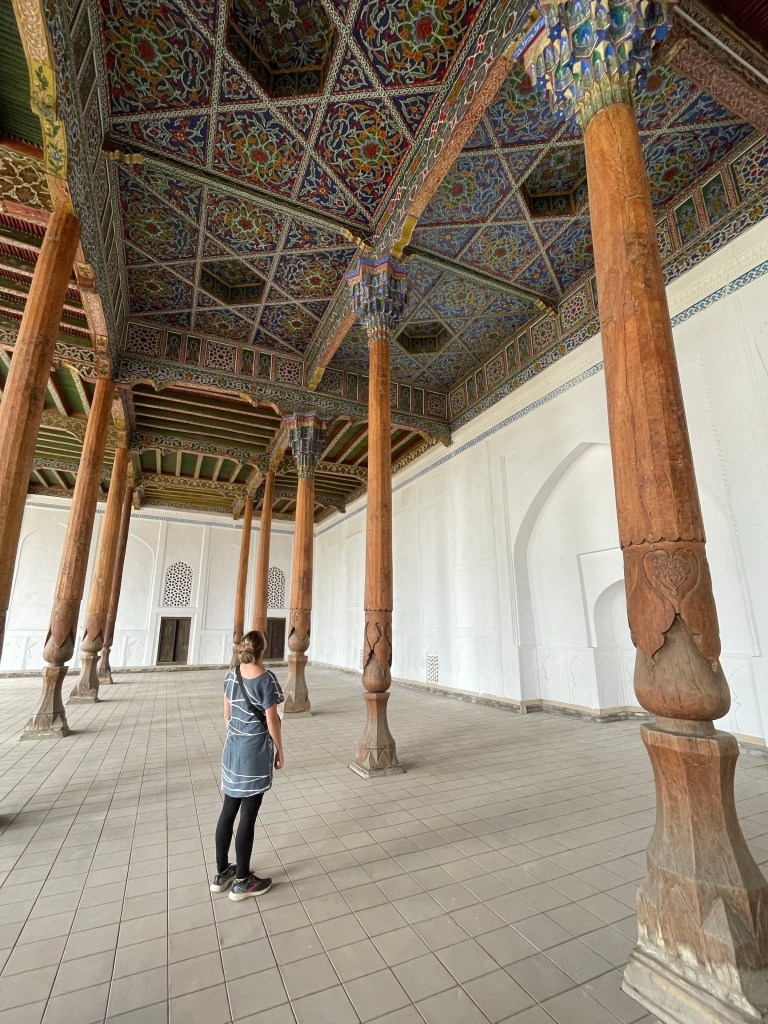
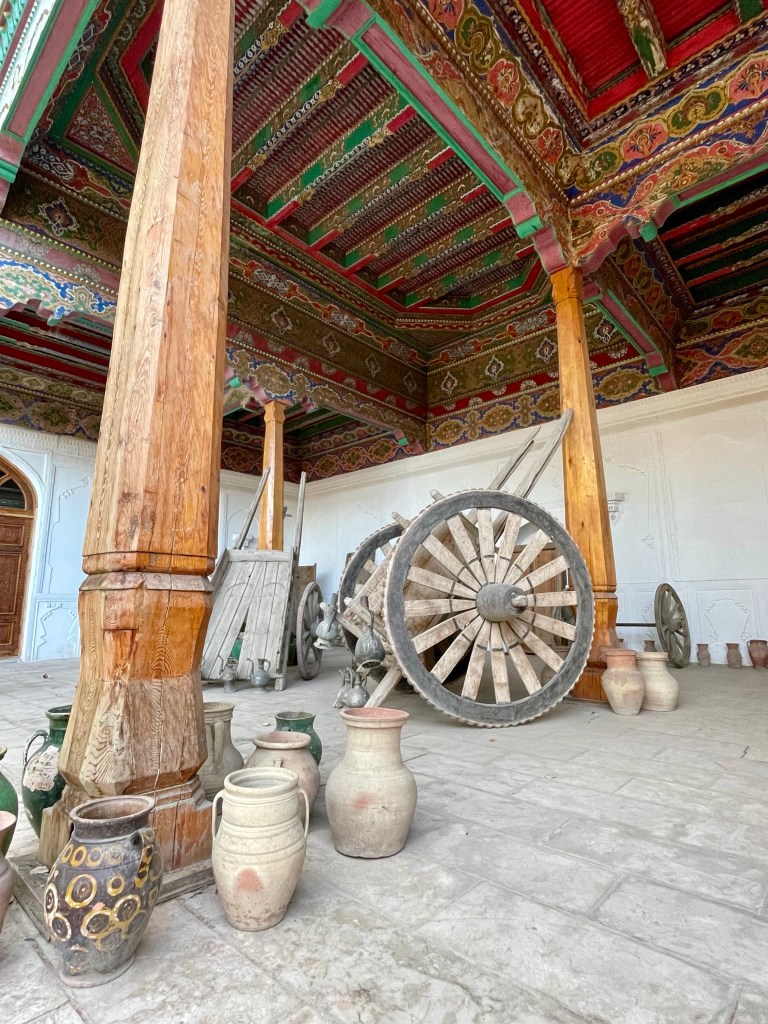
The other notable spot in Kokand is the Juma Mosque which dates back to the early 1800s, which we visited the following morning. Many of the old mosques in Uzbekistan have been converted into Artisan centers to promote and help continue the local trades and handicrafts that date back many generations in this country. As with the palace, there is a small fee to enter this famous mosque. The most notable and impressive feature of the Juma Mosque in Kokand is the many large wooden poles that are said to be redwood imported from India. The wooden poles are elaborately carved with designs, and the wooden ceilings are painted with different mosaics. The mosque is built around a courtyard with an iconic and colorful minaret in the center.


Around the outside are various artisan stores with workshops producing silk, metal works, jewelry, knives, and beautiful ceramics. Since we went early in the morning, there were few other tourists, which was wonderful, however many of the artisans were not yet open for the day, or perhaps they were busy preparing their booths near the palace for the upcoming weekend’s International Handicraft Festival.

After visiting the Juma Mosque, we took a taxi to the bus terminal in search of a bus or shared taxi to Margilon, a smaller town in the Fergana Valley with an equally rich Silk Road trading history. Upon arriving at the bus station, it was apparent that taxi drivers were trying to take advantage of us, so we were pointed in the direction of a local bus to Fergana, another regional city and we were told we would be able to hop off halfway to Fergana at a roundabout just outside of Margilon. This was definitely the most affordable option.

This option turned out to be a bit interesting as I thought the bus might take a loop around the roundabout for us to hop off at the side closest to the city, which unfortunately did not turn out to be the case. We were essentially dropped off on the side of a small three lane wide highway in a giant roundabout with no sidewalks, and then we had to negotiate across the roundabout on foot in order to pick up a smaller shared taxi for the final few kilometers into the city. Luckily an older local woman on the bus was also headed into Margilon and alighted with us, so we followed her lead. She bravely took the strategy of just walking out across this very busy and high speed roundabout, and trusting that everyone will just yield or go around. It worked just as she knew it would! She even helped us flag down the small transportation van that we all needed to get into the city, and explained to the driver our situation, despite not speaking a word of English. It was quite motherly.


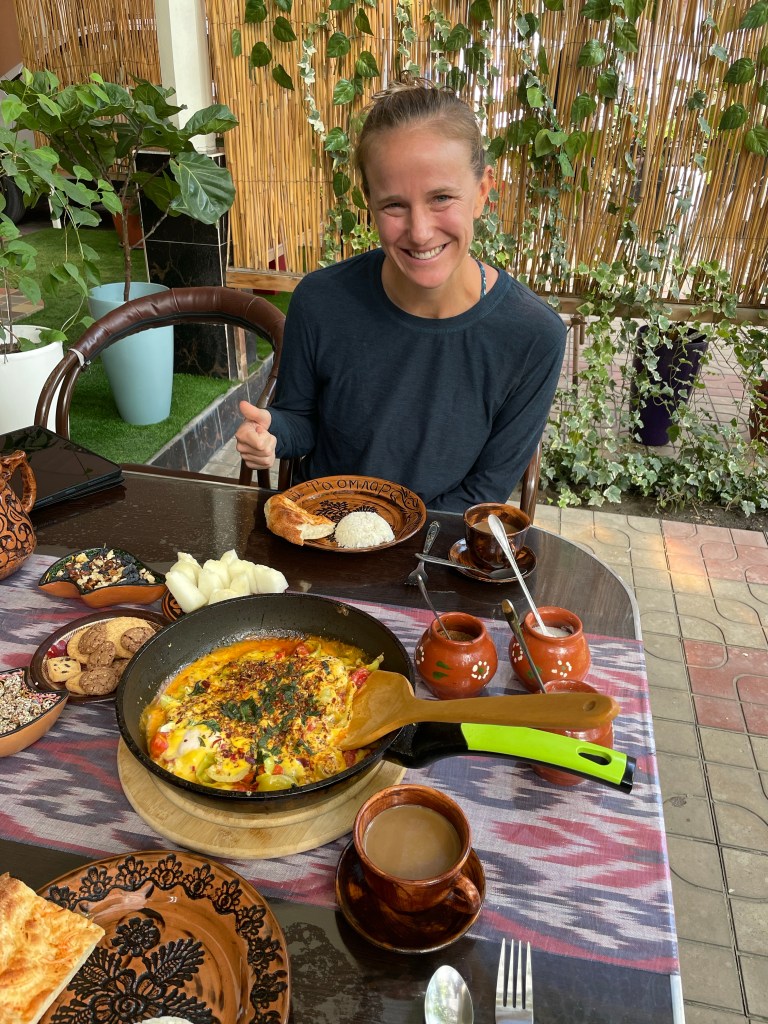
I really loved our guest house in Margilon, which was interestingly called Guest House Evergreen, even though it was outside of town a few kilometers away. The host spoke terrific English, he was very knowledgeable and helpful, the breakfast served was amazing, the courtyard was full of flowers and greenery, and the room with an en-suite bath was very well kept!
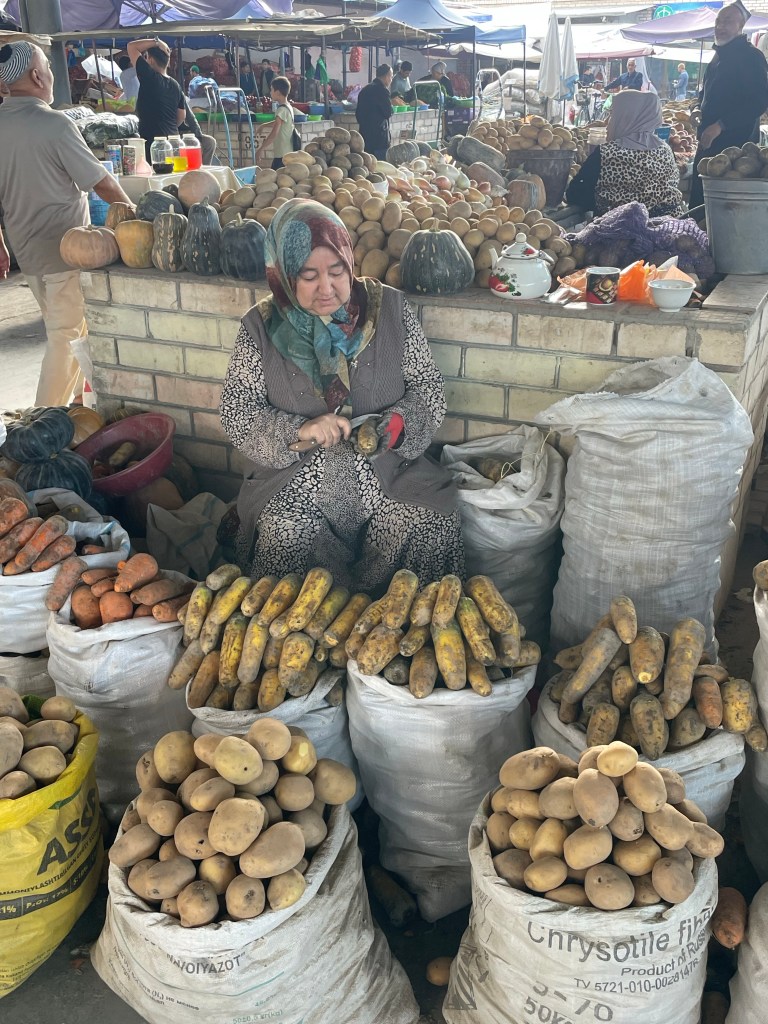
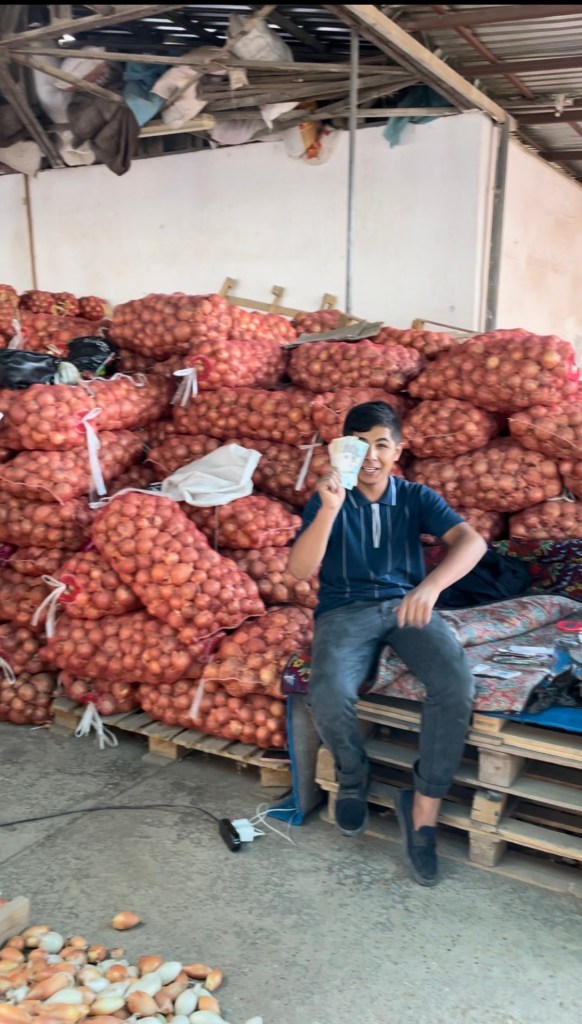
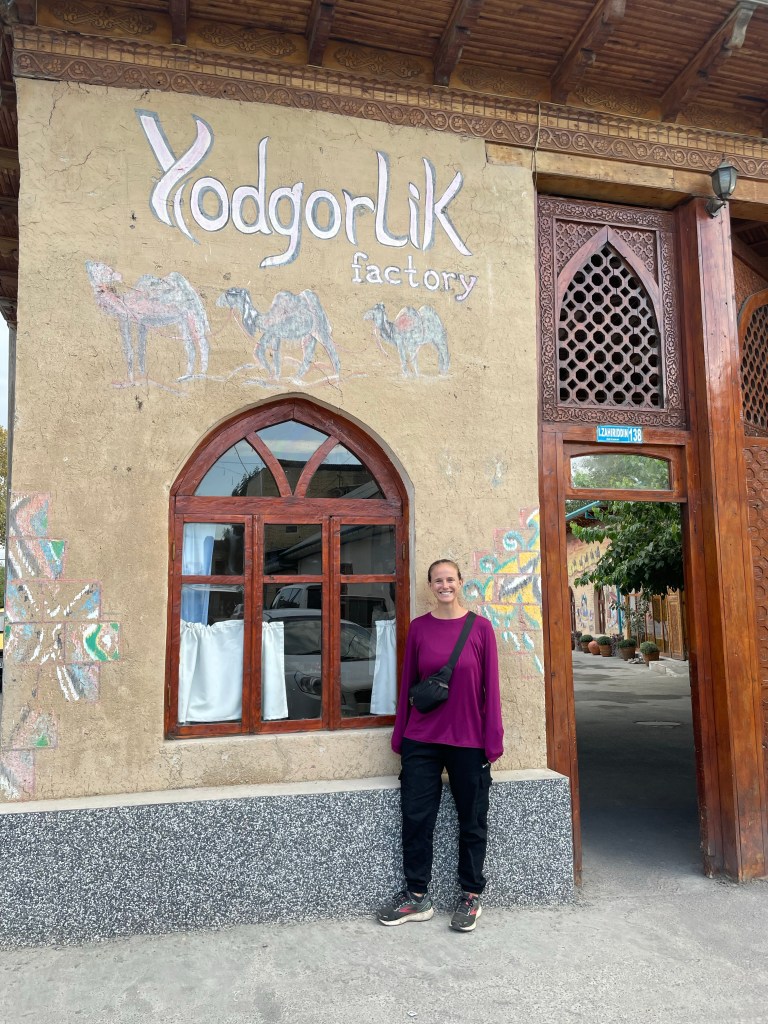
From our guesthouse, we took a taxi to the Yodgorlik Silk Factory, but when we arrived our stomachs took us in a different direction. In our search for food, we found the local farmer’s market. Even though there wasn’t anything for lunch, it was amazing to see the amount of produce that was available in the Fergana Valley. It is difficult to fully explain the amount of tomatoes, onions, watermelons, and other melons that were being sold here. They were piled high, and it is hard to imagine this much produce being sold before it went bad.

Walking further, we finally found what we were looking for in some quick street food. We discovered samsa (meat-filled pastries) for the first time, and they were delicious! In Uzbekistan we found that the food was a lot of meat in bread, or meat and bread, so this is definitely a country for meat lovers. We followed this up with some ice cream and were very content when we finally made it to the silk factory. What is special about Yodgolik Silk Factory is that you can take a tour through the whole silk-making process with an English-speaking guide. Our guide was a bit young and overconfident, but we could understand him quite clearly and left with a general idea of the process.
Silk of course comes from silkworms. Silkworms are grown in a factory offsite. They are encouraged to cocoon, but once they do, they are heated up so that the worm inside dies while the cocoon remains. This cocoon is made of silk. The worms along with the cocoons are submerged in water and a master is able to use a stick to catch the strands of the cocoon and wind them into spools of white silk. Spools of silk are combined into larger spools where a counter spins a wheel to make sure that the number of threads is equal in each bundle.


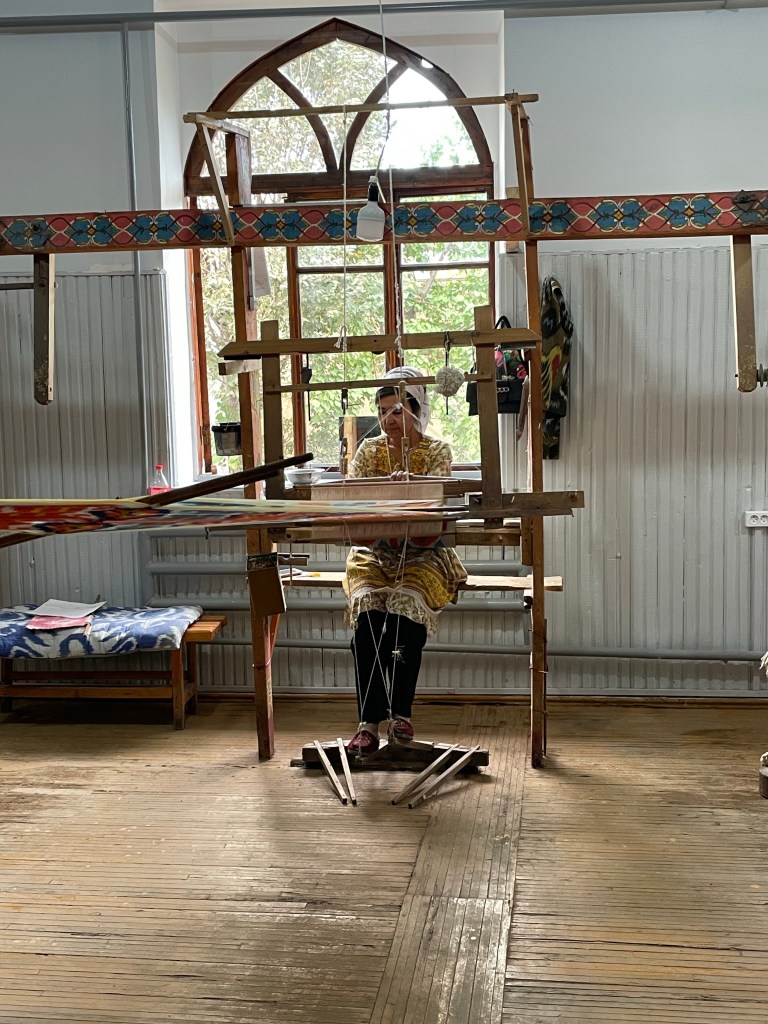
From there, two things can happen. If the silk is made into carpets, the process is tedious and can take a weaver one month to weave one square meter of carpet and from six months to even a year to make a full carpet.
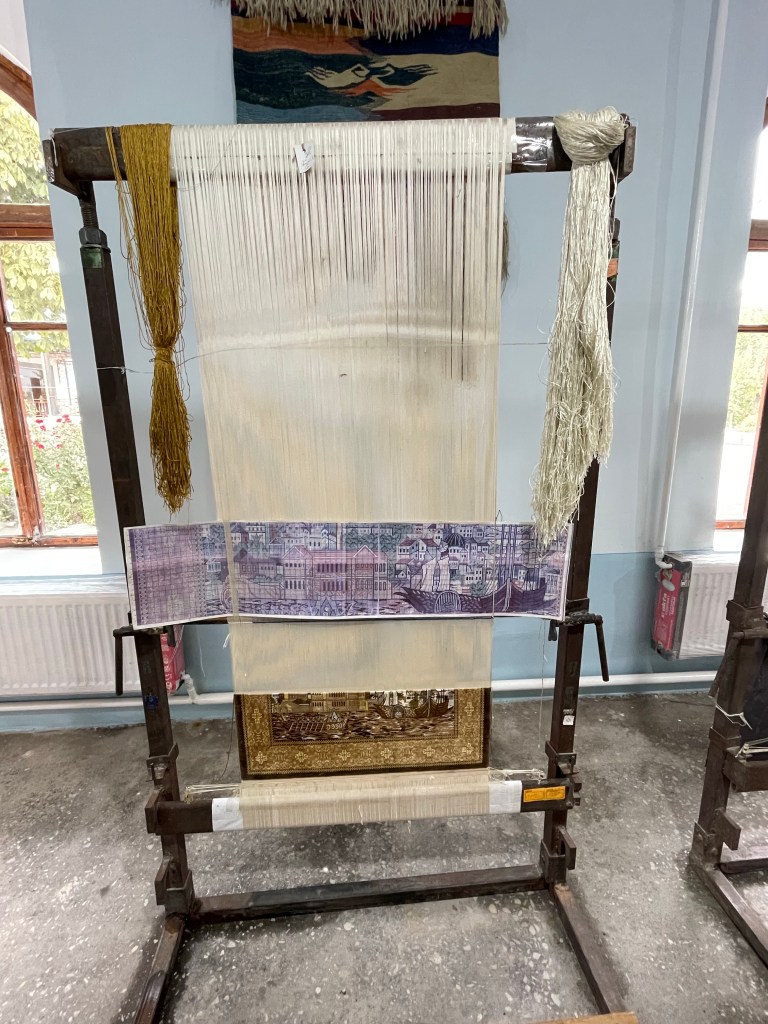
If the silk is being used for fabric, the equal bundles of silk threads are laid out and a colorful design is created. Each bundle is then separated and taped using a spinning machine and scotch taped to isolate parts of the thread so they can be dyed one color at a time.


Finally, the silk is woven into fabric, either by hand or machine, at which point you can see the patterns and material of the silk fabric that is then used to make clothes. After seeing this whole process with my eyes and how many people have a hand in making one meter of silk fabric, it makes clear sense why this material is so expensive. If the whole process is done by hand, it can take a month or more to complete. I would highly recommend to anyone visiting this region to visit the Yodgolik silk factory, to learn about this beautiful process that gives the Silk Road its namesake.
Our final two stops of the day were to visit mosques. The first mosque was called Said Ahmed Haji Madrassasi. Similar to Juma Mosque in Kokand, this mosque has been turned into an artisan center and is a place where local artisans including silk makers can work and show their goods.
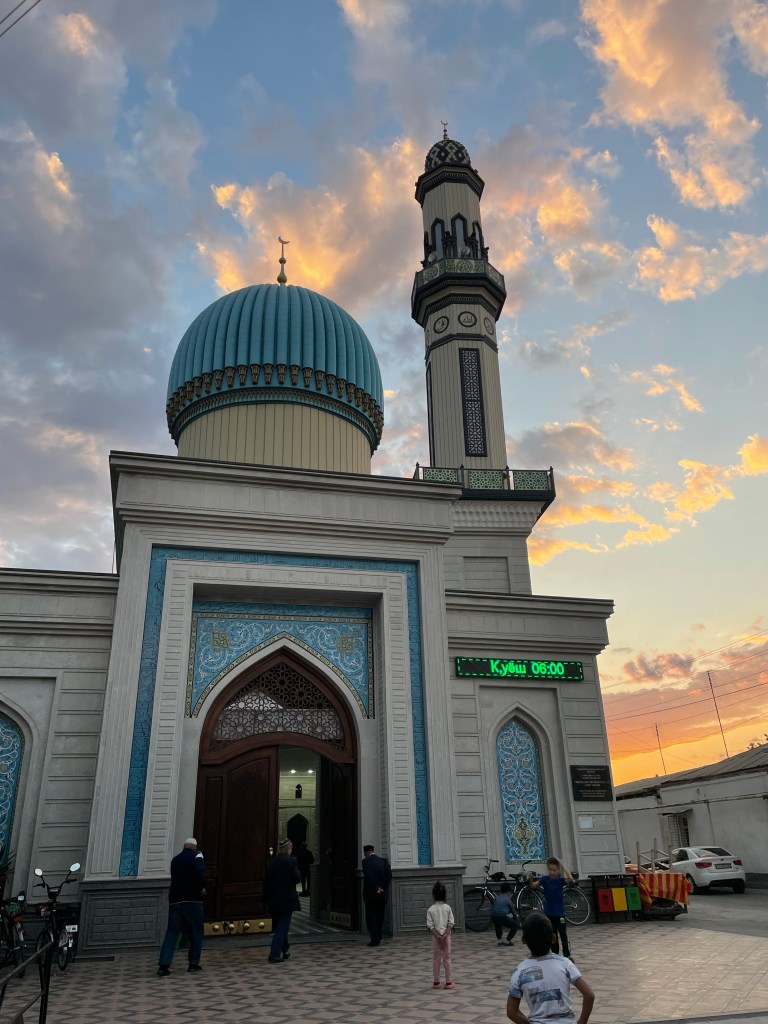
Our final stop of the stay was an accident. We were wasting some time before dinner and went on a walkabout that somehow took us to a small neighborhood mosque that would definitely not land on the typical tourist circuit. We arrived at the mosque right before the call to prayer and saw all of the men of the village riding up to the mosque on bicycles. One man saw us and beckoned Nate inside to give him a tour of the mosque and its history. I unfortunately was not allowed inside, so I stayed outside and played football with the neighborhood kids. This was one of those unplanned local experiences that was fun to have and would be absent for the remainder of our stay in Uzbekistan.


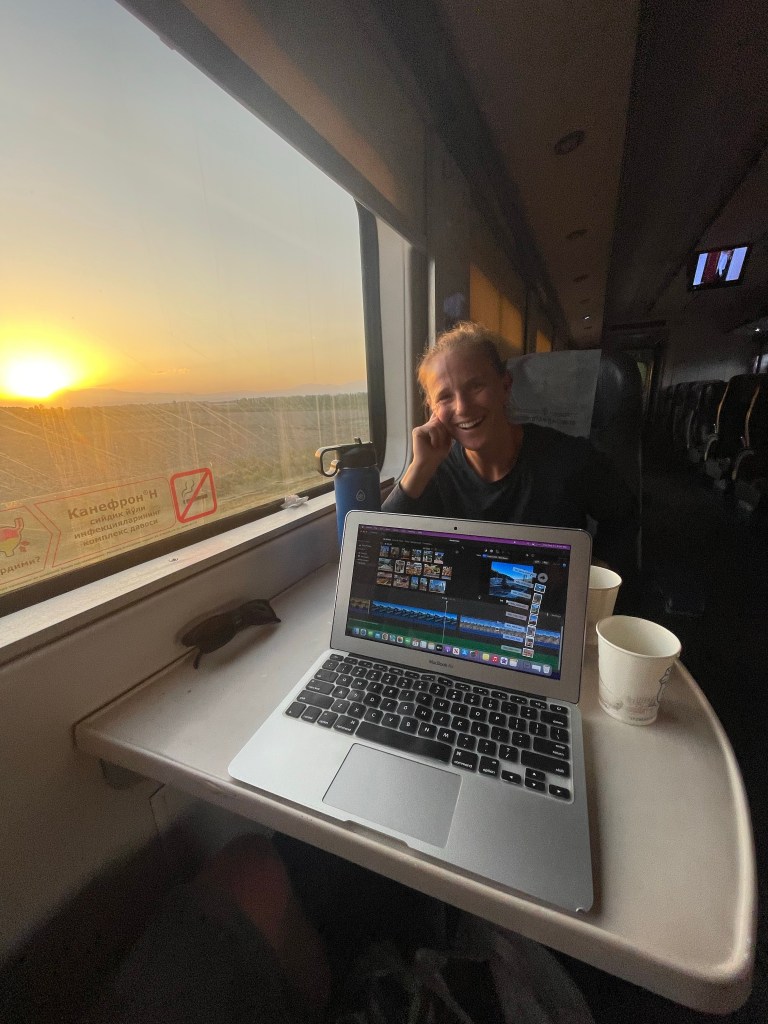
Once leaving the Fergana Valley, travel became much easier. From Margilon, we took a train to Tashkent, the capital of Uzbekistan. After long, cramped marshrutka rides and bumpy car rides in recent days, the upcoming train travel throughout Uzbekistan was a dream. Trains in Uzbekistan run perfectly on time, are only mildly bumpy, and are generally pretty comfortable inside. I would take a train any day over a bus!
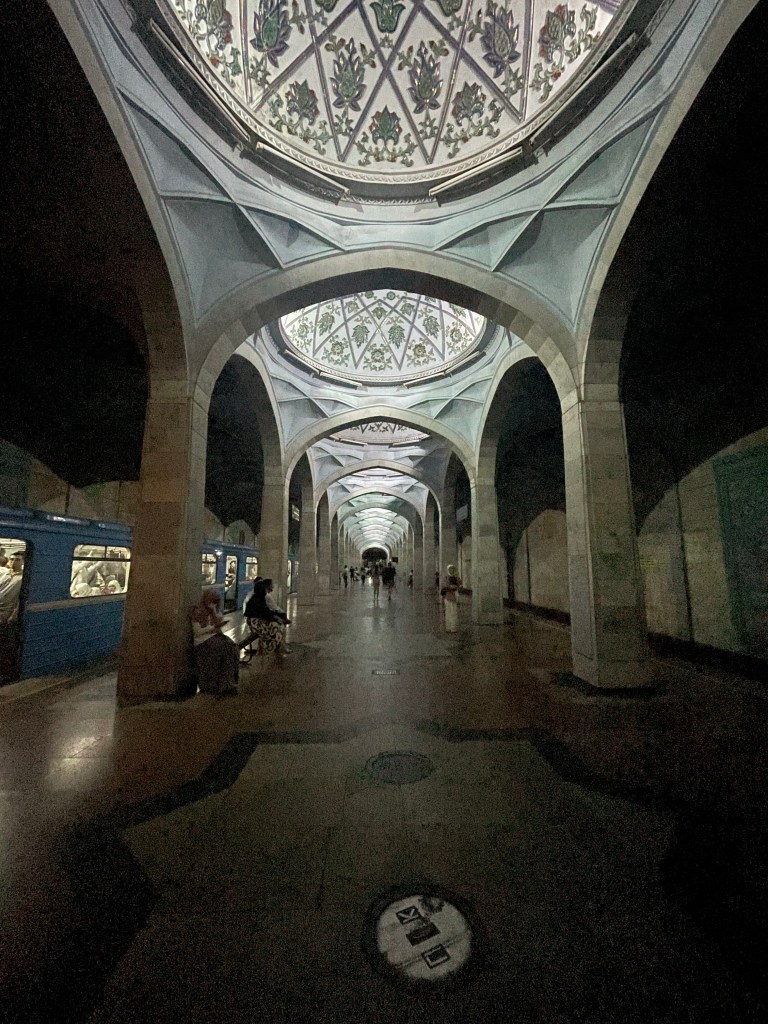
In Tashkent, we settled in and enjoyed a few days in the modern capital. While not quite as western as Almaty, Kazakstan, I believe Tashkent is a close second in my opinion as the most livable city in Central Asia for an expat. While there aren’t many tourist spots of note, we enjoyed our wanders around the city. The metro system of Tashkent is a gem and one of the best activities is just riding the metro and getting off at the various stations to see the decadence and ambiance of each. From large ceilings with chandeliers to a station dedicated to the Soviet space agency, this metro system does not disappoint. To add to this metro adventure, one of the stations had a power outage as we arrived, and the way it was half-lit added a quality that was just stunning to behold.
In addition to the metros, another thing Tashkent does quite well is planned parks and open spaces. A man-made lake was at the center, but it was actually built as a swimming pool where you cannot swim, which is interesting. Finally, this park had enough ice cream and food stands to keep anyone fat and happy. We did find it a bit odd that even though every stand was open with a worker there to serve any guests, there were very few people in the park.

The second park we visited was the Alisher Navoi Park. This park boasts a man-made lake in the center with bridges connecting islands and paddle boats. It also has a Disneyesque palace called the Magic City that has a big castle and restaurants. It reminded me of a smaller, less extravagant knock-off of Magic Kingdom. Ice cream is the name of the game in this park as well, and there are enough vendors to keep the entire population of Tashkent cool on a hot summer day.

In the evening, we visited our first bar of the trip called Steam Bar. It was definitely a weird place with some heavy gothic vibes, but it was so nice to have a night out! We were there on a Friday night so the place was packed and to start the night the servers put on a heavy metal dance show that included fire torches. The bar was famous for its grilled meat, so Nate and I finally had some proper burgers, which we were very excited about. We spent the evening chatting with a Tajik man who spoke great English and gave us some good local perspectives on both Tajikistan and Uzbekistan, as well as what it may be like to travel to Turkmenistan. It was a fun night!

The following day we took a train to Samarkand, which is a city I was really looking forward to since it is one of the most famous in Central Asia. In recent years, Uzbekistan has done a great job opening up to tourism, building infrastructure, and working to share its heritage sites such as Samarkand, Bukhara, and Khiva with the world. From here, our journey became much more touristy where we battled busloads of older Chinese, European, and American tourists for views of the top sites in each of these cities. We travel so much that Nate and I have become very spoiled, and don’t particularly love super touristy destinations.

It is fair to say that we did not fall in love with Samarkand as we found it felt very artificial to us and built up for the sole purpose of tourism. The main historic sites are spread out, and a pedestrian walking street lined with shops and touristy restaurants has been built to link them together. All of the ancient sites are reconstructions of the ruins that were once there. I am sure that they have tried to reconstruct it as close as they possibly could to what they believed it would have looked like, but it felt too perfect and did not feel authentic. Most of the sites to see in the area are mausoleums built by Timur who was a Turco-Mongol who founded the Timurid Empire (1370-1507) that stretched from Aleppo, in what is now Syria all the way to Delhi, India.

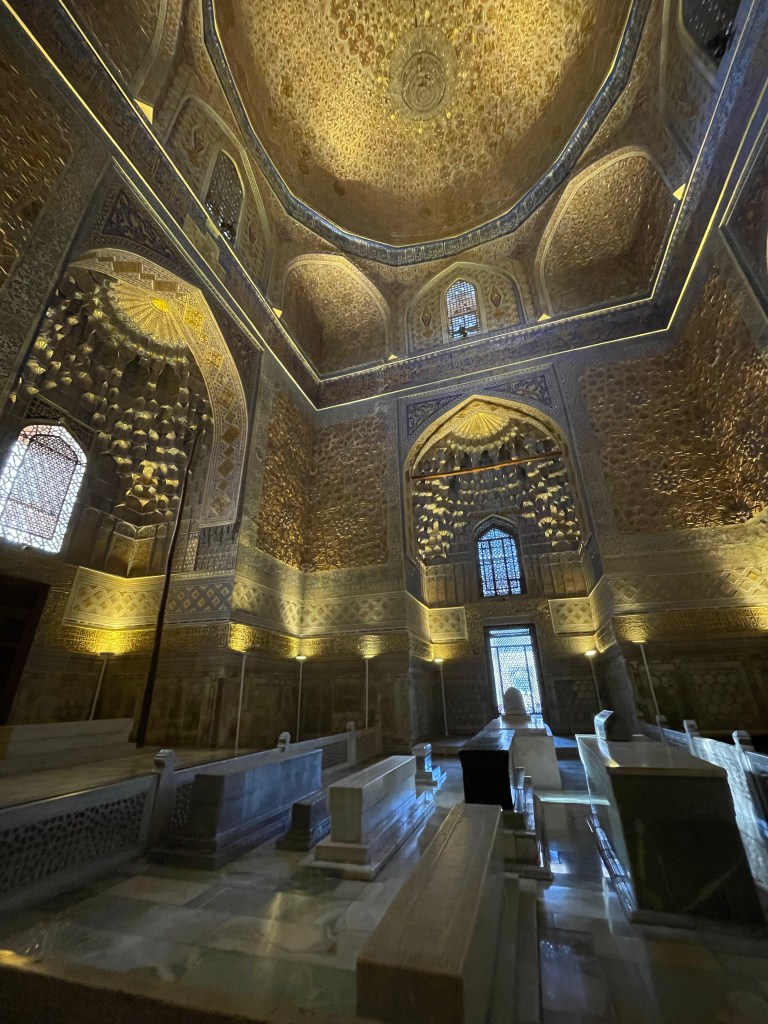
This type of tourism gives me pause because essentially we are celebrating a brutal dictator responsible for killing thousands of people to reach power and control the land that he did. Throughout our travels in Uzbekistan, we heard many stories of Timur conquering cities and killing everyone inside. It is certainly up for discussion whether this is the type of person that we should be celebrating, and reconstructing his mausoleum after he forced countless people to spend their lives honoring and building monuments, palaces, and forts for him. Is it correct to celebrate him as a great ruler? I just don’t know. To me, it is similar to if Hitler had made a tomb for himself, and now we all went and marveled at his grave just because it was of grand scale and beautifully built.


To add another layer to everything, there are the influencers that are a common site at these huge historical sites. We saw women dressed up in ridiculous outfits that were inappropriate for the mausoleums and cemeteries we were in, with hired photographers having photo shoots. While all of the buildings were 100% Instagram-worthy, it just felt off and a bit wrong to me.

The saving grace of Samarkand for me is Registan Square. In Timur’s time, the square was used for proclamations, parades, and executions. Yet, after his death, three madrassas (learning centers) were built around this square. The first was built by Ulugh Bek, who was Timur’s grandson. He was a leading mathematician and astronomer of the time and placed great emphasis on education setting up madrassas across the empire. He even set up an observatory in Samarkand itself and turned the city into the intellectual capital of the region inviting scholars to work and teach in Samarkand at the Registan. Unfortunately, his intellect surpassed his ruling duties and he was sadly assassinated.

We visited the Registan in the evening and therefore were able to see it in the daytime, at sunset, and all lit up in the evening. Inside each of the three madrassas, you can find stores in each of the old classrooms. There is no shortage of places to buy scarves, dresses, pottery, and any other local handicraft you can imagine. At night the buildings are beautifully lit in an eloquent way, and each evening at 9pm there is a light show where the lights come alive in a show choreographed to Uzbek music.

I can see the historical charm of Samarkand, and why people love the city so much, however, I left with mixed feelings on the draw of tourism here. The buildings are beautiful and colorful and they photograph wonderfully, but it is easy to get caught up in the Instagram culture instead of stopping to think about what the buildings actually represent. We found the next two stops in Bukhara and Khiva to be less perfectly contrived for tourists and slightly more authentic.


 Teri and Nate's World Adventures
Im hoping to get to Uzbekistan next year, so your post has been very interesting for me! Thanks.
LikeLike