Once we finished our trek in Mestia it took one travel day to get back to Kutaisi and then on to the town of Chiatura. Chiatura is a bit off the normal tourist loop, which is one reason that it appealed to us for a quick stopover. However, it was the seventeen cable cars that have provided public transportation for this town that really caught our attention! As an old Soviet mining town, Chiatura created the world’s largest system of cablecars that led from the town in the valley up to the mines in the hills above. This made it quick and easy for the miners to get to and from work. As the town began to expand, buildings and apartments were also built at the top of the hill and these cable cars were used as public transport for these miners to get into town for food and entertainment. All of the original cars are now out of service, however, four state-of-the-art new cable cars have been built and recently opened to continue the cable car history and to continue to serve as public transportation for residents of Chiatura.
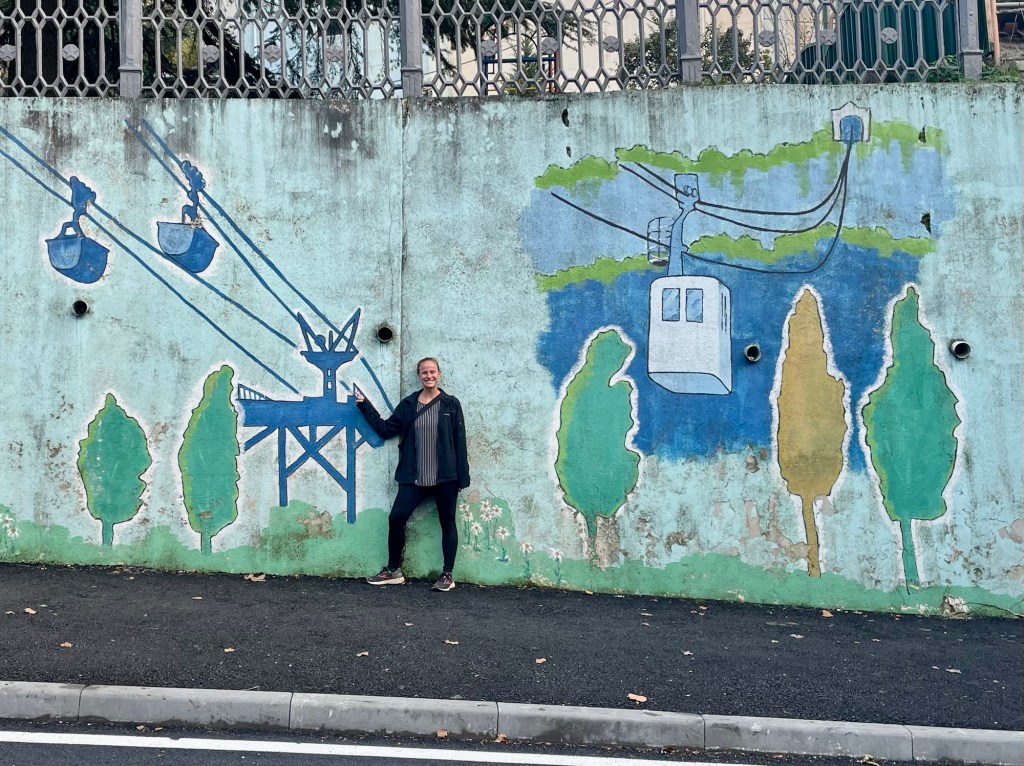
After arriving in the small town and settling into our small hotel on the main street, we walked around downtown to find the old cable car stations. Some of the stations are in disrepair with the cables taken down, but there are some that are still in decent condition and with the cars hanging around. We then went on to ride the new cable cars in order to get the whole experience. Since the intention is public transport the new cable cars are still very reasonably priced.


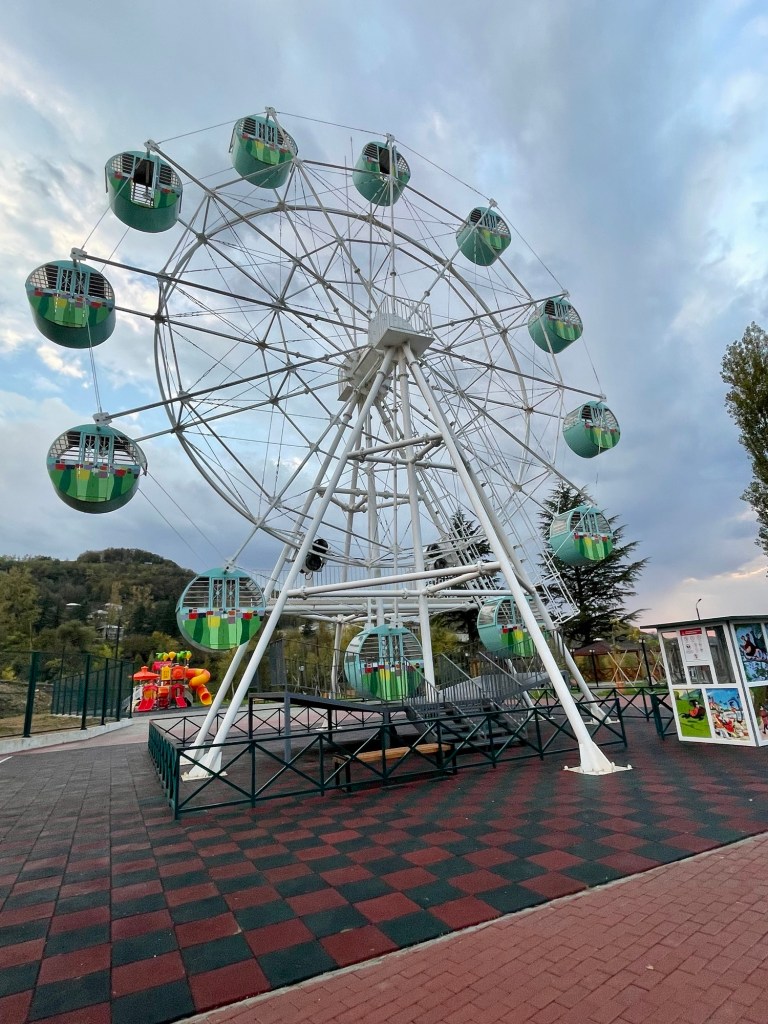
The longest cable car goes up to the top of a hill on the southern side of the town, and not surprisingly they have built a small amusement park with a Ferris wheel and great views of the city below. In addition to the small Ferris wheel that we patronized, we also noticed a lot of mid-rise apartment buildings around the upper edges of the city that were very run down and in our opinions should have been probably condemned. We later learned that there are a lot of squatters (many Russian refugees) that are living in these buildings even though they look like they could collapse at any time.
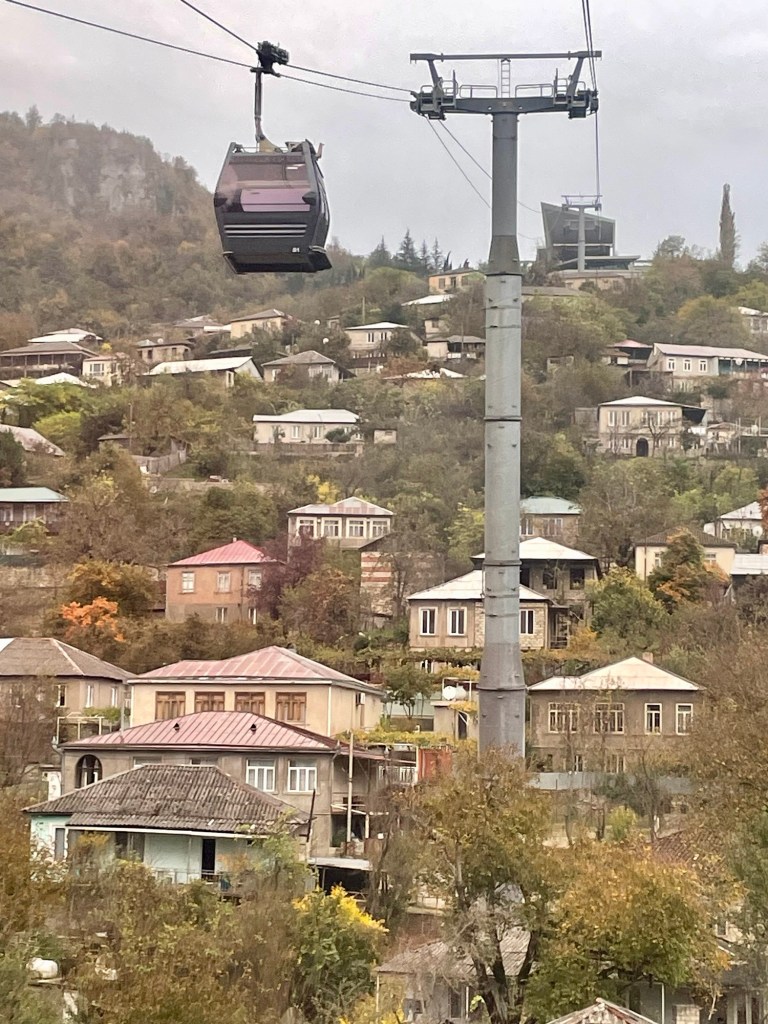
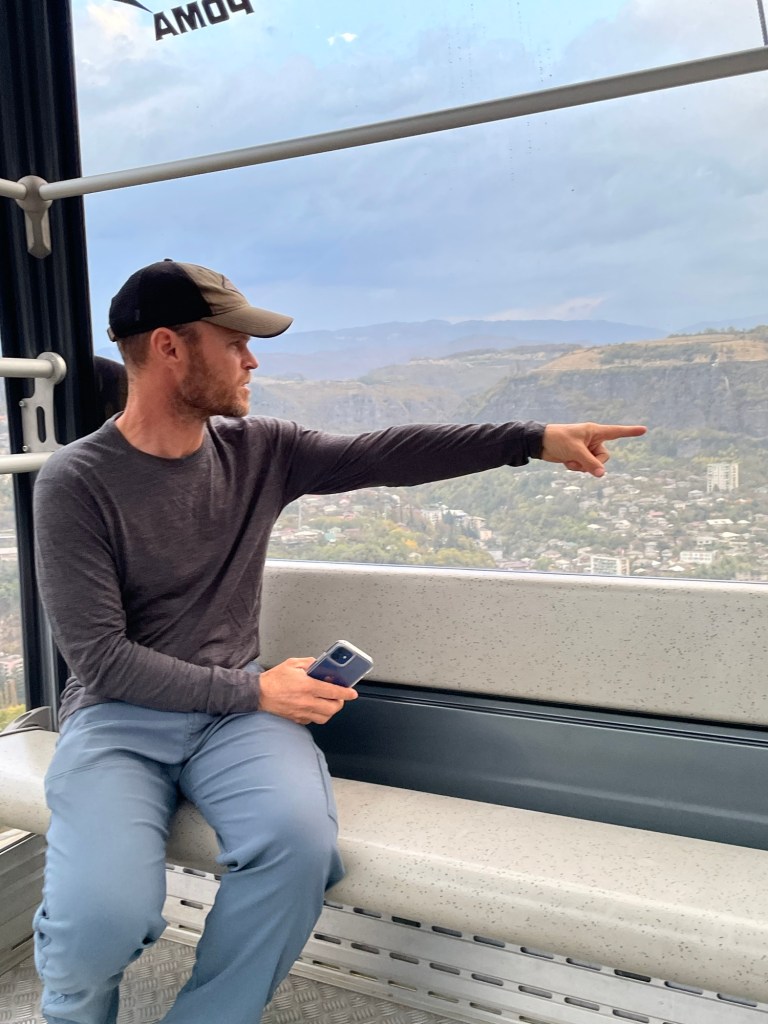
That evening we took another cable car route up to a local neighborhood on the opposite side of the valley to have a look around. We saw kids playing soccer and lots of cute buildings. On this second cable car, we rode with some locals that were apparently on their way home from work. I love the fact that cable cars are still being used for public transport in this town that has such a rich history with this unique means of transport.

The following morning we woke up early to meet a driver and catch a couple other nearby sights before heading out of town. We typically prefer public transport, however, we were limited on time, so we hired a driver through our hotel for a very reasonable price. Our first stop was an amazing postcard-worthy Christian monastery called the Katskhi Pillar. This is essentially a tiny church built on the top of a giant rock pillar. No one seems to know for certain when this church was officially built, because no one in modern times was able to scale the pillar and research the remains of the church until 1944. The church has now been restored, but due to the danger of climbing the long ladder, they do not allow tourists up to the top.

Our driver introduced us to the caretaker and the resident priest and after some begging the caretaker guided us up a steep rock climb to a ridge near the church, which provided us with an amazing view of the rock pillar and small church perched on top. This trail behind the church is not for the faint of heart and requires good hiking shoes since you have to scale some steep rock faces to reach the top. We were extremely grateful for the caretaker to show us around the monastery, and for the priest to convince him to take us up the short rock climb to the viewpoint. Their extra effort and consideration made this experience even more memorable for us.


On the way back into town we found another abandoned cable car station, so naturally, we had to explore. Our driver was proud of his hometown, and very patient with our desire to explore. Since this is not a heavily touristed town, we could tell he enjoyed our interest and seeing the sights as much as we did.

Our final stop was Mghvimevi monastery, which is a 13th-century Georgian Orthodox Church that is built inside of a cave fifty meters up a cliff overlooking the valley below. We arrived a bit before the official opening time, so we were the only ones at the church. Luckily, the opening time seemed inconsequential and we were allowed in the main chapel of the cave without any questioning. The larger monastery is still functioning and is off-limits to visitors. The main chapel is small, but we found it quite interesting due to both the remarkable location it is built into the cliff face, as well as the historical age and artifacts that still remain.
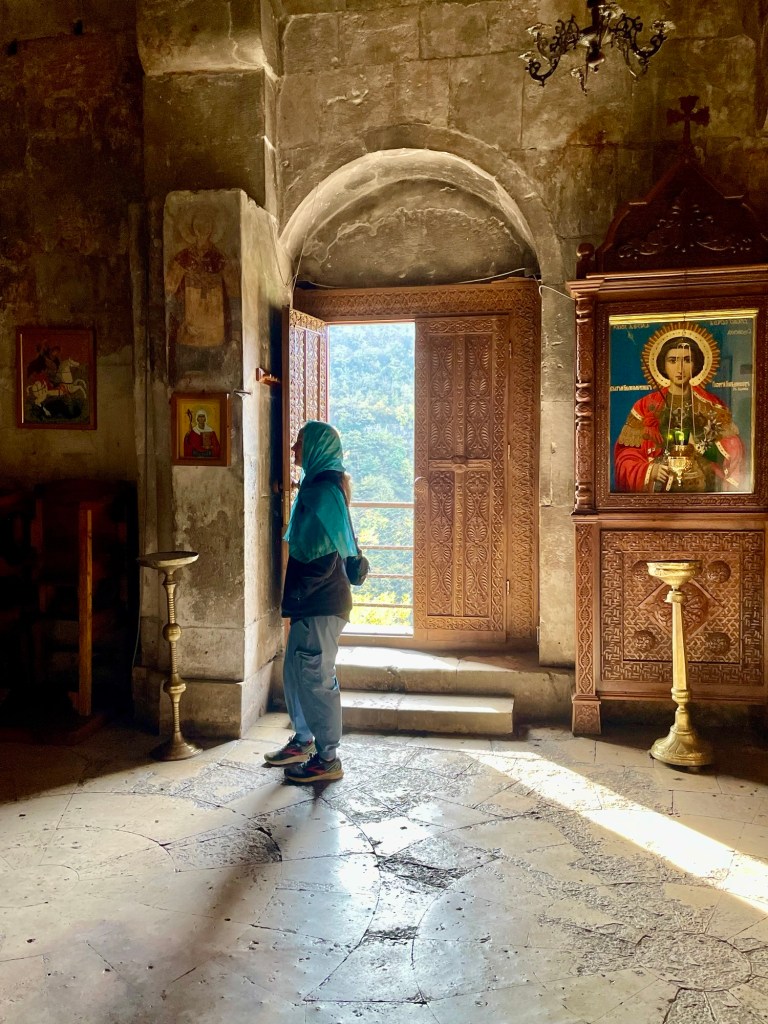

After leaving Chiatura, we headed to the small mountain town of Borjomi, home of the famous Borjomi mineral water. I had never heard of Borjomi until we were traveling through Tajikistan. I came down with a stomach bug and was told to drink Borjomi water, which actually helped tremendously. Borjomi water is carbonated mineral water that comes from, you guessed it, Borjomi Georgia. After enjoying this water so much in the ‘Stans we had no choice but to track down the source now that we were in Georgia.
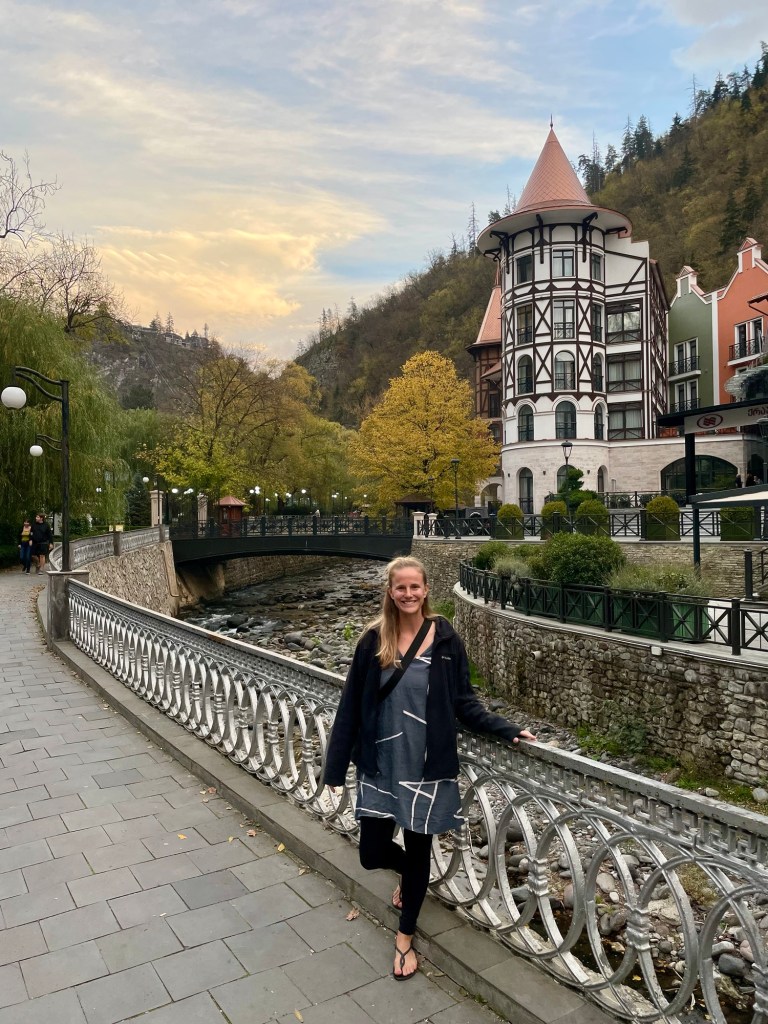
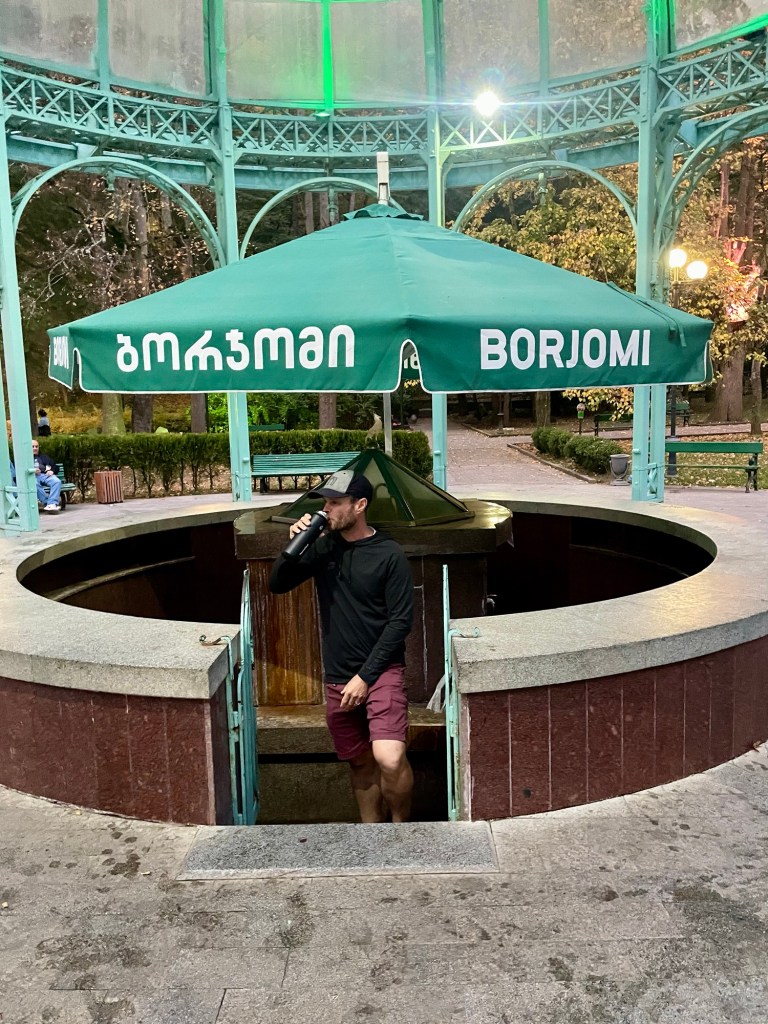
Borjomi is a cute town set into the mountains between Kutaisi and Tbilisi in central Georgia. There is a park nearby where you can get the history of the Borjomi bottling plant, stroll through the beautiful gardens, and even drink water right from the spring that is the original source. The only disappointment for us was that we found the non-carbonated and warm spring water to not be quite as refreshing and enjoyable as the bottled product that we had become used to over the past several months. This said, it was still very cool to drink this healing natural water that has become so notable in this region.


We wandered further up the valley to find a hot springs, which became a popular place during Soviet times as a healing retreat. It was a brisk autumn day and we were really looking forward to soaking in the pools of the hot springs. Unfortunately, upon arriving we found the hot springs have evolved into three swimming pools and the water is only lukewarm, which did not lend for the relaxing experience we hoped for. During the summer months, I am sure these pools are a popular destination and are a delight to sit in all day. During late October, it was not quite hot enough and all the visitors seemed to be vying to be one of the few lucky enough to sit under the hot water being piped into the pool, which was the only really enjoyable place to bath.
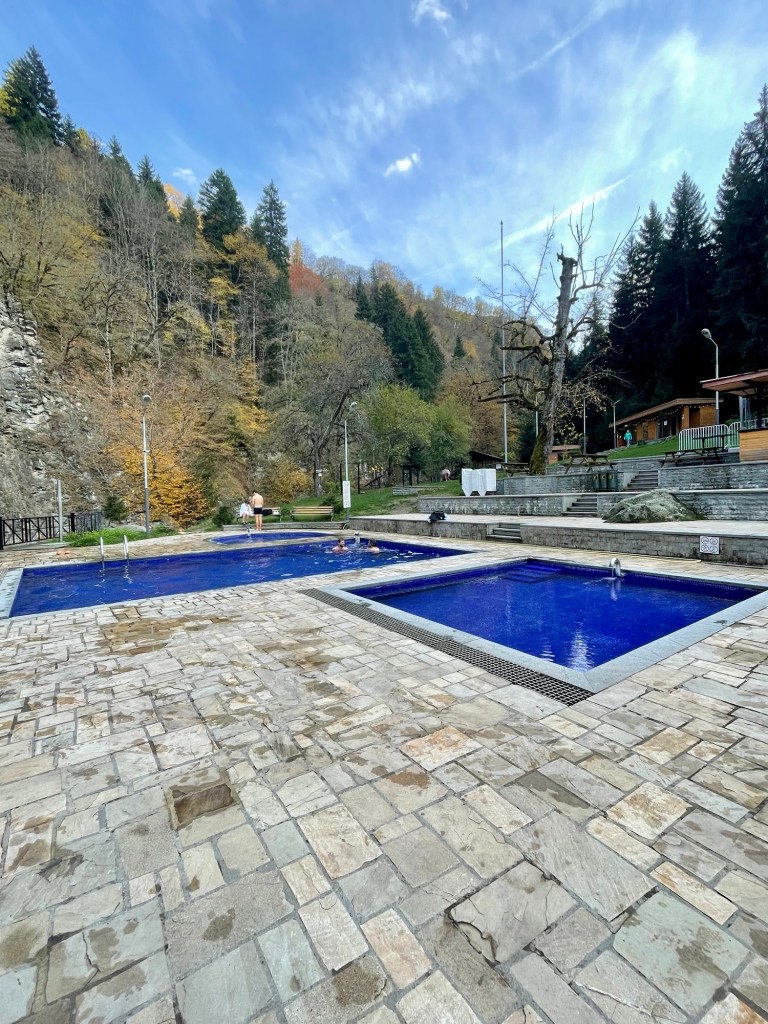
After a thirty minute soak we walked back to town enjoying the fall colors in the trees and even stopped for a hot mulled wine on our way. That evening we found a cute restaurant for dinner near our guesthouse, and enjoyed more of the delicious Georgian cuisine. I topped off our Borjomi trip with a run the following morning to take in our last Mountain views in this region and take a better look around the local town. I also quickly realized how out of shape I was!

Our next stop was the town of Gori, the birthplace of Stalin. The main attraction here is obviously to go to the Stalin Museum. We had mixed feelings about making this a stop on our tour, but we also thought it was worthwhile to learn a little more about the life of Stalin, and we were curious what his hometown would feel like. What we found was a bustling little town with a very interesting love/hate relationship with the fact that they are known as the birthplace of one of the most infamous figures in the last century. There is a not much love lost here for the Soviet Union and Russia given how they have treated Georgia in recent years. The town even recently tore down a central statue of Stalin in the town square.
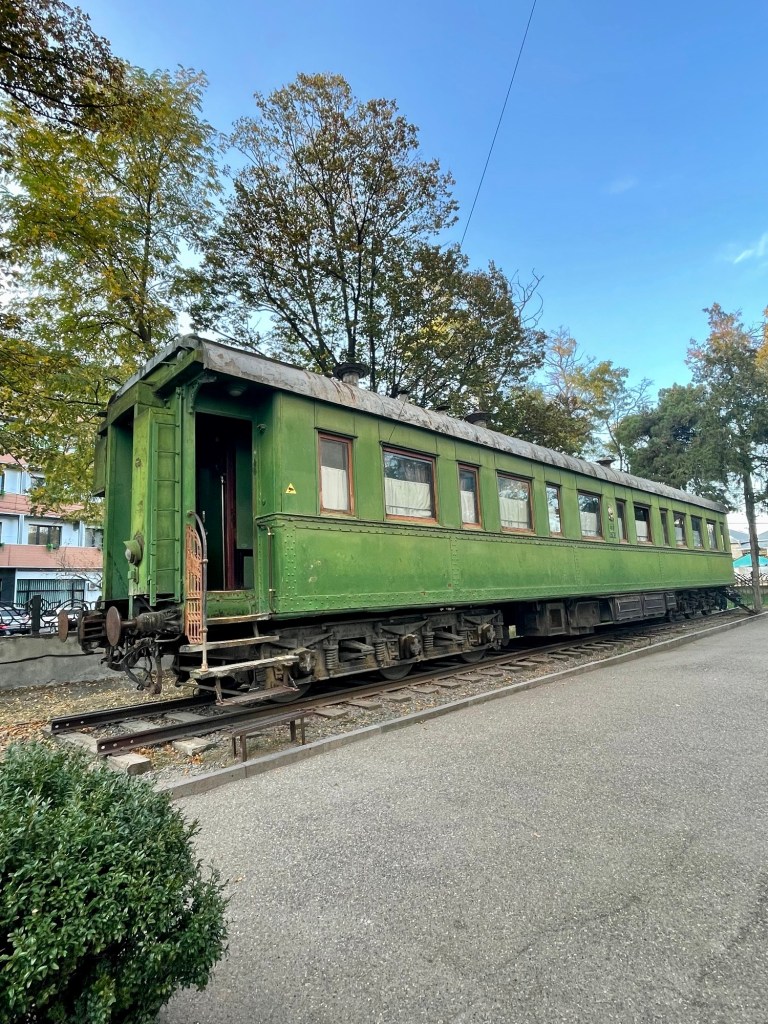

The Stalin museum is what you might expect, a place dedicated to the life of Stalin. It was interesting to see how he grew up, and they have even relocated his small childhood home to the front of the museum, which sits in the town’s Central Park. The Stalin Museum is mostly just pictures, so we joined an hour long guided English speaking tour which is included in your entrance fee. This is the best way to tour the museum since the tour guide was very informative. In his teens and twenties, Stalin was an idealist and fought against the Czars of Russia, helping to organize rallies and setting up a secret printing press that circulated revolutionist propaganda in the region. As a result of his protests and role in the communist movement he was sent to work camps in Siberia many times, but always seemed to escape. After the revolution, he rose quickly through the ranks and after the unexpected early death of his mentor Lenin, who it turned out didn’t want Stalin to succeed him, he managed nonetheless to quickly consolidate power and became the communist party leader. Outside of the museum you can also tour his bulletproof train car.

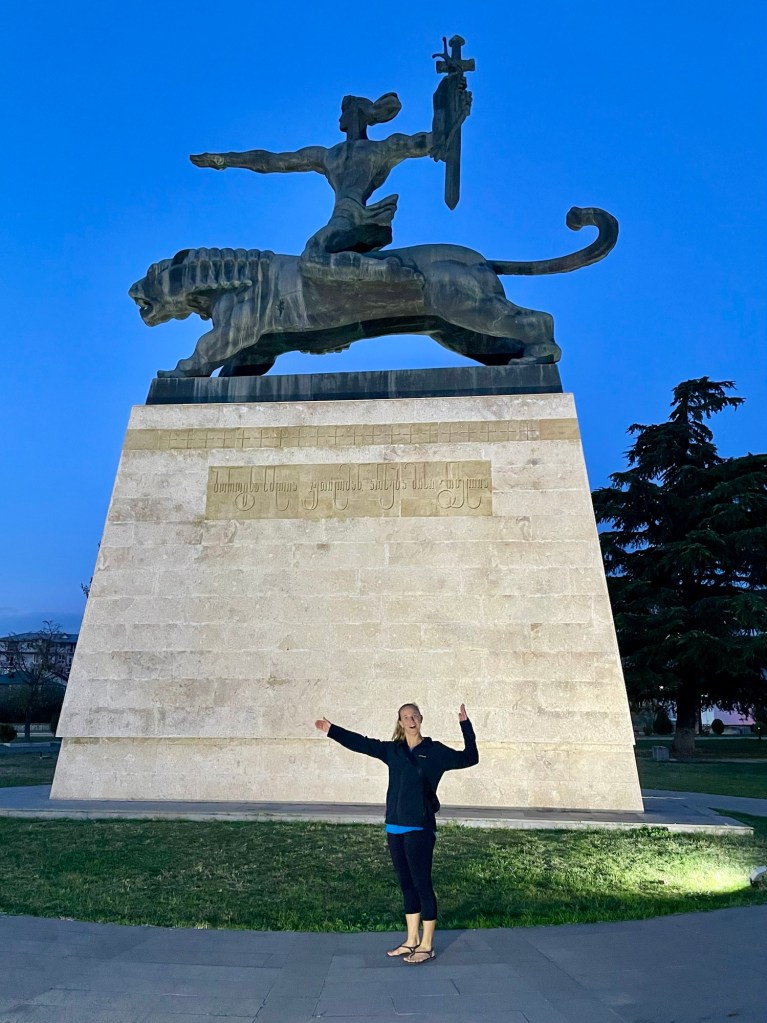
There is also a special room in the museum that looks like it may have been recently added, which displays pictures that highlight the atrocities carried out by the Soviet Union, and far more recently when Russia invaded the neighboring Georgian state of South Ossetia in 2008. Stalin’s hometown was bombed by Georgia’s favorite neighbor to the north when Putin (who I can only imagine is a huge fan of Stalin, but apparently not his hometown) decided the Georgian states of South Ossetia and Abkhazia needed Kremlin protection (sound familiar 🤔). Unlike the Kremlin’s latest Special Military disaster, the Russo/Georgian war of 2008 quickly ended in a cease-fire with far fewer deaths, however, Georgians are quick to remind you that Russia continues to occupy 20% of their land to this day. I guess Georgia didn’t need to be saved from Nazis, so the now apparent prequel invasion was far less bloody than Putin’s current war. Unfortunately, Russian troops continue to control these two states, so this lesser-known conflict of occupied Georgia remains unresolved and is far from a settled matter for Georgians.
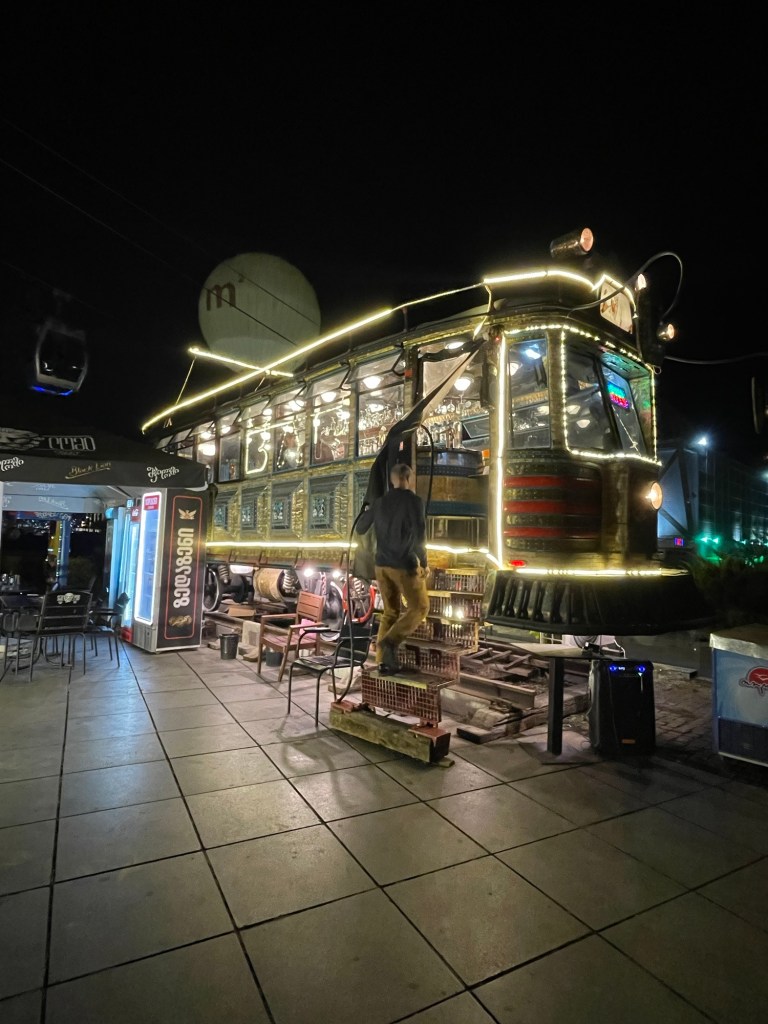

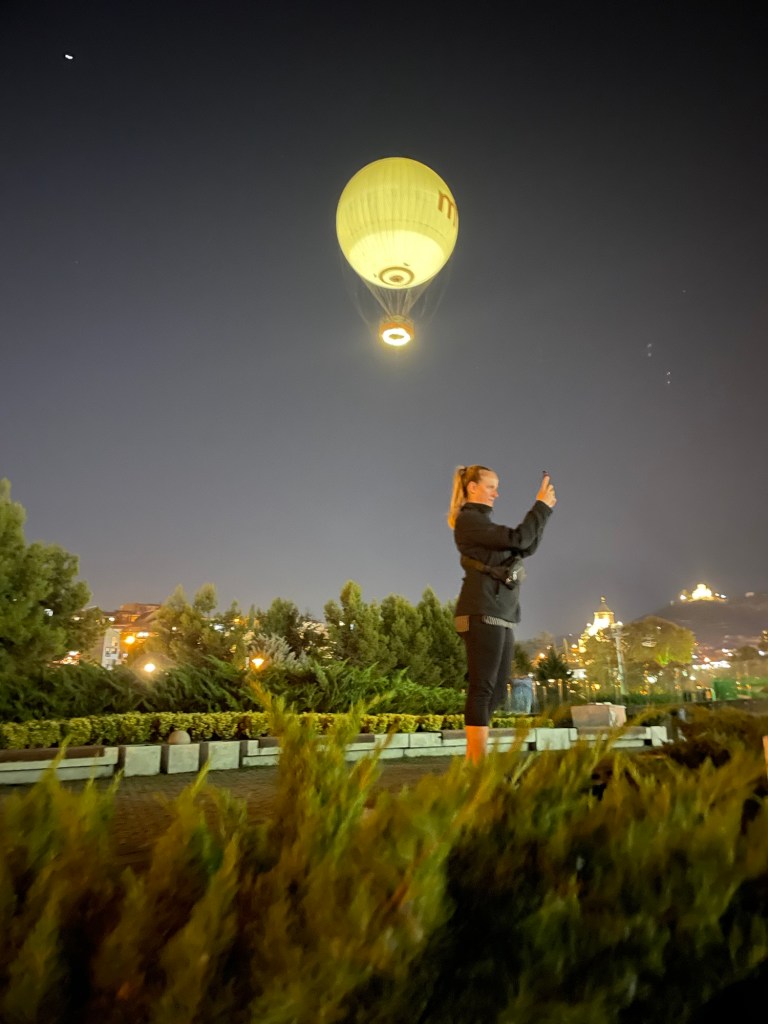
After Gori, we headed to Tbilisi which is the largest city, and capital of Georgia. We expected another city like Kutaisi, and were shocked to find a super modern city full of life! Downtown was full of restaurants and bars, local musicians were playing in the streets, churches lit up on every hill, and gondolas were ushering people to viewpoints high above the city. I love Tbilisi because they do a great job integrating the old and new, and everything is lit up beautifully at night. The new modern bridges are even works of art.

We had dinner at a lovely Indian restaurant, and enjoyed an evening walk around the old town taking in the sights and the nightlife. We found interesting statues in a main park including one of a giant piano which could even be played when it was first built. We also came across one of the newer theaters that has a clock tower outside that looks straight out of Alice in Wonderland. Unfortunately, we were only able to enjoy one evening in the capital before renting a car the next morning to head further east, but we would be back to take in more sights soon after returning from a two day adventure in the wine region near the Azerbaijan border!

 Teri and Nate's World Adventures