When looking at the map, we realized that it would be hard to get to a couple of towns outside of Tbilisi without a car, and minibuses were not a great option to cover the distances we wanted to cover in a short amount of time. So, we looked into renting a car and ended up renting a car from a local for two days. This whole plan ended up being a bit of a sketchy with an old run down car, but travel is always an adventure. We made it work and the clunker was able to get us there and back safely.
On the first day of this mini roadtrip our final destination was the village of Sighaghi, the birthplace and center of wine production in Georgia. Along the way, we were going to stop at the David Gareja cathedral complex, which is a complex of temples in the desert on the border with Azerbaijan. After evaluating the road map we came up with the conclusion that all tours took the main highway and the long way there, which we believed would take an extra hour of driving. We saw a shorter route on the map and decided to try that instead. It turned out that this was not the right move. After driving this southern route, and with only five kilometers to go, we found ourselves on a pothole riddled dirt road heading up a mountain in our rundown rental car. We somehow made it up the mountain only to find ourselves at the front entrance of a Georgian military base. We tried to get out of there as soon as possible, but had to back track all the way to Tbilisi before heading east and settling on the main highway route. We abandoned our plans for David Gareja this day since at this point we were well behind schedule and would already be arriving in Sighaghi late and were thirsty for some good wine tastings.
We stayed at a local guesthouse in the heart of the village, and quickly learned that every local in this town is a winemaker with their own small family vineyard. Each house has their own wine cellar with clay pots buried into the floor, which have been used for the traditional fermatentation process here for thousands of years. Upon arrival, our host offered us a free wine tasting of his wines, but already planned to go to a small vineyard of note called the Cradle of Wine before it closed for the day, so we politely postponed his wine tasting until after dinner.
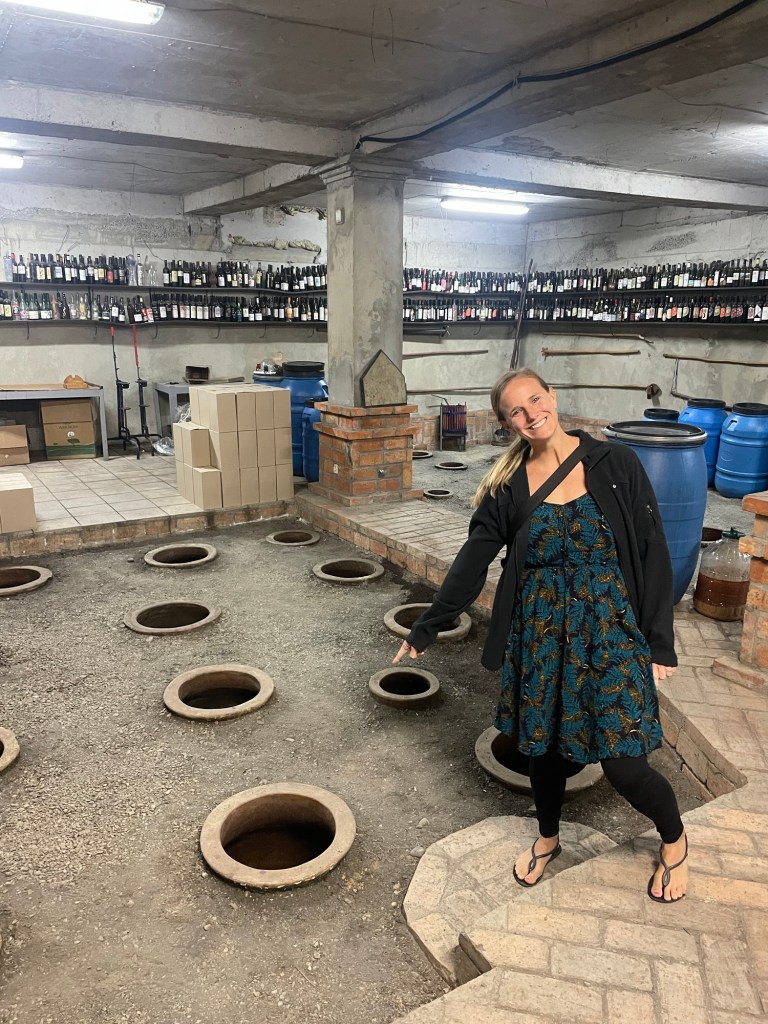
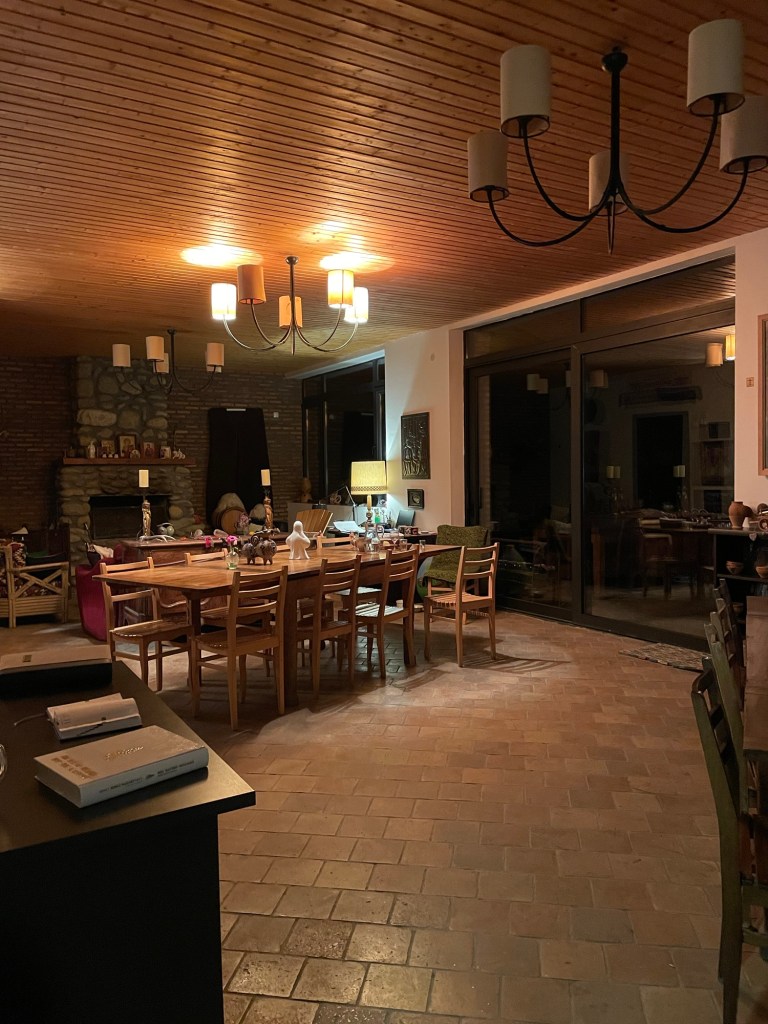
We read that the Cradle of Wine was run by an American man who had moved to Georgia to get into the wine business. We were very excited for this tour and tasting because we knew they spoke English, and it turned out to be a wonderful tasting where they did a great job of explaining how Georgian wine is made. Georgian and Armenian wine is unique for both the history, which dates back 6000 years, as well as the process in which grapes are not fermented in the now typical large metal tanks or wood barrels, but instead they continue to use these traditional clay pots buried in the ground. The wine takes on a much more Earthy taste, and the whites look more amber in color.
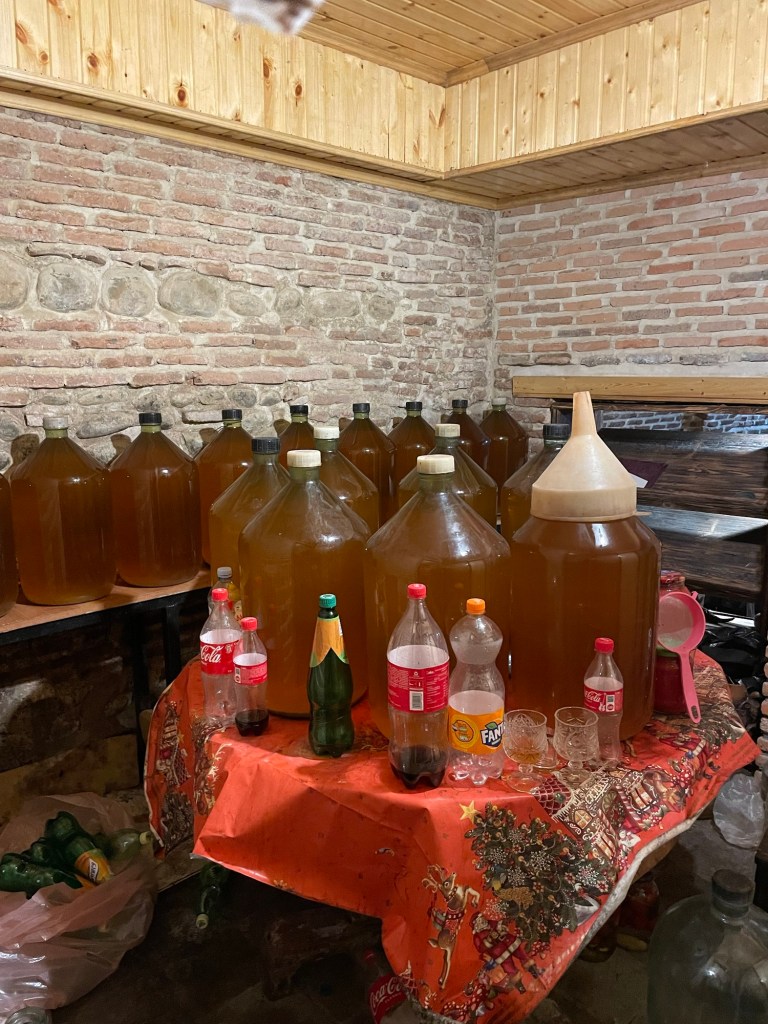
We had a lovely experience at the Cradle of Wine, and since we were the only customers on this late October afternoon we had the full attention of the Hungarian couple that were managing the cellar door and tastings. We stayed a long time and just chatted. After the tasting, we headed to a local restaurant to have more amazing Georgian food, and sober up a little bit albeit with another glass of wine. Finally, we stumbled home forgetting all about the tasting promised by our guesthouse. Whether we were ready for another round or not, the owner of the guesthouse was awaiting our return and he was excited to take us down to his cellar and showcase his wines. We did not want to disappoint our host so we graciously obliged.
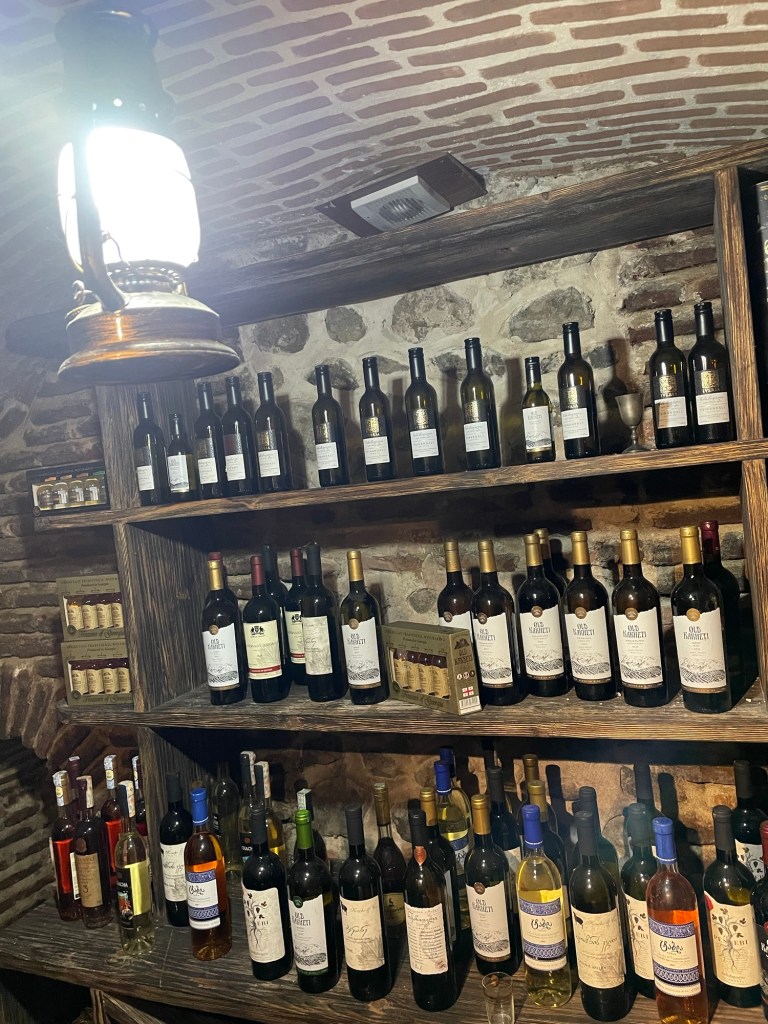
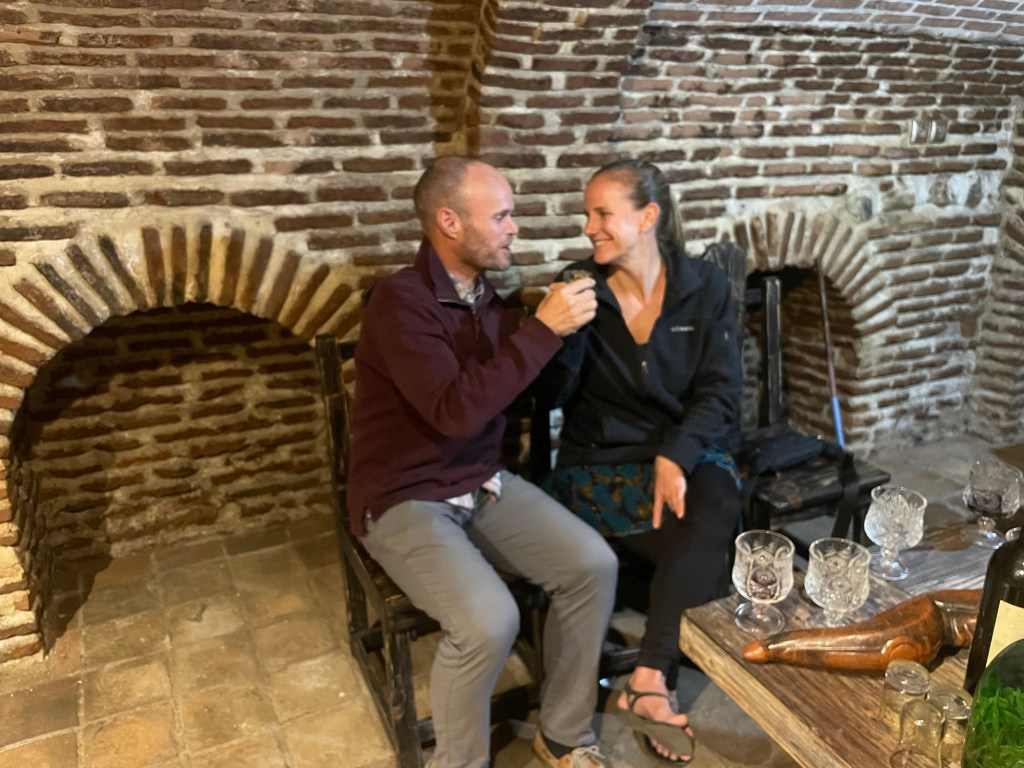
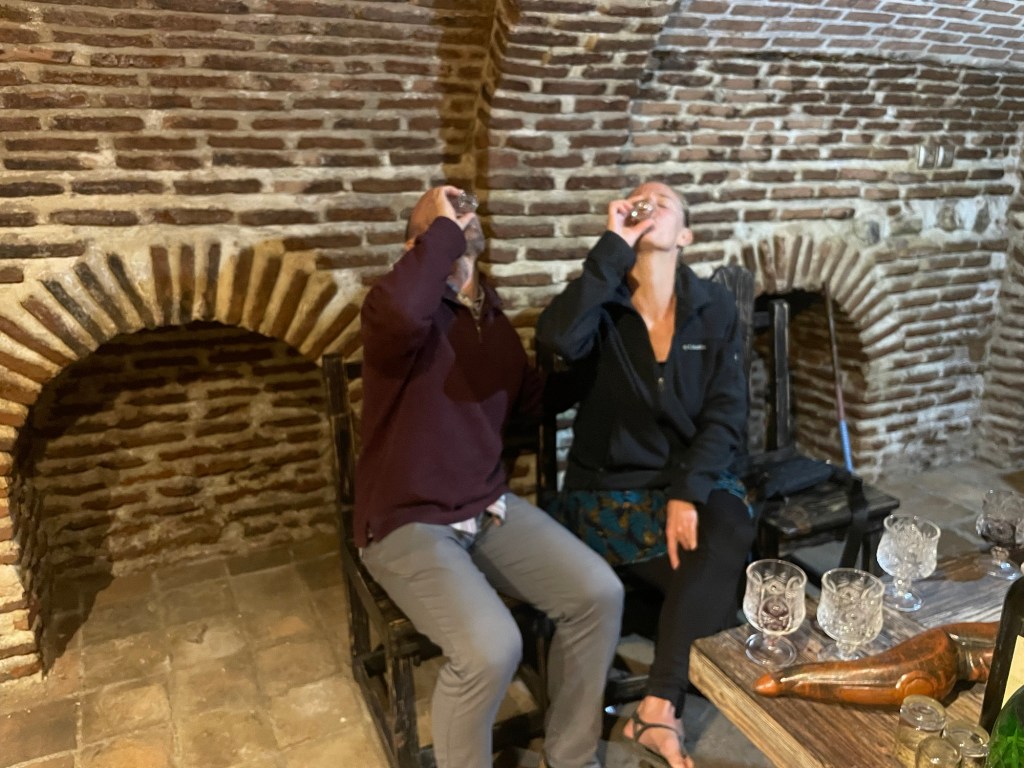
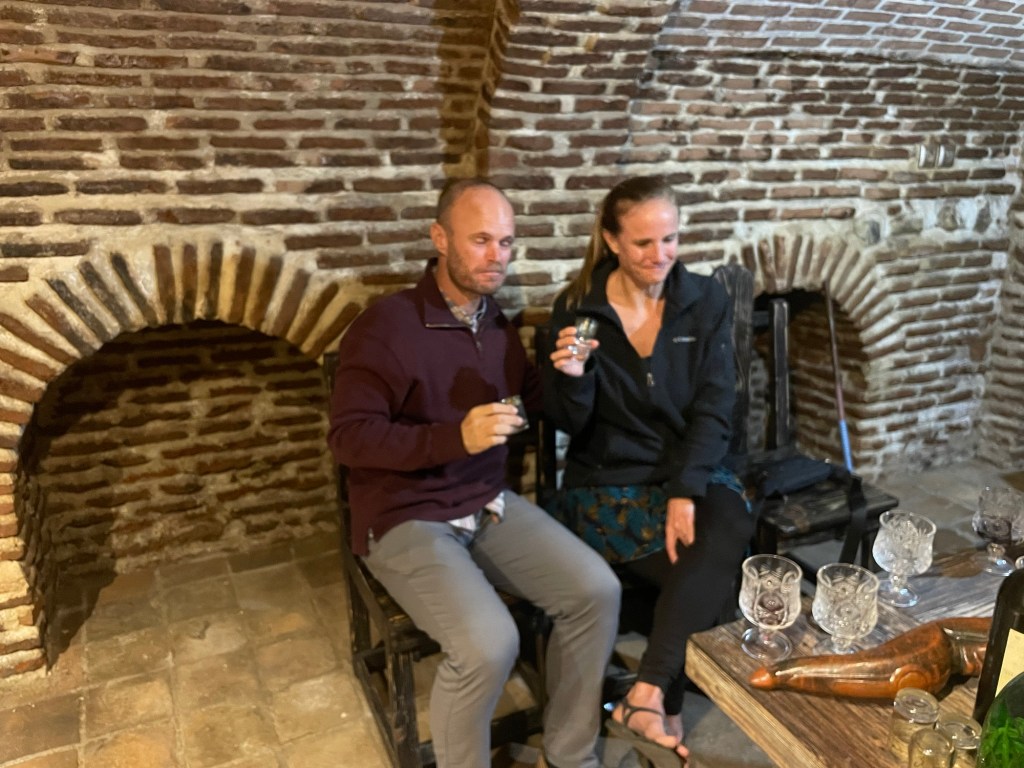
Our first tasting was the white (amber) wine and it was really good! Pours in Georgia are always quite generous, however his pours were literally over the top. This was no wine tasting but instead wine drinking. We drank our full glasses quickly, and then he let us try his red, again the glass was brimming. He explained that a tradition in the the local winemaking community is that at the conclusion of the fall harvest and fermentation there is a party every night at a different house where everyone gets very drunk off their new Amber. They use the horns off big horn sheep as wine glasses, and if the host of the party says to chug then everyone must drink their horn….which holds about a liter of wine! Let’s just say they are expert drinkers. After our glass of white and red I was ready for bed and feeling quite good from all this great wine, but our host then brought out the chacha, which is a wine liquor made from the leftover skin of the grape. Chacha is quite popular amongst the older generations here. He had infused this with different flavors and wanted us to try each one. We had tried chacha once or twice previously, and his flavored versions were actually quite good. Now thoroughly drunk, he finished off this generous tasting by offering us his strongest chacha, which is a staggering 80% alcohol! With our heads spinning we recognized our limit, kindly refused the strong stuff and stumbled our way upstairs to bed.
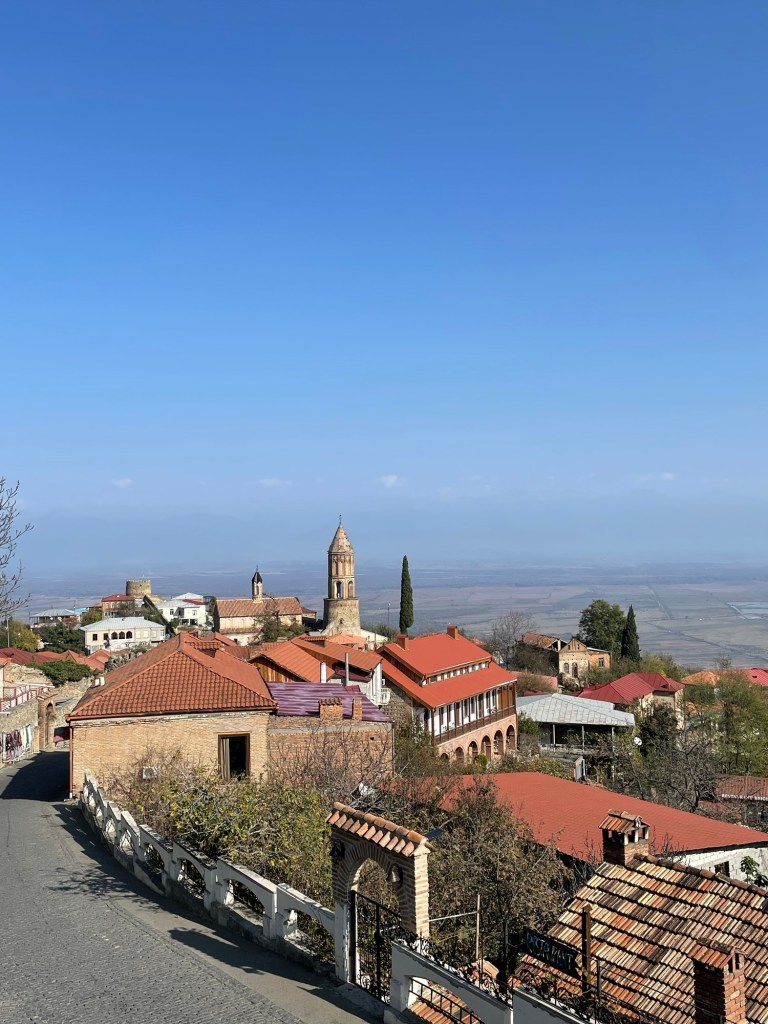
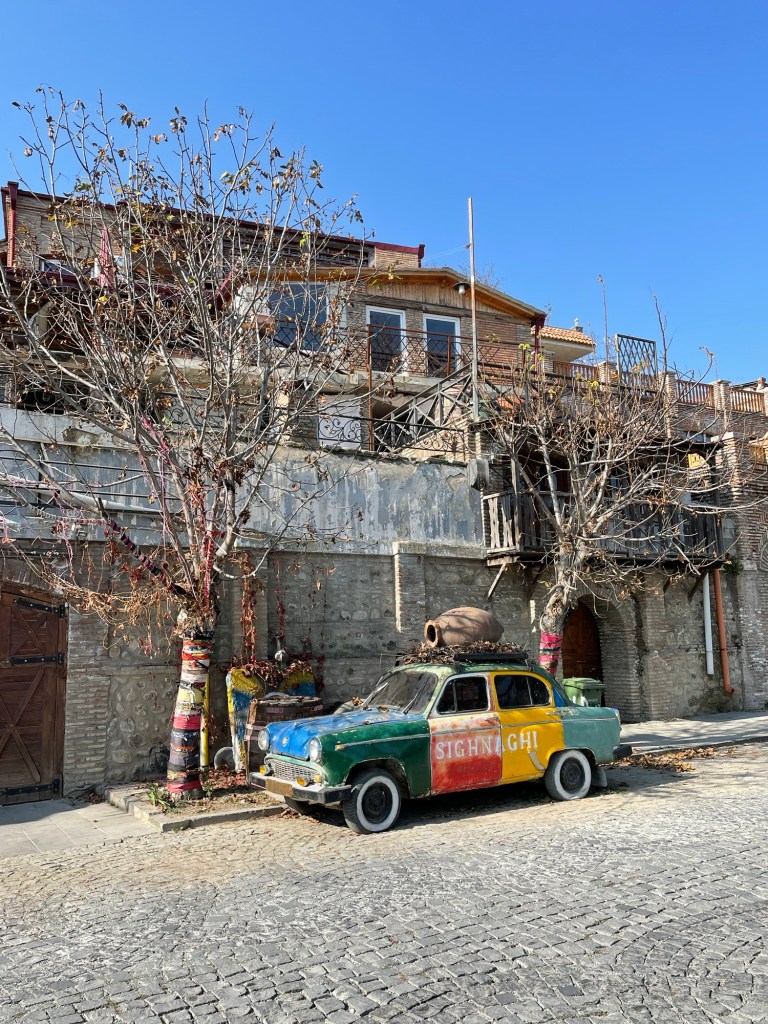
Not surprisingly, we had a slow start the next morning. Eventually we found breakfast and went on to explore the rest of the town of Sighnaghi walking through the cute streets and having a coffee on the hill overlooking the local cathedral. Then, we loaded the car and set out determined to finally see the David Gareja Monastery via the normal longer highway route instead of the dirt roads.
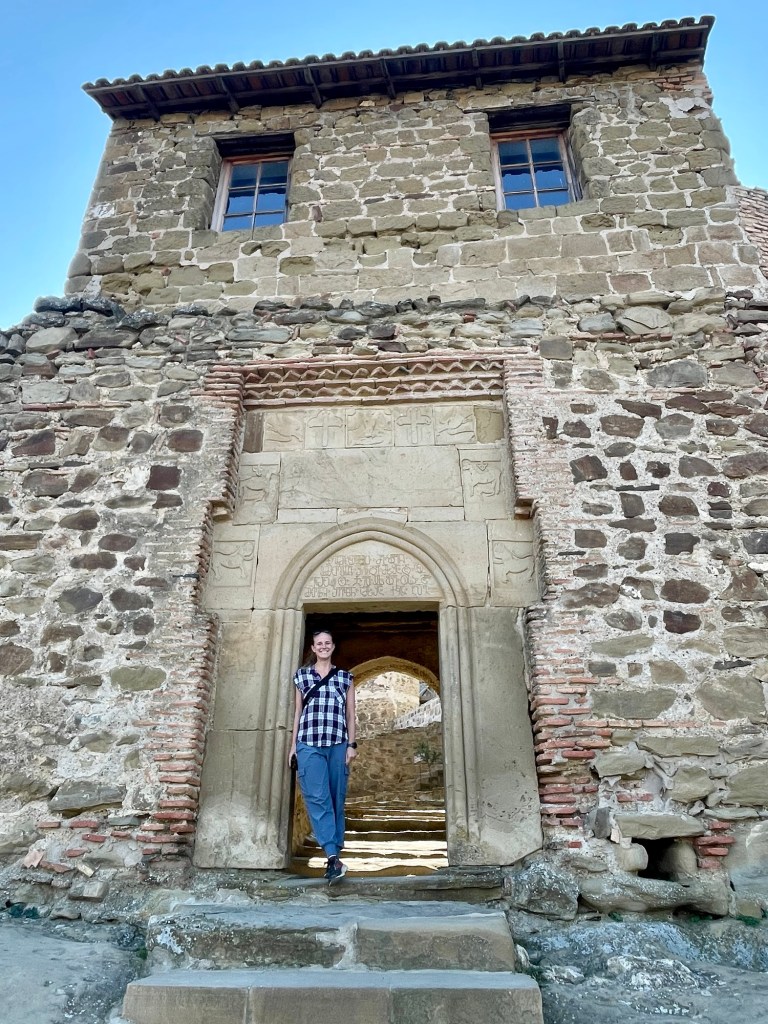
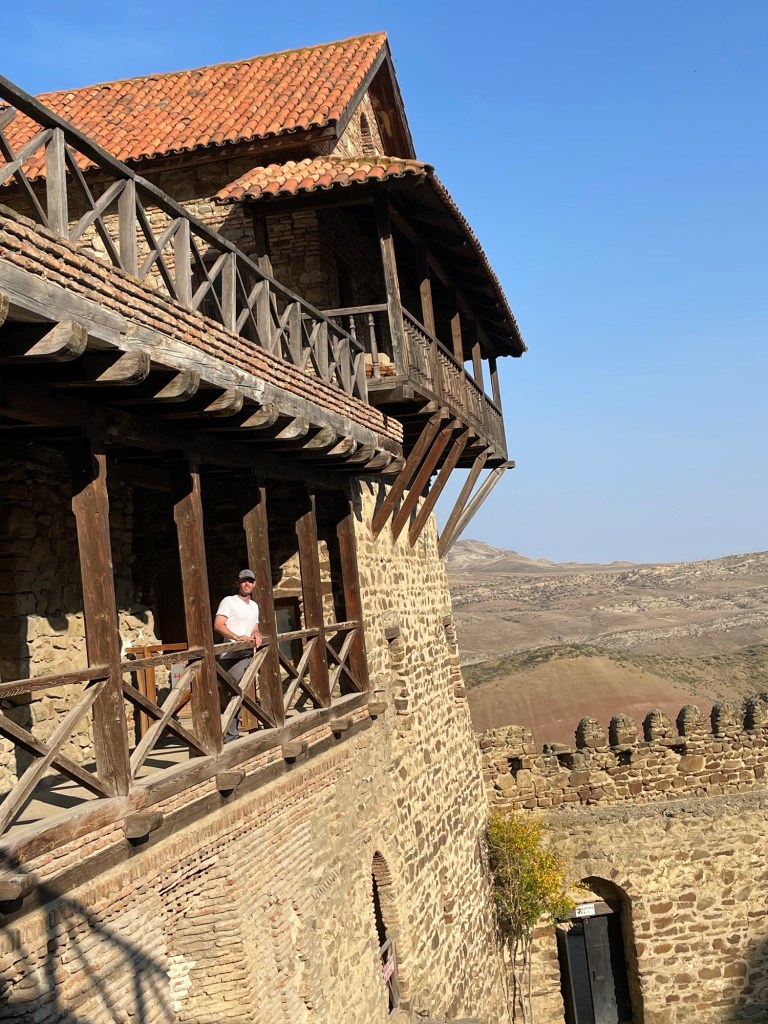
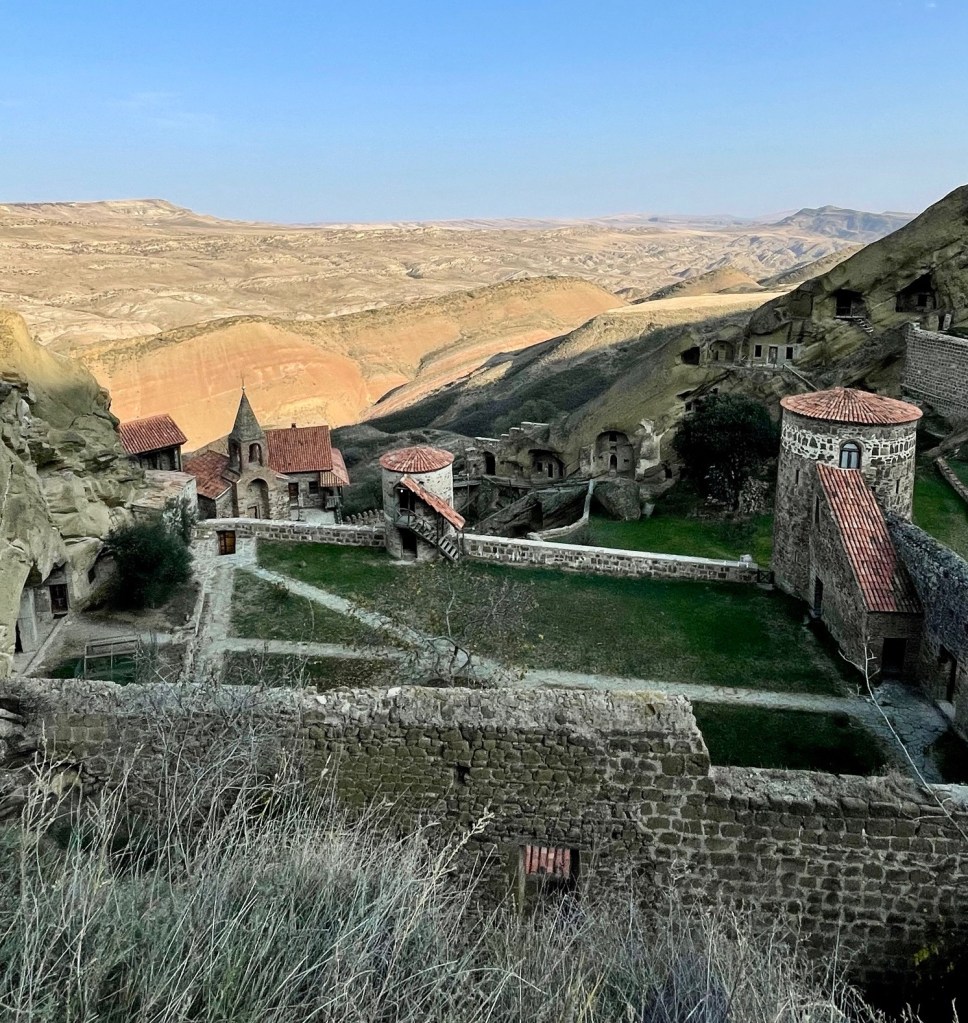
This set of monastery buildings dates back to the 6th century and has expanded considerably over the years. The buildings are set into the rocks and caves and only a small section of them can be viewed now since the rest of the complex is located in Azerbaijan. The Monastery literally sits on the border of Georgia and Azerbaijan, which is quite unusual and tense at times, particularly because the two countries are not the best of friends. We spent an hour walking around the grounds and taking in the uniqueness of this site built into caves on the side of a large hill. We hiked up the side of the hill above the complex for a better view only to meet two Georgian military guards, since we were literally just a hundred feet from the border.
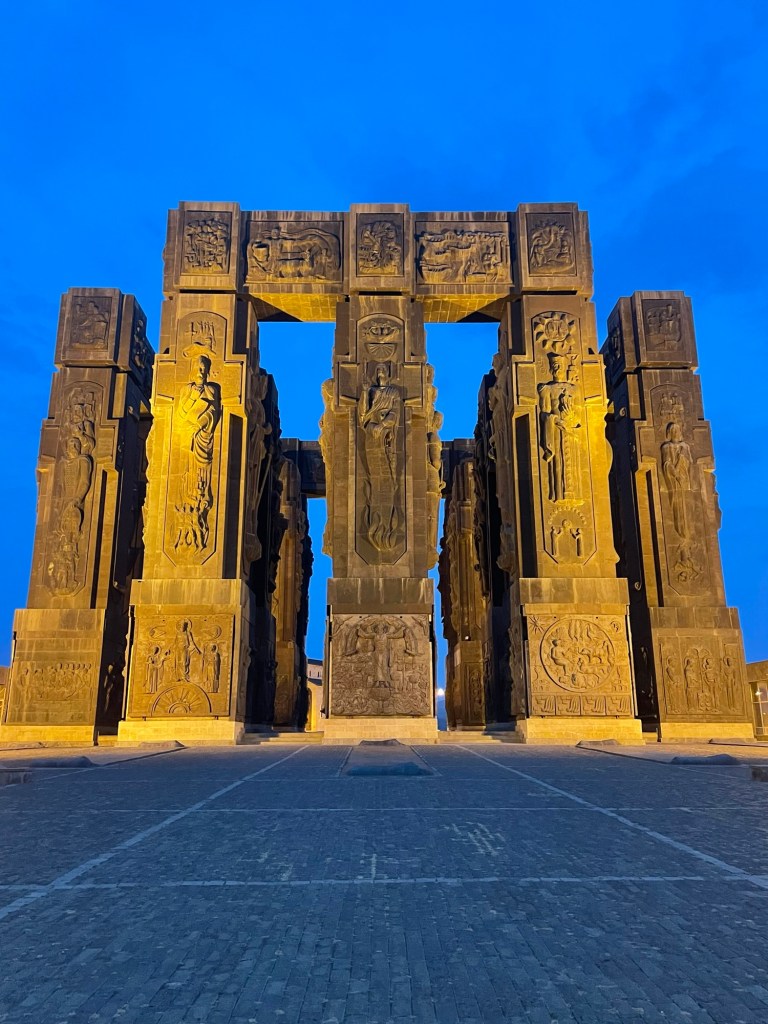
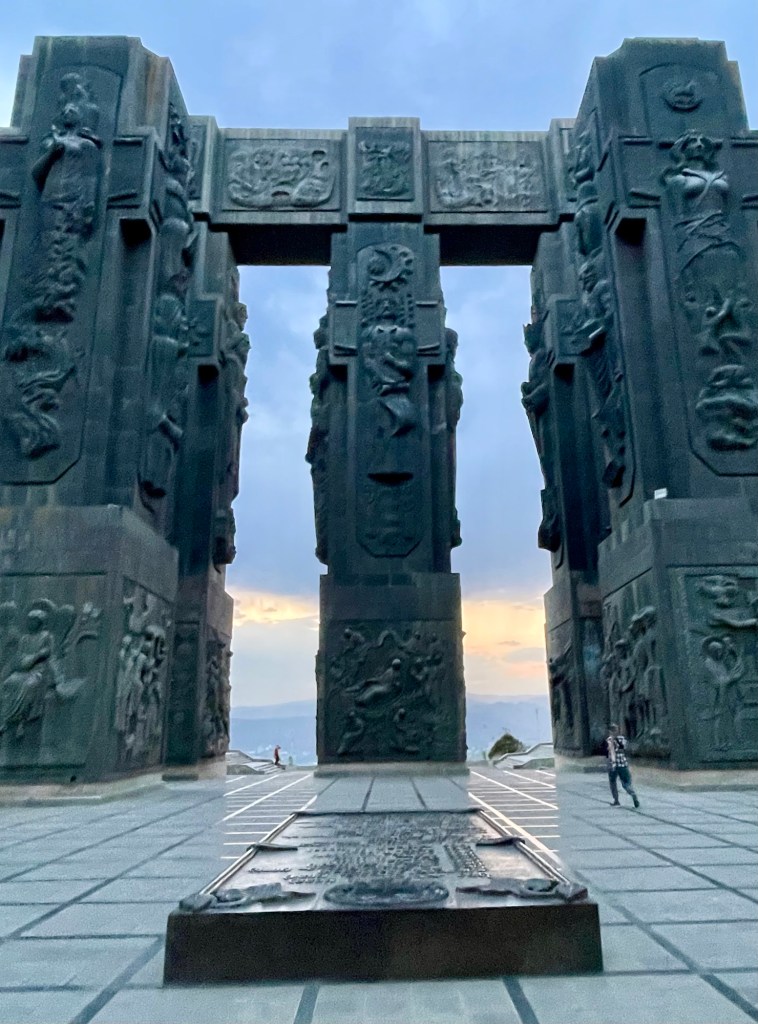
Finally, we hopped back into the car to head back to the capital city Tbilisi. We wanted to take advantage of having the rental car to reach a couple of the harder places to reach on the outskirts of Tibilisi and in the surrounding area. After enduring the long traffic around the city we made it to a monument called the Chronicle of Georgia, which was built in 1985 and consists of 16 giant pillars, each 30-35 meters (98-115 feet) tall sitting on top of a hill overlooking the city. The top part of the pillars feature kings, queens, and heroes of Georgia. This is a stunning monument and piece of art which reminded me a lot of the large statues from Lord of the Rings. The bottom part of the pillars depict stories of the life and death of Christ. It is quite a ways from the center of the city, but very much worth the effort to get here as I have never seen anything quite like it.
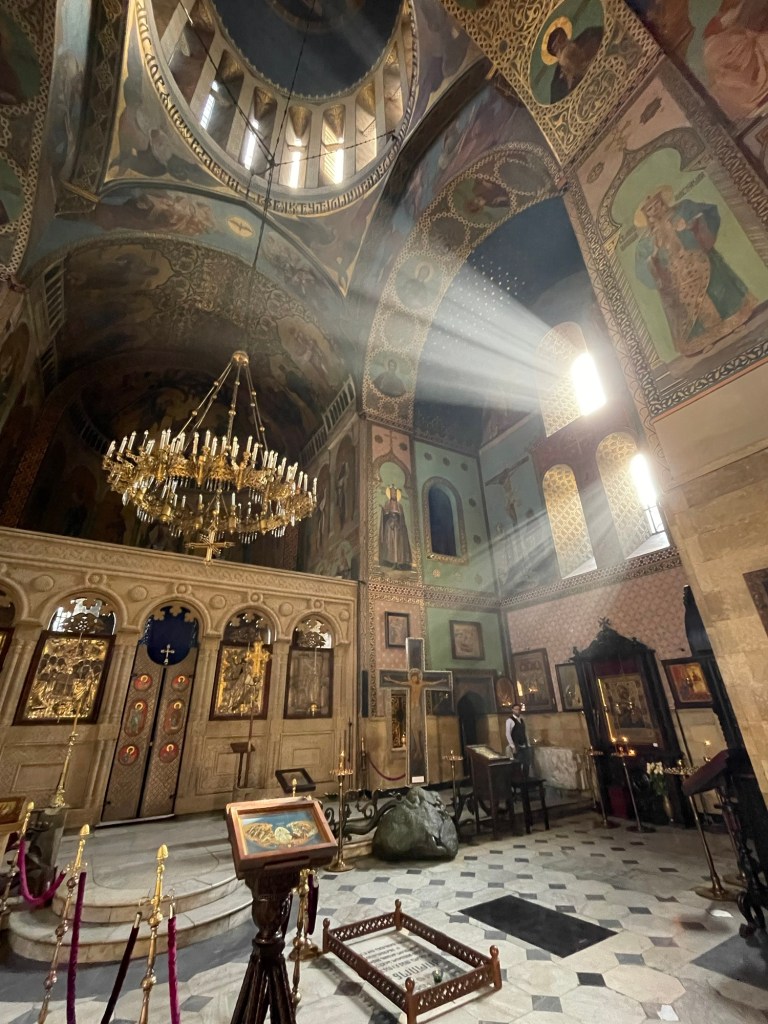
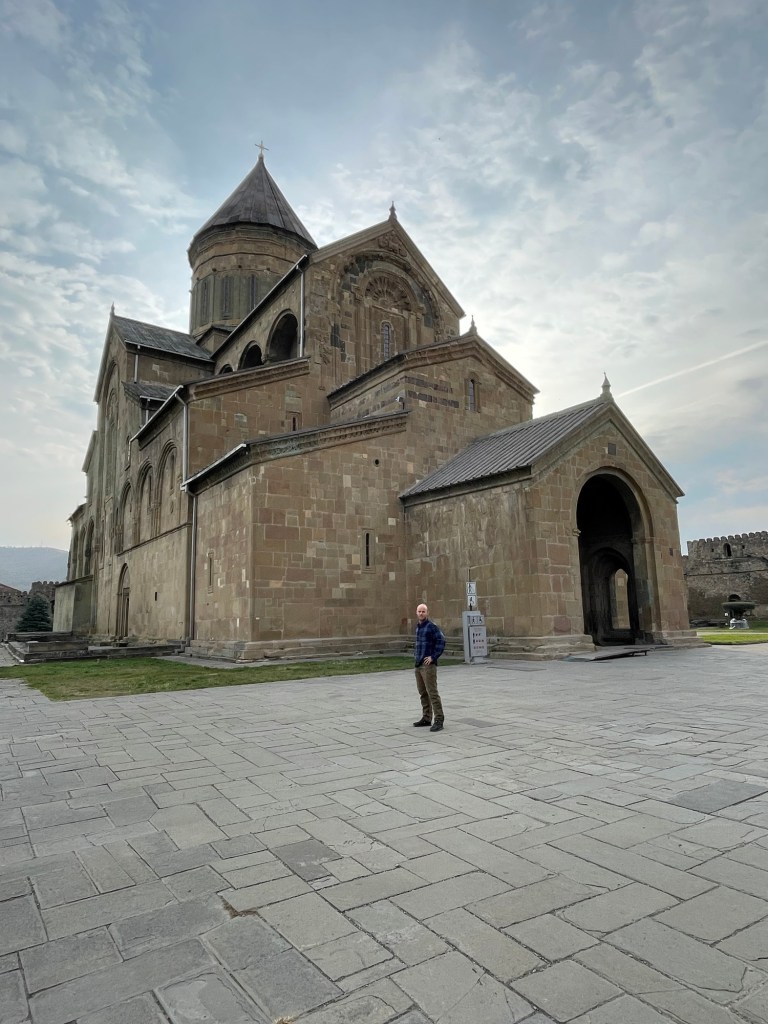
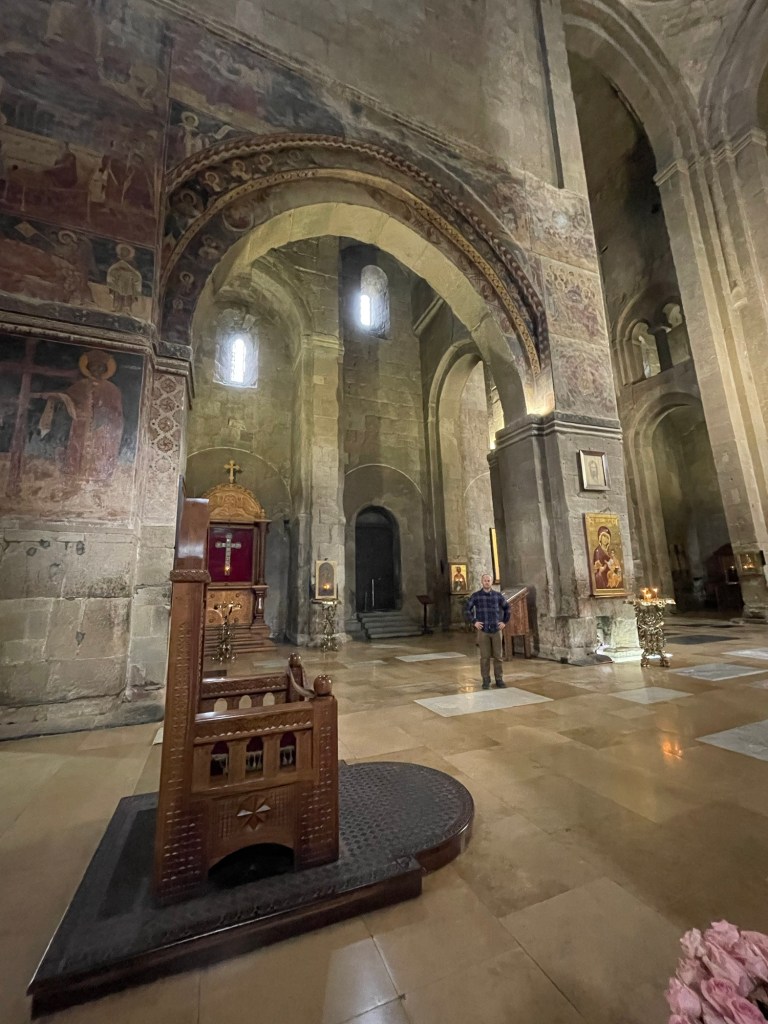
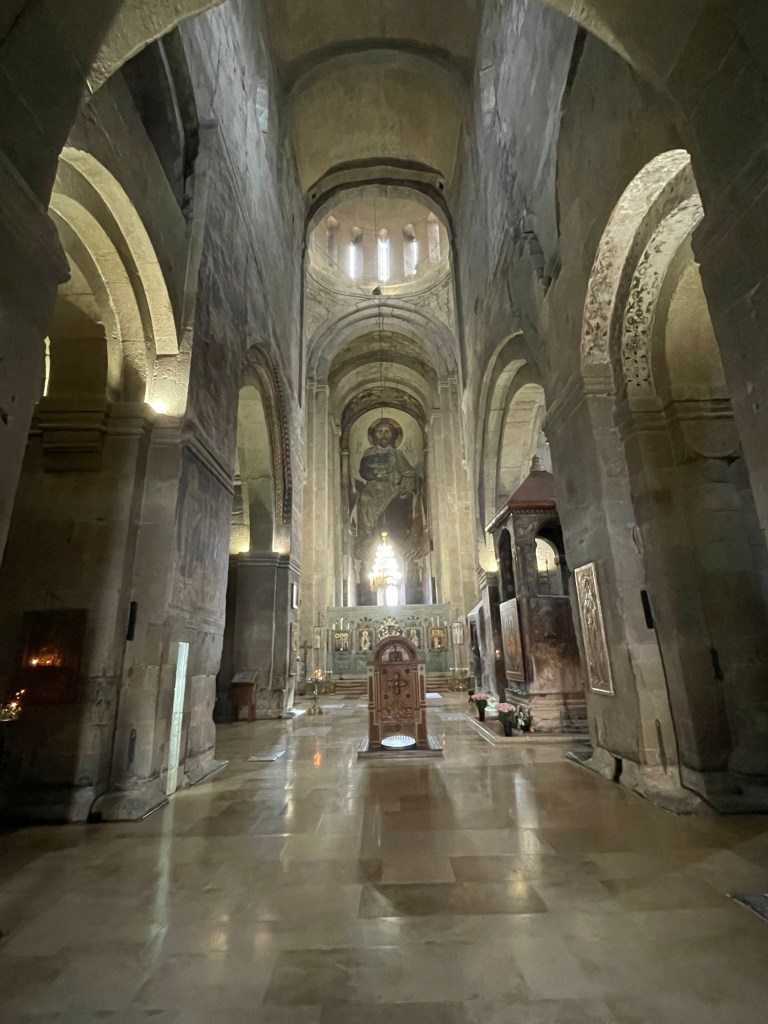
Our final stop this night was a small town north of Tbilisi called Mtskheta, which is famous for being one of the oldest continuously inhabited cities in the world, as well as the home of the giant beautiful Svetitskhoveli Cathedral, which was built in 1010 and is a masterpiece of the Middle Ages. This cathedral has been one of the most sacred places in the Georgian Orthodox Church and is rumored to contain Christ’s mantle. It is also the burial place of many Georgian kings. It is a truly remarkable church and we had it to ourselves when we visited the next morning.
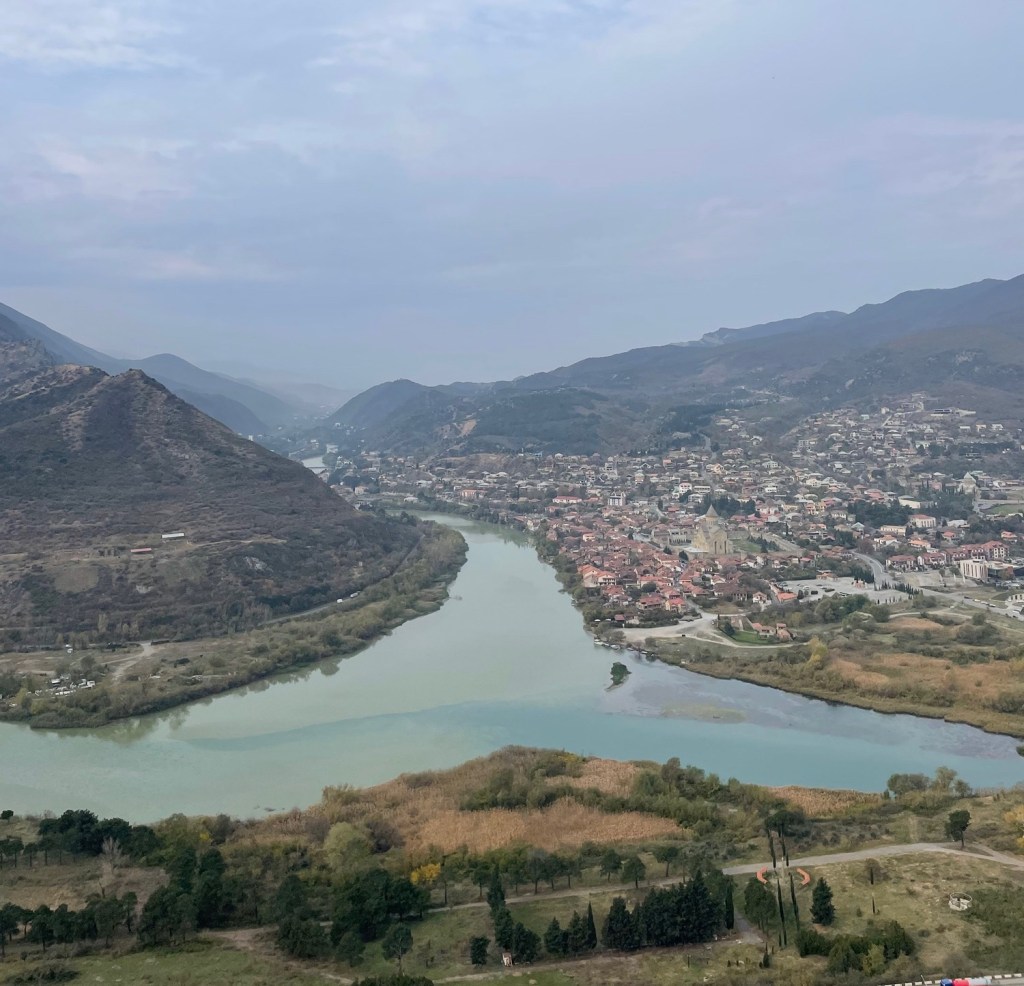
That following day we made our final stop with our rental car at the Jvari Monastery. While the Svetitskhoveli Cathedral was grand, yet very quiet when we visited, the Jvari Monastery was quite the opposite. When we arrived it was already packed with tour groups and it is quite a small church and monastery with not much to see, partly due to ongoing renovations. The selling point of this monastery is that it is the highest point on a hill overlooking the confluence of rivers leading into Tbilisi, as well as looking down on Mtskheta. The setting and views are worth the trip.
After returning the car, we took the metro to the other side of Tsibilisi where we caught a minibus heading up into the Caucus mountains to the northern border with Russia to a small town called Kazbegi. Similar to earlier drives in the Caucuses the roads to Kazbegi are windy but the views beautiful as we wove back into the Georgian mountains. The mountains here are different from the western mountain range we visited three weeks prior as there are far less trees, and unfortunately the fall season and colors had already come and gone. The drive took four hours and upon arriving we checked into a cute apartment on the outskirts of town. Unfortunately, this left us with a two kilometer round trip walk to dinner and winter was in the air.
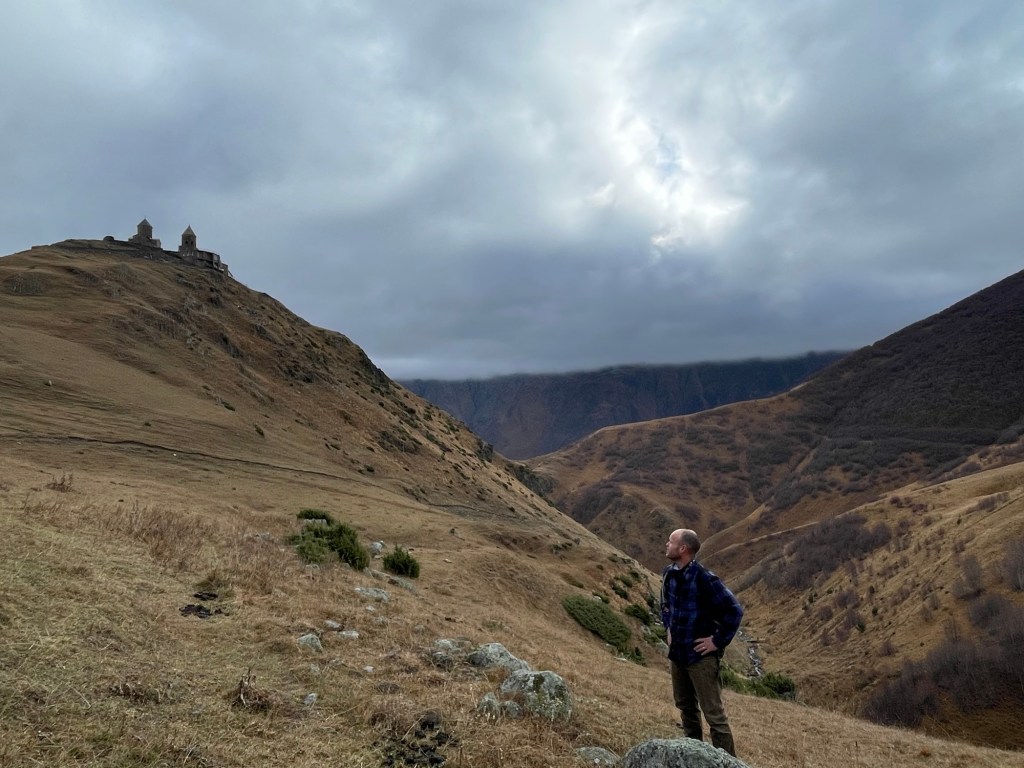
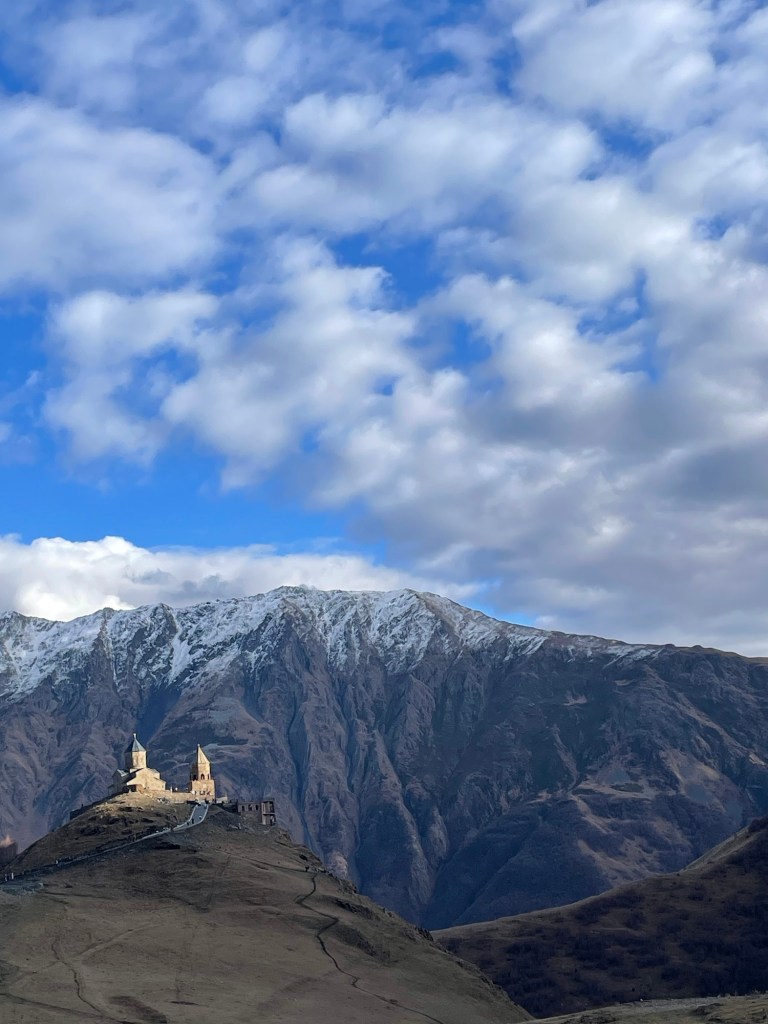
Aside from the stunning rugged mountains, the main attraction of Kazbegi is the Georgetown Trinity Church which sits high on the hill overlooking the town surrounded by a backdrop of mountains in every direction. We set out in the morning to not only hike the five kilometers up to the church, but if the weather allowed, hopefully hike another five kilometers further up Mt. Kazbegi to see the glacier at just over three thousand meters in elevation. The glacier is a big trek.
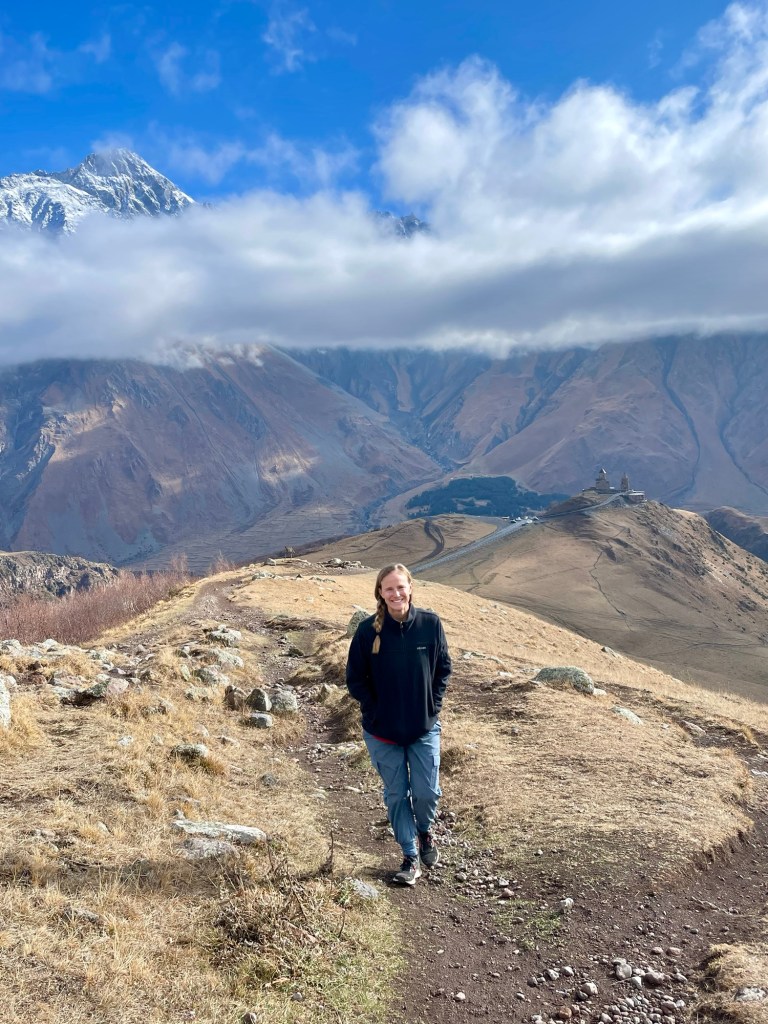
It was November now, and snow fell on the upper mountains overnight. Furthermore, the cloud ceiling was low when we awoke, so we were very uncertain as to how far up the mountain we would be able to make it. We began our hike through town and then up the mountain towards the church. Many people apparently just drive up the steep road to the church, but we always prefer to walk and enjoyed hiking on the trail around the back side of the church, and then up through a green valley where we were greeted with a view of the church from a vantage point the road does not provide. We decided we would stop in to see the church on the way back down as we wanted to hike further up the mountain in case the weather deteriorated and we had to end our trek.
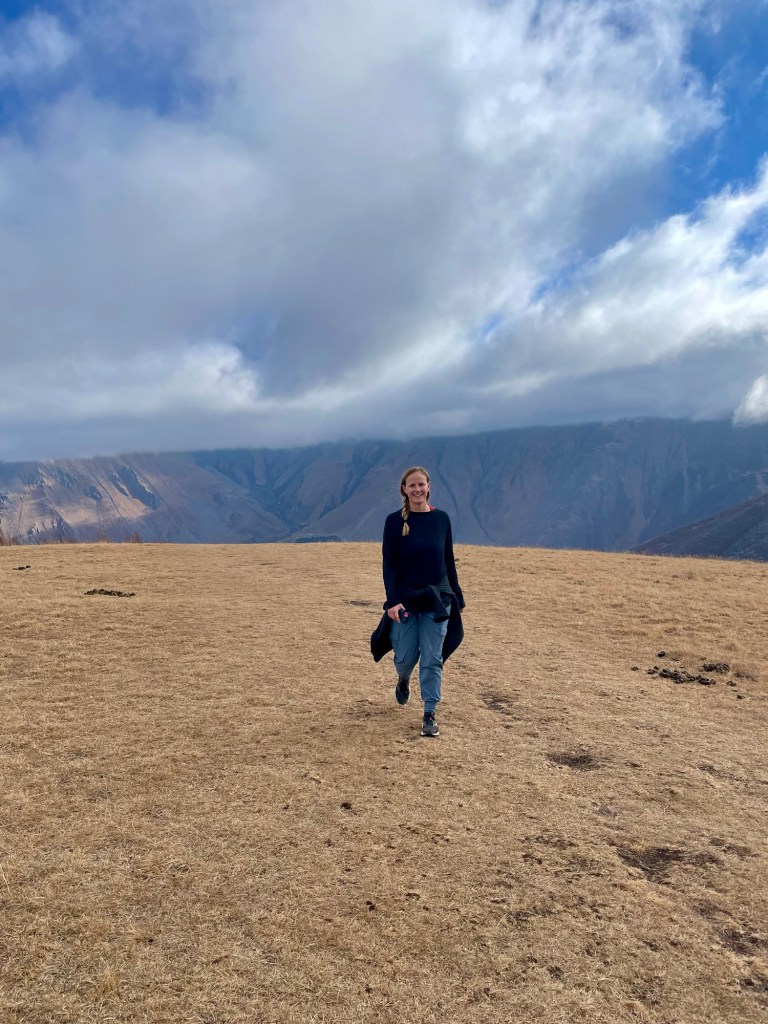
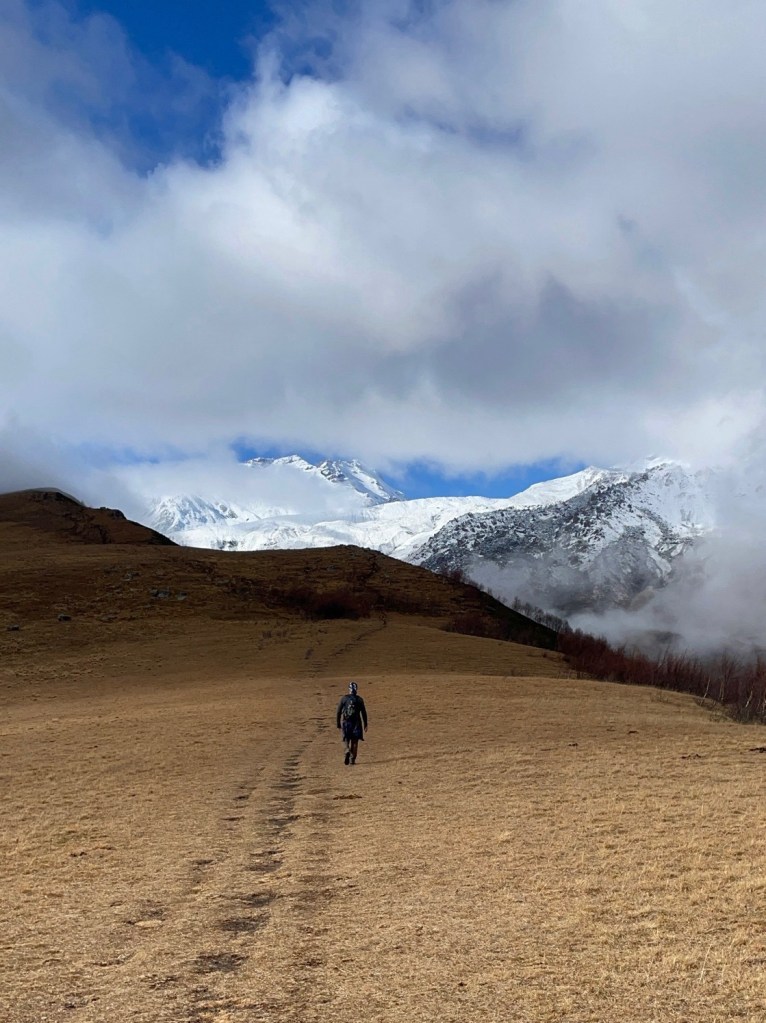
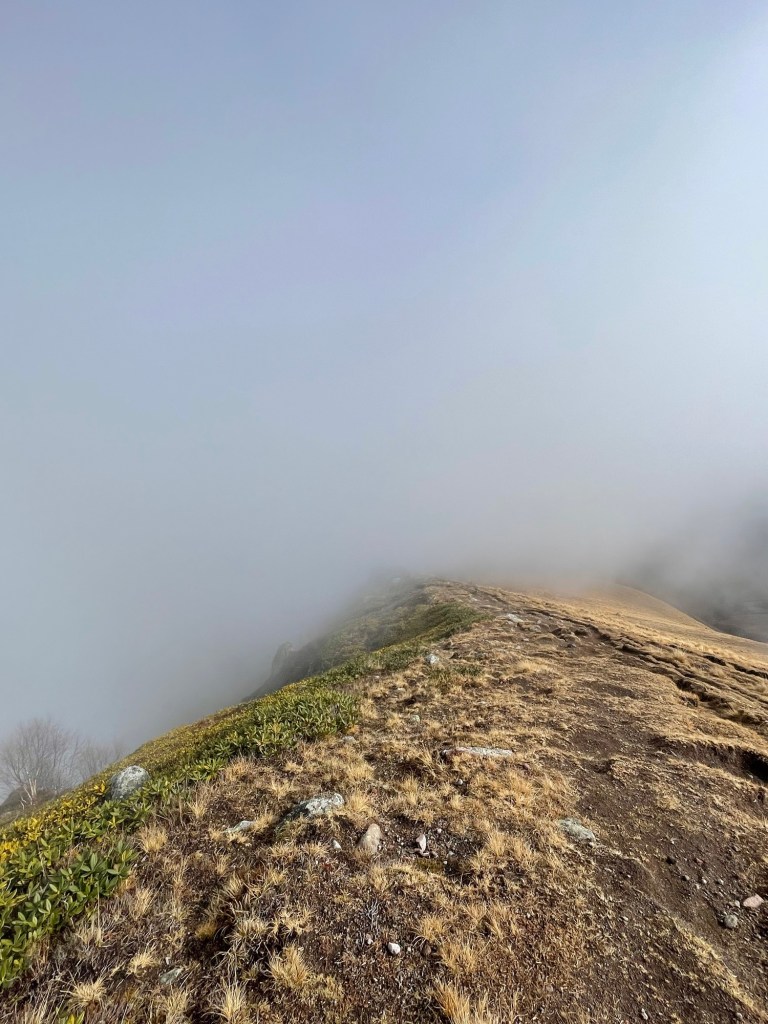
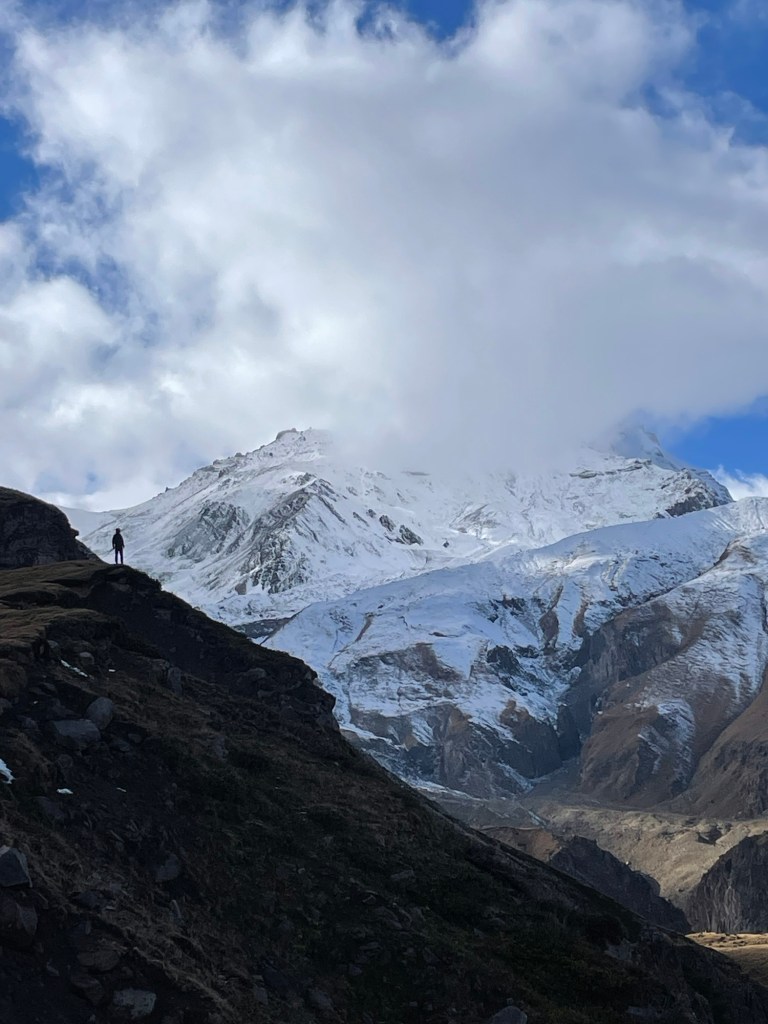
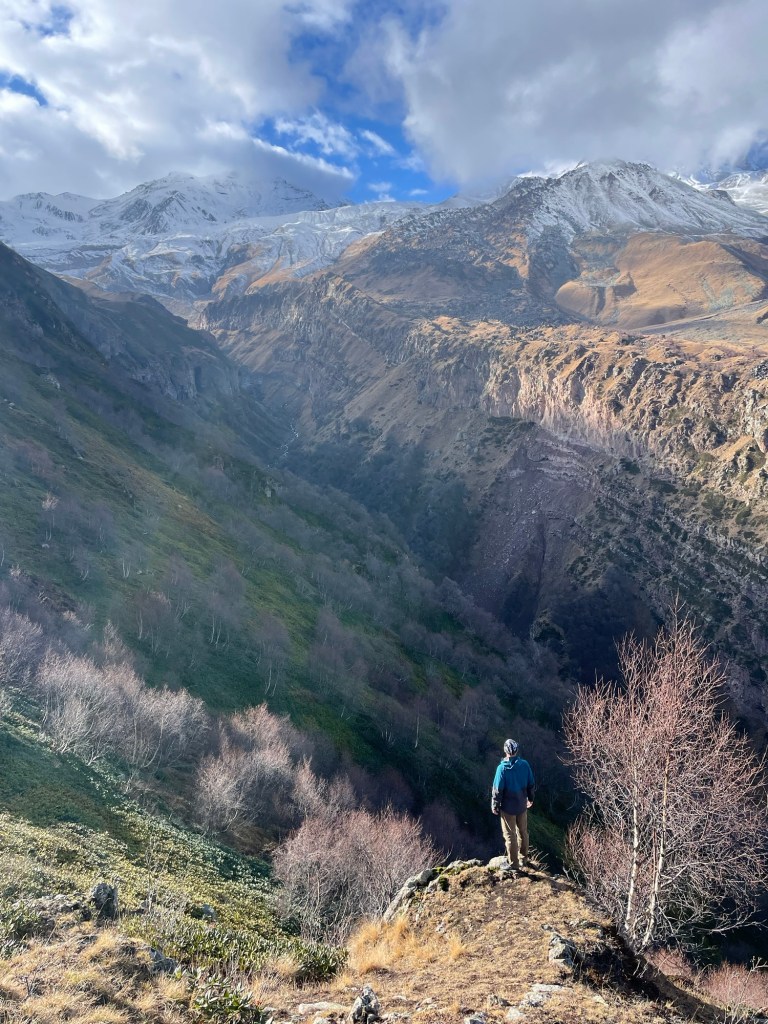
We continued our way further up, and decided to take the ridge line trail because we felt that it would give us a better view of the valley if the clouds lifted. When we began our ridgeline hike, we were unable to see the mountains or the valleys below because we were still fogged in. As we continued hiking, we were very fortunate as the fog eventually began to lift. We were treated to beautiful rugged mountain views and to a huge river gorge carved out by the glacier above. At this point, we also noticed how steep the ridge dropped off the path’s edge and were wary of the danger if we wandered off the path or the ridge line gave way, which it clearly had before.
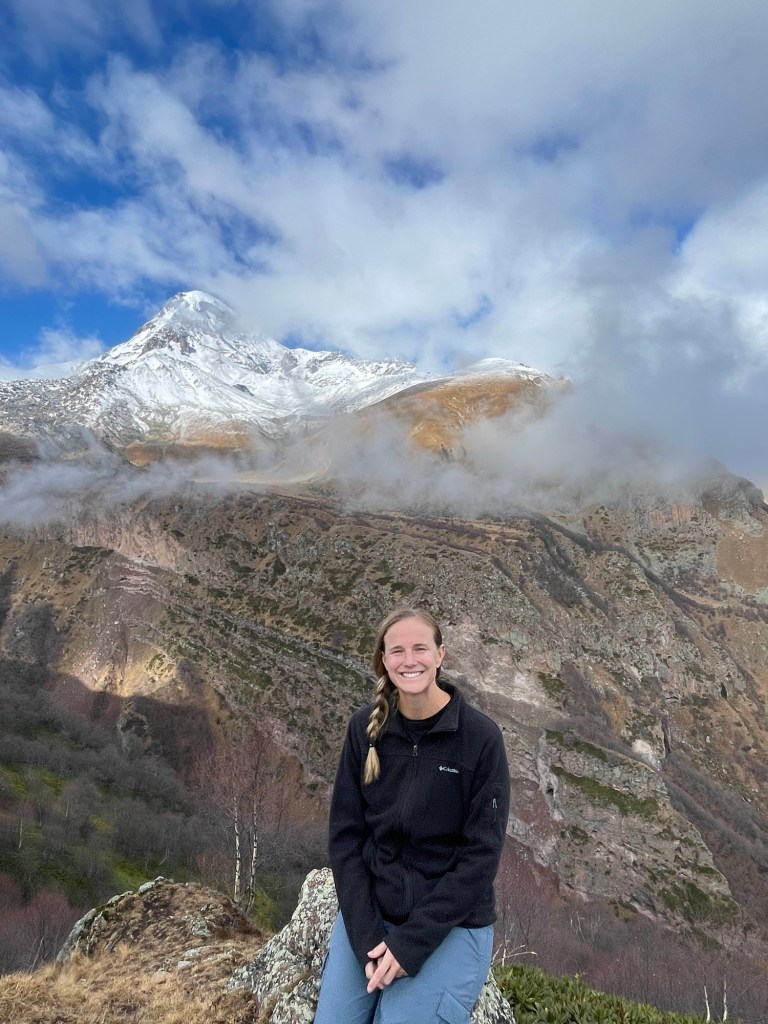
As we kept hiking, we finally reached the fresh snow that was covering the upper mountains. I did not anticipate these major climbs and had not packed properly for this first part of our year of traveling. Warm clothing aside, my biggest mistake was not bringing my hiking shoes with me, but instead just packing running shoes. After some big treks in the ‘Stans my running shoes were in pretty rough shape and this latest trek through fresh powder snow was a precarious one.
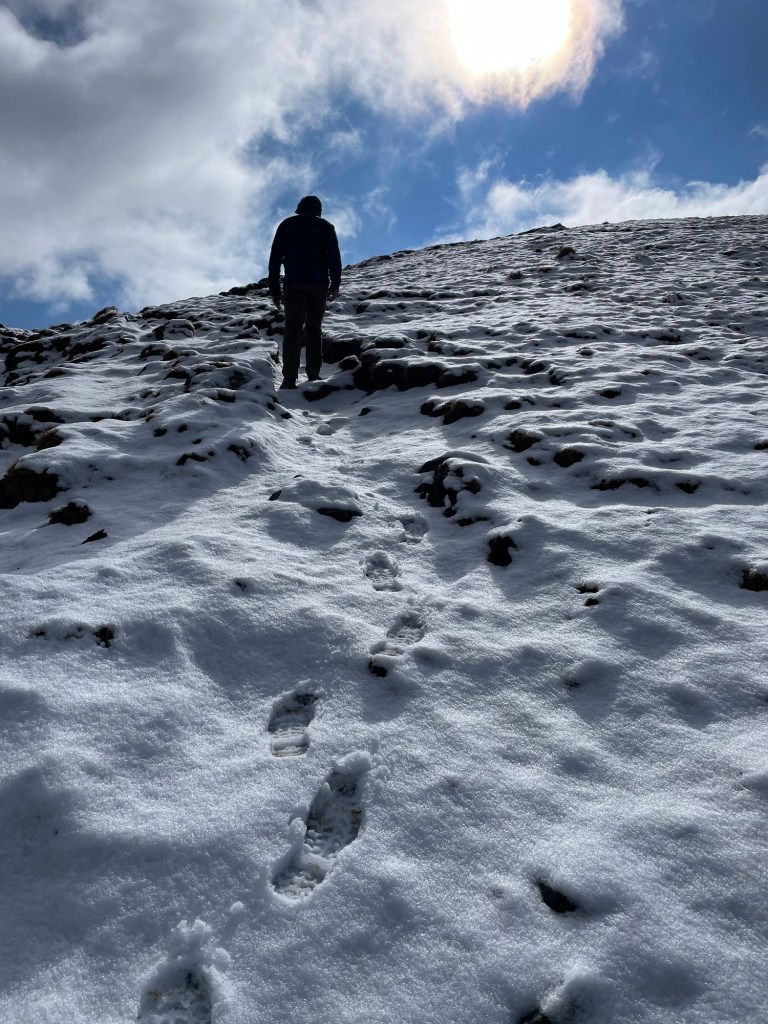
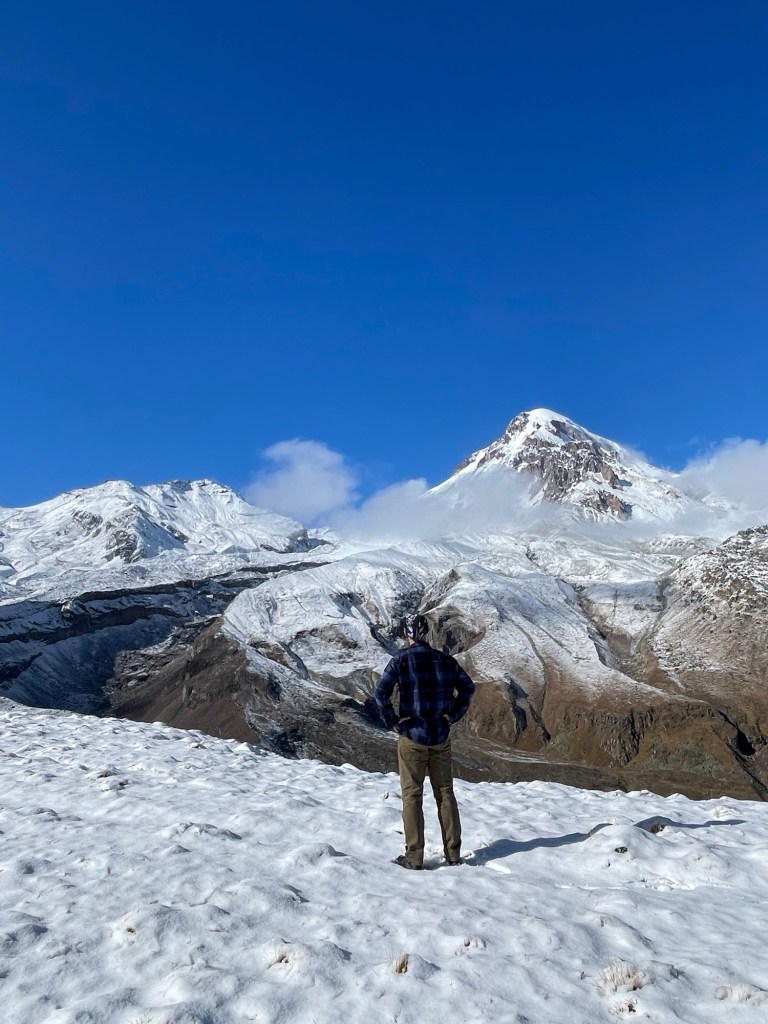
The higher we climbed, the skies continued to clear and the better the views became. Georgia is a devout Christian country and we even came across multiple crosses far up on the mountain. Finally, we reached a hut with great views up the valley of the glacier and the mountains beyond. Our original plan was to hike further up this valley to see waterfalls coming out of the glacier, but given the snow and my shoe wear, we decided to end our hike just short of the glacier. We ate our packed lunch at this hut, took some pictures, and then began to walk down the same way we came.
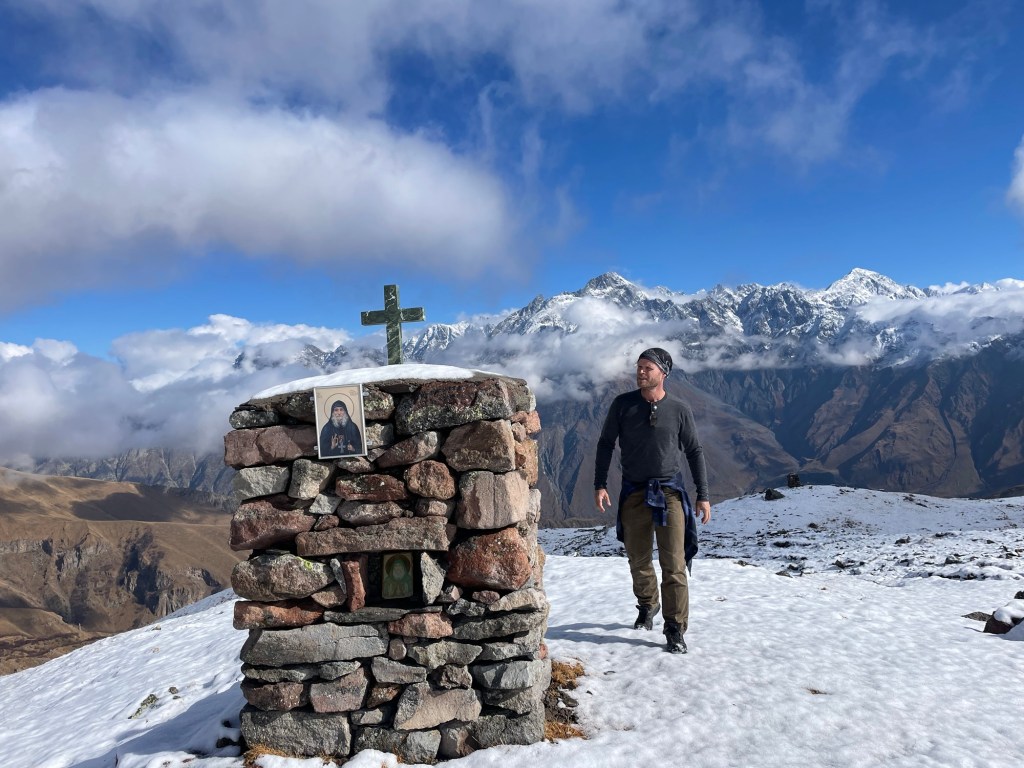
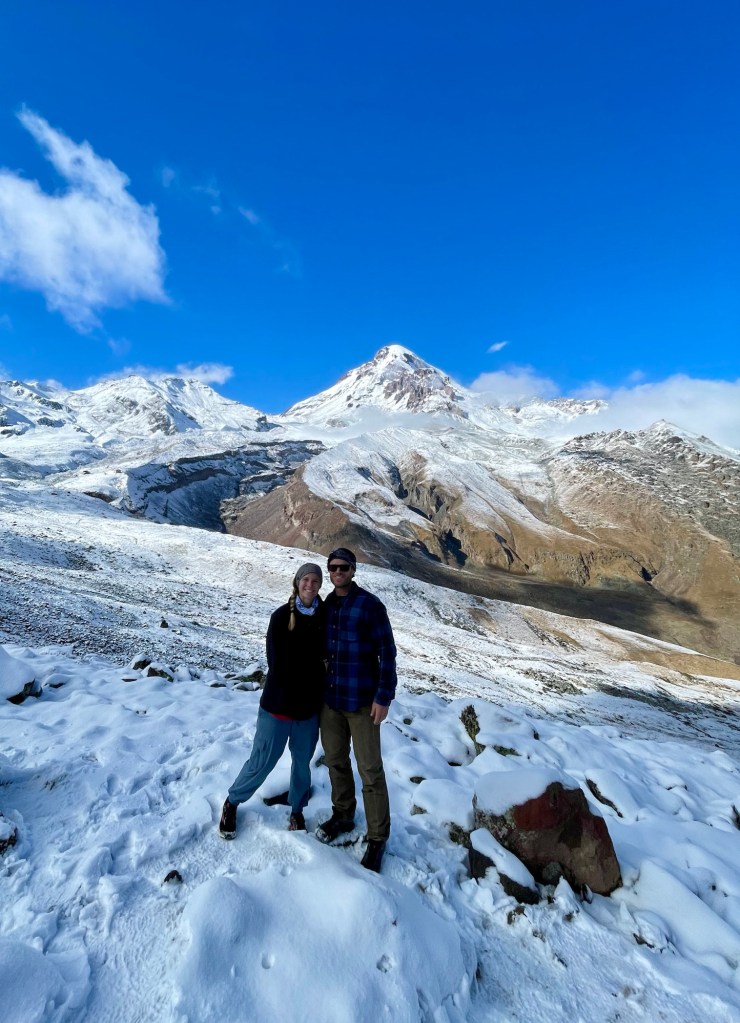
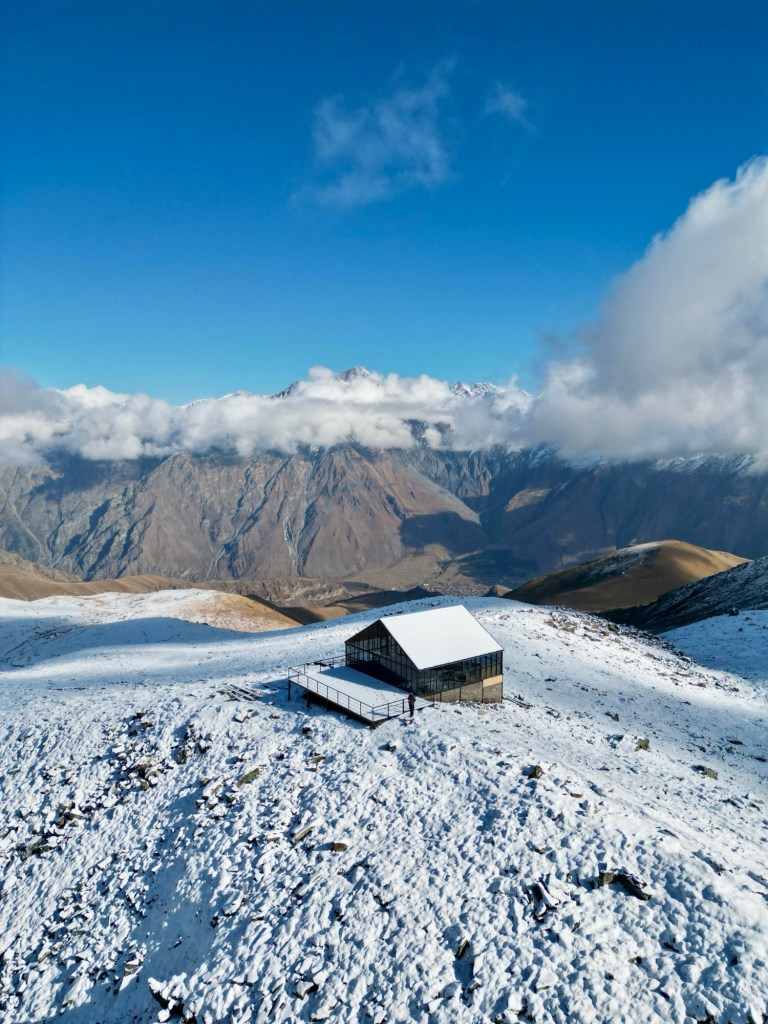
The clouds were still lifted, which led to some pretty epic pictures on the way down. The descent was much easier than coming up, and we enjoyed the leisurely walk and occasional run down the mountain. Finally, we arrived back to the top of the road leading to the church, and we noticed how many more cars were there in the afternoon compared to when we first came by in the morning. Nonetheless, we felt that we should stop in to see what all the fuss was about and play tourist for a few minutes. We found a cute cathedral, but nothing overly special. I think the main draw is the views from the church with the mountains surrounding it, which are postcard worthy.
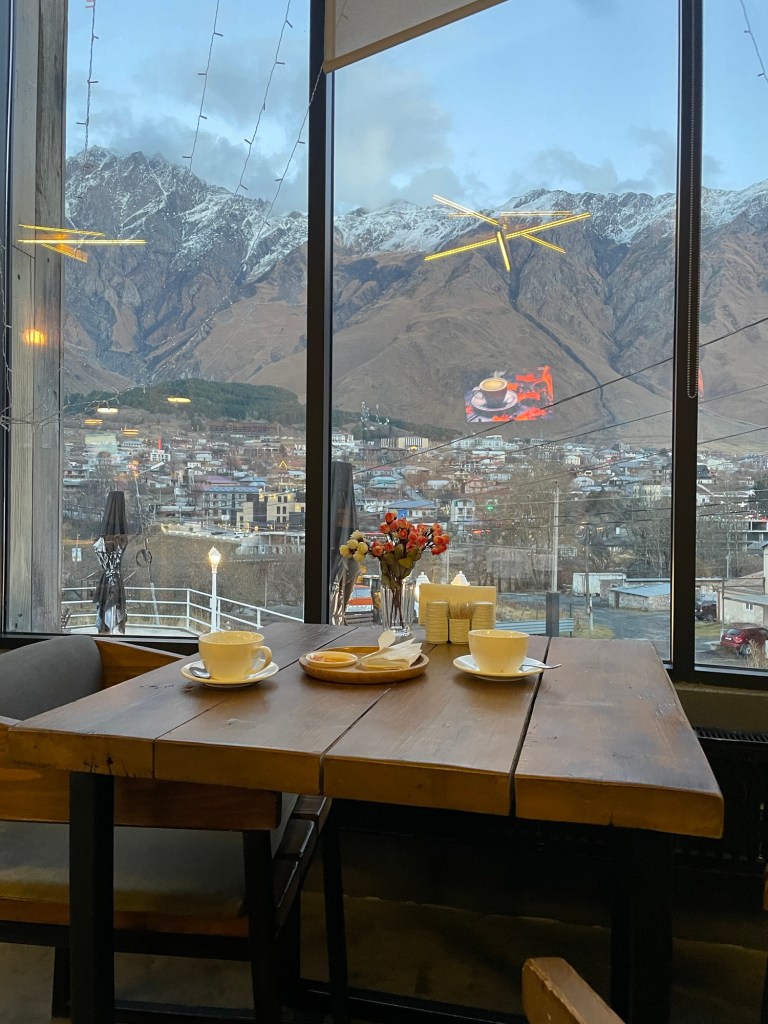
After descending, we found a cute coffee shop back in the town with sweeping glass windows looking out over the mountains, and we warmed up with coffees and a plate of french fries. We deserved it after the eight hour, seventeen kilometer hike we just completed. After returning to our apartment for a quick shower, we reluctantly made the two kilometer trip back into town for a nice Georgian dinner before bed.
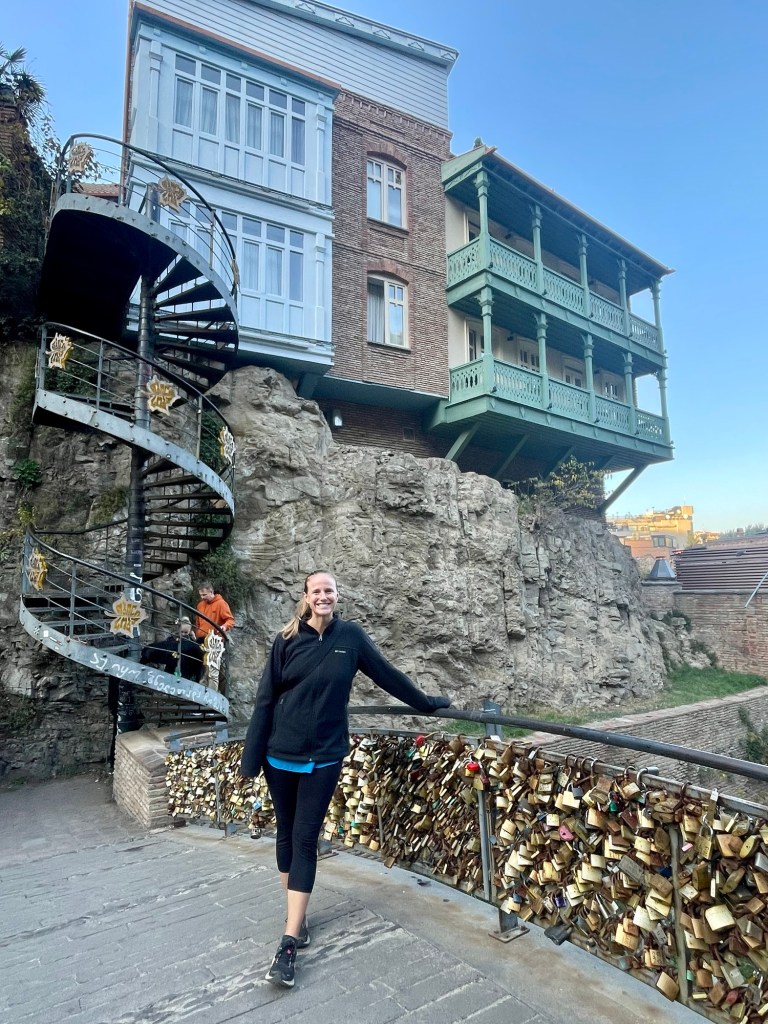
The following morning we took a minibus back to Tbilisi to enjoy one more day in this beautiful capital city that we had really fallen in love with. Upon arriving mid day we dropped out bags at the luggage storage office at the train station and headed out to find the famous thermal spas in the city. We learned that these spas were a renowned attraction and wanted to see why. What we failed to realize is how expensive they were and that you needed to book ahead, and therefore were quite disappointed when we found out the private baths were all booked up on this day. So instead, we went for a walk around the downtown area. We found a cute downtown alley along the river and took in the Tsbilisi version of the bridge of locks.
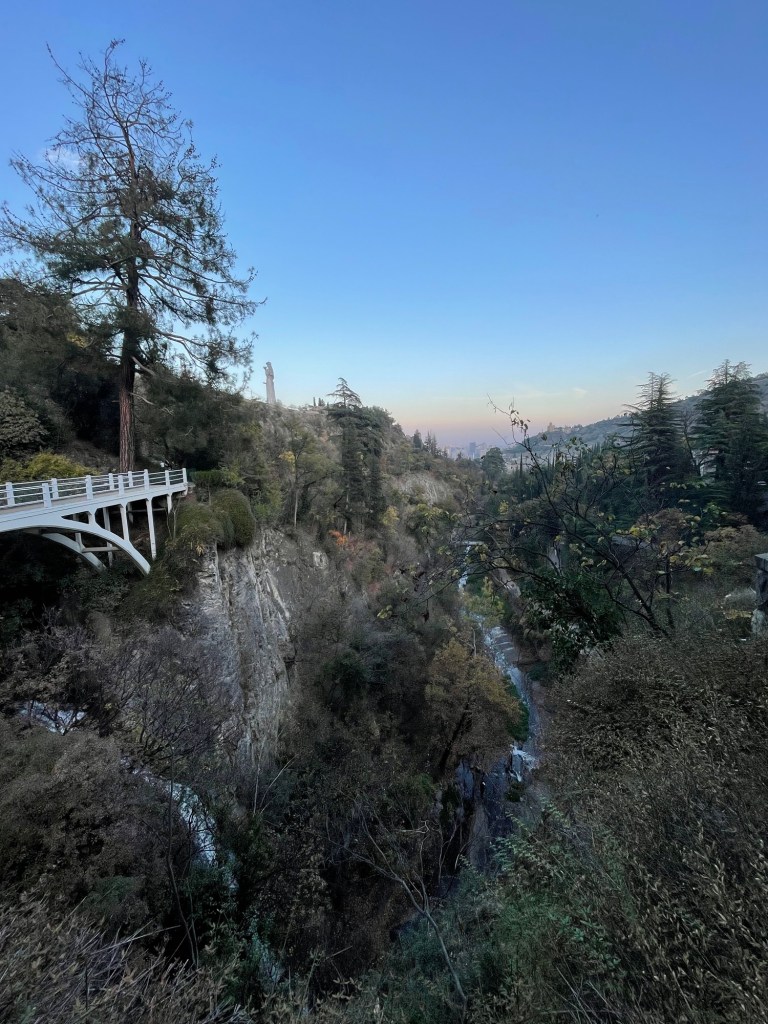
Then, we headed into the botanical gardens for a leisurely walk through the woods. This is a very popular place and many people were out taking in the beautiful park in the city. There is even a zip line over the park if you are looking for a little more adventure. In the park is a giant waterfall with a bridge overtop where we sat for awhile taking in the peace of naturally running water. Then, we hiked up the hill to watch the sunset over the city.
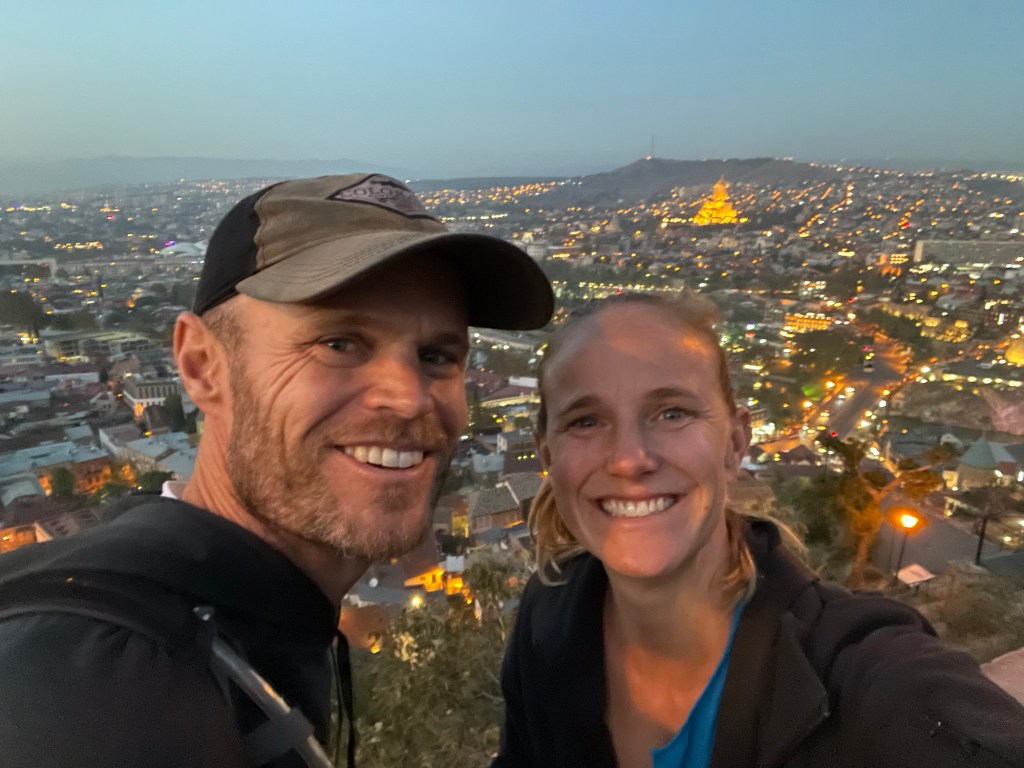
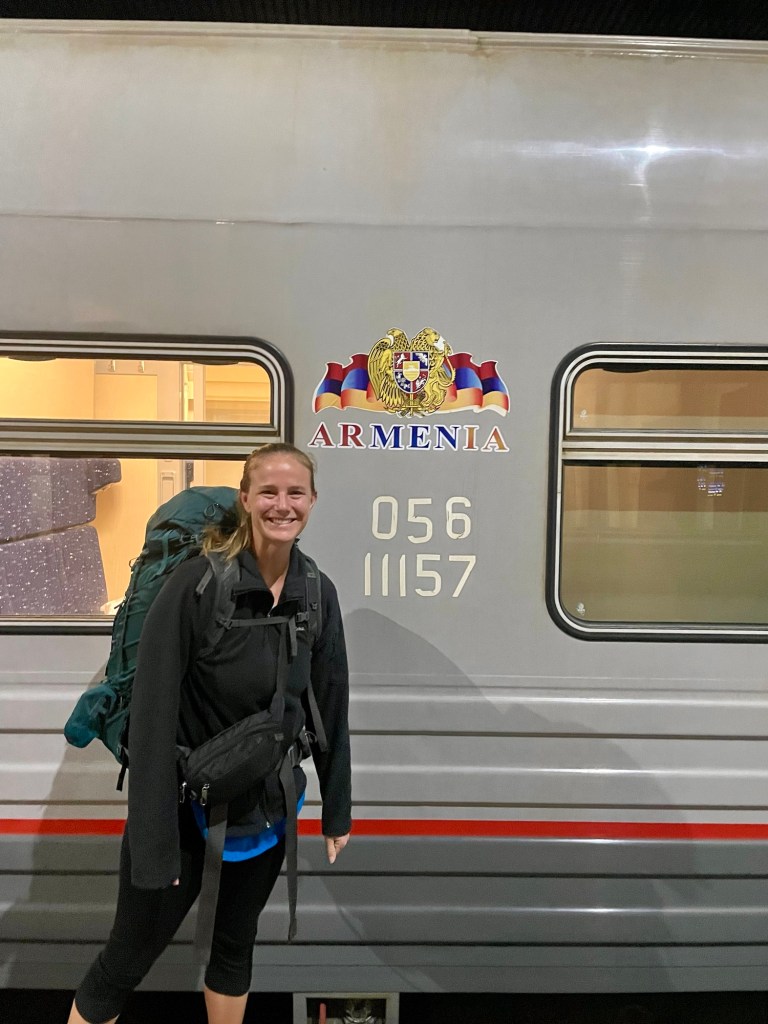
Finally, we headed down the mountain, ate a quick dinner, and headed back to the train station to catch our overnight train to Yerevan, Armenia. This would be our last overnight train of this trip, which turned out to be a great means of transportation and something I’ll remember fondly and miss from our time in the ‘Stans and the Caucuses. This was our first train where we were crossing borders in the middle of the night, and we wake up at just past midnight to go through immigration. On the Georgian side, we had to get off the train and stand in a line in the cold waiting to go through border control. The Armenian side was much easier as the border control officers actually boarded the train and went car to car checking passports and visas, so we never even needed to leave the warmth of our sleeper car beds.
Next stop…Armenia!