Throughout our travels through Central Asia, we talked to several people who had visited Armenia, and even met an Armenian girl in Tajikistan on the Pamir Highway. In all of these conversations we seemed to receive mixed reviews about Armenia, so we decided we had to see it for ourselves to fully understand this historic country. Since we were in the Caucuses and it was a post-Soviet country, it seemed to fit well with our travel itinerary thus far. The easiest way to reach Armenia from Georgia was the overnight train, which we thoroughly enjoyed.
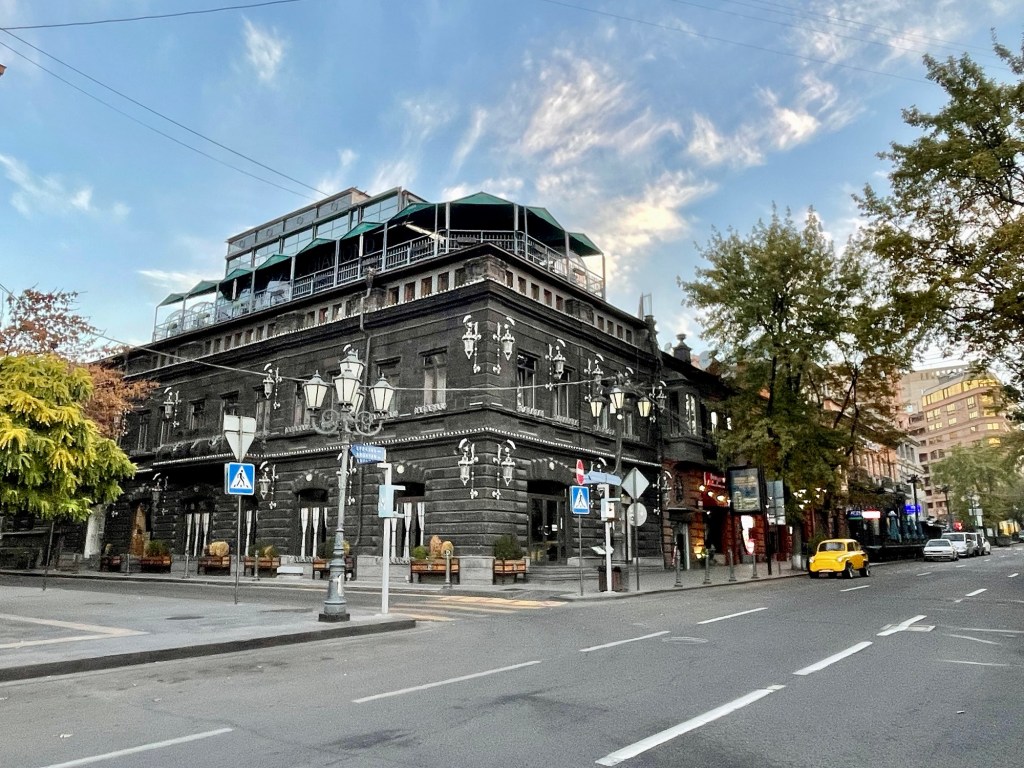
With the reputation for being a sad, gloomy, and not-so-friendly place we crossed over the land border just past midnight with very few expectations for both Armenia and its capital Yerevan. However, travel is full of surprises and this little country in the middle of a very hostile part of the world quickly won us over. Our train arrived in the capital city in the early morning hours, and our initial hurdle was to find an ATM to pay for the subway into the center of the city. The first few ATMs we tried either did not work or had no money, so we wandered a bit further away and were relieved to find a machine with cash to dispense. The taxi drivers at the train station had tried to convince us that there were no working machines nearby, which was a tourist scam to force us to go on an early morning ATM scavenger hunt with them at our expense. The entrance to the subway was a short walk from the train and very convenient. We took the subway into the city and popped up at a very modern station where we stayed for about thirty minutes until the breakfast shops opened. We stopped by a cafe and had a lovely breakfast then walked to the apartment we rented for our week in the capital city. We arranged ahead for an early check-in, which was wonderful because it allowed us to drop our luggage and go out exploring right away.
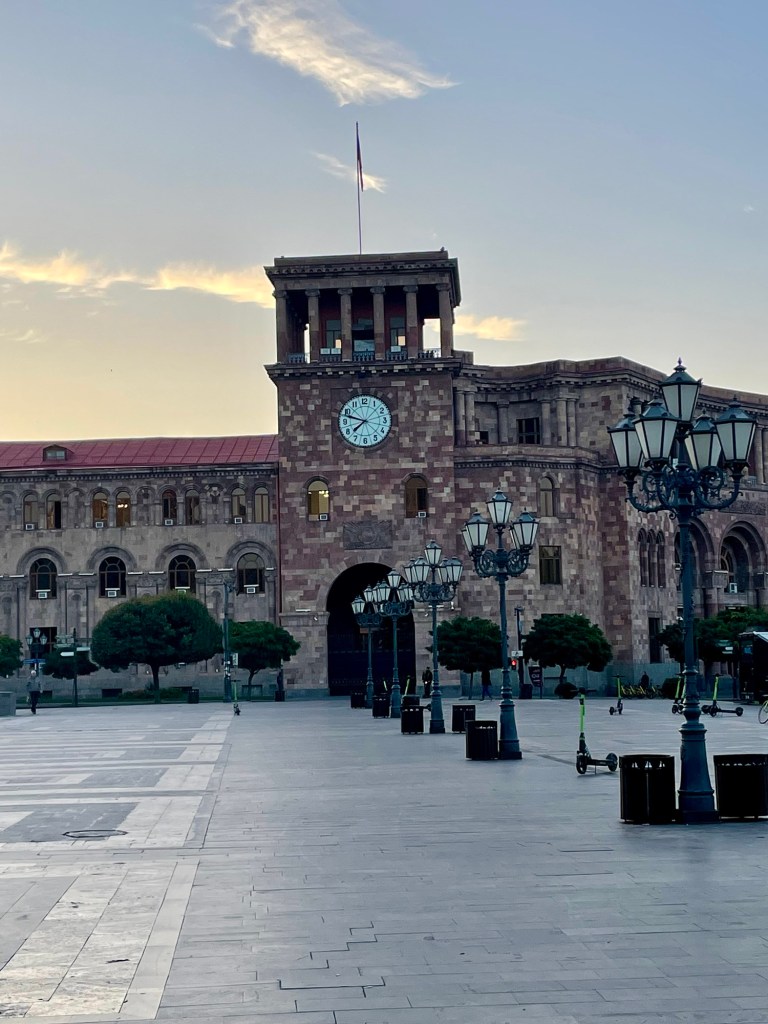

From here, we went for a wander around the city to see what we could find. We saw a ton of cute restaurants and cafes, and the streets were full of the hustle and bustle of local pedestrians enjoying a beautiful fall morning. We found many parks with countless benches, and it seemed as if nearly every park bench was full!

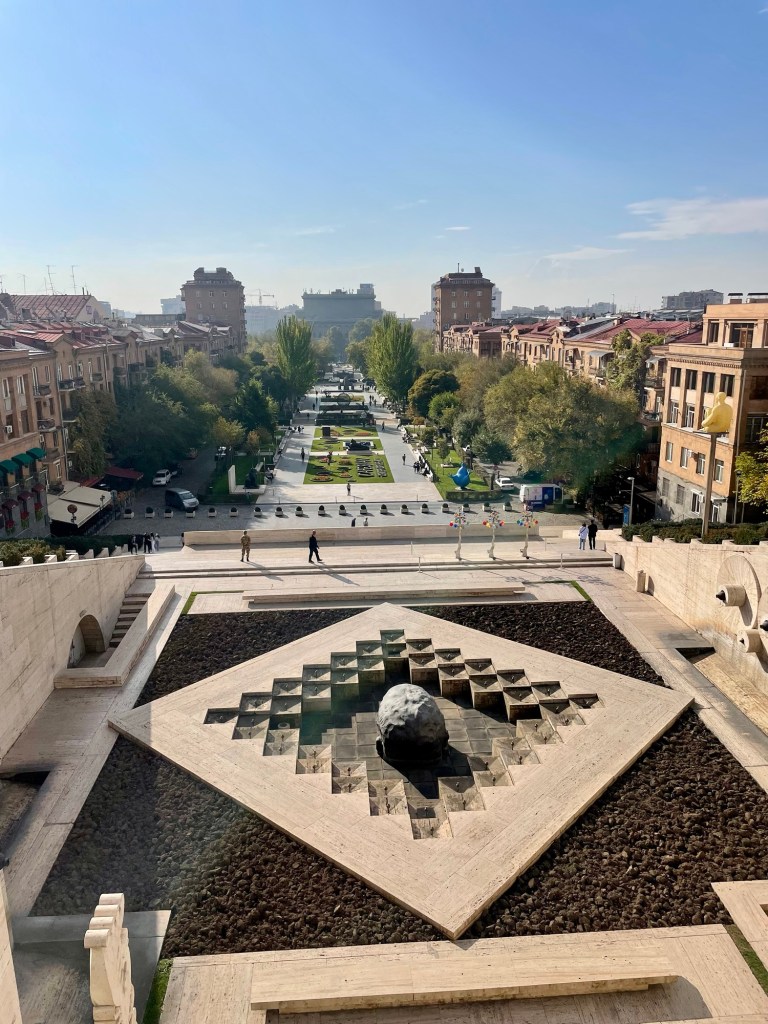
There is one place in particular in Yerevan that we read about in our research and we were excited to visit, which was called the Cascade. We had no idea what to expect, but what we saw at first was a park with tons of interesting statues commissioned or borrowed from artists around the world. There is a beautiful lion completely made out of cutup recycled car tires, elephants made of metal, and even several Botero statues. With security guards posted throughout it is clear that protecting the artwork is a priority in this park, however, one security guard seemed to take his job to the next level. With even one foot into the grass, he was running toward us to chastise and chase us back onto the sidewalk. We didn’t take it personally but did find it a bit intense and unnecessary.


Beyond the park is a set of stairs leading to the heavens. Well not quite that far, but it is an enormous staircase that climbs a hillside and seems to go on forever. The stairs are very wide and hold fountains as well as other art pieces along the way up to the top of the hill. There is a diverse range of sculptures as you work your way up the granite stair, which includes a creepy one with a head coming out of a fountain, as well as much cuter ones of turtles and divers.


The top provided us with beautiful views of the whole city. We also found that this whole staircase is home to an underground portion, which is a public art museum. Each level hosts a private art gallery and there is a series of escalators that you can take to the top if you are unable or simply do not want to walk the stairs outside. We took the escalators down and enjoyed the unique art exhibit as we descended as well. Nearby we enjoyed lunch at a local cafe, and tried a famous Armenian yogurt soup which turned out to actually be really good!

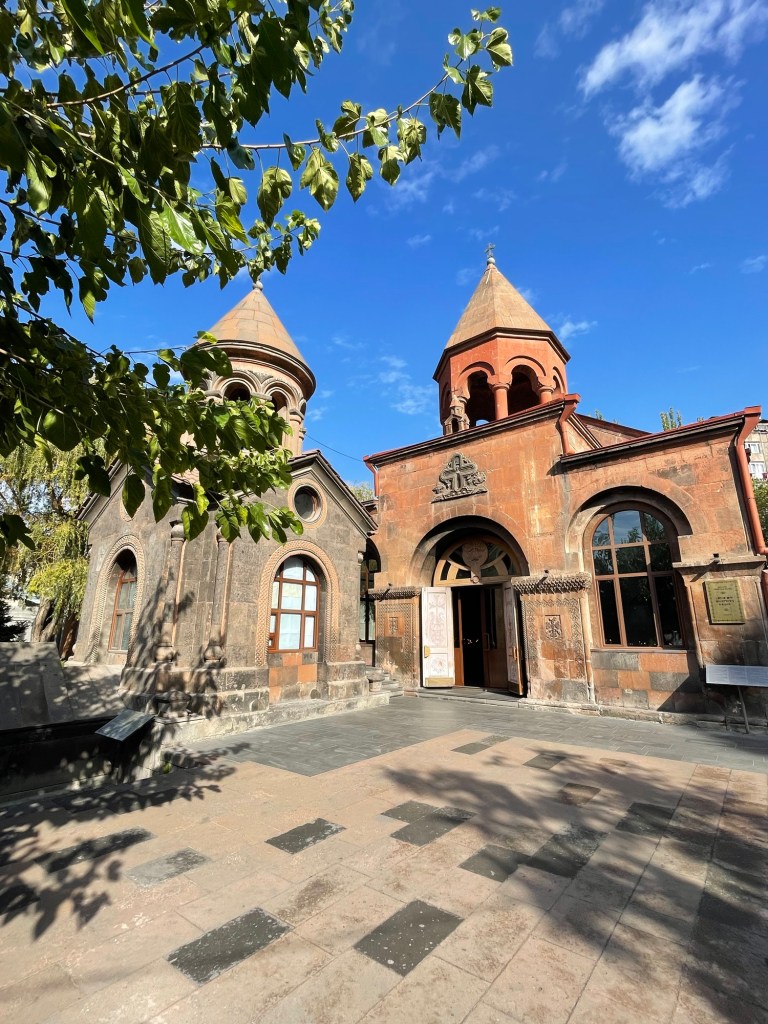
On the way back to our apartment, we stopped at S. Zoravor Church which is a really old and beautiful Christian church. Even during the middle of the day the church grounds were full of locals hanging out, once again on benches and just chatting. This seemed to truly be a center of the community even though the church was very small. Then, we wandered back to the apartment for a quick nap since we were now exhausted from the previous evening’s overnight train from Georgia.
Similar to Georgia, we came to the conclusion that the easiest way to quickly get around the southeastern part of the country would be to rent a car. Therefore, the following morning we picked up a rental and vowed to see as much of the countryside outside of the capital as possible in one day. We headed south right away with our first stop at Khor Virap, which is an Armenian monastery with a famous dungeon. It is most notable since Gregory the Illuminator was imprisoned and remarkably survived in a pit here for thirteen years at a time when Christians were being persecuted. Soon after, he became the religious advisor to King Tiridates III of Armenia, which led to Armenia becoming the first country in the world (301 AD) to be declared a Christian Nation.
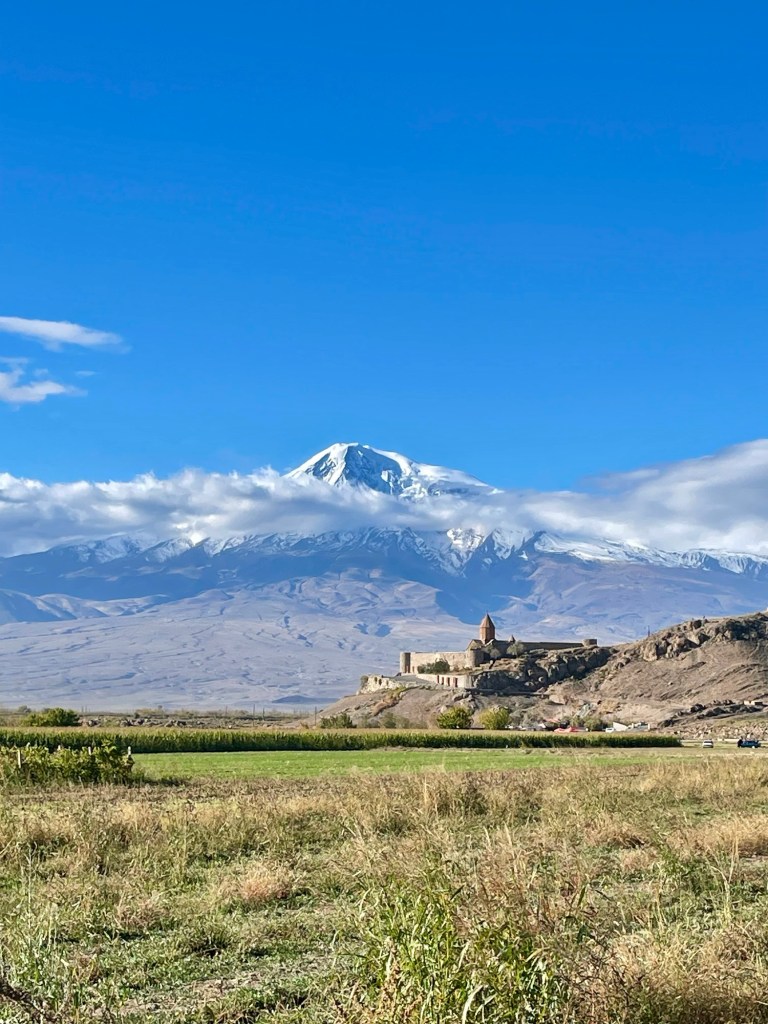

The church is located in a beautiful setting overlooking several beautiful mountains in Eastern Turkey, most notably the famous and majestic volcano Mount Ararat, which, as the story goes, is the final resting place of Noah’s Ark. Even though this mountain is so sacred for the Armenians, this land ended up as part of Turkey in an agreement with the Soviet Union at the end of WWII and Turkey has never given it back. As an additional insult, Armenians are not allowed to visit Turkey so they must worship this mountain from afar.
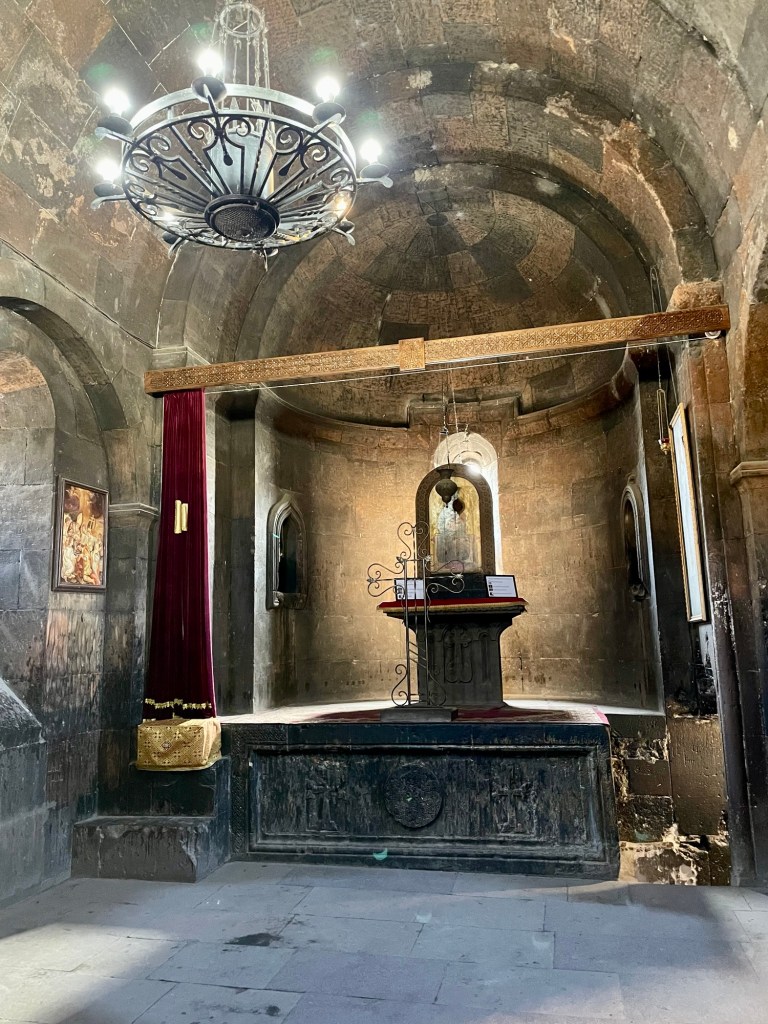
We found the dungeons and the fact that you can actually go down into them to be quite interesting and made this possibly the most interesting monastery that we visited. When you enter the smaller church in the monastery complex you see two small holes in the ground, one near the altar and one near the front entrance. The one near the altar is the actual pit where Gregory the Illuminator spent thirteen years of his life. They have a ladder (though it’s quite steep!) and it is now well-lit, so of course we had to climb down there to see more, as well as into the other dungeon. It was fascinating to walk in such a historical place and experience these dreadful dark dungeon cells firsthand.


Our second stop for the day was the Wings of Tatev, which is the longest non-stop double-track reversible cable car in the world. I’m not exactly sure what that means, but it spans three and one-half miles and takes about twelve minutes to reach the top. This was built with funding from the local community to draw tourism into the region and all proceeds go to the surrounding villages to support growth and development in this rural southernmost part of the country. The Wings of Tatev was created to take tourists more easily up to the historic and famous Tatev Monastery, which is halfway up the side of a mountain, and without this new cable car it previously required a windy, difficult, and long drive.


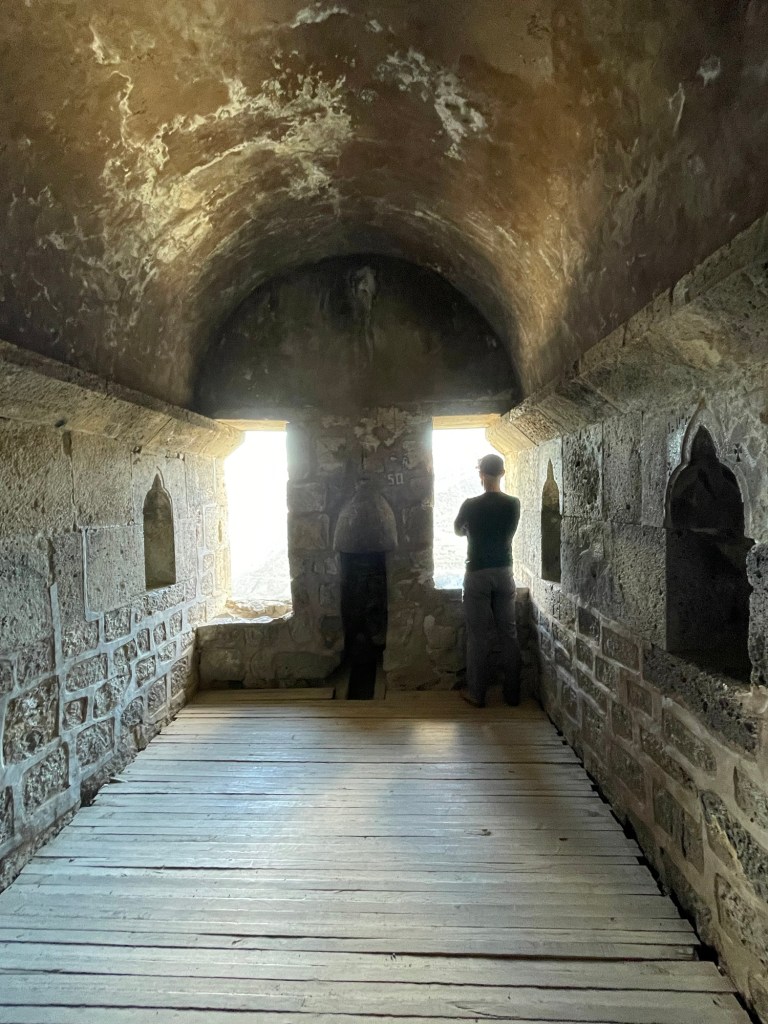
The Monastery is perched beautifully on the mountainside providing great views of the surrounding mountains and was a terrific experience. There are lots of small rooms and passageways to explore, as well as a museum explaining some of the history including how the monks living there were so self-sufficient despite being so remote. We felt a bit rushed because we booked our return ticket on the Wings of Tatev in advance and only had one hour to explore and grab a quick kabab for lunch. If I went again, I would plan for two hours at the top of the cable car.


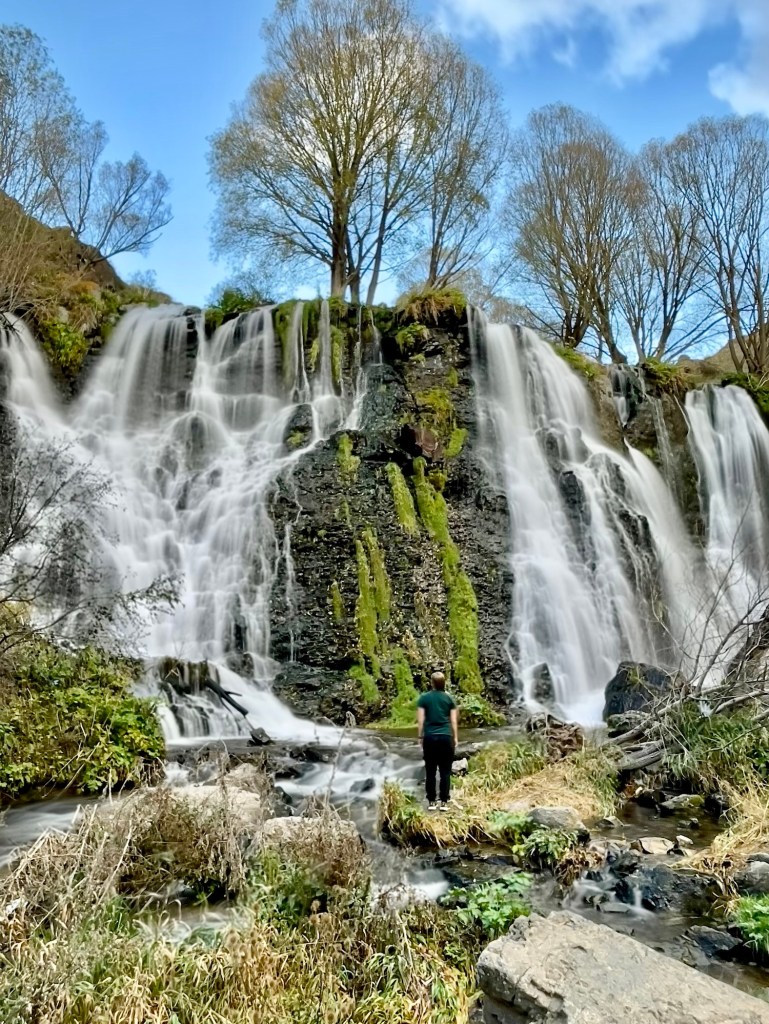
After taking the Wings of Tatev back down the mountain, we left in search of a beautiful waterfall called the Shaki Falls. We arrived in a small town at first and were a bit confused about how exactly to get to the waterfall. Tourism is not a big business in Armenia, so online maps are often incomplete or lack clear directions to some of the smaller attractions such as this Falls. After a short walk through this rural farm town, and then down a muddy road, we finally found the path leading us to the top of the falls. With little expectations, we were pleasantly surprised at how big the waterfalls are! We carefully made our way down the steep slope to the base of the falls and thoroughly enjoyed the natural beauty.


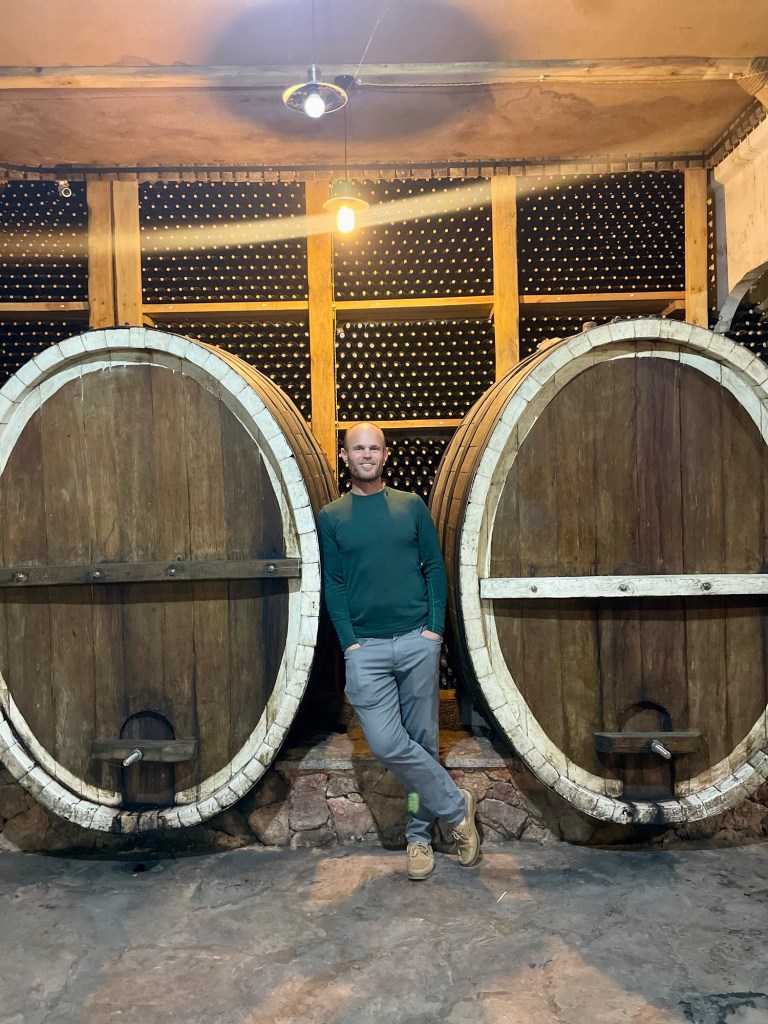
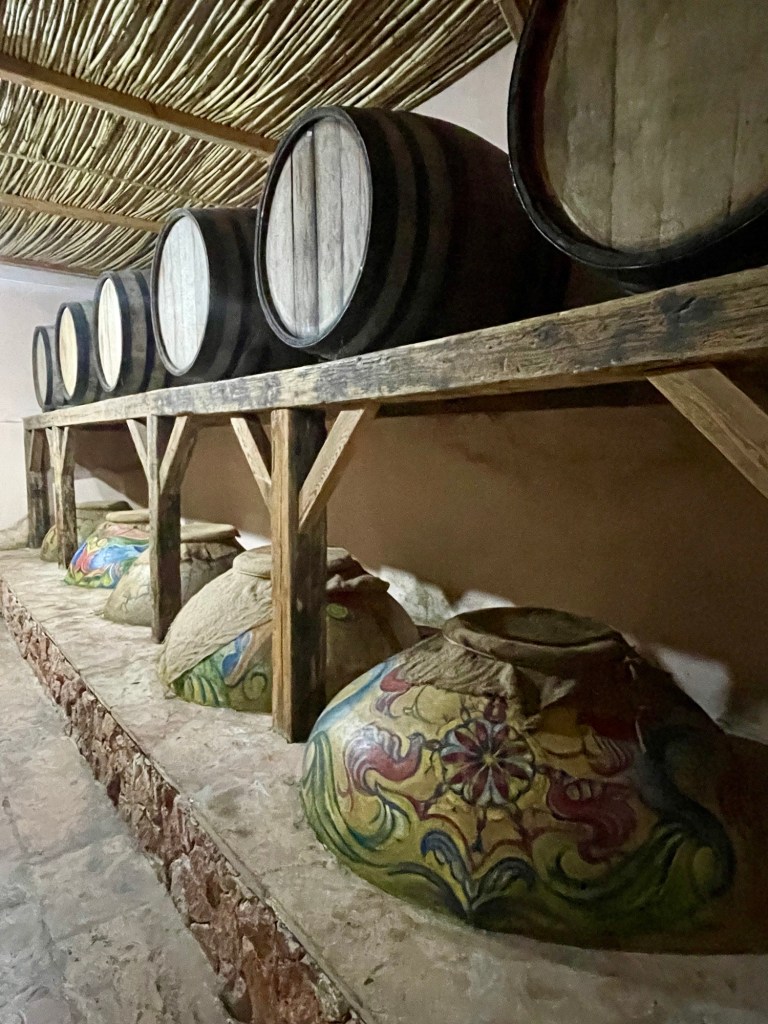
Our final stop as we made our way back toward Yerevan led us to the Areni Winery. Similar to Georgia, Armenia is known as the home of wine making and it is in this area where they have found the oldest clay pots for winemaking in the world that date back over six thousand years. Similar to Georgia, the ancient process of using clay pots in the ground to ferment wine is also used in Armenia. We enjoyed a wine tasting (super tasty) and then our hostess provided a quick tour around their winery, as well as a look at their beautiful wine cellar. Our travels through Cypress, Georgia, and now Armenia have been a gem for wine history and tasting. Finally, we made our way back to Yerevan, to grab some dinner before turning in for the evening after a very long day of touring southeastern Armenia.
For a little context as to what the Armenian people have faced in recent years, the entire southern region of the country that we explored via car this day is in danger of being attacked by Azerbaijan. These two countries seem to truly hate each other and have had the longest-standing conflict over borders in the world that dates back to when they were under Soviet control. Until recently, Armenia had an enclave inside of Azerbaijan called Nagorno-Karabakh. Azerbaijan has also claimed this land, and slowly taken back areas around it despite this area having a significant and arguably majority Armenian population. After the fall of the Soviet Union, Armenia was clearly a richer and stronger country. However, over the past twenty-five years, Azerbaijan has managed its huge gas reserves wisely and, combined with a strategic military relationship with Israel the power structure in the region has turned. With a stable government and big investment in defense, Azerbaijan has become a much stronger power. Earlier in 2023, Azerbaijan first set up a blockade around Nagorno-Karabakh and cut off the one remaining road from this region back into Armenia, as well as the internet. After several months of starving and weakening the resolve of the resistance in the enclave the military invaded Nagorno-Karabakh in October just before we visited, and shockingly and sadly took control leading to two hundred thousand Armenians being displaced. The Armenians here were left with the option of renouncing their country and becoming Azerbaijani, or fleeing their homes and communities and seeking refuge and a new life in Yerevan. EU peacekeepers are now in the southern territory of Armenia that we visited, however, it is still very much in danger of being invaded by Azerbaijan as well.
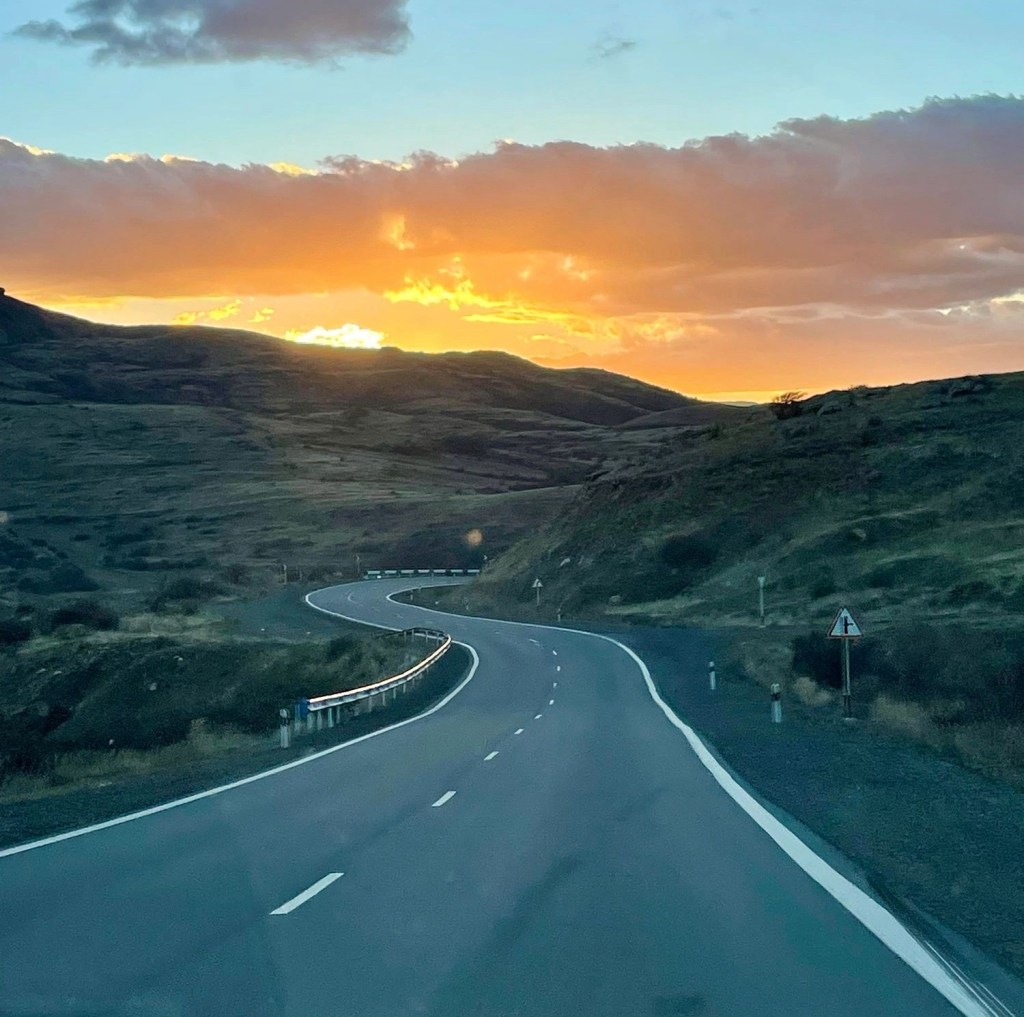
The following day we woke up early and set out again since we did not have to turn in the rental until later that morning. We saved a few attractions closer to Yerevan for this morning. Our first stop was the Arch of Charnec, which is an art installation with a large arch that frames Mount Ararat. There is not a ton to see here, but it does make for some Instagram-worthy photos of the famous volcano in Turkey, and we timed it perfectly for the sunrise. I would recommend visiting in the morning because it is most picturesque and apparently becomes busier throughout the day.


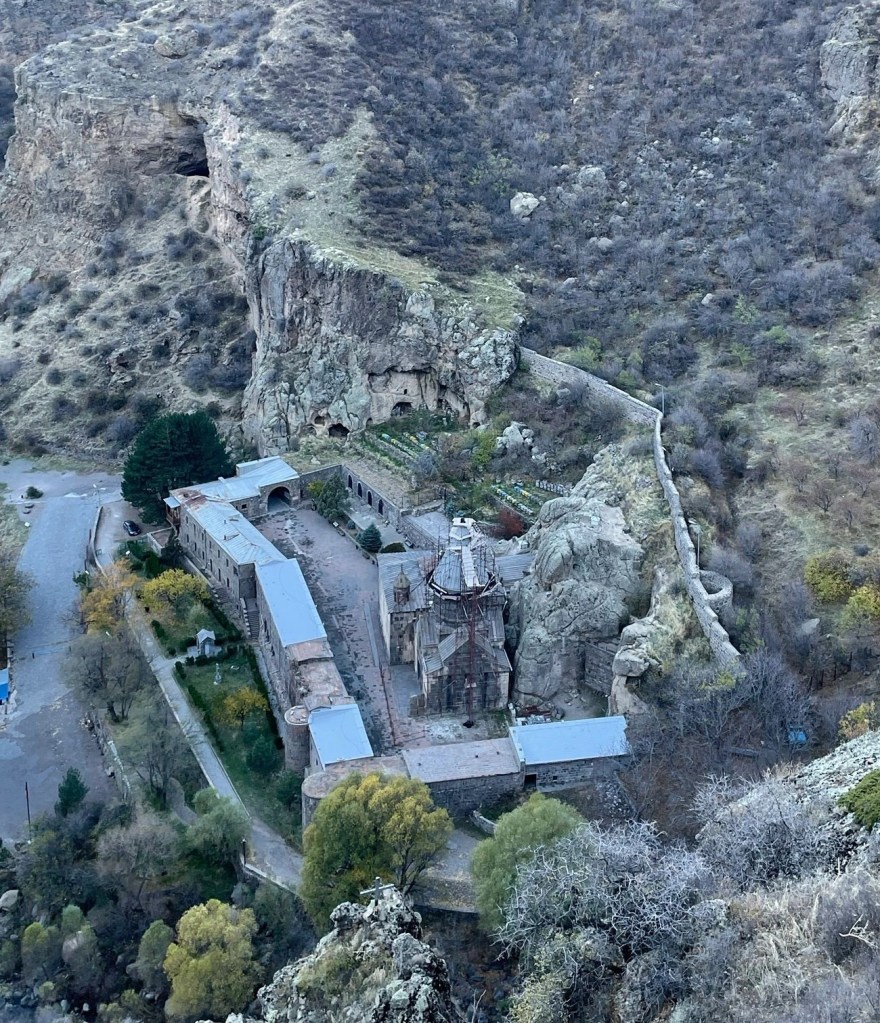
Our second stop was Geghard Monastery. This is an old Christian Monastery that was built inside of a cave. We arrived before the posted opening hours, so instead we climbed up the mountain next to the Monastery to get a good view from above. The climb was a bit sketchy, but the view was worth it. By the time we climbed down, they opened the gates a little early for us and we had the whole place to ourselves. It was very dark inside, but I think in the afternoon there would be more natural light shining in.


Our final stop was a natural rock formation called the Symphony of Stones. This is a one-way driving street where we were able to look straight up at hexagonal columns of rock. The wall of rock is quite extraordinary with the columns seemingly coming down from above and giving the illusion of an organ, hence the name Symphony of Stones. This was another place we were thankful that we arrived early because there were almost no other tourists and we were able to stop our car for a better look, as well as take plenty of pictures. If crowded, it would be difficult to have the freedom to see the stones in the way that we did. Finally, we raced back into Yerevan, panicking that we were going to be late due to horrible morning rush hour traffic.

After returning the rental car, we went for another walkabout around Yerevan and decided to continue the walk all the way to the Armenian Genocide Museum instead of taking a cab. I often find that when time allows, walking through a city is always the best course because you never know what you are going to see. When walking through cities without internet we always use the application maps.me. Most of the time this is an amazing app, but occasionally it shows paths that don’t exist or are not quite as accessible as they might appear on the map. On this adventure, we managed to find ourselves on our way down a steep hill full of weeds that landed us at an abandoned amusement park. In our time in Central Asia, we got our fill of abandoned parks, but this one was really cool because it also was home to an abandoned train station and spray-painted train cars.
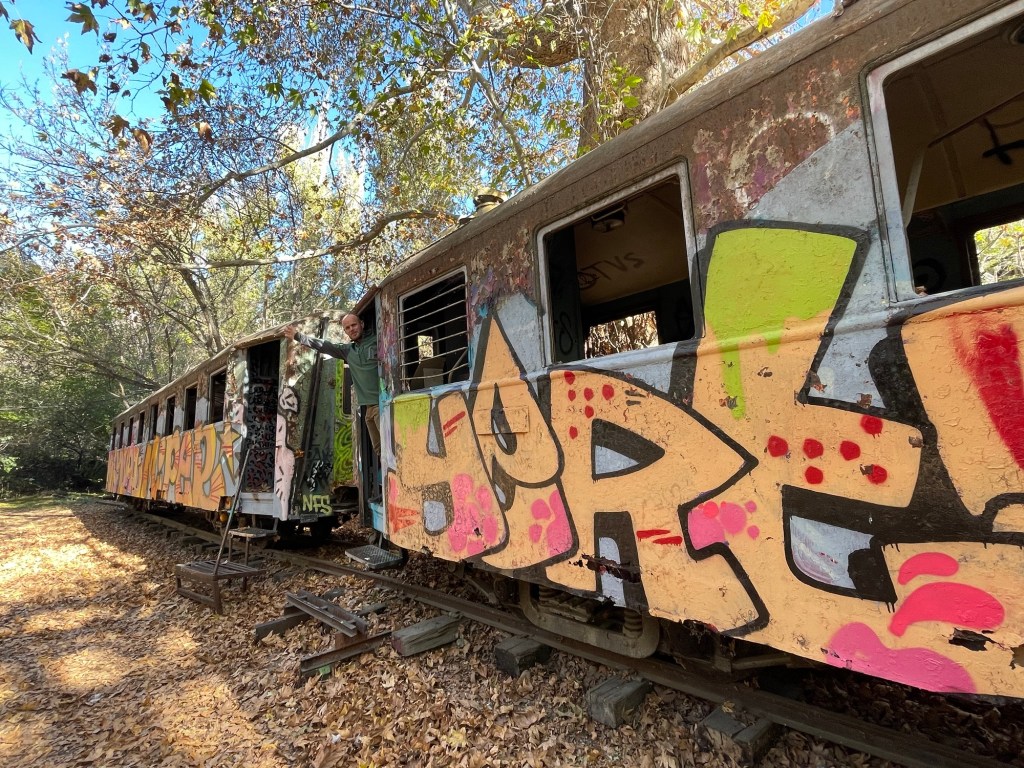
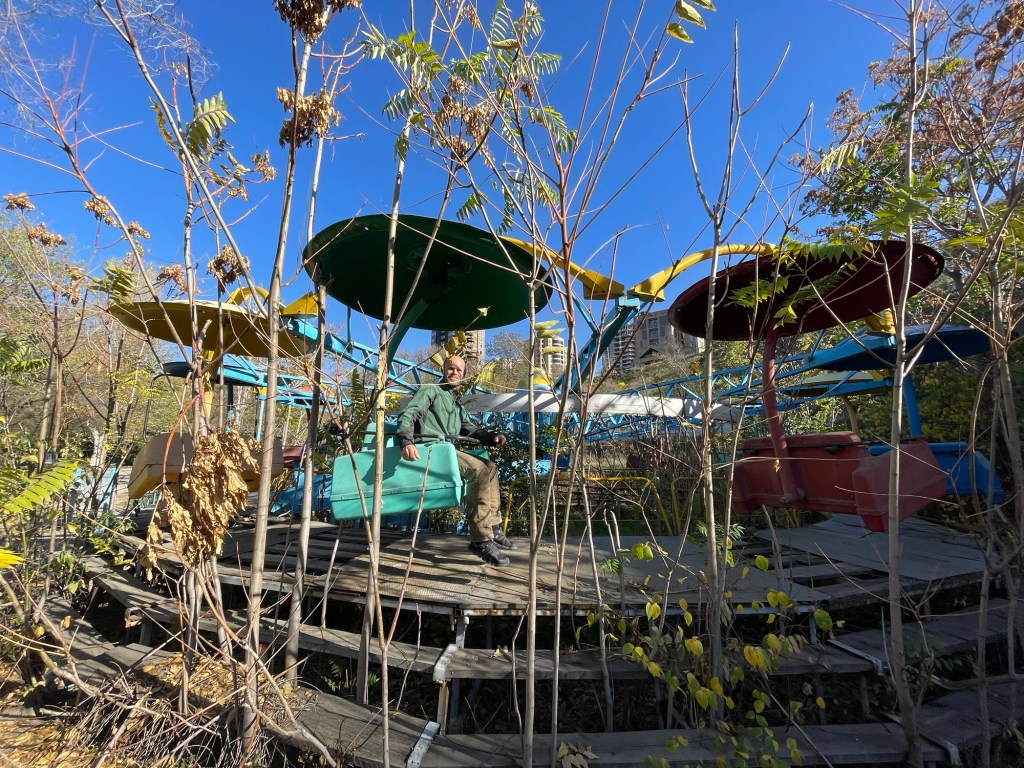
After crossing a river, we came across a bunch of men working out in their makeshift outdoor gym. They had put together a whole weight set by repurposing other materials (some from the abandoned train station and cars nearby). We were quite impressed. As we neared the museum, we came across what looked to be an abandoned sports arena. We walked inside a bit, but it seemed to have become a homeless encampment, so we made our way onward. Finally, up one last hill we finally reached the famous and very sad Armenian Genocide Museum.
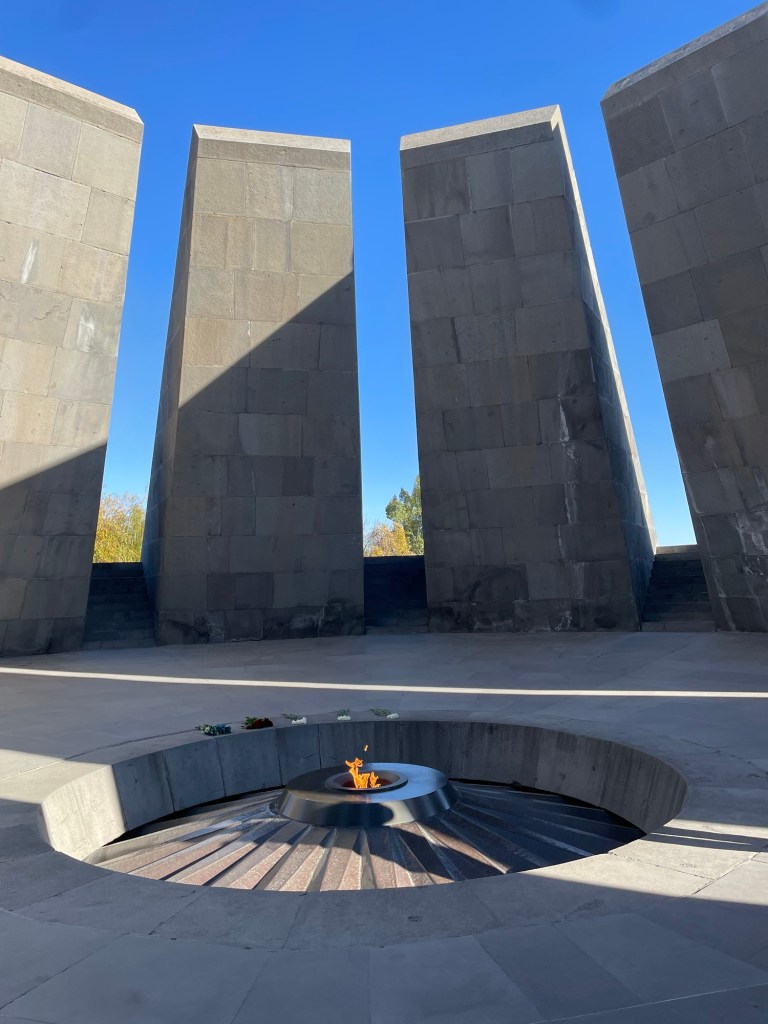

Before this trip, I heard very little information about the Armenian Genocide. This trip to Armenia and our time at the Genocide Museum really opened my eyes to the struggles of the Armenian people over the years. I was shocked to realize this terrible atrocity is not taught in schools and in fact, has not been labeled a genocide by most countries because politically they do not want to offend or hurt diplomatic relations with Turkey. The current Biden administration made the US the first country to publicly recognize what happened to the Armenians during World War I as a genocide. During these last years of the Ottoman Empire, many ethnic Armenian people lived in what is now modern-day Turkey, mostly in the far eastern part of the country near the modern-day border with Armenia. Armenians are historically Christians, and at the beginning of the twentieth century, they were living in what had become a strict Muslim Ottoman Empire. At this time Armenians were well-educated entrepreneurs, often getting the best government jobs and leading the way with trade and commerce. The Young Turks were leading a rising political movement at the time and gaining popularity on a position of openness to all religions, but that soon turned out to not exactly be the case. During WW1, the Ottoman Empire was fighting against the Soviet Union, which meant that Armenians were fighting on both sides of the battle lines. The Ottomans claimed to have lost trust in the Armenians and started rounding them up and executing the men. They marched the women and the children across the country and into the Syrian desert where they were placed in labor camps. Along the way, many of them were raped and killed. Many of these crimes were covered up and justified as soldiers being lost in the war, but as the fog of war settled the truth of what happened started to become more evident. People who are persecuted for their religion are the definition of genocide. It is estimated that well over one million Armenians were killed during this time, and some estimates have that number as high as two million. After the war, the Ottoman Empire fell and the country of Turkey as we know it today was created from what remained. Until this very day, the Turkish government has never acknowledged the genocide or apologized to the Armenian people. With huge religious differences, and the scars from this tragic event in history unhealed it is no wonder that the Turkish/Armenian border remains closed and tensions remain high.

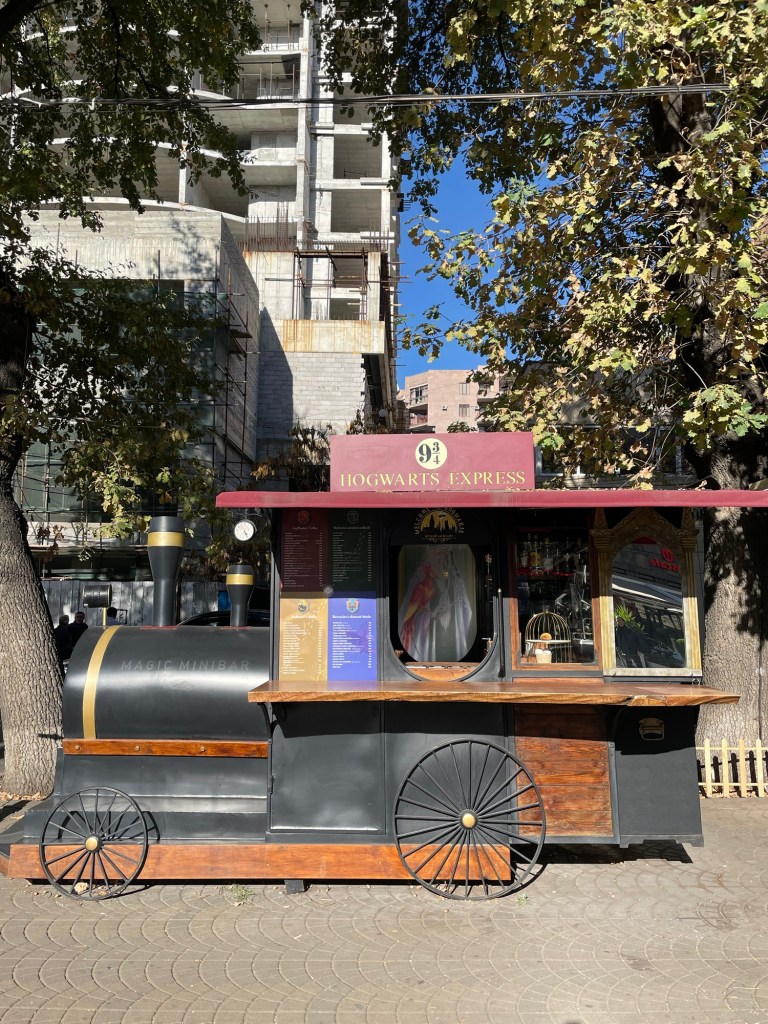
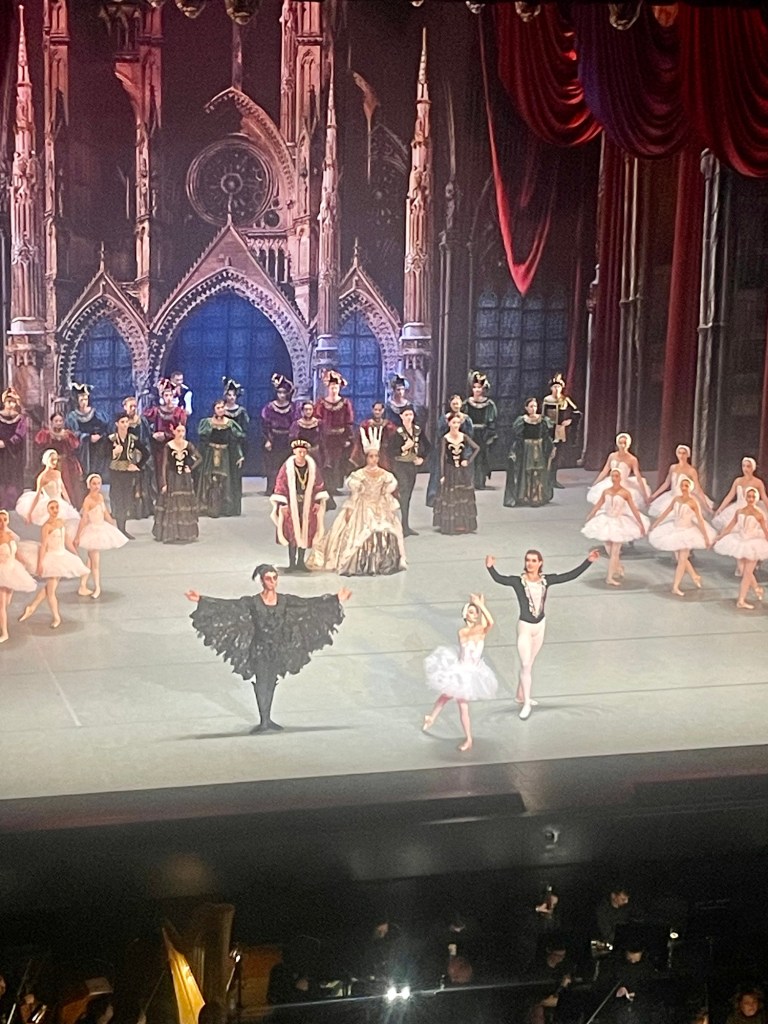
Our final day in Yerevan was slow and lazy. We wandered around town for the last time, spending time at coffee shops and restaurants. We capped off our time in the capital city with a wonderful night at the National Ballet. This was the first time for both of us to see a professional ballet, and we were really excited because this was the opening night for a two-week run of Swan Lake, which is a very famous Russian production. I was amazed by the grace and ease of movement of the dancers. The principal ballerina was flawless and effortless. I couldn’t stop watching her. It was a great way to finish off our time in Yerevan.

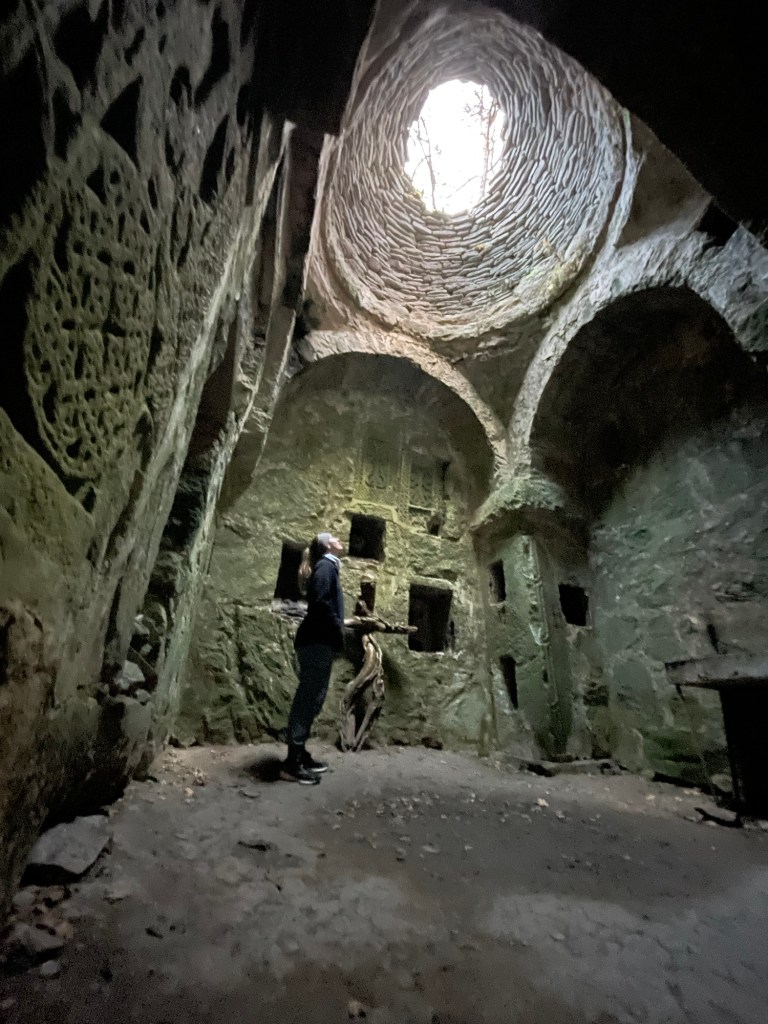
Our final stop in Armenia was a couple hours north in the small town of Dilijan. In our research, we read that this small mountain town was known for its hiking, and we were eager to get back into nature. We liked the town, but I would say we didn’t fall in love with it. We hiked in the woods to two small abandoned Monasteries named Jukhtak Monastery and the Matosavank Church. They were still standing, but a bit disheveled in the woods. We found the forest quite interesting and the monasteries made for some great pictures. There is very little else to do in this small town, and from what we found only a few places to eat. We ended up eating dinner and breakfast the following morning at the same restaurant which was called simply Cafe #2.

From here, we took a bus north across the border back to Tbilisi, the capital of Georgia. Our next country to visit was Turkey, and since the Turkey/Armenia border remains closed indefinitely we had to traverse Georgia to enter into Turkey over a land border. From Tbilisi, we took a train out to the western part of the country to a small city named Batumi on the Black Sea. This is a resort town in Georgia, and we really found it quite stunning.


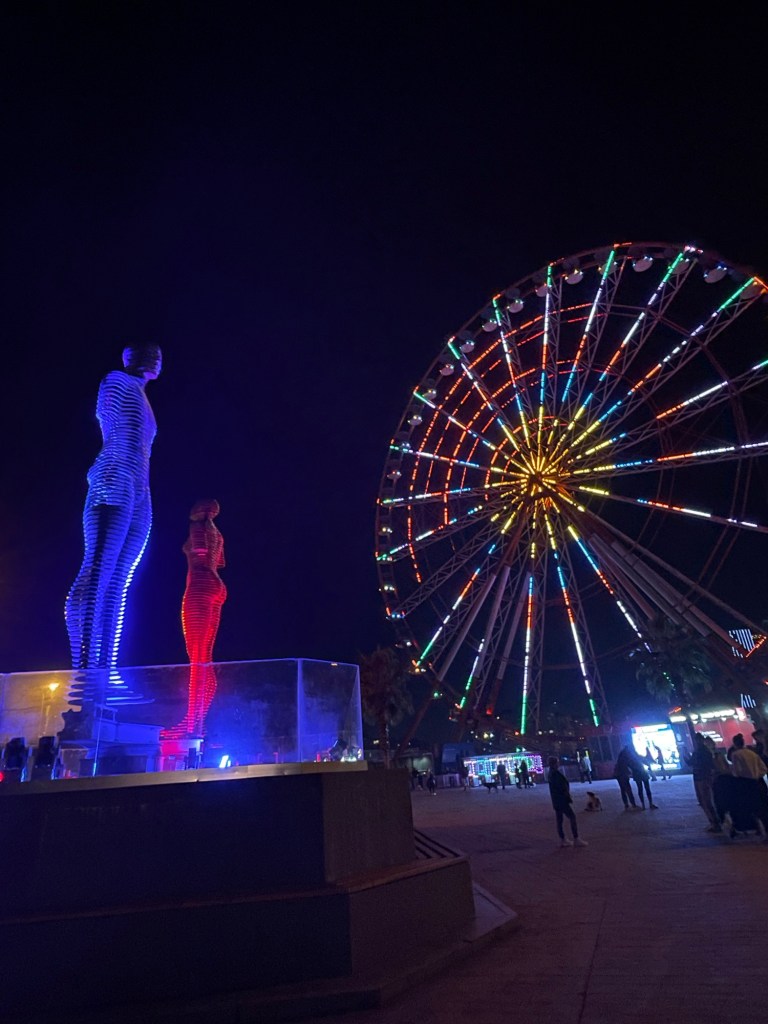
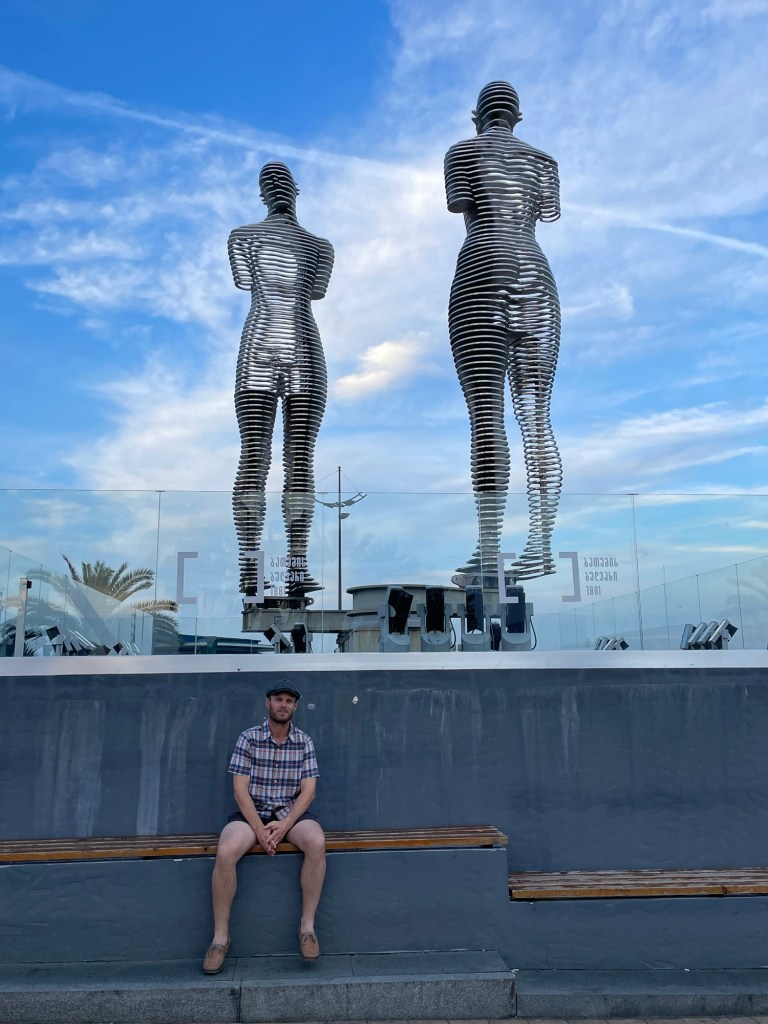
There is a long boardwalk along the sea that continues for fifteen to twenty kilometers. The beach is mainly a stone beach, but it is clean and the water is a clear blue (despite the name). The architecture is a very interesting mix of new and old, and we found all of the buildings to be very unique. It is also home to the famous public modern artwork named Ali and Nino, which is best described as two moving statues that circle around each other and then pass through each other without touching. This is an art piece that everyone seems to be mesmerized by and a sight we visited both during the day and at night.

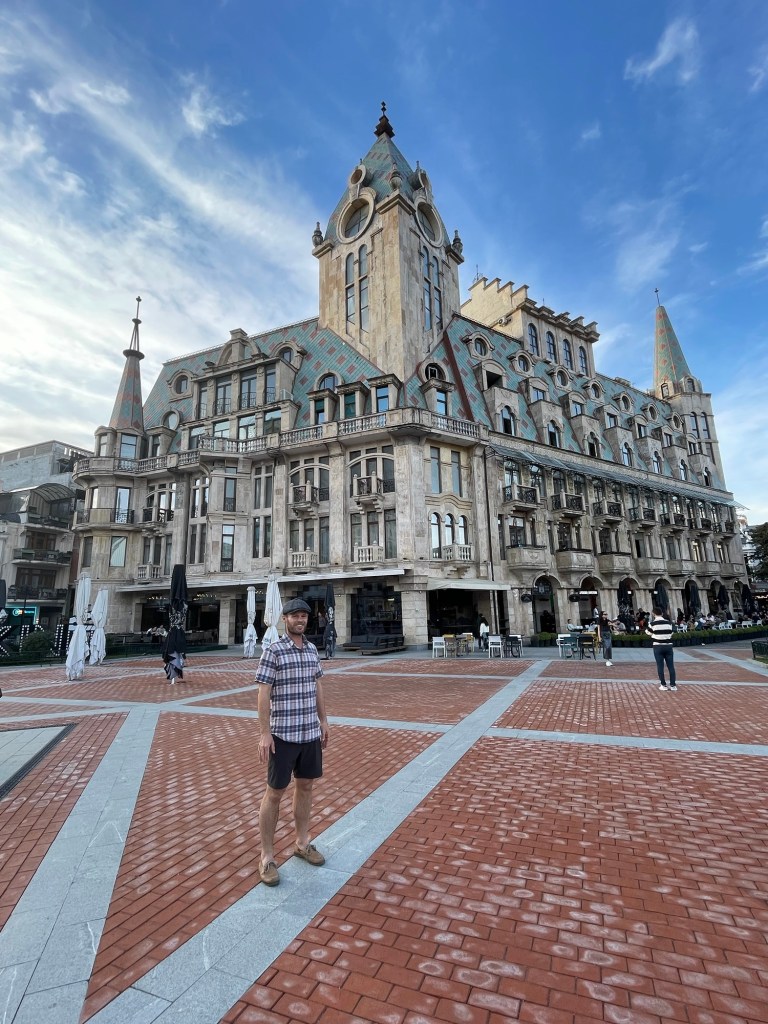
The following day, we decided to take a run to see as much of the boardwalk as possible. We ran ten kilometers, which is a lot considering we had not run in a long time, but we enjoyed the experience and shoreline. In the afternoon we took a bus over to the Batumi Botanical Gardens, which are one the biggest and most grand botanical gardens I have seen and were apparently the prized Botanical Gardens of the Soviet Union. The gardens are right along the Black Sea coast, so we could see the ocean battering up against the rock cliffs below us. The gardens are extremely large with many different types of plants. There were Japanese gardens, winter gardens, rose gardens, and so much more. The park was too big to see everything, however, we found the gardens we visited extremely well kept and had a fantastic afternoon walk.
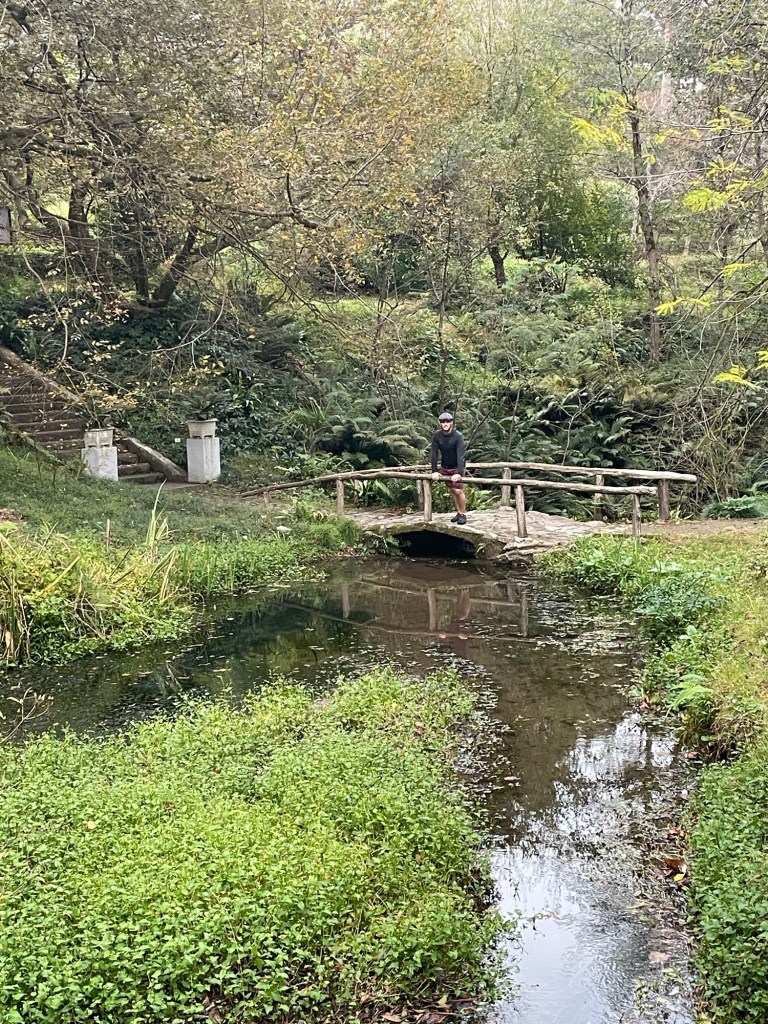
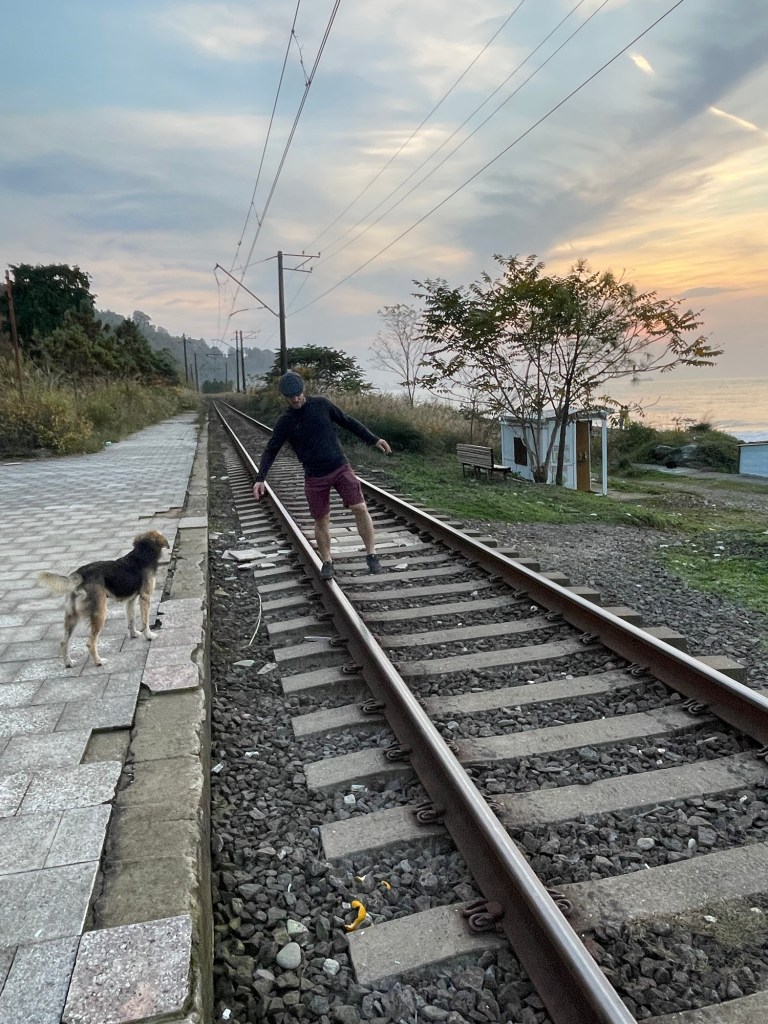
We enjoyed these additional few days back in Georgia on the Black Sea coast, eating more great food and drinking too much amazing and ridiculously cheap wine before heading south into Turkey!


 Teri and Nate's World Adventures